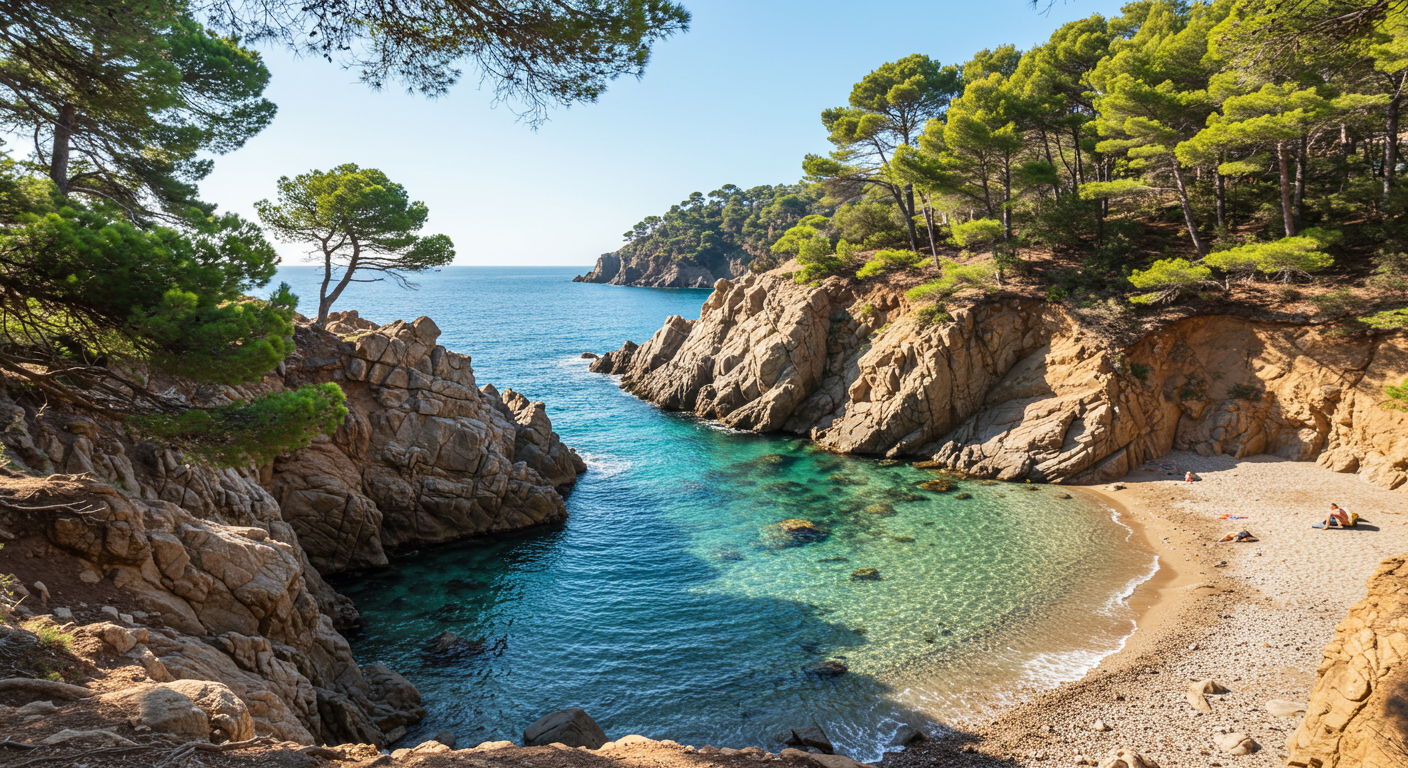
Best Beaches Near Barcelona by Train (No Car Needed)
The best beaches near Barcelona reachable by train, with real journey times, ticket prices, and honest tips on which ones are worth the trip in 2026.
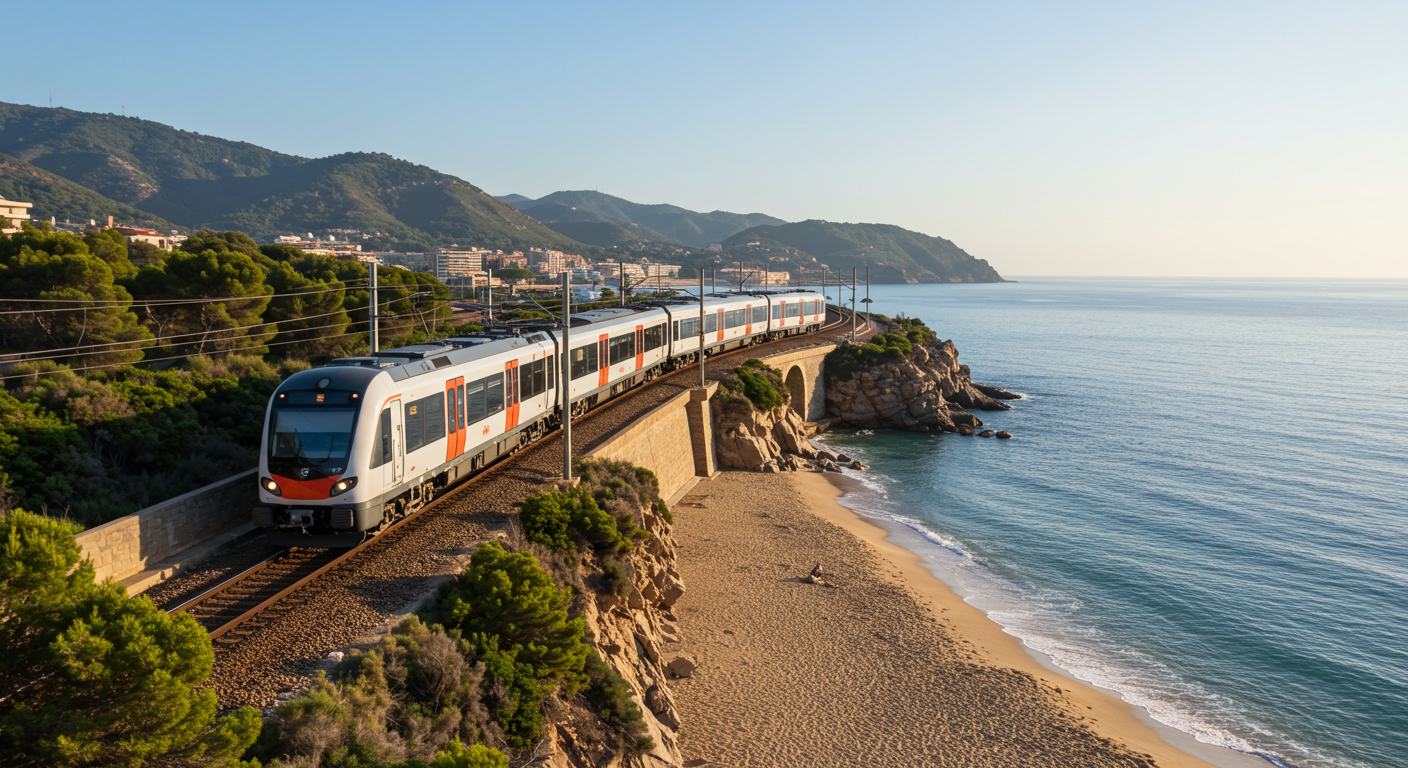
The Barceloneta gets all the headlines, but anyone who's actually lived in Barcelona knows the score: it's fine for an after-work swim, but on a Saturday in July it's a human car park. The good news is that Catalonia's rail network — specifically Rodalies (the regional commuter trains run by Renfe) and the FGC lines — puts genuinely excellent beaches within 30 to 90 minutes of Passeig de Gràcia, all without a car, a hire company, or a parking migraine.
Here's the short answer if you're in a hurry: the best beaches near Barcelona reachable by train are Sitges, Caldes d'Estrac, Arenys de Mar, and the quieter coves between Calella and Blanes to the north. All are on Rodalies lines R1, R2, or R2 Sud. A return ticket costs between €5 and €10 depending on zones (as of 2026 with the T-Casual discount card). Journey times range from 25 minutes to just under 90. None of them require anything more complicated than turning up and tapping a contactless card.
The Rodalies Network: How It Actually Works
Rodalies trains leave from Passeig de Gràcia, Barcelona Sants, and Catalunya station. For beaches, you want two lines. Line R2 Sud heads southwest toward Sitges and Vilanova i la Geltrú — this is the classic beach run. Line R1 heads northeast along the Maresme coast, stopping at a string of small towns with their own beaches: Montgat, Mataró, Caldes d'Estrac, Arenys de Mar, and eventually Blanes.
Tickets are cheap. A single to Sitges from Sants is around €4.60 at full price, but if you load a T-Casual card (10 trips, zone-integrated) it works out to roughly €1.10 per journey within zone 1–2. The T-Casual is worth buying from any Rodalies ticket machine if you're doing more than two or three day trips. Trains run frequently — roughly every 20–30 minutes on most of these lines during the day, though Sunday afternoons can thin out, so check before you leave.
One practical note: trains get rammed on hot weekends in July and August. Take the 9am train, not the 11am one. By the time the crowds arrive, you'll already have a spot.
Sitges: The Best All-Round Day Trip
Sitges is the obvious choice and, for once, the obvious choice is right. It's 35 minutes from Sants on the R2 Sud, the beaches are long and clean, and the town itself is worth a wander — a whitewashed old quarter with a church perched dramatically above the sea. There are 17 beaches in and around Sitges proper, which sounds absurd, but it means you can walk ten minutes from the main Platja de la Ribera and find something considerably less heaving.
Platja d'Aiguadolç, just north of the marina, is noticeably calmer than the central beaches. Platja de les Coves and the naturist beach beyond it (Platja del Muerto, a 20-minute walk south of town or accessible by taxi) are worth the extra effort if you want genuine quiet.
The town has real restaurants rather than just chiringuitos aimed at tourists. Can Laury on Carrer de les Parellades does a solid menú del día for around €14–16. Skip anything on the seafront promenade itself — the prices jump and the quality doesn't follow.
The water here, incidentally, is calmer than Barcelona's city beaches because the coastline curves slightly. If you're wondering about sea temperatures in different seasons, Can You Swim in the Sea in Spain in October? covers the Catalan coast specifically.
The Maresme Coast: Quieter, Underused, and 30–60 Minutes Away
The Maresme is the stretch of coast running northeast from Barcelona along the R1 line, and it's where Barcelonans who want a proper beach day actually go. The towns are smaller, the beaches are backed by the railway line (a minor irritant — trains pass every 20 minutes), but the sand is better than Barceloneta and the crowds are a fraction of Sitges on a peak weekend.
Caldes d'Estrac
Forty-five minutes from Sants, Caldes d'Estrac (also called Caldetes) is a small, slightly faded resort town that feels like it hasn't quite decided whether it's 1975 or 2026. That's meant as a compliment. The beach is around 800 metres long, the water is clean, and there are a handful of decent chiringuitos. The town has thermal baths if you want to turn it into a longer day. It's genuinely quiet by Catalan standards.
Arenys de Mar
Arenys is bigger and more functional — a working fishing town with a good market on Saturdays. The beach is fine but the real draw is the fish. The restaurants near the port are the real deal: local catch, straightforward cooking, prices that don't make you wince. Lunch at La Grua by the harbour is worth the trip on its own. About 50 minutes from Sants.
Calella and Sant Pol de Mar
Sant Pol de Mar is the one Maresme stop that gets genuinely enthusiastic word of mouth among Barcelona residents. The beach is wide, the village is pretty, and it's about 55 minutes on the R1. The downside: everyone knows this now, and summer weekends are busier than they used to be. Go on a weekday in June or September.
Calella itself, further north at about 70 minutes, is a larger resort town that caters heavily to German and British package tourists. The beach is enormous — nearly 2km — but the strip behind it is exactly what you'd expect. Fine if you want facilities and don't mind the vibe.
Vilanova i la Geltrú: Further, but Worth It
Stay on the R2 Sud past Sitges for another 15 minutes and you reach Vilanova i la Geltrú, a proper Catalan town that most day-trippers never reach because they get off at Sitges. Its beaches — Platja de Ribes Roges and Platja del Far — are long, clean, and genuinely uncrowded by comparison. The town has a good market, a castle, and a railway museum (odd but genuinely interesting). Total journey time from Sants: around 55 minutes.
This is also a town where people actually live, which means the restaurant quality-to-price ratio is better than anywhere more tourist-dependent. The Mercat Municipal is worth a look for provisions if you're planning a beach picnic.
Blanes: The End of the Line
Blanes is the southernmost town of the Costa Brava and sits at the end of the R1 line — about 80 to 90 minutes from Barcelona Sants. It's a proper resort, and the main beach is large and busy in summer. But Blanes has something most of the Maresme towns don't: immediate access to cove beaches. Sa Palomera rock divides the town beach from a series of smaller coves to the north, and the coastal path from Blanes toward Lloret de Mar (don't go to Lloret, just use the path) passes several of them.
The journey time is the main deterrent, and honestly, for a day trip that length, you need to leave early and plan it properly. But in May, June, or September, when the weather is perfect and the crowds are thin, Blanes rewards the effort.
Practical Notes Nobody Mentions
The trains on the R1 line run along the coast, which means the right-hand side of the train (heading north from Barcelona) gives you sea views. Small thing, but worth knowing.
Most of these beaches have no lockers. Take a small bag, keep valuables minimal, or take turns swimming. Theft from unattended towels happens — not constantly, but enough that it's worth being sensible.
The Rodalies app is genuinely useful for checking real-time departures. Trains do get delayed, especially in summer, and the platform information boards aren't always accurate. Download it before you go.
If you're based in Barcelona longer-term and thinking about how transport costs fit into your overall budget, it's worth noting that a T-Casual card (as of 2026, zones 1–2) costs around €12 for 10 trips. For regular beach days, it pays for itself immediately.
For those who've relocated to Barcelona or are thinking about it — transport access to the coast is one of the city's genuinely underrated advantages. You don't need a car for any of this. If you're still sorting out the practicalities of living here, questions about how long you can drive in Spain on a foreign licence come up constantly among new arrivals.
When to Go
June and September are the sweet spots. The water is warm enough to swim properly — typically 22–24°C in June, 24–26°C in September along this stretch of coast — the trains aren't rammed, and you can actually get a table at lunch without a reservation. July and August work fine if you go early and accept that you'll share the beach with half of greater Barcelona.
April and May are underrated for the Maresme specifically. The sea is cooler (18–20°C), but the landscape is green, the towns are quiet, and the light is extraordinary. Worth it even if you don't swim.
October is a genuine option — the sea holds its temperature well into autumn along this coast, and weekday beaches in October can feel almost private. See the full breakdown in Can You Swim in the Sea in Spain in October?.
Wherever you end up, the principle holds: the best beach near Barcelona is the one you can reach without sitting in traffic on the C-32 for an hour. The train makes all of these places genuinely accessible, and that's before you factor in what a beach parking space costs in Sitges in August.
Frequently asked questions
- Which beach near Barcelona is easiest to reach by train?
- Sitges is the easiest and most rewarding. It's 35 minutes from Barcelona Sants on the R2 Sud line, trains run frequently, and the town has multiple beaches plus good restaurants. No connections needed — it's a direct run.
- How much does a train ticket from Barcelona to Sitges cost in 2026?
- A single fare from Barcelona Sants to Sitges costs around €4.60 at the standard price as of 2026. If you use a T-Casual multi-trip card (zones 1–2, roughly €12 for 10 trips), each journey works out to about €1.10 each way. Check the Rodalies website for the current fare as prices are reviewed annually.
- Are the Maresme beaches north of Barcelona better than Sitges?
- Depends what you want. The Maresme beaches (R1 line: Caldes d'Estrac, Arenys de Mar, Sant Pol de Mar) tend to be quieter on summer weekends and feel more local. The downside is that the railway line runs directly behind most of them, so you hear trains passing. Sitges has a prettier town and better restaurant options but gets more tourist traffic.
- Can I reach Costa Brava beaches by train from Barcelona?
- Partially. Blanes, the southernmost Costa Brava town, is the last stop on the R1 line — about 80–90 minutes from Sants. Beyond Blanes, you need a bus or taxi to reach other Costa Brava towns. There's no train line running up the Costa Brava itself.
- Which Barcelona area beach train line is R2 Sud and which is R1?
- R2 Sud goes southwest toward Sitges and Vilanova i la Geltrú. R1 goes northeast along the Maresme coast toward Mataró, Caldes d'Estrac, Arenys de Mar, and Blanes. Both lines stop at Barcelona Sants and Passeig de Gràcia.
- Is it worth buying a T-Casual card just for beach day trips from Barcelona?
- Yes, if you're doing two or more day trips. The savings per journey are significant compared to single tickets, and the card works across Rodalies, Metro, and bus within the zones you've loaded. You can buy one at any Rodalies or Metro ticket machine with cash or card.
- What's the best month to visit beaches near Barcelona by train?
- September is the best combination of warm sea, thinner crowds, and reliable weather. June is a close second. July and August are fine but trains and beaches are at maximum capacity on weekends — go early or on weekdays. October is underrated for those who don't mind slightly cooler water.