Catalan Food Beyond Tapas: Calçots, Escudella & What to Eat
Traditional Catalan food goes far beyond tapas. From calçot season to escudella de Nadal, here's what to actually eat across Catalonia in 2026.
Most visitors to Barcelona eat patatas bravas and call it Catalan cuisine. It isn't. Patatas bravas are everywhere in Spain — they're no more specifically Catalan than a gin and tonic. The real tradition here is older, heavier, more rural, and frankly more interesting. Traditional Catalan food beyond tapas is its own distinct culinary world, built around fire, dried pulses, mountain pork, and a coastline that still takes fish seriously.
The short answer, if you want it: Catalan cuisine is best understood through a handful of key dishes — pa amb tomàquet, escudella i carn d'olla, calçots with romesco, fideuà, and crema catalana — eaten in season, often outside Barcelona, in towns that haven't had to adjust for tourist expectations. Get any of those right and you'll understand the food here better than most people who've visited twice.
Pa Amb Tomàquet: The Actual Foundation
Before anything else, understand bread. Pa amb tomàquet — bread rubbed with ripe tomato, drizzled with olive oil, sometimes with a scrape of garlic — is not a starter or a side dish. It is the baseline. Every meal begins with it. Every can (farmhouse restaurant) serves it automatically. You can eat it plain, or piled with anchovies, cold cuts, or a slice of fuet, the thin dried sausage that Vic and the Osona comarca do better than anywhere.
Don't order it in tourist-facing restaurants where it comes pre-assembled and soggy. The point is the ritual: you get the bread toasted, the tomato half, and you do it yourself at the table. If the bread is already wet when it arrives, something has gone wrong.
Calçots: A Seasonal Obsession Worth Planning a Trip Around
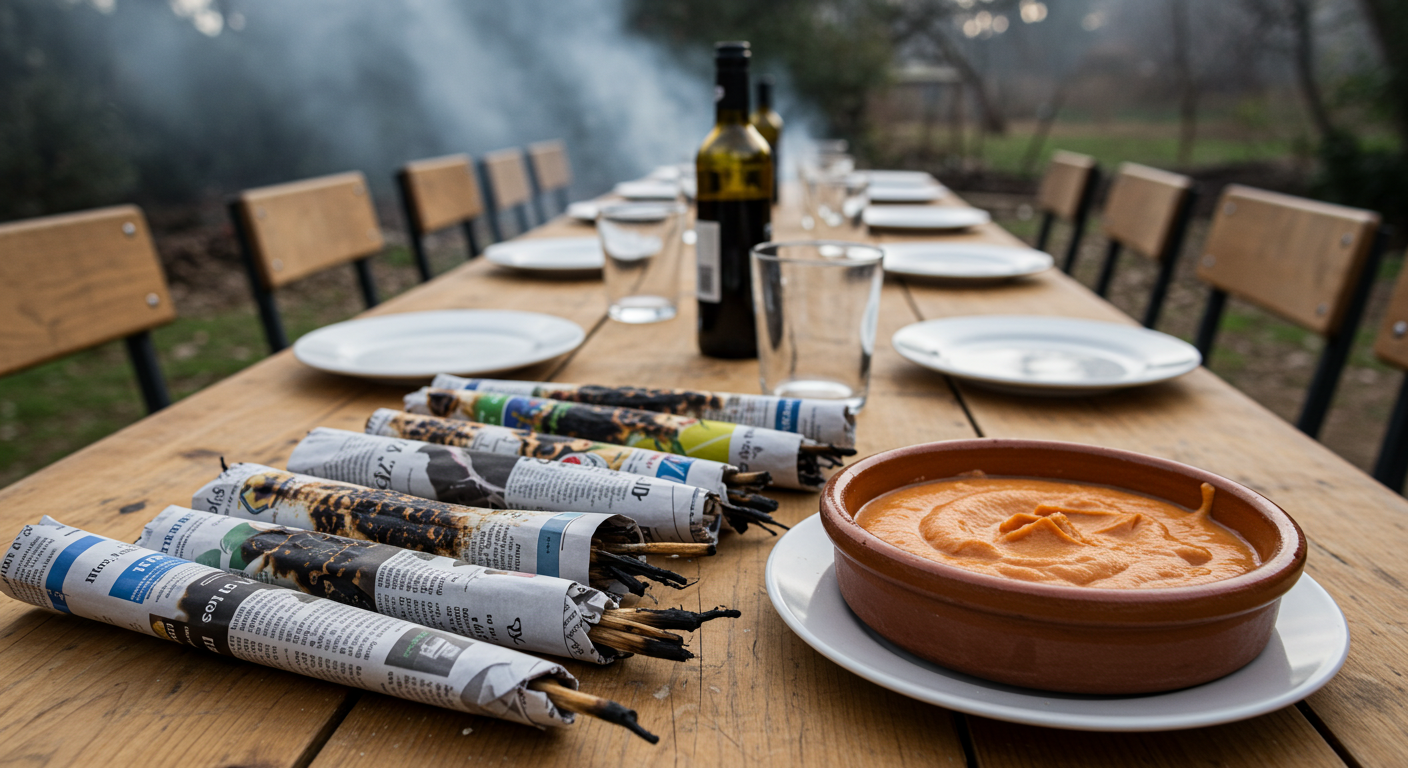
From roughly late January through March, Catalonia becomes briefly but completely consumed by calçots. These are a variety of spring onion — long, white, mild — grown specifically in the Valls area south of Tarragona, though now cultivated more widely. They're charred black over a wood fire until the outer layer is carbonised and the inside is soft and sweet, then wrapped in newspaper to steam while you peel back the charred skin and dip the white interior into romesco sauce.
Romesco is the thing. Roasted tomatoes, nyores (dried red peppers), almonds or hazelnuts, olive oil, garlic, a splash of vinegar — blended into something that's simultaneously smoky, nutty, and sharp. The sauce alone is worth learning to make. You'll find it year-round on grilled fish and vegetables, but in calçotada season it's consumed in industrial quantities.
A proper calçotada is an event: long tables outside, plastic bibs, red wine in porrons (glass pitchers you drink from at arm's length to avoid touching your mouth to them), and a second course of grilled lamb or butifarra sausage. The town of Valls holds its famous Calçotada festival in late January — it's worth the 90-minute train ride from Barcelona if you're here in winter. Restaurants in Vilafranca del Penedès and even some in Gràcia in Barcelona do credible versions, but the real ones happen outdoors with smoke in your eyes.
Escudella i Carn d'Olla: Catalonia's Great Winter Pot
Escudella is what Catalans eat at Christmas and what they eat on cold Tuesdays in February when nobody is watching. It is a two-course meal in one pot: a broth with thick pasta shapes (galets, which look like large snail shells) or rice served first as a soup, followed by the meats and vegetables that made the broth — chicken, pork ribs, pilota (a large meatball of minced pork, egg, and breadcrumbs), botifarra, turnip, potato, chickpeas.
This is not a delicate dish. It is restorative. It is the kind of food that makes sense after a morning walking in the Pyrenees or the Montseny massif. You won't find it easily in summer or in tourist-heavy restaurants. Look for it in old-fashioned restaurants de menú — the kind that do a three-course lunch with wine included for around €12–15 — in towns like Vic, Ripoll, or Berga. If you're in Barcelona in December, a few places in the Eixample and Gràcia put it on the menú del día around Christmas week.
The Coast: Suquet, Fideuà, and Why Barceloneta Gets It Wrong
Catalonia has a long coast and a fishing tradition that predates tourism by centuries. The dishes that come from it are worth seeking out, but not in Barceloneta, which is almost entirely tourist-facing and overpriced as of 2026.
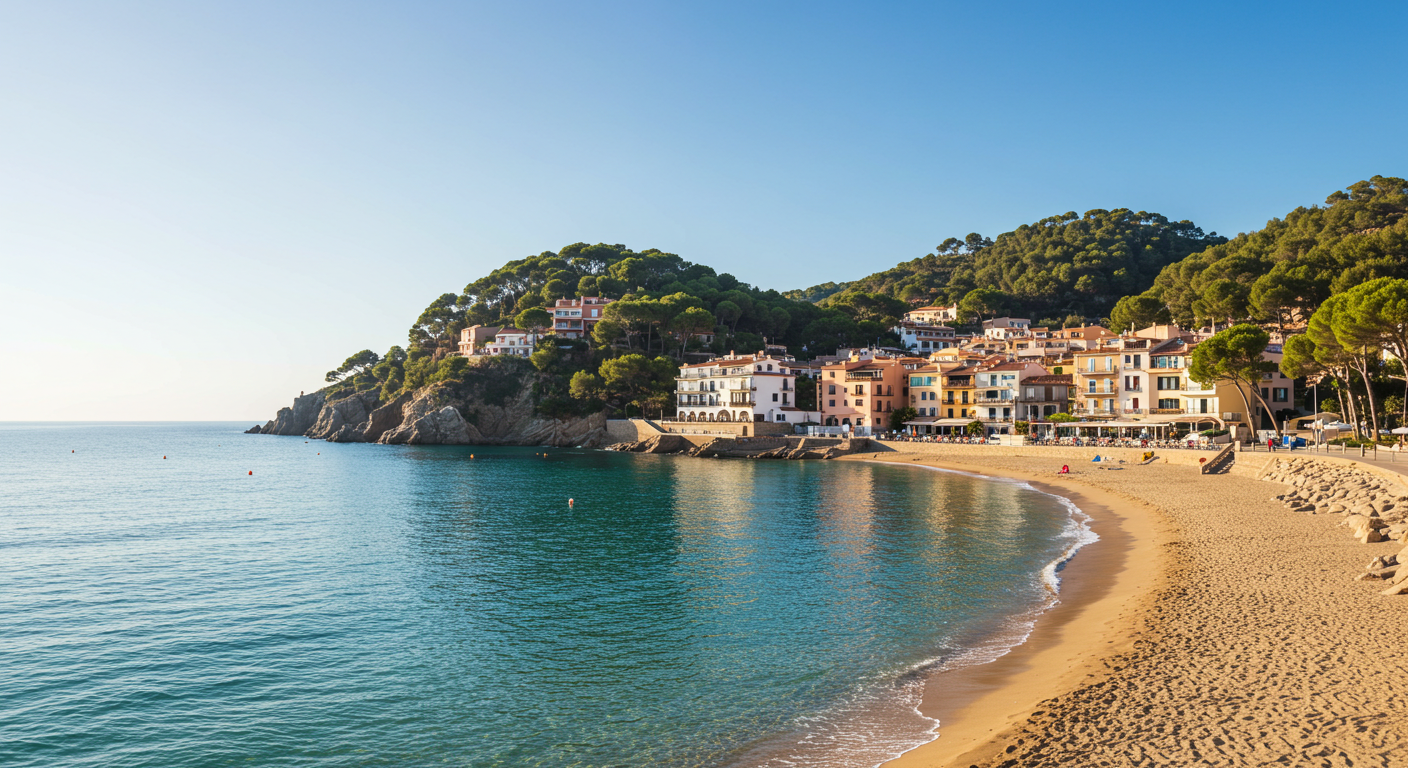
Suquet de peix is the Catalan fisherman's stew — potato, fish (monkfish, scorpionfish, whatever came in), a picada of fried bread, garlic, and almonds stirred in at the end to thicken and enrich the broth. It's not flashy. It's deeply savoury. The best versions I've had were in Palamós, on the Costa Brava, where the prawns are locally caught and absurdly good. Palamós prawns (gambas de Palamós) are a genuine regional product — sweeter and firmer than the defrosted alternatives — and worth ordering simply grilled with salt.
Fideuà is often described as paella made with noodles instead of rice, which is technically accurate but undersells it. The short, thin noodles toast in the pan before the stock goes in, developing a nuttiness you don't get with rice. It's more a Valencian invention that Catalonia has thoroughly adopted, particularly along the Garraf coast south of Barcelona. Vilanova i la Geltrú has a serious fideuà tradition and holds an annual competition. Skip El Born tourist traps for this one.
Inland Catalonia: The Dishes Nobody Talks About
The further you get from Barcelona, the more interesting the food becomes. This is not a slight against the city — it has excellent restaurants — but inland Catalonia is where the old cooking survives without modification.
Trinxat de la Cerdanya is a winter dish from the high Pyrenean county of Cerdanya: cabbage and potato mashed together and fried in a pan with pork belly or bacon until a crust forms. It is extremely simple and extremely good. The altitude and cold of the Cerdanya mean it makes sense there in a way it doesn't in Barcelona in July.
Arròs de muntanya — mountain rice — is a rice dish made with rabbit, snails, and pork rather than seafood. You find it in the pre-Pyrenean foothills, around Berguedà and Solsonès. It's as far from paella as you can get while still involving a wide pan.
Mel i mató — fresh unsalted curd cheese drizzled with honey — is the simplest Catalan dessert and one of the best. Crema catalana, the egg yolk and cinnamon custard with a caramelised sugar crust, predates the French crème brûlée by a reasonable margin, and Catalans will tell you so unprompted.
Sauces, Condiments, and the Picada
Catalan cooking uses a specific set of techniques that set it apart from the rest of Spain. The sofregit (slowly caramelised onion and tomato, the base of almost everything) and the picada (a paste of fried bread, nuts, garlic, sometimes chocolate or saffron, stirred in at the end of a braise to thicken and deepen it) are the two structural pillars. Neither is flashy. Both require patience.
Allioli — the emulsified garlic and oil sauce — is the other essential. The real version contains no egg; it's garlic pounded with olive oil until it emulsifies through friction alone. It's harder to make and more aggressively garlicky than the egg-based version most restaurants serve. If someone offers you real allioli, say yes.
Where to Actually Eat Well Across Catalonia
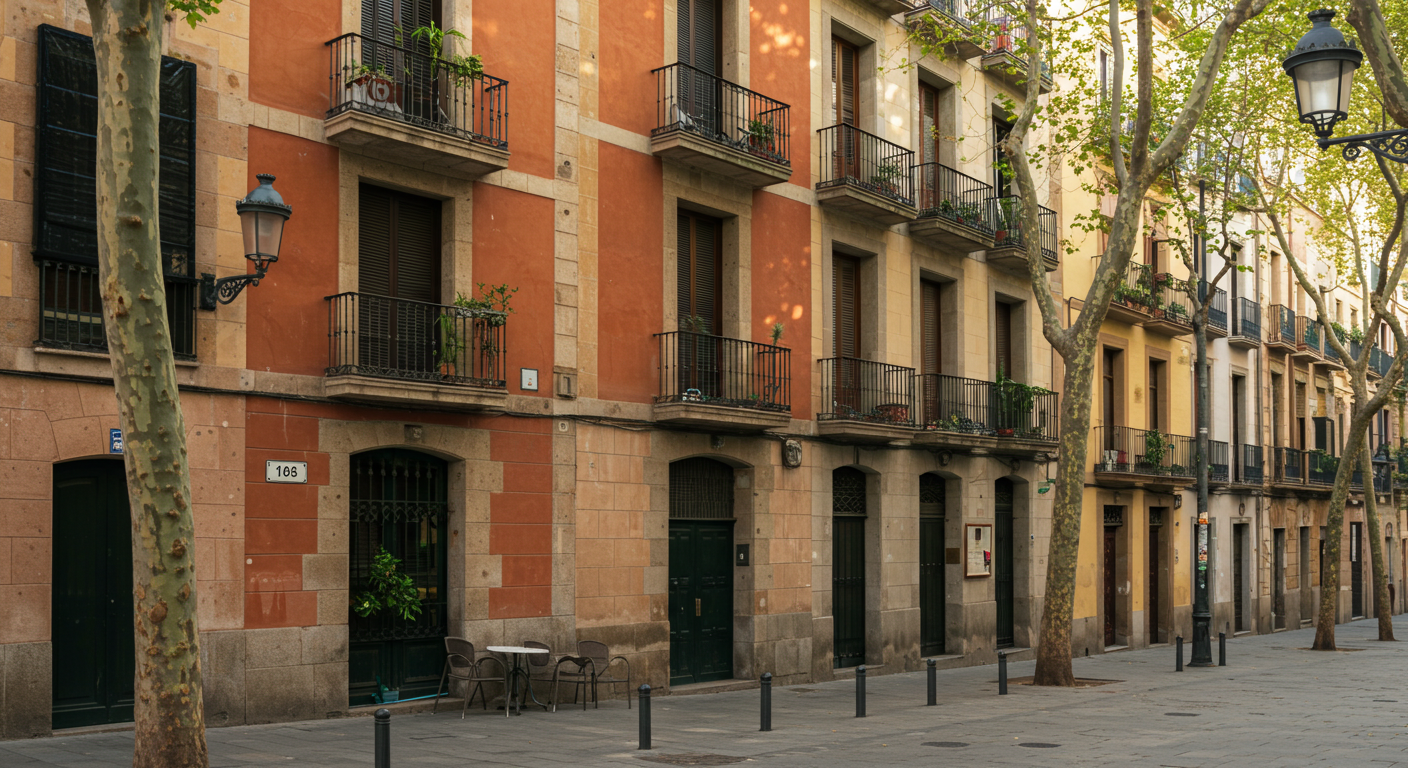
Barcelona has good food, but it's concentrated in specific places. The Boqueria market is a tourist attraction now — buy your olive oil and leave, don't eat at the counters. The Mercat de Santa Caterina in El Born is better for actual shopping. For traditional cooking in the city, look at restaurants in Sarrià, Gràcia, and the older parts of Sant Gervasi, where the clientele is still largely local.
Outside Barcelona: Vic for embotits (cured meats) and market food; Palamós and Palafrugell for seafood; Valls for calçots (January–March); the Priorat wine region for cargols a la llauna (snails roasted in a tin with spiced oil) and local wine; and the Cerdanya for anything involving potatoes and pork fat in winter.
If you're in the process of settling in Catalonia — sorting out registration, residency paperwork, or figuring out the banking system — the food culture is one of the things that rewards patience. The good restaurants operate on Spanish time: lunch from 2pm, dinner rarely before 9pm, and the menú del día only available at midday. Renting in Spain without a Spanish payslip is its own challenge, but once you're sorted, eating well here is genuinely affordable — a proper three-course menú with wine in a non-tourist town still runs €12–15 most days.
A Note on Wine
Catalonia has eleven DO wine regions, which is more than most people realise. Penedès is the most familiar (cava, and increasingly good still whites from Xarel·lo). Priorat produces some of Spain's most serious and expensive reds, from old Garnacha and Cariñena vines on slate soils. Montsant, next door, does similar things for about a third of the price. Alella, just north of Barcelona, makes delicate whites from the Pansa Blanca grape that pair brilliantly with seafood. If you're buying wine for a calçotada, a young Penedès red or a Montsant will do the job better than anything imported.
Catalan food, at its best, is the food of a place that has always known what it was doing — it just didn't need to explain itself to anyone.
Frequently asked questions
- What is traditional Catalan food, and how is it different from Spanish tapas?
- Traditional Catalan cuisine is a distinct regional cooking tradition built around fire-cooked vegetables, slow-braised meats, legumes, and coastal fish stews. It shares little with the tapas culture of Andalusia or Madrid. Key dishes include escudella i carn d'olla (a two-course meat and broth pot), calçots with romesco sauce, pa amb tomàquet, and suquet de peix. The cooking techniques — particularly the sofregit and picada — are specific to Catalonia.
- When is calçot season in Catalonia?
- Calçot season runs roughly from late January through March, peaking in February. The town of Valls, near Tarragona, is the heartland and holds a large calçotada festival in late January. Many restaurants across Catalonia, including some in Barcelona, add calçots to their menu during this window. Outside these months, you won't find them fresh.
- Where can I eat escudella i carn d'olla in Barcelona?
- Escudella is a seasonal winter dish, most commonly found in December around Christmas. A few traditional restaurants in Gràcia and the Eixample put it on their menú del día in late December. Year-round, you're better off heading to towns like Vic or Ripoll, where old-fashioned lunch restaurants still serve it through the winter months.
- What is romesco sauce made from?
- Romesco is made from roasted tomatoes, dried nyora peppers, toasted almonds or hazelnuts, garlic, olive oil, and a splash of vinegar or sherry. Everything is blended into a thick, smoky, nutty sauce. It's the traditional accompaniment to calçots, but also appears year-round alongside grilled fish and vegetables across Catalonia.
- Is the Boqueria market in Barcelona worth visiting for food?
- The Boqueria is worth a walk-through to see the produce, but it's no longer a practical food market for locals — it's heavily tourist-facing and the stalls near the entrance are overpriced and poor quality. For actual shopping or eating, the Mercat de Santa Caterina in El Born or the Mercat de l'Abaceria in Gràcia are more authentic and less crowded.
- What Catalan wines should I try?
- Start with a Penedès white (look for Xarel·lo or Macabeu-based bottles) with seafood, or a Montsant red with grilled meat. Priorat is excellent but expensive — prices for good bottles start around €20–30. Alella whites, made just north of Barcelona, are underrated and pair well with fish. For a calçotada, a young Penedès red or a Montsant is the classic choice.
- What is pa amb tomàquet and how should it be served?
- Pa amb tomàquet is toasted or grilled bread rubbed with a ripe tomato half, drizzled with olive oil, and sometimes rubbed with garlic first. It's the universal base of Catalan eating — served before almost every meal. The correct version arrives unassembled: you get the bread, the tomato, and the oil separately and do it yourself. Pre-assembled, soggy versions are a sign the restaurant isn't trying.