A Slow Guide to Girona Old Town: Game of Thrones & Costa Brava Gateway
How many days do you need in Girona? Two is the honest answer — here's how to spend them in the old town, spot GoT locations, and plan Costa Brava day trips.
Two days is the honest answer to how many days you need in Girona. One day is enough to walk it, but not enough to feel it. Three days lets you exhale and start using it as a base for the Costa Brava. Anything beyond that is a lifestyle choice — and a very reasonable one.
Girona sits 37 minutes from Barcelona by AVE and yet most visitors treat it as a half-day stop. They arrive on the fast train, photograph the coloured houses above the Onyar, eat crema catalana somewhere near the cathedral, and leave. That's a shame, because the old town — the Call jueu, the cathedral, the Arab baths, the medieval walls — rewards slowness in a way that Barcelona's Gothic Quarter, busier and more polished, no longer can.
What Girona Old Town Actually Feels Like
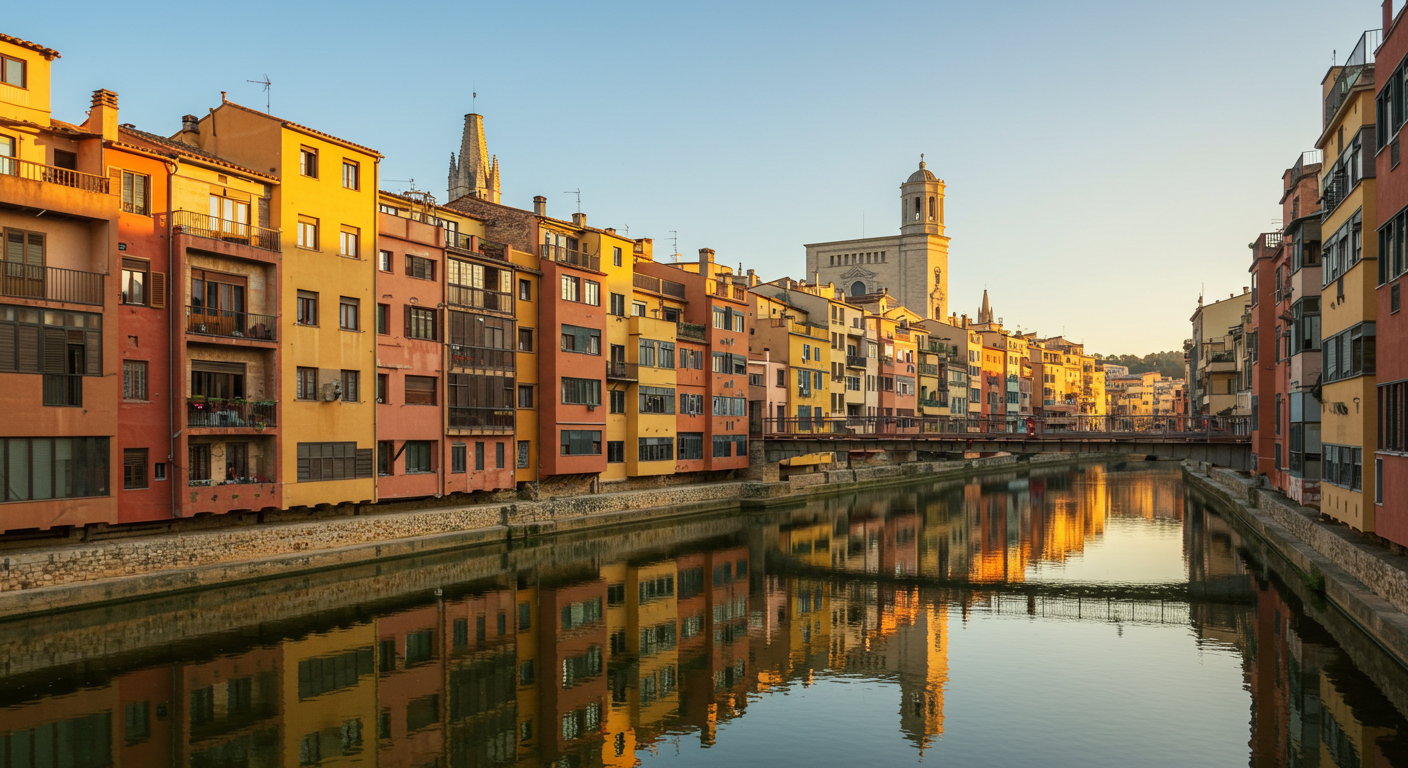
The old town, the Barri Vell, is compact and mostly car-free once you're inside the walls. It sits on the right bank of the Onyar, separated from the newer city by a row of tall, narrow houses painted in ochre, terracotta, dark red and the occasional faded yellow — the famous Cases de l'Onyar you'll have seen in every photograph. Cross any of the small bridges and you're in. The Pont de Pedra is the main one; the iron footbridges (one designed by Eiffel's firm, which Girona is quietly proud of) are quieter.
Once inside, the streets are medieval in the literal sense: tight, uneven, built for mules not SUVs. The cathedral square opens dramatically after the narrow lanes — 86 steps up to a single baroque nave that is, by width, the broadest Gothic nave in the world. Entrance costs around €7 as of 2026 (verify on-site, prices shift seasonally). Worth it, not least for the Romanesque cloister attached to it, which is lovelier than the cathedral itself and gets far less attention.
The Call — Girona's medieval Jewish quarter — is one of the best-preserved in Europe. This isn't marketing; historians genuinely say so. The narrow lanes around Carrer de la Força feel genuinely old, not reconstructed. The Museu d'Història dels Jueus is small but serious. Give it an hour.
The Game of Thrones Locations in Girona (and Which Ones Are Worth Seeking Out)
Girona stood in for Braavos and later King's Landing in series five and six of Game of Thrones, and the filming locations are easy to find — perhaps too easy, given the number of tour operators now hawking them. Let me be blunt: you don't need a tour.
The cathedral steps are the most famous. Arya swept them in the House of Black and White scenes. They're right there; you'll see them. The Call lanes appeared as Braavosi alleyways. The Arab baths (Banys Àrabs) featured briefly. The old city walls — the muralla, which you can walk along for free — appeared in King's Landing exteriors.
The self-guided approach works perfectly well. The tourist office on the Rambla de la Llibertat has a free GoT map, or you can find one online before you arrive. Honestly, the filming locations are interesting for about 45 minutes total; what makes Girona worth two days has nothing to do with Westeros.
Skip the paid GoT tours unless you're travelling with children who are fans and need the narrative thread. The locations are too close together and too obvious to justify €20–25 a head.
Eating and Drinking in Girona: Where to Go and What to Avoid
El Celler de Can Roca needs no introduction — three Michelin stars, frequently voted best restaurant in the world, and currently booked out roughly a year in advance. If you have a reservation, congratulations. If not, don't waste mental energy on it. The city has plenty of other options.
For lunch, head to the Mercat del Lleó on Plaça Calvet i Rubalcaba. It's the covered municipal market, functional and not particularly pretty, but the produce stalls and small bars inside it are the real thing. A bocadillo and a glass of something cold costs under €5.
Roca Moo, the hotel restaurant connected to the Roca family but more accessible than El Celler, is worth the splurge for a special dinner — around €80–100 per person with wine. Book ahead.
For something more casual, the Rambla de la Llibertat has terrace bars that are fine for coffee but overpriced for food. Walk one block back into the Barri Vell and prices drop noticeably. Carrer de la Força and the streets around it have several good small restaurants serving Catalan cooking — escudella, pa amb tomàquet, salt cod in various forms.
The xuixo is Girona's local pastry: a fried, cream-filled doughnut-adjacent thing. Get one from Pastisseria Adrogué or one of the old patisseries near the cathedral. Don't buy them from the tourist-facing shops on the main drag.
Walking the Walls and What You See From Them
The medieval walls are free to walk and genuinely one of the best things to do in Girona. The full circuit takes around 45 minutes at a slow pace. You get views over the cathedral, the old town rooftops, the Pyrenean foothills to the north on clear days, and the newer city to the west. Go late afternoon when the light is warm and the tour groups have thinned.
The walls connect at various points to the parks and gardens above the old town — the Jardins de la Francesa and the Jardins dels Alemanys are quiet, a bit scruffy, and almost always empty. Good spots to sit with a coffee from a takeaway cup and do nothing for twenty minutes.
Girona as a Gateway to the Costa Brava: The Practical Reality
This is where Girona earns its keep as a base. The Costa Brava — Catalonia's rugged northern coast, running roughly from Blanes up to the French border — is genuinely one of the most beautiful stretches of coastline in Spain. Rocky coves, clear water, medieval villages above the sea. The problem is that most of it requires a car to reach properly.
From Girona, without a car, you can reach:
- Figueres by train in around 30 minutes — useful mainly for the Dalí Theatre-Museum, which is extraordinary and genuinely strange in the best way. Book tickets online in advance; queues at the door in summer are punishing.
- Palafrugell and the coves around it (Calella de Palafrugell, Llafranc, Tamariu) by bus from Girona's bus station, though services are infrequent and the journey takes around an hour. These are among the prettiest coves on the Costa Brava.
- L'Estartit by bus in summer, which gives access to the Medes Islands marine reserve — good for snorkelling and diving.
With a car, the range expands dramatically. Cap de Creus at the far northern tip is worth a full day. Cadaqués — white-washed, expensive, beautiful, beloved by Dalí and therefore full of people who know it — is a half-day drive from Girona. Begur sits above the coast with views that justify the winding road up to it.
If you're considering basing yourself in the region longer-term rather than just visiting — remote working from a coastal town, for instance — the practical side of Spanish residency becomes relevant quickly. Getting your NIE sorted before or shortly after arrival is the first real task, and the waits can be longer than you'd expect: the NIE Appointment in Spain 2026: How Long the Wait Really Is piece on this site goes through the current reality in detail. For those planning a longer stay and considering the digital nomad route, the Spanish Digital Nomad Visa on Minimum Salary: Is It Worth It? article is worth reading before you commit.
Staying in Girona: Neighbourhoods and Where to Book
Stay in the Barri Vell if you can. There are a handful of small hotels and apartment rentals within the walls — pricier than staying in the new town, but the difference in experience at 7am, when the streets are empty and the cathedral is lit gold, is significant. Expect to pay €100–160 per night for a decent room in the old town in peak season (July–August). Shoulder season — May, June, September, October — is better in every way: cheaper, cooler, less crowded.
The new town has chain hotels near the train station from €70–90 a night. Functional. Fine if you're only sleeping there.
For longer stays, the rental market in Girona is tighter than you'd think for a city of 103,000 people. The university drives demand, and proximity to Barcelona means remote workers have been arriving steadily. If you're looking to rent without a local payslip, the practical workarounds are covered in Renting in Spain Without a Spanish Payslip: How Foreigners Do It.
When to Go
May and June are close to ideal. The Costa Brava beaches aren't yet rammed, the weather is warm without being brutal, and Girona's old town is at its most pleasant. The Temps de Flors flower festival happens in May — the old town fills with elaborate floral installations in courtyards, on the cathedral steps, along the walls. It draws crowds but it's worth it.
July and August are hot (regularly above 32°C), busy, and expensive. The coast is the main draw then and Girona itself empties slightly as Catalans head to the beach.
September is arguably the best month: warm sea, quieter towns, harvest season in the Empordà wine country to the north. October is still mild and the light on the Costa Brava cliffs is extraordinary.
Winter is underrated. Girona is a working Catalan city in winter — markets, local restaurants full of locals, no tour groups on the cathedral steps. Cold but not brutal (5–12°C typically). The coast is wild and empty.
If you leave Girona thinking you should have stayed one more day, that's the city doing its job. Most people do.
Frequently asked questions
- How many days do you need in Girona to see everything?
- Two full days covers the old town properly — the cathedral, the Call, the Arab baths, the city walls, and a meal or two worth remembering. A third day makes sense if you want to do a day trip to the Costa Brava or Figueres. One day is doable but rushed.
- Can you do Girona as a day trip from Barcelona?
- Yes — the AVE takes around 37 minutes and trains run frequently. But a day trip means you'll miss the old town in the early morning and evening, which is when it's at its best and emptiest. If you can stay overnight, do.
- Are the Game of Thrones filming locations in Girona worth visiting?
- They're interesting for about 45 minutes and easy to find without a paid tour — the tourist office has a free map. The cathedral steps and the Jewish quarter lanes are the main ones. Don't come to Girona primarily for GoT; come for the medieval city itself.
- How do you get from Girona to the Costa Brava without a car?
- Buses run from Girona's bus station to Palafrugell, L'Estartit, and other coastal towns, but services are infrequent — check SARFA bus timetables before you go. For Figueres and the Dalí museum, the train is easy. For the best coves, a rental car genuinely opens up the coast.
- What is the best time of year to visit Girona?
- May, June, and September are the sweet spot — warm, manageable crowds, and the Costa Brava is accessible without the full August chaos. The Temps de Flors festival in May is a bonus. Winter is quiet and underrated for those who don't mind cool weather.
- Is Girona worth visiting if you've already been to Barcelona's Gothic Quarter?
- More so, arguably. Girona's Barri Vell is smaller, less commercialised, and feels more authentically medieval. The Jewish quarter in particular is better preserved than anything comparable in Barcelona. The two cities have different rhythms entirely.
- Can you base yourself in Girona as a remote worker or digital nomad?
- Increasingly, yes. It's well-connected to Barcelona, the cost of living is lower than the capital, and the quality of life — particularly access to the Pyrenees and the Costa Brava — is high. The practical residency steps (NIE, empadronamiento, healthcare) are the same as anywhere in Spain and worth sorting early.