Slow Travel in Cádiz: How Many Days Do You Actually Need?
Wondering how many days to spend in Cádiz? Three is the sweet spot. Here's an honest slow-travel guide to Europe's oldest city — beaches, tapas, carnival and all.
Three days is the honest answer to how many days you need in Cádiz. Two leaves you rushed; a week is only justified if you're genuinely considering staying. Most people who come for a weekend end up Googling flat prices by Sunday afternoon.
Cádiz sits on a narrow peninsula jutting into the Atlantic in the far south-west of Andalusia, roughly two hours by train from Seville. It claims — credibly — to be the oldest continuously inhabited city in Western Europe, founded by the Phoenicians around 1100 BC. You feel that age not in grand monuments but in the grain of the place: the salt-bleached ochre towers, the tight callejones that turn back on themselves, the sense that this city has been quietly getting on with things for three millennia and has no particular need to impress you.
Why Cádiz rewards slow travel more than most cities
The city is small — the old town fits on a peninsula barely two kilometres across. That's a feature, not a limitation. You can walk from the Mercado Central to the Atlantic-facing Playa de la Caleta in about fifteen minutes. There are no must-see blockbuster museums eating your morning, no queues that require advance booking in March. What Cádiz offers instead is cumulative: the way the light changes on the Bahía at 7pm, the particular rhythm of an evening in the Barrio del Pópulo, a glass of manzanilla at a bar that's been there since before your grandparents were born.
Slow travel suits it. Come with a loose schedule and comfortable shoes.
The old town neighbourhoods: where to actually spend your time
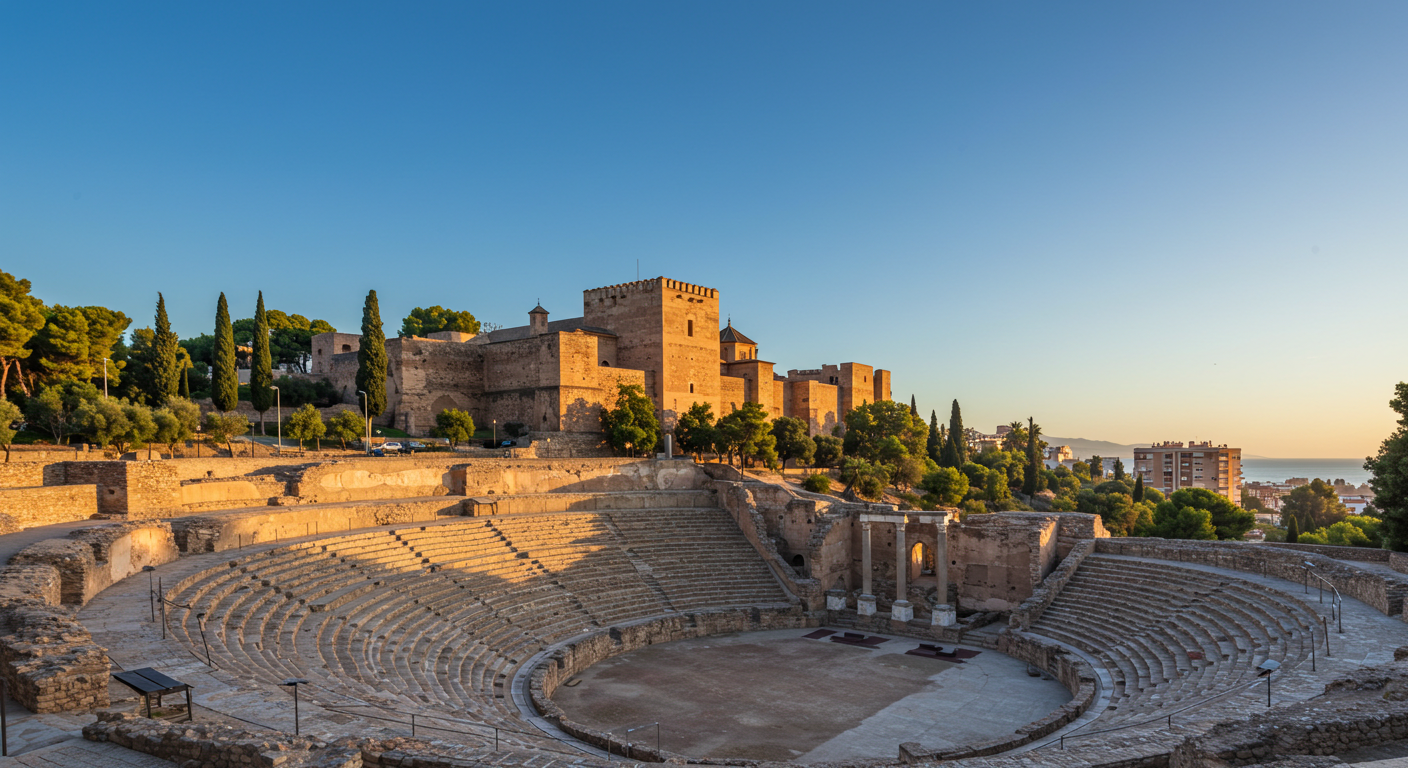
The Barrio del Pópulo is the oldest quarter — medieval walls, Roman theatre ruins half-excavated beneath the street, and a handful of genuinely good tapas bars that haven't been sanded down for tourists. The Arco de los Blancos and Arco de la Rosa are worth finding, though they're easy to miss if you're moving quickly. Slow down.
The area around the Plaza de las Flores is where locals do their morning shopping — the flower stalls give the square its name, and the Mercado Central just behind it is one of the better covered markets in Andalusia. Go before noon. The fish counter alone justifies the detour: urta (a local bream), coquinas (tiny wedge clams), and whatever the Atlantic threw up that morning.
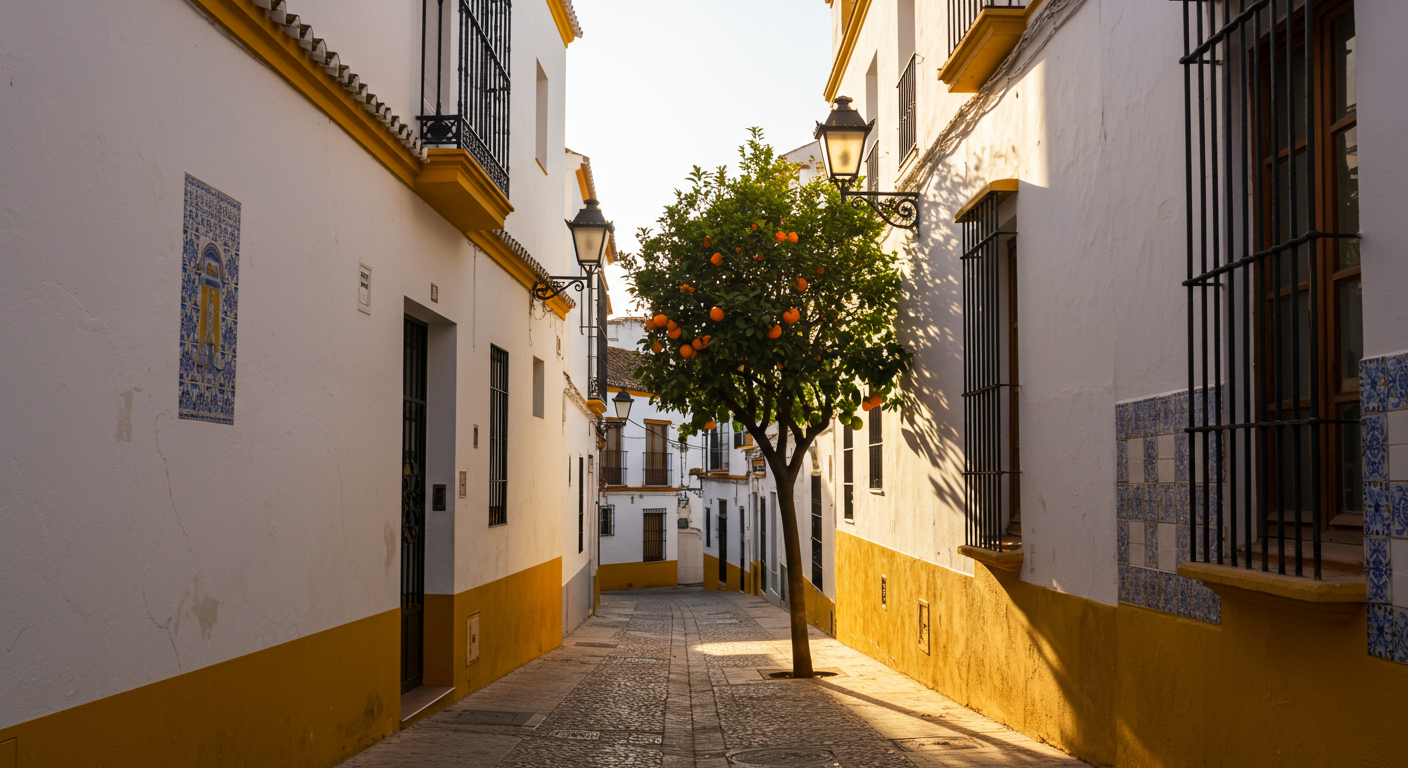
The Barrio de la Viña sits on the western edge of the old town, directly behind Playa de la Caleta. This is the neighbourhood that produces most of Cádiz's carnival characters and considers itself the soul of the city. It probably is. The streets are narrow enough that neighbours can hand things between balconies. On weekend evenings, people spill out of bars onto the pavement in a way that feels unrehearsed.
The beaches: what nobody tells you
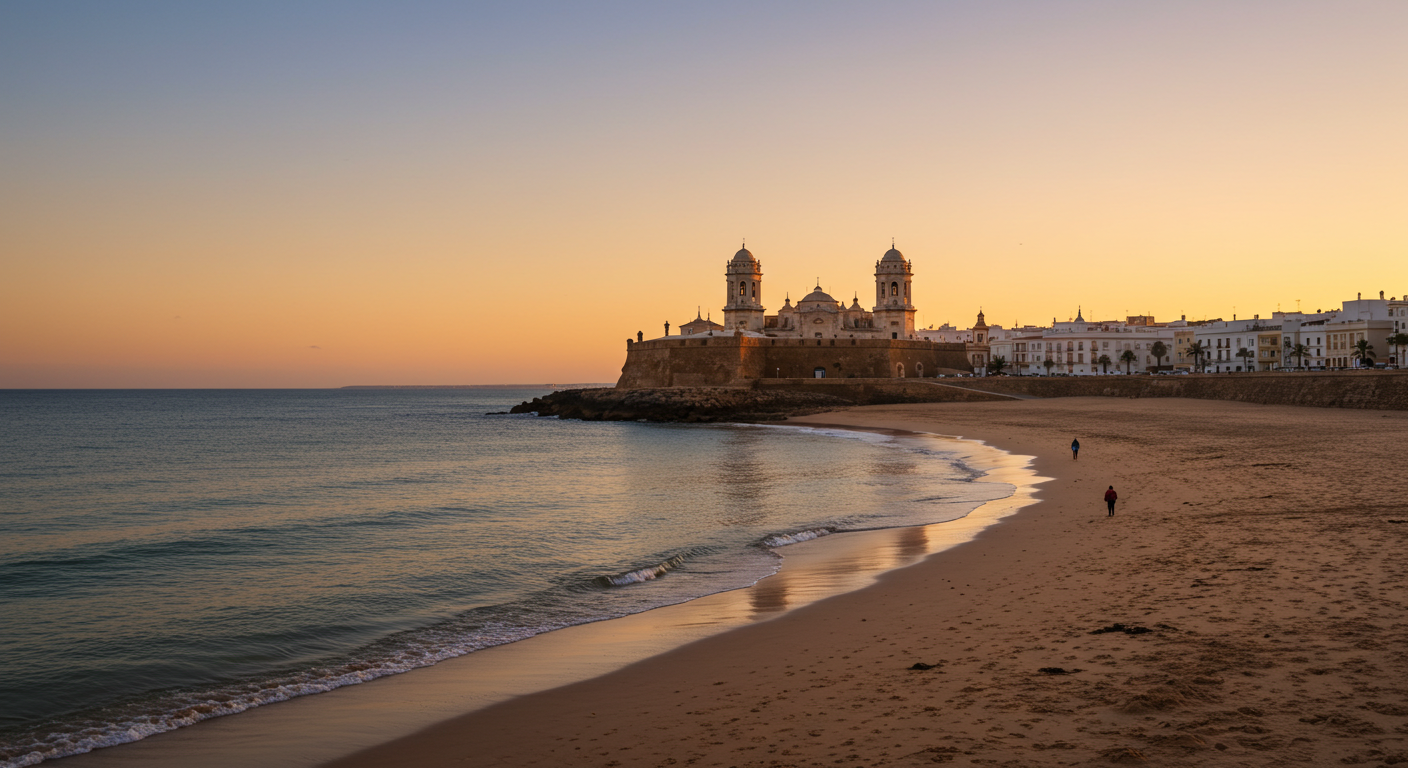
Playa de la Caleta is the iconic one — crescent-shaped, framed by two old sea forts (Castillo de San Sebastián and Castillo de Santa Catalina), and right in the middle of the old town. It's also the smallest and most sheltered. The Atlantic swells don't really reach it. Good for an evening swim, not ideal if you want waves.
For proper Atlantic beach, you want to walk or cycle south along the Paseo Marítimo to Playa de la Victoria. It stretches for about three kilometres, faces the open ocean, and is genuinely excellent — wide, clean, with enough space that even in August it doesn't feel crushed. The water is cooler than the Mediterranean, reliably so. In May or October it's bracing; in July and August it's exactly right.
Skip the chiringuitos closest to the old town — they're overpriced and mediocre. Walk further south along Victoria and the quality improves.
If you have a day spare and a car, or if you're willing to take a local bus, the beaches of the Parque Natural de la Breña y Marismas del Barbate — about an hour south — are on another level entirely. Playa de los Caños de Meca and Playa de Zahara de los Atunes are the ones worth the trip. Zahara in particular is the kind of place that makes you recalibrate what a beach can be.
The carnival: Europe's most anarchic street party
Cádiz Carnival (Carnaval de Cádiz) takes place in February, and it is unlike any other carnival in Spain. It's not the sequins-and-floats spectacle of Tenerife or the corporate polish of some other festivals. It's a city of roughly 115,000 people deciding collectively to spend ten days being very, very funny.
The heart of it is the chirigota — a group of ten to fifteen people who spend months writing satirical songs (usually skewering politicians, celebrities, or local scandals) and then perform them on the streets and in competition at the Gran Teatro Falla. The humour is sharp, fast, and mostly in Andalusian Spanish, which means even fluent Spanish speakers sometimes struggle to keep up. That's fine. The atmosphere carries you regardless.
The streets of the old town are impassable in the best possible way from Thursday to Sunday of the main weekend. Everyone is in costume. The rule seems to be: the more elaborate the group costume, the more serious the intent. Small children and grandmothers participate with equal commitment.
Book accommodation four to six months in advance if you want to come for carnival. Prices roughly double and everything fills. It's worth it once; it's one of those events that recalibrates your sense of what a city can do with its collective personality.
Eating and drinking in Cádiz: the specifics
The local tapa is tortillitas de camarones — a lacy, crispy fritter made with tiny transparent shrimp and chickpea flour, fried in olive oil. They're almost impossible to find done well outside the province. El Faro de Cádiz (Calle San Félix, 15) does a refined version; for the more traditional, rougher-edged fritter, look for the freidurías in La Viña.
Manzanilla (the pale, dry, slightly saline sherry from nearby Sanlúcar de Barrameda) is the drink of Cádiz. Order it cold, in a catavino glass, with anything from the sea. Fino works too, but manzanilla has that particular tang that tastes like the Atlantic smells.
For a long lunch, La Candela (Calle Feduchy) is good and not too expensive — around €25–35 a head with wine, as of 2026. El Aljibe, near the cathedral, is solid. Avoid anything directly facing the Plaza de la Catedral at dinner; that whole strip is tourist-trap pricing for average food.
The cathedral square is worth a drink at dusk, but eat elsewhere.
Practicalities: getting there and getting around
The fastest route from Madrid is to fly to Jerez de la Frontera (about 35 minutes by car or bus from Cádiz) or to Seville and take the train onward. From Seville's Santa Justa station, the Cádiz train takes around 1 hour 40 minutes and costs €10–15 one way on a regional service — check Renfe for current fares. There are also direct high-speed options that are faster but more expensive.
From Málaga or the Costa del Sol, you'll either change in Seville or drive the A-48 along the coast, which is a genuinely lovely road.
Once you're in Cádiz, you don't need a car. The old town is walkable in its entirety. For the longer beach strip, rent a bike — there are several hire places near the Alameda Apodaca, typically around €10–15 a day.
If you're thinking about staying longer
A significant number of people who come to Cádiz for a long weekend start doing the maths on actually moving here. The cost of living is low by Spanish standards — rents in the old town for a decent one-bedroom flat run roughly €600–850 per month as of 2026, though supply is tight and the market has tightened over the past two years. The city has a small but real community of remote workers and long-term expat residents, partly drawn by the quality of life-to-cost ratio.
If you're seriously considering it, the bureaucratic groundwork is the same as anywhere in Spain: NIE, empadronamiento, possibly a bank account. Renting in Spain without a Spanish payslip is a common obstacle for new arrivals — foreign income and guarantors are the usual workarounds. For the residency paperwork side of things, the wait times for NIE appointments in Cádiz province can be lengthy; the real picture on NIE appointment waits is worth reading before you assume you can sort it in a week.
If you're a remote worker weighing up a longer stay, the Spanish Digital Nomad Visa minimum salary requirements are worth checking — the Atlantic coast lifestyle is appealing, but the visa maths need to work first.
A loose three-day structure
Day one: arrive, walk the old town without a map for at least two hours, find the Barrio del Pópulo, have a manzanilla somewhere in La Viña by 7pm.
Day two: Mercado Central in the morning, Playa de la Victoria in the afternoon, the Torre Tavira (the old watchtower with a camera obscura — genuinely worth the €8 entry) before it closes at 6pm.
Day three: day trip to Vejer de la Frontera (40 minutes south by car, a white village on a hill that justifies the detour) or to El Puerto de Santa María across the bay for a long seafood lunch and a look at the González Byass bodegas if that's your thing.
That's three days well spent. Come back in February if you can.
Frequently asked questions
- How many days do you need in Cádiz?
- Three days is the practical minimum for a proper visit — enough time to explore the old town, get a day on the beach, and eat and drink well without rushing. Two days is possible but you'll leave with unfinished business. A full week makes sense if you're considering living there or visiting during Carnival.
- Is Cádiz worth visiting outside of summer?
- Genuinely yes — arguably more so. Spring (April–May) and autumn (September–October) have warm weather without the August crowds, and the city feels more like itself. February's Carnival is one of the best reasons to visit Spain at any time of year. Even winter is mild, typically 14–18°C, and the old town is atmospheric year-round.
- What is Cádiz Carnival actually like?
- It's a ten-day street festival in February built around satirical musical groups (chirigotas) who perform original comedy songs. The whole city participates — everyone in costume, streets packed, performances in bars and on street corners as well as in the Gran Teatro Falla. It's less polished and more genuinely participatory than most Spanish festivals. Book accommodation months in advance.
- Which beach is best in Cádiz?
- For atmosphere and location, Playa de la Caleta in the old town is iconic. For proper Atlantic swimming with space to breathe, Playa de la Victoria (about 20 minutes' walk south) is better. For a genuinely exceptional beach day further afield, Playa de Zahara de los Atunes about an hour south is hard to beat.
- Can you visit Cádiz as a day trip from Seville?
- Yes, and many people do — the train takes around 1 hour 40 minutes each way and runs regularly. But a day trip is a compressed version of a city that rewards lingering. You'll see the cathedral, walk the old town, and have lunch. You won't get the evening atmosphere, the beach, or any real sense of the place. Stay at least one night if you can.
- Is Cádiz a good place to live as a remote worker or digital nomad?
- It has real appeal: low cost of living relative to most of coastal Spain, excellent food, a walkable old town, and beaches within minutes. The downsides are a relatively small international community compared to Málaga or Seville, limited co-working infrastructure, and a tight rental market in the old town. It suits people who are comfortable integrating into Spanish daily life rather than expat bubble living.
- How do I get from Seville to Cádiz?
- The easiest way is by train from Seville Santa Justa to Cádiz — around 1 hour 40 minutes on the regional service, costing roughly €10–15 one way as of 2026. There are also faster high-speed options. Buses run from Plaza de Armas bus station in Seville and take a similar time. Driving is straightforward on the A-4 motorway.