How Many Days to Spend in Ronda and the White Villages
Planning a slow trip through Ronda and Andalucía's pueblos blancos? Here's exactly how many days you need and how to pace it properly.
Three days in Ronda is the answer you'll see repeated everywhere. It's not wrong, exactly — but it misses the point. Ronda alone could take three days. Add Zahara de la Sierra, Grazalema, Setenil de las Bodegas and Arcos de la Frontera, and you're looking at a week minimum if you want to actually stop somewhere rather than photograph it from a moving car.
For a properly slow trip through Ronda and the white villages of Andalucía — the kind where you eat lunch at two in the afternoon and walk a gorge path in the cool of the morning — allow seven to ten days. Five days is possible but leaves you feeling rushed. Anything under four and you're just ticking boxes.
Why the Pueblos Blancos Reward Slowness
The Ruta de los Pueblos Blancos — the loose circuit of whitewashed hill villages strung across the Serranía de Ronda and the Sierra de Grazalema — isn't a theme park. These are working towns. The bar in Setenil de las Bodegas where you'll drink a cold Cruzcampo at noon is the same bar the old men play dominoes in at six in the evening. That's the experience. Rush it and you get views; slow down and you get a place.
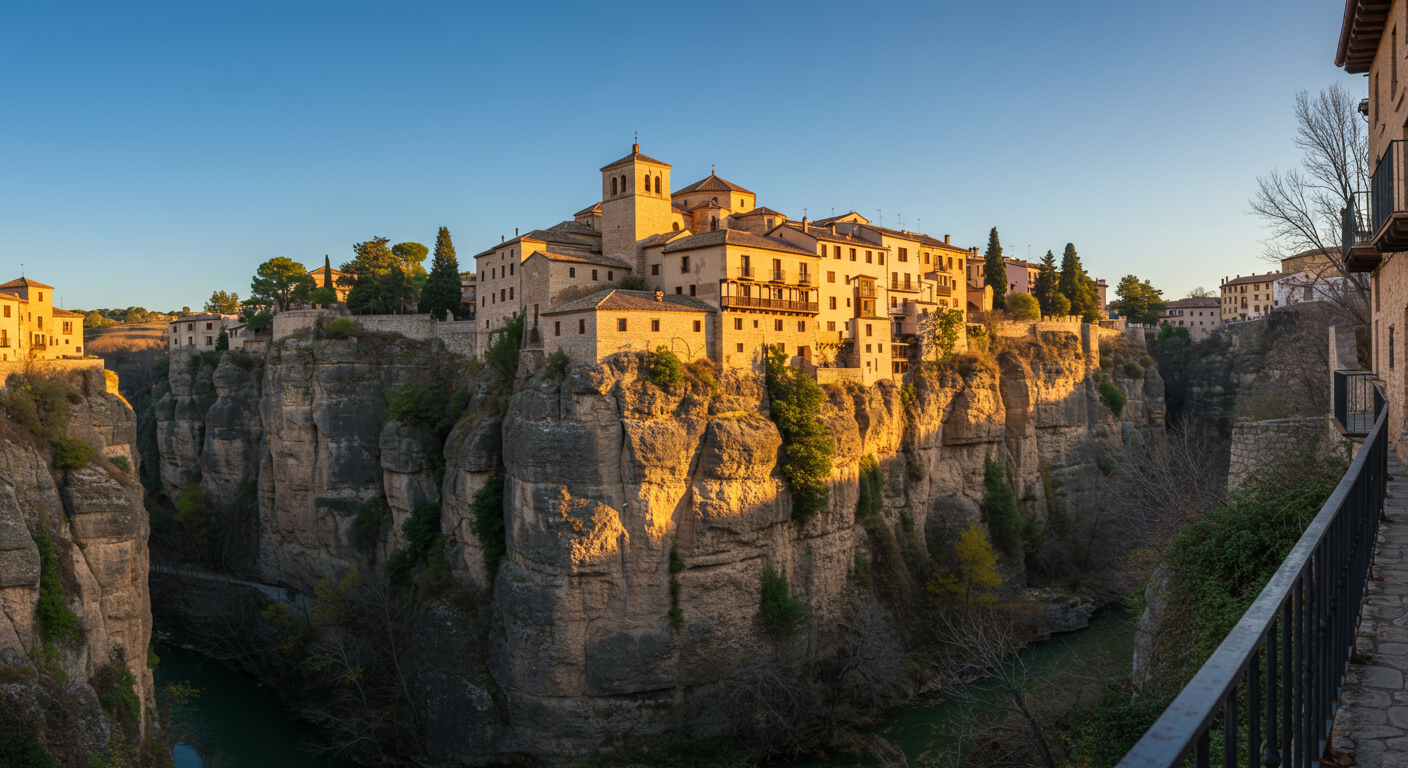
The villages also have genuinely different characters. Zahara is dramatic and small, perched above a turquoise reservoir. Grazalema is a proper mountain town with serious hiking around it and the wettest microclimate in Spain (relevant: pack a layer even in July). Setenil is the one built into the rock face, with cave-bars that feel genuinely prehistoric. Olvera has a castle that's more impressive than half the ones charging €12 entry elsewhere. None of them are interchangeable.
A Realistic Day-by-Day Framework
This isn't a rigid itinerary — Andalucía doesn't really do rigid — but here's a framework that works.
Days 1–3: Ronda
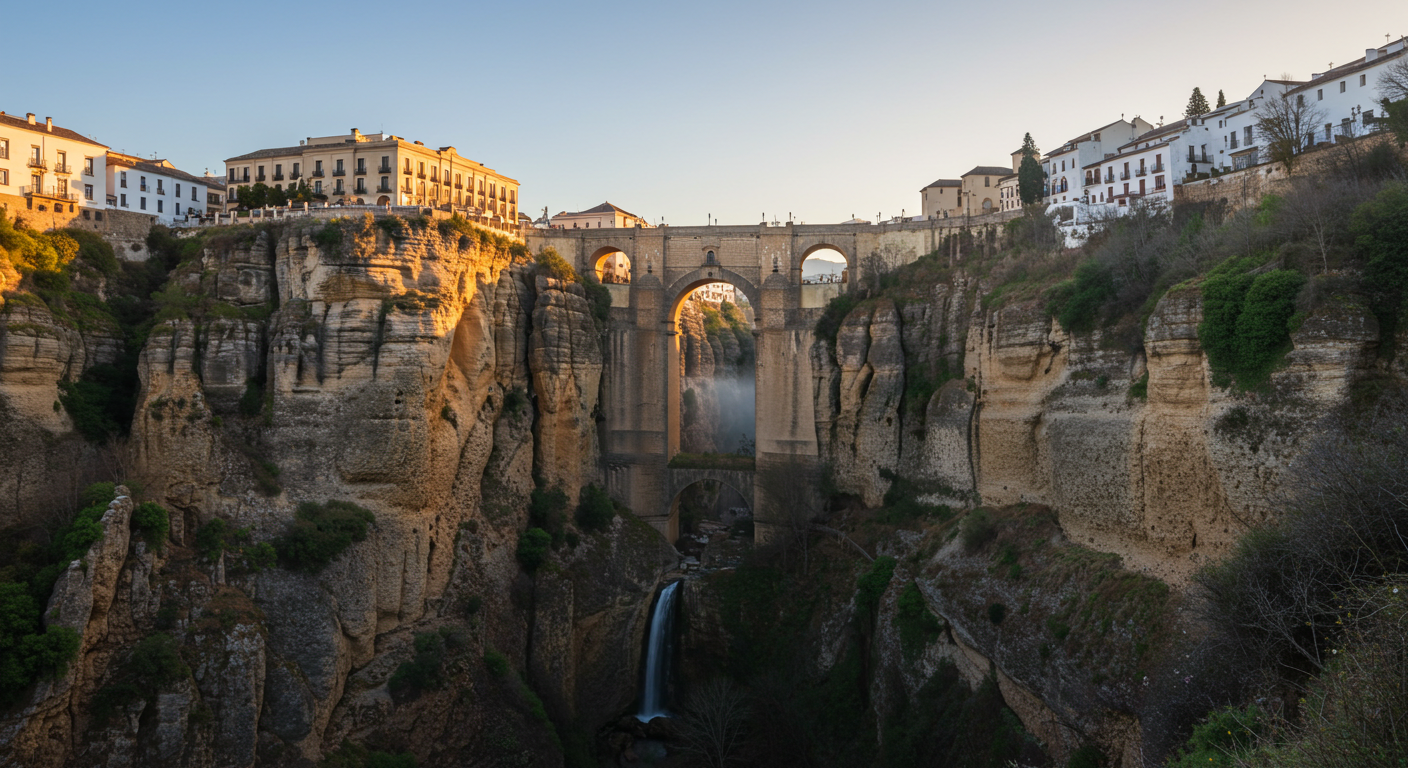
Base yourself in Ronda for at least two nights, ideally three. The town sits on a plateau split by the Tajo gorge, and the Puente Nuevo bridge across it is as dramatic in person as it looks in photographs. Get there early morning before the day-trip coaches arrive from the coast — they come up from Marbella and Málaga in numbers between 10am and 2pm.
The old town (La Ciudad) side of the bridge is where you want to wander: the Arab baths down by the river are undervisited and cheap (around €4 entry as of 2026), the Palacio de Mondragón has a good archaeology section, and the mirador behind the parador gives you the gorge view without the crowds. The bullring — Plaza de Toros de Ronda, one of the oldest in Spain — is worth the €8 entry if you have any interest in the history of the corrida; it's beautiful as a piece of architecture regardless of how you feel about bullfighting.
For food in Ronda: Restaurante Tragabuches on Calle José Aparicio has been the serious choice for years. Bodega San Francisco on Calle Ruedo Alameda is better for a long, cheap lunch — rabo de toro (oxtail stew) for around €12, house wine for €2 a glass. Skip the restaurants right on the Puente Nuevo; they're not terrible but they're coasting on the view.
Day three in Ronda should include the walk down into the gorge itself. The Camino de los Molinos path from near the Puerta de Almocábar drops you to the old mills at the bottom — about 45 minutes down, longer back up, worth every step.
Day 4: Setenil de las Bodegas
Thirty minutes north of Ronda by car. Setenil is genuinely unlike anywhere else in Spain — the main street runs underneath an overhanging rock face, with houses and bars built directly into the cliff. It looks like a film set; it isn't. Go on a weekday if you can. Lunch here: Casa Virrey on Calle Villa does decent raciones and the setting (literally under a rock) is hard to beat.
You can combine Setenil with Olvera the same day — another 20 minutes north — and be back in Ronda by early evening.
Day 5: Zahara de la Sierra and Grazalema
These two sit close together in the Sierra de Grazalema natural park. Zahara takes about an hour to explore properly: the castle at the top, the reservoir below, the main street with its Mudéjar church. Then drive the CA-531 over the Puerto de las Palomas pass to Grazalema — it's a spectacular road, particularly in spring when the wildflowers are out.
Grazalema has good walking. The Pinsapar trail through the Spanish fir forest requires a permit (free, booked through the Junta de Andalucía website — get it weeks in advance in summer), but the paths around the village itself are open and excellent. Stay the night here if you can: Hotel Puerta de la Villa is small, well-run, and around €80–95 for a double as of 2026.
Days 6–7: Arcos de la Frontera
Arcos is the western end of the white village circuit and arguably the most dramatically sited of all of them — a long ridge of a town above the Guadalete river, the old quarter so narrow in places that cars genuinely cannot pass. It's also larger than the others and has more going on: proper restaurants, a few decent shops, a parador in a converted palace that's worth the money if you want one splurge night.
From Arcos you're an hour from Jerez de la Frontera, which is worth a half-day for the sherry bodegas alone. Bodegas Tradición is the serious one; González Byass (Tío Pepe) is the famous one. Both are worth it but book ahead.
Getting Around Without a Car
Honestly, this circuit is very difficult without a car. There are buses between some of the villages — Comes and Damas operate routes connecting Ronda, Arcos, and the coast — but they run infrequently, don't always connect the smaller villages at all, and timetables shift seasonally. If you're serious about the pueblos blancos, hire a car. Ronda has a small Hertz and Europcar presence; alternatively pick up in Málaga and drive up.
Ronda itself is reachable by train from Málaga (about 2 hours, a genuinely lovely journey through the mountains, run by Renfe — around €12–18 as of 2026) and from Algeciras. The train is fine for getting to Ronda; it doesn't help you much once you're there.
When to Go
April, May, and early June are the best months. The hillsides are green, temperatures are manageable (20–26°C in the valleys), and the villages aren't overrun. September and October are also excellent — still warm, noticeably quieter than August, and the light in the late afternoon is extraordinary.
July and August: possible, but hot. Genuinely hot — the Guadalquivir basin and the lower sierra villages can hit 38–40°C in July. The coast gets crowded and the roads are busy. If you go in summer, stay high — Grazalema at 800 metres above sea level is always cooler than the lowlands.
Winter is underrated. The villages are empty, the air is cold and clear, and the sierra gets occasional snow on the higher peaks. Plenty of bars and restaurants close or reduce hours between December and February, but the ones that stay open are full of locals and far better for it.
Practical Notes for Longer Stays
If you're thinking about basing yourself in Ronda for a month rather than a week — it's a growing choice for remote workers and slow travellers — the practical side is manageable. Long-term rental options exist, though the market is smaller than in Málaga or Seville. Renting in Spain without a Spanish payslip is the challenge most foreign arrivals run into, and Ronda is no different from anywhere else in that respect.
For anyone considering a longer move to Andalucía, the administrative paperwork starts early. Getting your NIE sorted is the first real task, and wait times in the province of Málaga (which covers Ronda) have been running long — plan ahead. If you're thinking about working remotely from here, the Spanish Digital Nomad Visa is worth understanding before you arrive.
The Bit Nobody Mentions
The villages on the tourist circuit — Ronda, Zahara, Grazalema, Setenil — are genuinely wonderful. But there are smaller villages in the sierra that barely appear on itineraries: Benaoján, Montejaque, Jimena de la Frontera, Atajate. Some have almost no tourist infrastructure. That's not a problem; it's the point. Benaoján has a train station on the Ronda–Algeciras line, a cave system (Cueva de la Pileta, with genuine Palaeolithic paintings, one of the best in Spain), and a village bar where lunch costs €8 with wine. Nobody will be taking photographs of you eating it.
Slow travel in Andalucía isn't a method; it's a pace. The region will meet you halfway if you stop rushing.
Frequently asked questions
- How many days do you need in Ronda and the white villages?
- For a proper slow trip, allow seven to ten days. Ronda alone is worth three days; adding Setenil, Zahara, Grazalema and Arcos de la Frontera fills another four to five. Five days is the minimum if you want to feel like you've actually been somewhere rather than just driven through it.
- Can you visit the white villages without a car?
- It's very difficult. Buses connect some villages but run infrequently and often don't serve the smaller pueblos at all. Ronda is reachable by train from Málaga (around 2 hours), but exploring the surrounding villages really requires a hire car.
- What is the best time of year to visit Ronda and the pueblos blancos?
- April, May, early June, and September–October are the sweet spots. Spring brings green hills and wildflowers; autumn is warm and quiet. July and August are very hot (often 38°C+) and busy. Winter is peaceful and underrated if you don't mind some places being closed.
- Is Ronda worth visiting on a day trip from the Costa del Sol?
- Yes, but it's a shame. The coaches come up from Marbella and Málaga between 10am and 2pm and the town gets crowded. If you can stay at least one night, the town in the early morning and evening is a completely different experience.
- Which white village is best for hiking?
- Grazalema is the serious hiking base — it sits inside a natural park with marked trails and the famous Pinsapar route through ancient Spanish fir forest. The Pinsapar requires a free permit booked in advance. Ronda also has good walking, particularly the gorge path down to the old mills.
- How much does it cost to visit Ronda and the white villages?
- It's relatively affordable by Spanish standards. A mid-range hotel in Ronda runs €70–120 per night (2026). Lunch in a local bar with wine costs €10–15 per person. Entry to sights is modest — the Arab baths around €4, the bullring around €8. Grazalema accommodation is slightly cheaper, around €80–95 for a good double.
- Can I base myself in Ronda for a longer stay or remote work?
- Yes, though the rental market is smaller than in Málaga or Seville. The town has decent internet infrastructure in most accommodation and is quiet enough to work well. You'll need to sort Spanish bureaucracy like any other long-term stay — NIE, empadronamiento, and so on. Wait times for appointments in the Málaga province can be long, so start early.