Nit de Sant Joan in Palma: The City Bonfire and Correfoc at Parc de la Mar
Tonight Palma celebrates midsummer with the official Sant Joan bonfire and a fire-running Correfoc at Parc de la Mar. Where to go and what to expect.
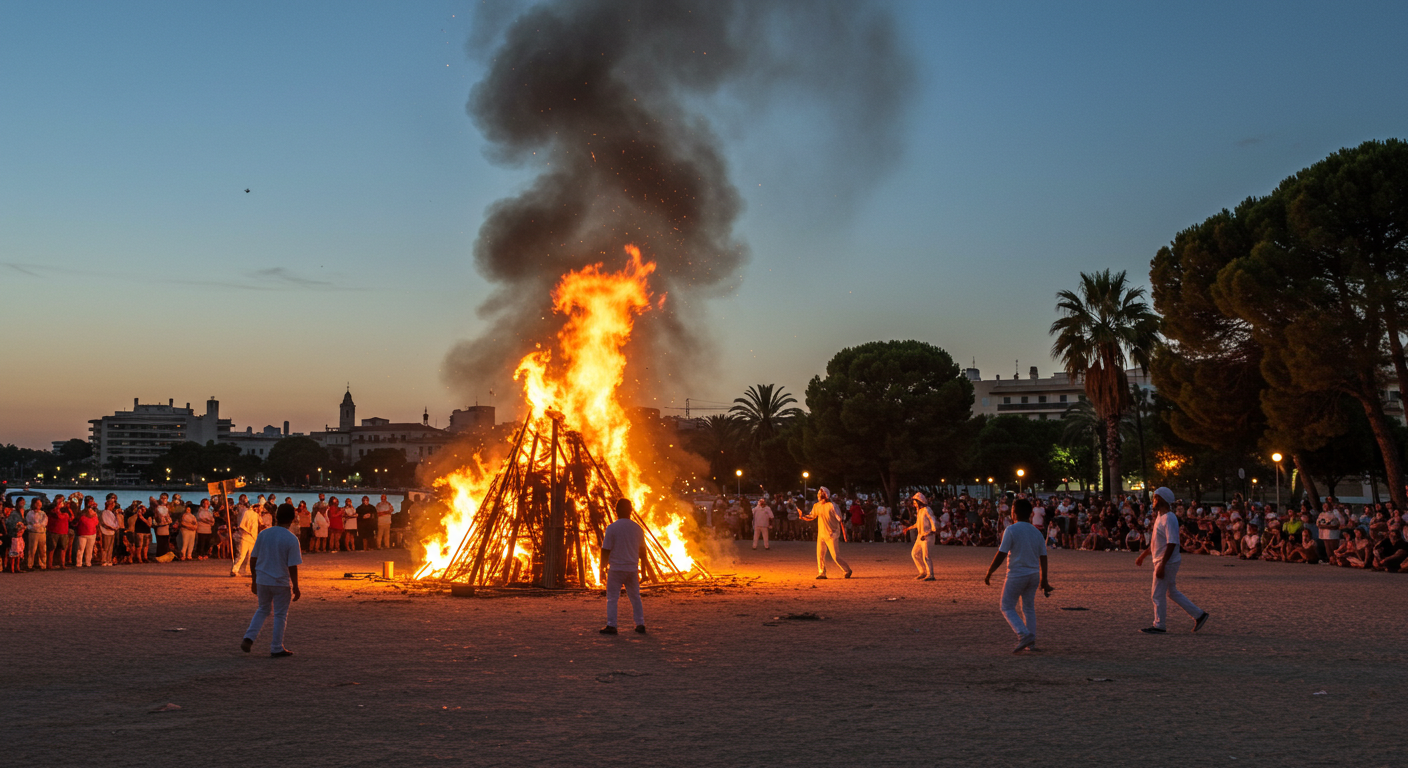
The shortest night of the year is Palma's loudest. On 23 June, the eve of Sant Joan, the city lights its official bonfire and runs a Correfoc — a parade of spark-throwing "devils" — through Parc de la Mar, the waterfront park beneath the Cathedral. If you want the heart of it tonight: get to Parc de la Mar after dark for the foguero and the fire-run, then spill onto the beaches around midnight, where Mallorcans light their own fires, jump the flames for luck and run into the sea.
It's the best night of the Mallorcan summer, and most of the people around you will be locals, not tourists. Here's how the whole night works — where to be, what to wear, what to eat and how to get home — so you can do it properly rather than wander around missing the good bits.
What Nit de Sant Joan actually is
Sant Joan (San Juan in Castilian) marks midsummer: the summer solstice and the eve of St John's day on 24 June. Long before it was attached to a saint, this was a solstice fire festival — the year's turning point, when the nights start drawing in again. The Church folded it into the feast of John the Baptist, but the old logic survived intact: fire and water, the two elements that cleanse and renew. You burn the past year's bad luck in the flames, then wash off whatever's left in the sea at midnight.
That's why the celebration has two halves that don't feel like the same event. The first is loud, urban and a bit dangerous — the bonfire and the Correfoc in the city. The second is quieter and stranger — thousands of people sitting around small fires on the beach, waiting for midnight. Do both and you'll understand the night.
The official bonfire and the Correfoc at Parc de la Mar
Palma's town hall lights the foguero (the official bonfire) and stages the Correfoc at Parc de la Mar, the long park between La Seu — the Cathedral — and the bay. The setting does half the work: sparks rising against a floodlit Gothic cathedral, the harbour behind you.
A correfoc is a Catalan-Balearic "fire run". Troupes of dimonis (devils), often a local colla, move through the crowd with drums hammering a relentless beat, spinning hand-held wheels that throw showers of sparks, and firing pyrotechnics rigged on poles and frames overhead. Sometimes there's a bèstia — a dragon or beast figure — breathing fire at the front. It is genuinely loud, genuinely smoky, and the drums get into your chest.
There are two ways to take it. Stand back along the edges and watch — what most families do, and you'll still feel the heat and the noise. Or get into the middle, under the sparks, the traditional and slightly reckless way Mallorcans do it. The crowd presses in, the devils weave through, and the sparks rain down on everyone close enough. It's exhilarating and a little unhinged.
Timing varies year to year — always check the Ajuntament de Palma programme for the exact start — but as a rule the bonfire and Correfoc are an evening event, often kicking off around 21:00–22:00. Get there early if you want a position near the front; by the time it starts, the park is packed.
How a typical night unfolds
You don't need a rigid plan, but the rhythm tends to go like this:
- Early evening (20:00–21:00): people eat first — a quick dinner in the old town, or a slice of coca grabbed from a bakery — and drift towards Parc de la Mar.
- Around 21:00–22:30: the foguero is lit, there's live music on a stage somewhere, and the Correfoc runs through the park. This is the spectacle.
- Late (23:00 onwards): the crowd thins from the centre and heads for the beaches, carrying bags, towels and drinks.
- Midnight: the fires on the sand, the jumping, and the swim. The beach stays alive well into the early hours.
- Dawn: the diehards watch the sun come up. Sant Joan technically is the 24th, so this is the actual saint's day beginning.
Where to watch, and where to stand
If you're nervous about the sparks, watch the Correfoc from the raised edges of Parc de la Mar or from the Cathedral side — you get the whole picture, the fire against La Seu, without being in the shower. Have a vantage point in mind, because once it's busy you won't be moving far.
If you want to be in it, work your way towards the devils early and accept that you'll come out smelling of smoke. Keep an exit in your head; the crowd can be tight.
What to wear (this matters)
The sparks are real and they land on people. Dress for it:
- Natural fibres only — cotton, denim, wool. Synthetics melt and stick; this isn't a fashion note, it's the actual rule everyone follows.
- Cover your head with a hat or hood, and keep a high neckline. A cotton scarf over the nose and mouth helps with the smoke.
- Closed shoes — no sandals or flip-flops in the fire zone.
- Long sleeves and long trousers if you're going into the middle.
- Leave the good camera and loose clothing at home. Bag your phone; screens get pitted by sparks.
None of this is needed if you're watching from the edge — but if you're going under the fire, take it seriously. People do get small burns and singed clothes every year, and that's considered part of it.
The beaches at midnight
The second half of Sant Joan is on the sand. Palmesanos head to the city beaches — Can Pere Antoni (the closest, a short walk east of the centre along the seafront), Ciutat Jardí a bit further out, and Cala Major to the west — with small bonfires, food, speakers and crates of drinks. It's part picnic, part ritual, part all-night party.
The traditions you'll see everyone doing:
- Jump the bonfire — three times (some say seven), once the flames have died down enough, to burn away bad luck and bring good fortune.
- Jump the seven waves at midnight, or simply run into the sea, to wash off the old year. Plenty of people swim in the dark; the water is warm enough.
- Write down what you want to leave behind and burn the paper, or write a wish and throw it into the fire or the sea. Different families do it differently.
It's warm — Palma nights in late June sit around 20–23°C — so the midnight swim is a genuine pleasure, not a dare. Bring a towel and something dry to change into.
What to eat and drink
The taste of the night is coca de Sant Joan — in the Catalan tradition a sweet, brioche-like flatbread topped with candied fruit and pine nuts, though Mallorca leans just as happily on its savoury coca amb verdura (with vegetables, no cheese, the classic Mallorcan version). Buy it from a forn (bakery) earlier in the day; the good ones sell out before evening.
For a drink, this is the night for hierbas (herbes de Mallorca) — the island's anise-and-herb liqueur, drunk seca (dry) or dolça (sweet), usually after food. Otherwise it's beer, wine and whatever the group beside you on the beach is pouring.
If you want dinner before the fire, eat early and in the old town — kitchens and streets get chaotic later, and many places near the Cathedral will be slammed.
Beyond Palma: Sant Joan around the islands
Sant Joan is celebrated all over Mallorca, not just the capital — most coastal towns and many villages light their own foguerons and head to the local beach. If you're island-hopping, the most famous Balearic Sant Joan of all is in Ciutadella, on Menorca: the Festes de Sant Joan, a centuries-old festival built around horses, where riders rear their mounts through dense crowds in the old streets. It's a completely different spectacle from Palma's fire-run, and it falls on the same 23–24 June. Worth knowing if you're in the region.
Getting there and getting home
- Walk. Central streets close around Parc de la Mar and there's nowhere to park. From the old town it's ten minutes on foot, and the city beaches are walkable along the seafront.
- Public transport runs but gets jammed; EMT buses are your friend for the beaches further out, though the late-night service is limited — check the last departures before you commit, or plan to walk back.
- Taxis are scarce and slow on the night — don't count on one at 2am.
- Bring cash for the stalls and beach vendors.
A few honest notes
The beaches get messy, and there are rules: some years the council restricts or bans open fires on certain beaches for safety and environmental reasons, so check before you build one. Take your rubbish with you — the morning-after photos of the beach are not the island's proudest moment. And keep an eye on kids near the fires; the bonfire and Correfoc are family events, but the centre of the fire-run is no place for small children — keep them on the perimeter.
If you're in Palma tonight, you don't need a plan beyond this: Parc de la Mar for the fire, the beach for the water, a coca somewhere in between, and bed at dawn if you can manage it. Bona revetla de Sant Joan.
Frequently asked questions
- When is Nit de Sant Joan in Palma?
- The night of 23 June into 24 June, Sant Joan's day. The official bonfire and the Correfoc take place on the evening of the 23rd, and the beach celebrations run through midnight into the early hours.
- What time does the Correfoc start?
- It varies year to year, but the bonfire and Correfoc are an evening event, usually starting somewhere around 21:00–22:00. Check the Ajuntament de Palma programme for the exact time and arrive early for a good spot.
- Where is the Correfoc held?
- At Parc de la Mar, the waterfront park between Palma Cathedral (La Seu) and the bay.
- What should I wear to the Correfoc?
- Old clothes in natural fibres only — cotton, denim or wool, never synthetic — with your head covered, a high neckline and closed shoes. The dimonis throw real sparks. None of this is needed if you watch from the edge.
- Which beaches do people go to?
- Can Pere Antoni is closest to the centre, with Ciutat Jardí further east and Cala Major to the west. People gather around small bonfires for the midnight swim.
- Can you swim, and is the sea warm?
- Yes. Palma nights in late June are around 20–23°C and the sea is warm enough for a comfortable midnight swim. Bring a towel and dry clothes.
- Is it free?
- Yes. The bonfire, the Correfoc and the beach celebrations are all free; you only pay for your own food and drink.
- What do people eat and drink?
- Coca de Sant Joan (a sweet brioche-like flatbread) or the savoury Mallorcan coca amb verdura, from local bakeries, often with hierbas de Mallorca, the island's anise-and-herb liqueur.
- Is it suitable for children?
- The bonfire, music and beach are family events, but keep small children on the perimeter of the Correfoc — the centre, where the sparks fall, is not for them.