A Slow Guide to San Sebastián: La Concha, Pintxos & the Old Town
A slow travel guide to San Sebastián: where to eat pintxos in the old town, when to walk La Concha, and how to spend three unhurried days in the Basque Country.
Three days in San Sebastián feels like the right amount — and also nowhere near enough. I've been back four times now, and I still haven't worked out whether I love it most at 8am, when the old town is quiet and the fishmongers on Calle Pescadería are hosing down their stalls, or at 11pm, when the pintxos bars are three-deep and someone is always arguing cheerfully about which house has the best gilda.
If you're planning a slow travel visit to San Sebastián — meaning you want to actually absorb the place rather than sprint between Instagram coordinates — the honest answer is: you need at minimum two full days, three is better, and you should arrive with no fixed lunch reservations and a very flexible dinner plan. The city rewards wandering far more than scheduling.
What Makes San Sebastián Work for Slow Travel
Donostia (the Basque name, used interchangeably and proudly) is small enough to walk almost everywhere but dense enough that every walk turns up something new. The old town — La Parte Vieja — sits on a small peninsula between the mouth of the Urumea river and Monte Urgull. It takes about twelve minutes to cross it end to end, but you will never actually manage that in twelve minutes, because something will stop you. A bar. A bakery. A conversation.
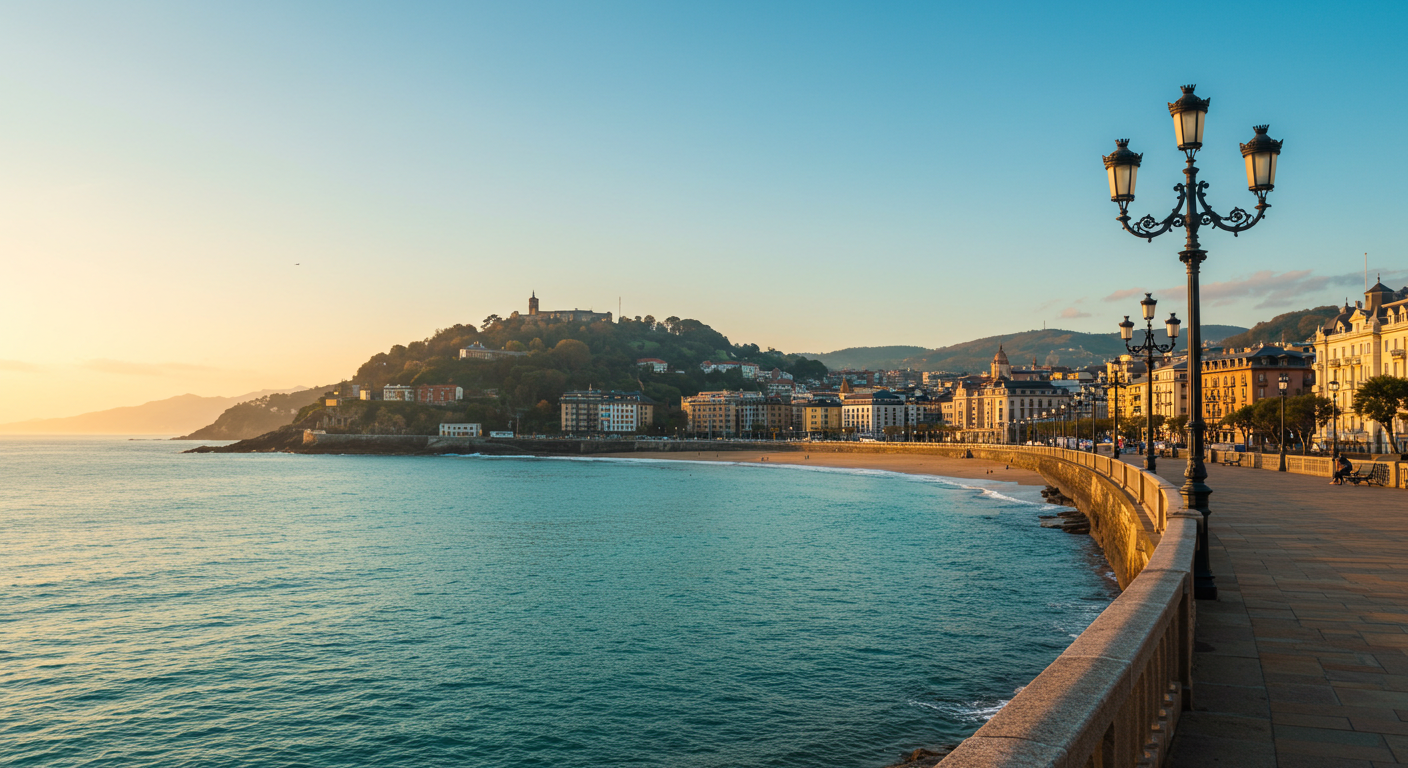
The city is also genuinely walkable to its beaches and hills. La Concha beach is a ten-minute stroll from the old town along the seafront. Monte Igueldo — the hill at the western end of the bay — is reachable by a rattling funicular that's been running since 1912 and costs around €4 return as of 2026. Monte Urgull, directly above the old town, is free and takes about 25 minutes to climb. Do it. The views from the castle at the top, early morning before the tour groups arrive, are the kind of thing you'll describe badly to people for years.
La Concha: When to Go and What to Expect
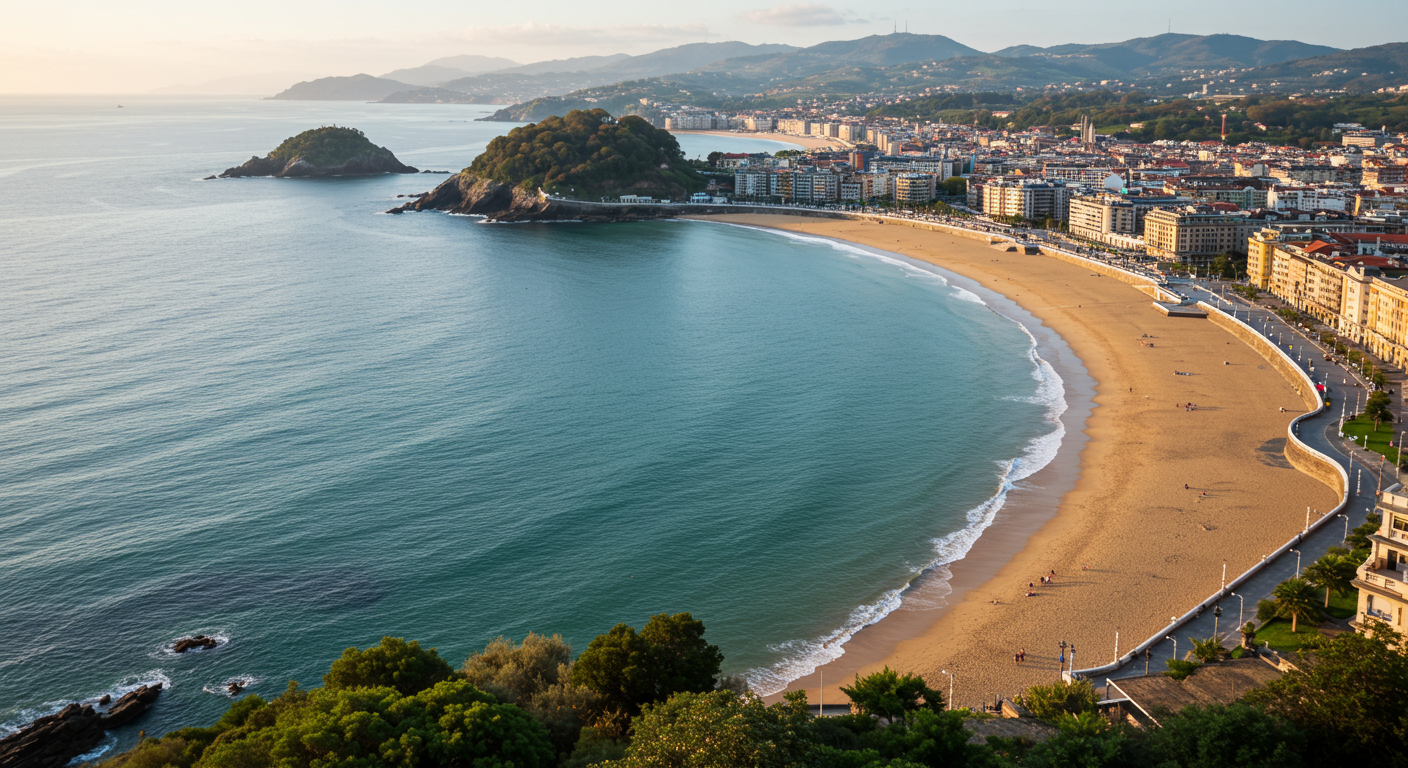
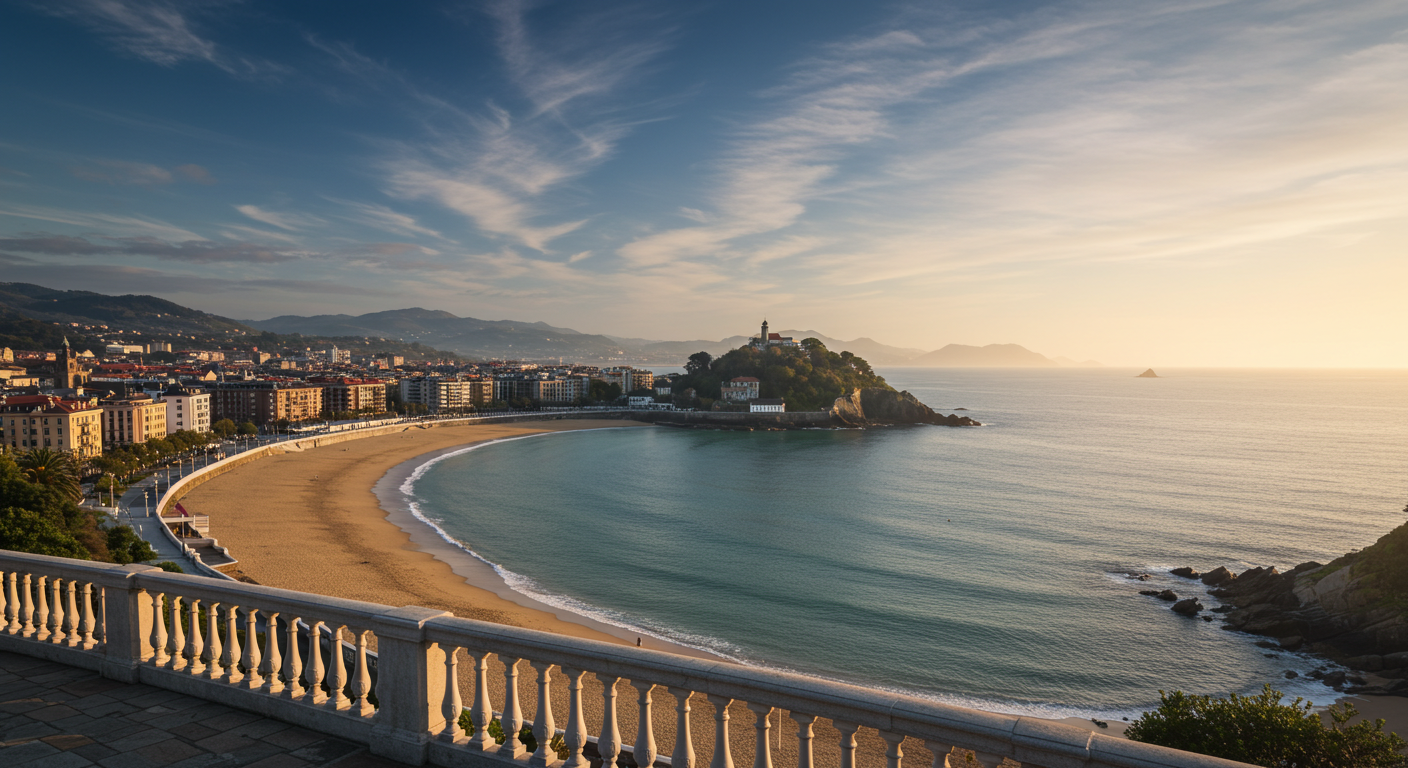
La Concha is legitimately one of the finest urban beaches in Europe. That's not hyperbole — it's a near-perfect crescent of fine sand with calm water (the bay is sheltered), a Victorian-era seafront promenade, and mountains behind it. The problem, which nobody in a travel article will tell you plainly, is that in July and August it is absolutely rammed. Packed in a way that makes you question your life choices.
If you're doing slow travel and have any flexibility, come in May, June, or September. The water is still swimmable — around 18–20°C in September — the crowds thin dramatically, and you can actually use the promenade at a pace slower than a shuffle. October is pushing it for swimming but the light is extraordinary and the esplanade is practically yours.
Early morning at La Concha in any season is its own reward. By 7:30am the regulars are already in the water — older Basques doing their morning swim with the kind of quiet dedication that makes you feel lazy — and the café at the Miramar end is open for coffee. Sit there. Watch the bay. This is what slow travel is for.
The promenade itself runs the full length of the beach and continues around to Ondarreta (the smaller, slightly less crowded beach to the west, which locals tend to prefer). At the far end of Ondarreta, El Peine del Viento — the Wind Comb sculpture by Eduardo Chillida — is set into the rocks. Go at high tide if you can. The spray and the noise are part of it.
The Old Town: How to Actually Navigate La Parte Vieja
La Parte Vieja is where you'll spend most of your time, and the pintxos crawl is its central ritual. But a word of caution before we get into the bars: don't try to do it at 7pm on a Saturday in August. The streets become genuinely difficult to move through. The sweet spot — weekday evenings, or weekend lunchtimes — gives you the energy of the place without the crush.
The main pintxos streets are Calle 31 de Agosto, Calle Fermín Calbetón, and the squares around them. Most bars put their pintxos out on the bar top from around 12:30–3:30pm and again from 7pm onwards. The etiquette is simple: walk in, look at what's on the bar, order a drink (txakoli, the local sharp white wine, or a zurito — a small Basque beer), point at what you want, eat it standing up. Pay when you leave. Tip if you feel like it; it's not obligatory but it's noticed.
The Bars Worth Your Time
A Fuego Negro on Calle 31 de Agosto is doing genuinely creative things — small, modern pintxos, a dark interior, usually a queue. Worth it. Bar Zeruko on Calle Pescadería does a theatrical truffle pintxo under a glass dome that's a bit silly but delicious. Bar Txepetxa, also on Calle Pescadería, is almost entirely dedicated to anchovies in various combinations. If you like anchovies — and you should, the Cantabrian ones are different from what you've had before — go here first.
Skip the bars on the main tourist drag around Plaza de la Constitución that have laminated English menus displayed outside. They're not terrible, exactly, but they're not what you came for.
For a proper sit-down dinner, the old town has plenty of options, but consider eating in the Gros neighbourhood instead — across the Zurriola bridge, slightly younger and less tourist-dense. Restaurante Bodegón Alejandro does good traditional Basque cooking at prices that feel almost reasonable given the city's reputation for being expensive.
The Neighbourhood Beyond the Old Town
Most visitors barely leave La Parte Vieja and La Concha, which means the rest of the city is refreshingly calm. The Gros neighbourhood, east of the river, has its own pintxos scene (Calle Zabaleta is a good starting point) and Zurriola beach — which faces the open Atlantic rather than the sheltered bay, so the waves are real. Surfers use it year-round. In summer it gets busy but never quite as hectic as La Concha.
The Amara neighbourhood is mostly residential and has almost no tourists, which is itself a reason to wander through it. The market in the Bretxa building, just on the edge of the old town, is worth an hour on a weekday morning — fish, vegetables, Basque cheeses, and a basement supermarket that's useful if you're self-catering.
Eating and Drinking: The Practical Reality
San Sebastián is not a cheap city. Budget roughly €25–35 per person for a proper pintxos crawl with drinks, more if you're doing a sit-down dinner anywhere decent. The Michelin-starred restaurants (there are more per capita here than almost anywhere in the world) are a different conversation entirely — Arzak, Mugaritz, Akelarre — with menus starting at €200+ and booking waits of months. They're exceptional if that's your thing, but they're not what makes San Sebastián special for slow travel. What makes it special is the democracy of the pintxos bar: everyone stands at the same counter.
Txakoli is the drink to know. It's poured from a height to aerate it — you'll see bartenders holding the bottle above their head — and it's dry, slightly fizzy, and low in alcohol (around 11%). It costs around €2–3 a glass. Drink it cold and drink it with anchovies.
Getting There and Getting Around
San Sebastián has no airport worth mentioning for most travellers — the local one handles a handful of routes. The realistic options are flying into Bilbao (about an hour by bus — the ALSA service is frequent and costs around €17 each way) or Biarritz in France (30 minutes, if you can get a cheap flight there). From Madrid, the train takes about five and a half hours on the slower routes; there's no high-speed AVE connection yet, though it's been promised for years.
Once you're there, you don't need transport. The city is built for walking. The only exception is if you want to visit the cider houses (sagardotegiak) in the hills outside the city — you'll need a taxi or a local with a car.
A Word for Anyone Thinking of Staying Longer
Some people come for a weekend and start looking up flat prices. It happens. The Basque Country is one of Spain's wealthiest regions and rents reflect that — a one-bedroom in San Sebastián will cost you €900–1,200/month in a decent central location as of 2026, more in the old town. If you're considering making a longer stay of it as a remote worker or relocating to Spain more broadly, you'll want to get your paperwork sorted: residency, banking, the usual maze. Renting in Spain without a Spanish payslip is its own challenge, and if you're coming from outside the EU, the Spanish Digital Nomad Visa is worth understanding before you commit. Getting empadronamiento — the local registration that unlocks access to healthcare and other services — has its own complications too.
For those just visiting, none of that matters. What matters is that you find a bar stool in the old town sometime around 8pm on a weekday, order a txakoli and a gilda, and resist the urge to check your phone for twenty minutes.
San Sebastián will do the rest.
Frequently asked questions
- How many days do you actually need in San Sebastián for a slow travel trip?
- Two full days is the minimum to feel the rhythm of the place — one for the old town and pintxos crawl, one for La Concha, Monte Urgull and Gros. Three days is more comfortable and lets you take a half-day trip to the cider houses or the coast. Four days starts to feel like you're living there, which isn't a bad thing.
- When is the best time to visit San Sebastián to avoid crowds?
- May, June and September are the sweet spot: warm enough to swim at La Concha (water temperatures 18–20°C in September), far fewer tourists, and the pintxos bars are actually navigable. July and August are peak season — the city is heaving, especially at weekends. October is quiet and beautiful but the sea is getting cold.
- What is a gilda and where should I eat one in San Sebastián?
- A gilda is the oldest pintxo in San Sebastián: a skewer of a green olive, a guindilla pepper, and a Cantabrian anchovy. It's named after Rita Hayworth's character in the 1946 film because it was considered a bit spicy and provocative. Bar Txepetxa on Calle Pescadería is the classic spot for anchovy-based pintxos. Most traditional bars in La Parte Vieja serve a version of it.
- Is La Concha beach safe for swimming?
- Yes — La Concha is one of the safest urban beaches in Spain for swimming. The bay is sheltered, the water is calm, and there are lifeguards during summer months. The main season runs roughly June to September. Water temperatures peak around 21–22°C in August. Check the flag system on the day: green means safe, yellow means caution, red means no swimming.
- How do pintxos bars work — is there a set menu or a bill at the end?
- There's no set menu and usually no bill until you ask for one. You walk in, look at what's on the bar (the cold pintxos laid out) or ask what's being cooked in the kitchen, order a drink, point at what you want, eat standing up, then tell the bartender what you had when you're ready to pay. Honesty is assumed. Prices are typically €2–4 per pintxo, drinks €2–3.
- Can I get from San Sebastián to Bilbao easily for a day trip?
- Very easily. ALSA buses run between San Sebastián bus station and Bilbao roughly every half hour, the journey takes about an hour to an hour and fifteen minutes depending on traffic, and costs around €15–17 each way as of 2026. There's also a slower local train (the Euskotren) that takes longer but goes through interesting countryside. Bilbao makes an excellent day trip — the Guggenheim alone is worth it.
- Is San Sebastián expensive compared to other Spanish cities?
- Yes, noticeably so. It's one of the priciest cities in Spain, comparable to Madrid or Barcelona for accommodation and dining. Budget around €120–160 per person per day for a mid-range visit including a decent hotel, pintxos meals and activities. The pintxos bar format actually keeps food costs reasonable — you control what you spend — but accommodation, especially in the old town, is expensive. Book well ahead for summer.