Healthcare in Spain for Foreigners: Public SNS, Private Insurance and How to Register
A practical guide to Spain's public health system (SNS) and private insurance for expats in 2026 — who qualifies, how to register, and what it really costs.
Why Healthcare Is the First Thing to Sort Out
Before you find a flat, before you open a bank account, before you even think about where to eat — sort out your healthcare. Spain's system is genuinely excellent once you're inside it, but the path in differs considerably depending on your visa, your employment status and which region you've landed in. Get it wrong and you'll either be paying out of pocket for every GP visit or carrying private insurance you don't need once you're entitled to the public system.
This guide walks through the two main routes — the Sistema Nacional de Salud (SNS, Spain's public health system) and private insurance — and explains, step by step, how to register for each. It covers the situation as it stands in 2026, including post-Brexit rules for British nationals, the implications of the digital nomad visa and non-lucrative visa, and the regional quirks that can catch people out.
Spain's Public Health System: What the SNS Actually Is
Spain operates a largely decentralised public health system. The national framework is set in Madrid, but day-to-day delivery is managed by each of the 17 autonomous communities — meaning your experience in Andalusia, Catalonia or the Basque Country will differ in minor but sometimes important ways. Overall, though, the SNS is consistently ranked among the best in Europe, with strong primary care, good hospital infrastructure and essentially no cost at the point of use for those entitled to it.
The system is funded through social security contributions and general taxation. Access is not universal by default — it is tied to legal residence and, in most cases, to active contributions or a recognised exemption.
Who Is Entitled to Free Public Healthcare?
As of 2026, the following groups are entitled to SNS coverage:
- Employees and the self-employed (autónomos) registered with Social Security (Seguridad Social) and paying contributions
- Registered job-seekers receiving unemployment benefit (prestación por desempleo)
- Pensioners receiving a Spanish state pension
- Dependants of any of the above (spouses, children under 26, and in some cases other family members)
- Children under 18, regardless of their parents' status
- People with low income who meet specific means-tested criteria under Royal Decree 576/2013 (as amended)
- EU/EEA citizens exercising treaty rights (working, studying or economically self-sufficient with sufficient resources)
- Holders of the European Health Insurance Card (EHIC) — for temporary stays only, not long-term residence
British nationals who were legally resident in Spain before 31 December 2020 and hold the Tarjeta de Residencia under the Withdrawal Agreement retain full SNS entitlement. Those arriving after that date are treated as third-country nationals and must qualify through one of the routes above.
The Padrón: Your Foundation for Everything
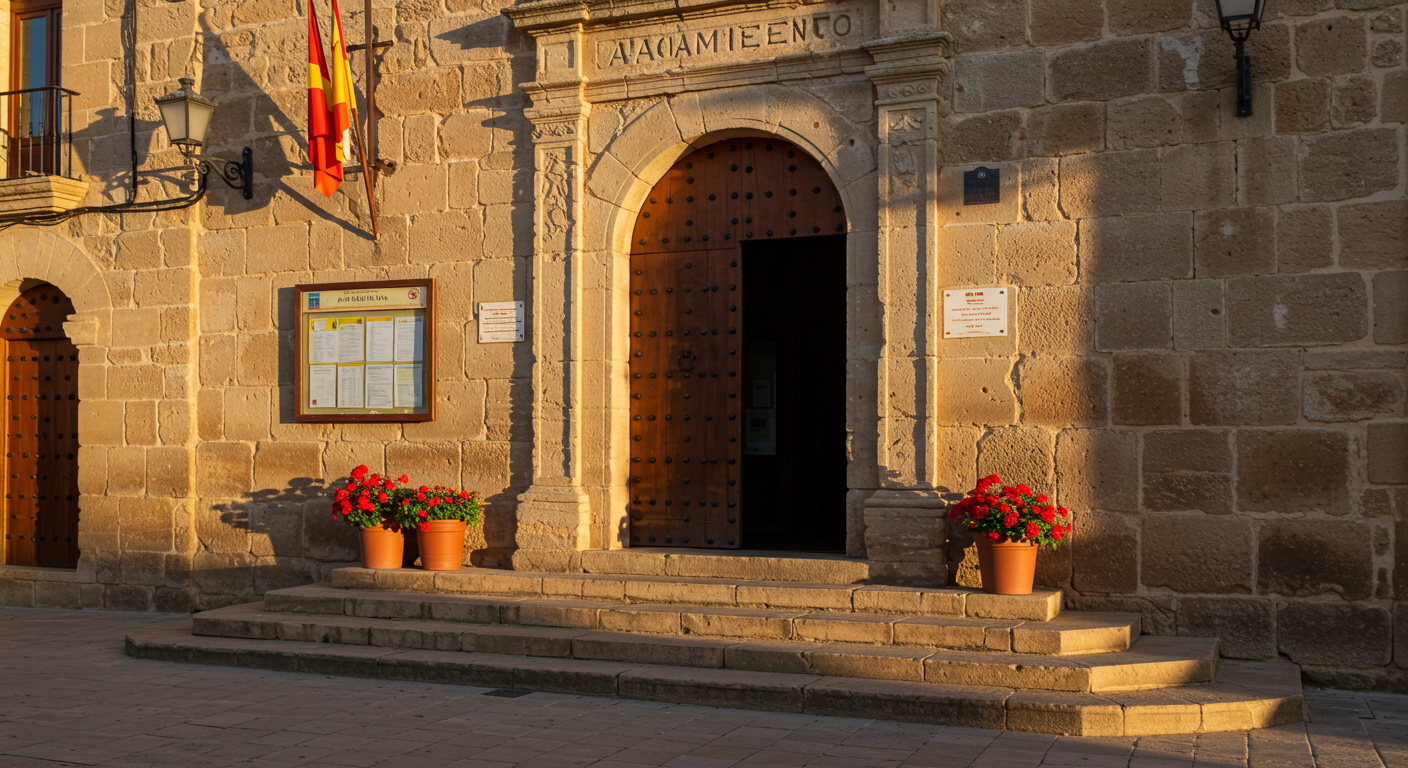
Before you can access the SNS, you must be registered on the padrón municipal — the local population register held by your town hall (ayuntamiento). This is separate from your residency permit; it simply records that you live at a given address. You can register on the padrón even before your residency is fully approved, and it's worth doing immediately on arrival.
To register, visit your local ayuntamiento with:
- Your passport (and NIE or TIE if you have it — see our guide to NIE and TIE in Spain: What They Are and How to Get Them in 2026)
- Proof of address (rental contract, utility bill, or a letter from the property owner)
You'll receive a volante de empadronamiento or certificado de empadronamiento — keep several copies, as you'll need this document repeatedly.
How to Register with a GP (Centro de Salud)
Once you're on the padrón and have your entitlement established (through employment, residency status or another qualifying route), registering with the public health system is straightforward.
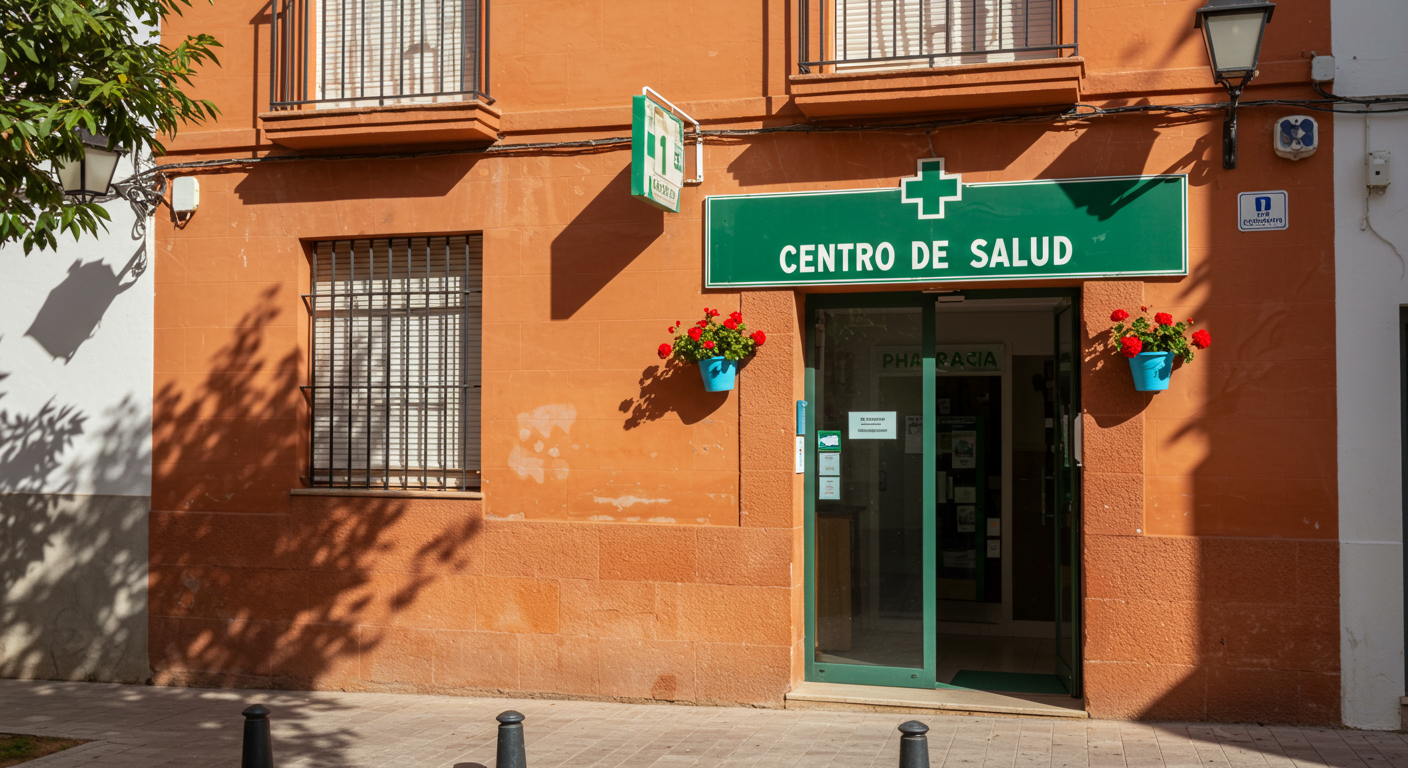
- Go to your local health centre (centro de salud). In cities, there may be several; you'll be assigned to one based on your address.
- Bring your padrón certificate, passport, NIE/TIE, and Social Security number (número de afiliación a la Seguridad Social) if you have one.
- Request your tarjeta sanitaria individual — the health card that identifies you within the SNS. In most regions this is issued on the spot or within a few days.
- You'll be assigned a GP (médico de cabecera). Specialist referrals go through this GP.
The health card is region-specific. If you move from, say, Valencia to Madrid, you'll need to re-register with your new community's health service and get a new card. The process is the same, but don't assume your Valencian card works seamlessly in Madrid for anything beyond emergencies.
Regional Health Services: Key Contacts
Each autonomous community runs its own health service:
- Madrid: Servicio Madrileño de Salud (SERMAS)
- Catalonia: Servei Català de la Salut (CatSalut)
- Andalusia: Servicio Andaluz de Salud (SAS)
- Valencia: Conselleria de Sanitat Universal i Salut Pública
- Basque Country: Osakidetza
- Canary Islands: Servicio Canario de la Salud
- Balearic Islands: Servei de Salut de les Illes Balears (IB-Salut)
Waiting times for GP appointments vary: in urban centres like Barcelona and Madrid, same-day or next-day appointments are usually available. For specialists, waits can range from a few weeks to several months depending on the region and the specialty.
Non-Lucrative Visa and Digital Nomad Visa: The Healthcare Catch
This is where many new arrivals come unstuck. The non-lucrative visa (NLV) and the digital nomad visa both require you to hold private health insurance as a condition of the visa itself — and that insurance must provide comprehensive cover in Spain with no co-payments and no coverage gaps.
Critically, NLV holders are not automatically entitled to SNS coverage. Because you are not working in Spain or contributing to Social Security, you fall outside the standard entitlement routes. You must maintain private insurance for as long as you hold the NLV, typically for the first five years until you can apply for long-term residency.
Digital nomad visa holders are in a slightly different position. Because the visa requires you to register as autónomo or demonstrate employment with a foreign company, you may eventually contribute to Spanish Social Security — at which point SNS entitlement kicks in. However, during the initial period before contributions begin, private insurance is required. For a detailed breakdown of how these two visa routes compare, see Spain's NLV vs Digital Nomad Visa: A Honest Comparison for 2026.
Note also that your visa and tax status interact in complex ways — particularly if you're considering the Beckham Law regime. Read more in our piece on Taxes for Expats in Spain: Tax Residency, the Beckham Law and What You Actually Owe.
Private Health Insurance in Spain: What to Expect
Spain has a mature private healthcare market, and private insurance is genuinely useful — not just as a visa requirement. Private cover gives you:
- Direct access to specialists without GP referral
- Shorter waiting times
- English-speaking doctors in major cities and tourist regions
- Private hospitals (often newer, quieter and more comfortable than public ones)
What Does Private Insurance Cost?
As of 2026, indicative monthly premiums for a comprehensive private health policy in Spain:
- Single adult, 30–40 years old: €50–€90/month
- Single adult, 50–60 years old: €90–€160/month
- Family of four: €180–€350/month
Premiums vary by region (Madrid and Barcelona tend to be slightly higher), by the insurer's network, and by whether you include dental and optical cover. Policies with no co-payments (sin copago) cost more but are required for visa purposes.
The Main Private Insurers
The dominant players in Spain's private health insurance market are:
- Sanitas (part of Bupa) — large network, English-language support, strong in major cities
- Adeslas — the largest network by number of affiliated doctors
- Asisa — competitive pricing, good coverage outside major cities
- Mapfre Salud — solid option, particularly in Andalusia and central Spain
- DKV — popular with expats, good digital tools
- Cigna and Allianz Care — international insurers with Spain-specific plans, often preferred by digital nomads and those who travel frequently
For visa applications, make sure the policy explicitly states it covers Spain as the primary territory, has no exclusions for pre-existing conditions (or that any exclusions are clearly declared), and meets the minimum coverage thresholds set by the consulate processing your application.
Mutualidades: A Third Option for Civil Servants
If you work for the Spanish state or certain regulated professions, you may be enrolled in a mutualidad (such as MUFACE for civil servants) rather than the SNS. These are semi-private schemes that offer a choice between public and private providers. Most expats won't encounter this, but it's worth knowing exists.
Emergencies: What to Do Regardless of Your Status
Spain's emergency services are accessible to everyone, regardless of insurance status or residency. In a genuine emergency:
- Call 112 — the universal European emergency number, with English-speaking operators
- Go directly to the urgencias (A&E) at any public hospital
- You will be treated; billing questions come later
If you're a tourist or short-term visitor from an EU/EEA country, your EHIC (or GHIC for British citizens) covers emergency and necessary treatment in public facilities. It does not cover repatriation, private treatment or non-urgent care, so travel insurance remains advisable on top.
Prescriptions and Pharmacy
Spain's pharmacy network is dense and excellent — there's a farmacia (identified by the green cross) on virtually every high street. Pharmacists are highly trained and can advise on minor ailments, often saving you a GP visit.
If you're registered with the SNS, prescriptions are subsidised. The co-payment rate depends on your income and employment status:
- Active workers pay around 40% of the cost
- Pensioners on low incomes pay 10%, capped at a monthly maximum
- Children and those on very low incomes pay nothing
Private patients pay the full retail price, which for common medications is usually modest — a month's supply of a standard blood pressure medication, for example, typically costs €10–€20.
Mental Health and Dental Care
Two areas where the SNS has historically been weaker:
Mental health: Public provision exists but waiting times for psychiatry and psychology are long in most regions. Many expats supplement with private therapy, where sessions from English-speaking therapists in Madrid or Barcelona typically run €60–€100/hour as of 2026.
Dental care: Routine dentistry (check-ups, fillings, extractions) is largely not covered by the SNS for adults. You'll pay privately, or take out a separate dental policy (usually €15–€30/month). Costs are considerably lower than in the UK or US: a standard filling runs €60–€100, an implant €900–€1,500.
A Note on Regional Variation
Spain's decentralised system means your experience will vary. The Basque Country and Navarre (which have their own fiscal arrangements) tend to have well-funded, efficient health services. Catalonia and Madrid have large, sophisticated urban networks. Rural areas anywhere in Spain may mean longer travel times to specialists. The Canary Islands and Balearic Islands, dealing with large tourist populations, have invested heavily in their health infrastructure but can face seasonal pressure.
If you're still deciding where to settle, factor healthcare access into your thinking alongside climate, cost of living and lifestyle — all of which vary dramatically across the country.
Getting Started: A Practical Checklist
If you're arriving on a work contract or as an autónomo:
- Register on the padrón immediately on arrival
- Get your NIE/TIE sorted
- Register with Social Security (your employer will often do this; autónomos must do it themselves)
- Take your padrón certificate, NIE and Social Security number to your local centro de salud
- Request your tarjeta sanitaria
If you're arriving on an NLV or digital nomad visa:
- Arrange private health insurance before applying for the visa
- Register on the padrón on arrival
- Keep your insurance active and renewed; consulates check this at renewal
- Reassess entitlement if your employment status changes
For full guidance on the visa application process itself, see Spain's Digital Nomad Visa: The Complete 2026 Guide to Eligibility, Income, Documents and Timelines.
Spain's healthcare system rewards those who take the time to navigate it properly. The SNS, for those entitled to use it, is a genuine asset — comprehensive, largely free at the point of use and staffed by well-trained professionals. Private insurance fills the gaps, meets visa requirements and offers convenience that many expats find worth the monthly cost even after they've gained SNS entitlement. The key is understanding which system applies to you, registering promptly and not leaving it until you actually need a doctor.
Frequently asked questions
- Can I use Spain's public health system (SNS) as soon as I arrive?
- Not automatically. You need to be registered on the padrón municipal and have an established entitlement — usually through employment and Social Security contributions, or through a qualifying residency status. Children under 18 and genuine emergencies are exceptions: emergency care is available to everyone regardless of status.
- Do I need private health insurance if I'm on a non-lucrative visa?
- Yes. Private health insurance is a mandatory condition of the non-lucrative visa and must be maintained throughout the visa period. It must provide comprehensive cover in Spain with no co-payments. NLV holders are not entitled to free SNS care because they are not contributing to Spanish Social Security.
- How much does private health insurance cost in Spain in 2026?
- For a single adult aged 30–40, expect to pay roughly €50–€90 per month for a comprehensive policy with no co-payments. Premiums rise with age and vary by region. Family policies for four people typically run €180–€350/month. Dental cover is usually a separate add-on.
- What is the tarjeta sanitaria and how do I get one?
- The tarjeta sanitaria individual is your personal health card within the SNS — it identifies you to doctors, pharmacies and hospitals. Once you have your padrón certificate, NIE/TIE and Social Security number, take them to your local centro de salud and request the card. It's usually issued on the spot or within a few days.
- Does my UK GHIC (Global Health Insurance Card) cover me in Spain?
- It covers necessary and emergency treatment in Spanish public health facilities during temporary visits, on the same terms as Spanish nationals. It does not cover repatriation, private treatment or non-urgent care, and it is not a substitute for health insurance if you are residing in Spain long-term.
- Is dental care covered by Spain's public health system?
- Only to a very limited extent for adults — basic extractions are covered in some regions, but routine check-ups, fillings and most dental work are not. Most expats either pay privately (costs are lower than in the UK or US) or take out a supplementary dental insurance policy, which typically costs €15–€30 per month.
- What happens if I move from one Spanish region to another?
- Your tarjeta sanitaria is issued by the regional health service and is region-specific. If you move permanently, you'll need to update your padrón in the new municipality and re-register with the local centro de salud to get a new health card. Emergency care is available nationwide regardless of which region issued your card.