Staying Overnight in Toledo: The Slow Guide Beyond the Day Trip
Is staying overnight in Toledo, Spain worth it? Yes — here's how to do it properly: where to sleep, eat, and wander after the tour buses leave.

Is Staying Overnight in Toledo Worth It?
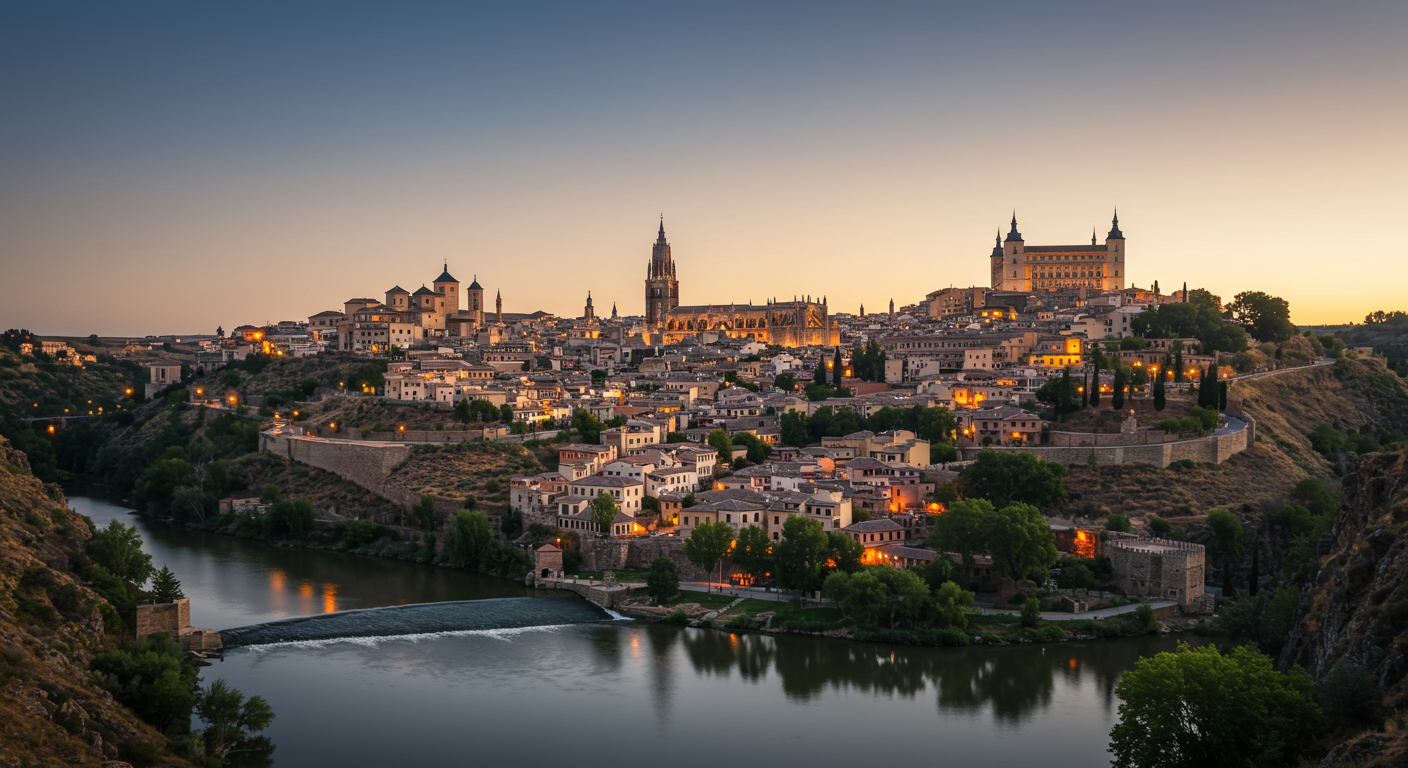
Yes, without question. Toledo is one of the most day-tripped cities in Spain, which means the vast majority of visitors see it in a state of maximum noise and minimum soul. Stay the night — even just one — and you get the city the crowds never see: the narrow streets at dusk when the light turns the sandstone walls amber, the silence after 8 pm when the last coach has reversed out of the Bisagra gate, the smell of woodsmoke and roasting meat drifting through the Judería. That's the version worth the trip.
The short answer for anyone Googling this: Toledo is easily done as a day trip from Madrid (50 minutes on the high-speed AVANT train), but staying overnight transforms it entirely. The old city empties out by early evening and you'll have the cathedral quarter, the synagogues, and the riverside mirador almost to yourself.
Why Toledo Gets Day-Tripped to Death — and Why That's Your Opportunity
Toledo sits 70 km south of Madrid and is served by frequent AVANT trains from Atocha — first service around 6:50 am, last return around 9:30 pm, tickets roughly €13–€15 each way as of 2026. The journey is absurdly easy. So every day, especially in high season, a steady river of people arrives, walks the main circuit (Zocodover, the cathedral, Santo Tomé for the El Greco, the Alcázar), has a menú del día, and leaves.
That circuit takes about five hours. It's not wrong. But it leaves out almost everything that makes Toledo genuinely interesting: the way the three-religion history is actually embedded in the urban fabric rather than just printed on a leaflet, the smaller churches that most visitors walk straight past, the Friday evening paseo, the local restaurants that don't bother with English menus because they don't need to.
Stay overnight and you claim all of it.
Getting There and Leaving the Train Station
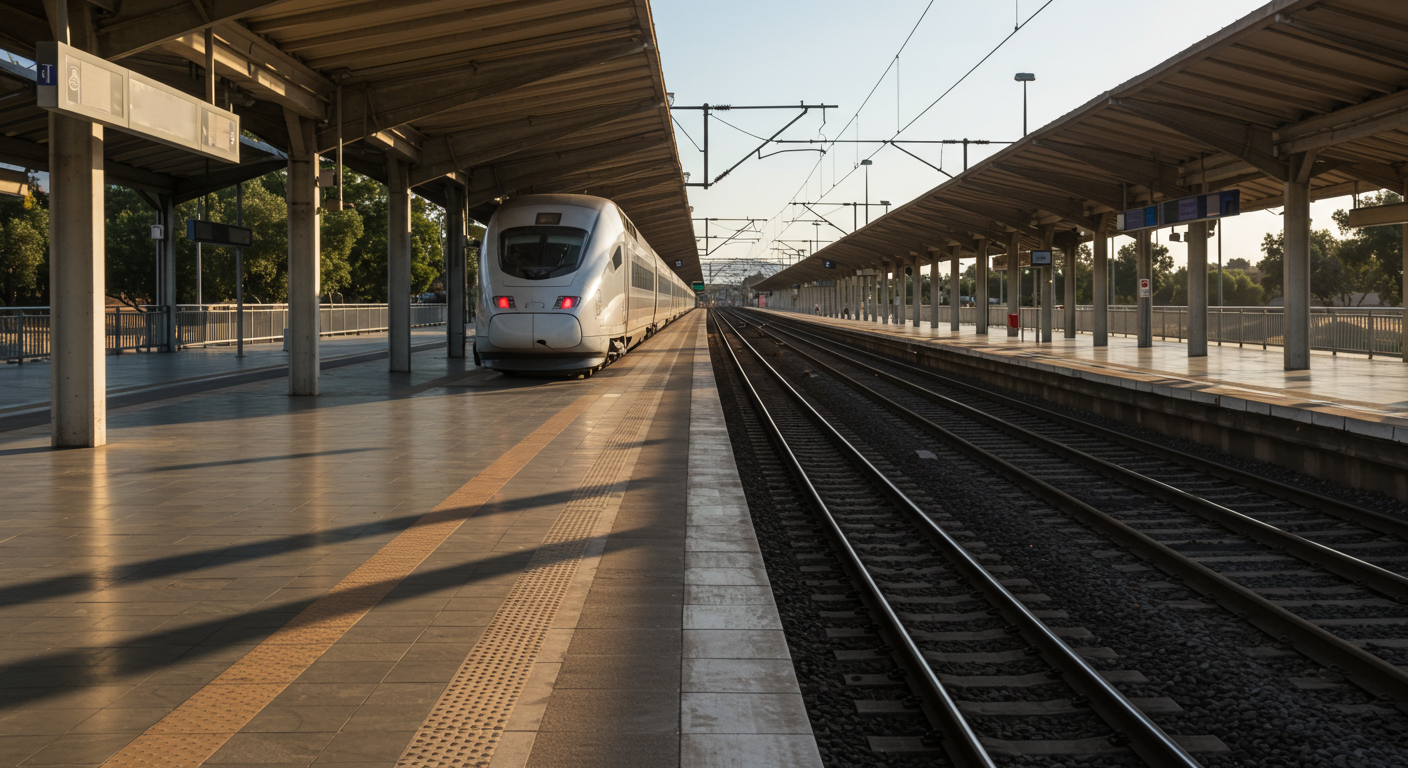
The Toledo train station is one of the more beautiful in Spain — a Mudéjar-revival building that tells you immediately you're somewhere architecturally serious. From there, bus line 5 takes you up to Zocodover square in the old city for a couple of euros. Taxis are available and not expensive — around €6–€8 to the centre as of 2026. If you're driving from Madrid, the A-42 is straightforward but parking in the casco histórico is a genuine problem; use one of the paid car parks just outside the old walls (Parking Miradero is well-positioned) and walk in.
Where to Stay: Sleeping Inside the Walls
This is the key decision. Stay inside the old city if you possibly can — ideally in the Judería or the area around the cathedral. The difference between waking up inside the walls and commuting in from a hotel on the ring road is the difference between actually experiencing Toledo and just visiting it.
A few honest options across different budgets:
Parador de Toledo — the one on the hill across the Tagus, not inside the walls, but the view from the terrace at breakfast is genuinely extraordinary. Prices vary enormously by season; expect €130–€200 for a double in spring as of 2026. It's not cheap, and the rooms are a bit corporate-Parador, but the location and that view justify it for a splurge.
Hotel Pintor El Greco — right in the Judería, which puts you exactly where you want to be at 7 am when nothing's open and the streets are empty. Mid-range, around €80–€120 for a double. Comfortable rather than spectacular, but the location is excellent.
Casa de Cisneros — a small boutique hotel steps from the cathedral, attached to a 16th-century palacio. Often books up fast in summer. Worth checking.
For budget travellers: there are a handful of hostels and small pensiones in the old city. Poke around Booking.com filtering specifically for the casco histórico; avoid anything that lists a street address outside the walls unless it specifically says there's a shuttle.
The Three Cultures — What That Actually Means on the Ground
Toledo was the capital of Visigothic Spain, then the seat of a Muslim taifa kingdom, then recaptured by Alfonso VI in 1085, after which it became one of the great centres of medieval Christian-Jewish-Islamic coexistence — or at least productive proximity. The convivencia was never as harmonious as the tourist literature implies (the Jewish community was expelled in 1492, the same year as Granada), but the physical evidence of three religions sharing and sometimes literally rebuilding each other's sacred spaces is real and remarkable.
The two synagogues are the clearest illustration. Santa María la Blanca — the older one, dating to around 1180 — was built by Jewish craftsmen using Almohad-style horseshoe arches, inside a building that would later become a church. The Sinagoga del Tránsito, built in 1356, has Hebrew inscriptions and Mudéjar stucco work of extraordinary quality. Both are worth the entry fee (around €3–€4 each as of 2026, combined ticket available). The Mosque of Cristo de la Luz — a tiny 10th-century mosque that was converted into a church — is also worth the small entry fee and takes about 20 minutes.
Skip the Cathedral Treasury if you're short on time — it's impressive in a gold-and-relics way but doesn't add much to the three-cultures story. The main cathedral nave and the El Transparente (the extravagant Baroque altarpiece with the hidden skylight) are genuinely worth the €10 entry.
Where to Eat: Honest Recommendations
Toledano food is Castilian — heavy, meat-forward, built for cold winters. The signature dish is carcamusas, a pork and vegetable stew that you'll find everywhere and should try at least once. Venison, partridge, and wild boar appear on most serious menus in autumn and winter.
Adolfo is the famous one — genuinely excellent, genuinely expensive, worth it for a special meal. The tasting menu runs €80–€100 per person without wine. Book ahead.
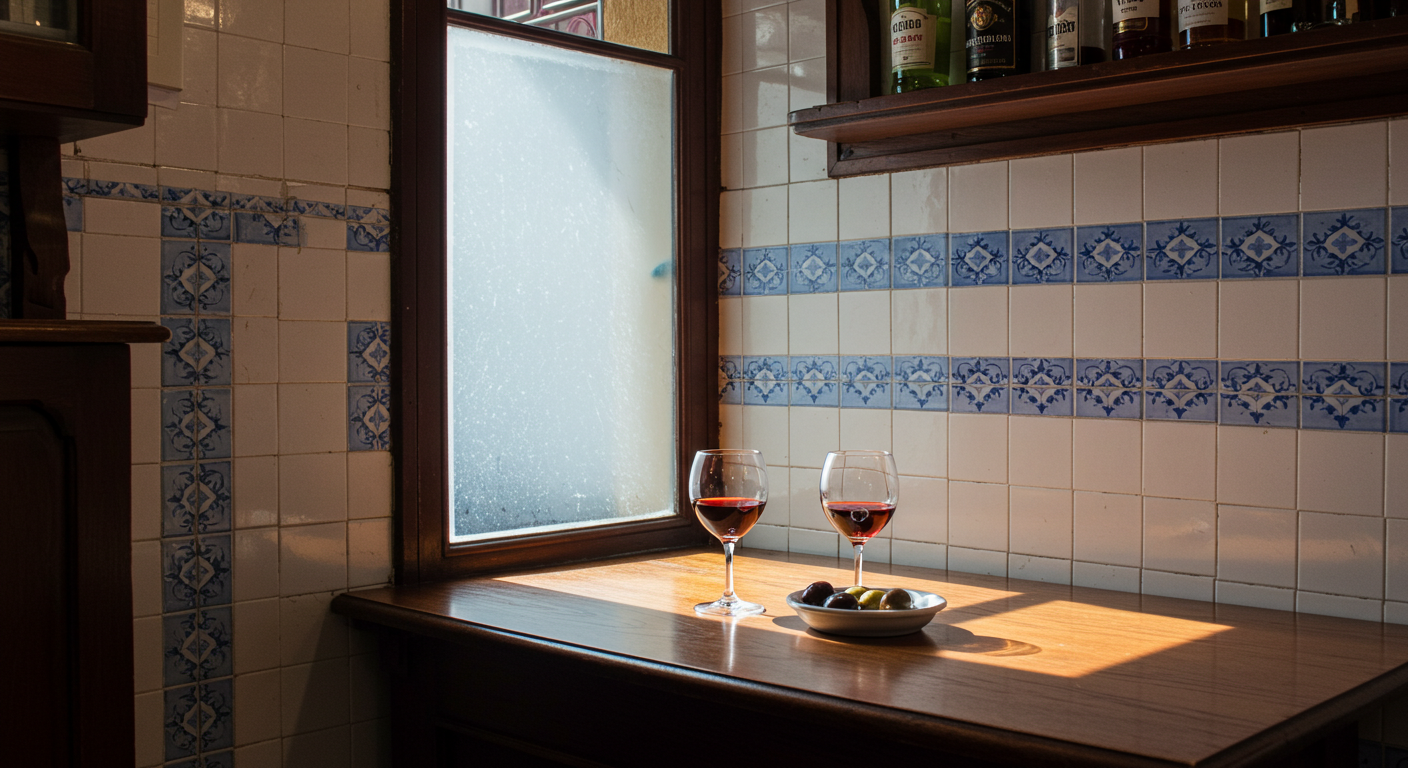
Bar Ludeña on Plaza de la Magdalena is the opposite: a proper local bar where the carcamusas are served as a tapa with your drink and the room is full of people who live there. This is where you go at noon on a Saturday. Cheap, no pretension, very good.
Restaurante Placido is a reliable mid-range option near the cathedral — solid Castilian cooking, friendly service, menú del día around €15–€18 including wine.
For marzipan: Toledo's mazapán is the real thing, made with almonds and sugar and nothing else. Santo Tomé is the most famous brand and has a shop on Calle Santo Tomé — the quality is genuinely good, not just famous-for-being-famous. Buy a small figurine or a box of mazapán de Toledo to take home. Avoid the cheaper versions sold in souvenir shops near Zocodover; the ingredients list will tell you everything you need to know.
The Evening and Morning Hours: What You're Actually Staying For
The day-trippers are gone by 6 pm. By 7 pm the streets around the Judería and the cathedral are almost empty. This is when Toledo is at its most beautiful — the light is golden, the stone glows, and you can actually hear your own footsteps.
Walk the Callejón de los Laureles. Climb up to the Mirador del Valle side — either walk down through the Puente de San Martín or cross the Tagus and look back. The view of the city from across the river, especially at dusk, is one of the best urban views in Spain. It's why El Greco painted it. It still looks like that.
In the morning, the old city is quiet until about 9:30 am when the first day-trippers arrive on the early train. Use that window. Walk the streets around the Judería before breakfast. Get a coffee at a bar on Calle de la Plata or Calle Comercio — you'll be served by someone who lives there, not someone working a tourist-season job.
Two Days in Toledo: A Loose Structure
One night is enough to get the point. Two nights gives you genuine leisure. Here's how I'd roughly structure two days:
Day one: Arrive on the morning train, check in, walk to the cathedral and pay the entry. Lunch at Bar Ludeña. Afternoon: both synagogues, the Mosque of Cristo de la Luz, a wander through the Judería. Evening: walk the walls, watch the sunset from somewhere high, dinner at a proper restaurant.
Day two: Early morning walk before the coaches arrive. Visit the Alcázar (the Army Museum inside is more interesting than it sounds — the Toledo steel industry and the siege of 1936 are both told here). Buy marzipan. Afternoon train back to Madrid, or onwards.
If you're based in Madrid and considering a longer stay in the region, Toledo makes a useful base for a few days — it's calmer and cheaper than Madrid, and the surrounding Castilla-La Mancha countryside is good walking territory. Some people considering relocating to Spain use Toledo as a quieter alternative to the capital; if that's you, the practical side of Spanish bureaucracy — from registering as autónomo to sorting your NIE appointment — applies here just as it would anywhere else in Spain.
Practical Notes
When to go: April to June and September to October are ideal. July and August are hot (regularly above 38°C) and crowded; the heat in the walled city, which sits on a hill surrounded by the Tagus, is brutal. December is quiet and atmospheric, and the Christmas lighting in the old city is genuinely good.
How long to stay: One night minimum. Two nights is the sweet spot. Three nights is for people who really want to slow down or use it as a base.
Getting around: The old city is walkable — it's not large. The streets are steep and uneven, which matters if you have mobility issues. There's a small tourist train (the Tren Turístico) that covers the main circuit; it's aimed at families and not something I'd recommend to anyone who can walk.
Budget: Toledo is noticeably cheaper than Madrid. A good dinner for two with wine is €50–€70 at a proper restaurant; a menú del día is €13–€18. Hotel costs vary widely but mid-range options inside the walls run €80–€130 per night as of 2026.
The day trip version of Toledo is fine. The overnight version is why you came to Spain.
Frequently asked questions
- Is staying overnight in Toledo, Spain actually worth it?
- Yes. The city empties completely after the day-trippers leave on the evening trains, and you get quiet medieval streets, better restaurant options, and the chance to see the city at dawn before the crowds arrive. One night transforms the experience; two nights is even better.
- How long does it take to get from Madrid to Toledo by train?
- The AVANT high-speed service from Madrid Atocha takes about 33–35 minutes. Trains run frequently throughout the day. Tickets cost roughly €13–€15 each way as of 2026 and should be booked in advance on Renfe's website, especially at weekends.
- Where is the best area to stay in Toledo?
- Inside the old walled city, ideally in or near the Judería (the old Jewish quarter). This puts you in the heart of the historic centre and means you can walk the streets early in the morning or late in the evening when they're empty. Avoid hotels outside the walls unless you specifically want the view from the Parador.
- What is the best time of year to visit Toledo?
- April to June and September to October. The weather is pleasant, the light is good, and the crowds are manageable. July and August are extremely hot — regularly 38°C or above — and the city is at peak tourist volume. December is quiet and atmospheric if you don't mind cooler weather.
- What food is Toledo known for?
- Carcamusas (a pork and vegetable stew), Castilian roast meats (lamb, suckling pig), partridge and venison in autumn, and above all, mazapán de Toledo — almond marzipan that is genuinely different from the supermarket version. The Santo Tomé brand is the benchmark.
- Can you visit both synagogues in Toledo in one day?
- Easily. Santa María la Blanca and the Sinagoga del Tránsito are a few minutes' walk apart in the Judería. Each takes 30–45 minutes. A combined ticket is available and costs around €6–€7 as of 2026, though prices should be confirmed locally.
- Is Toledo a good base for exploring Castilla-La Mancha?
- It's a reasonable base if you have a car. The surrounding region — Don Quixote windmill country, medieval villages like Consuegra and Orgaz, the wine region around Valdepeñas — is all accessible by road. By public transport, options are limited; most villages aren't well-served by bus.