Basque Country Beaches in Summer: Are They Worth It?
Surf, green cliffs and real Atlantic swells: here's what the Basque Country beaches are actually like in summer, from San Sebastián to Mundaka.
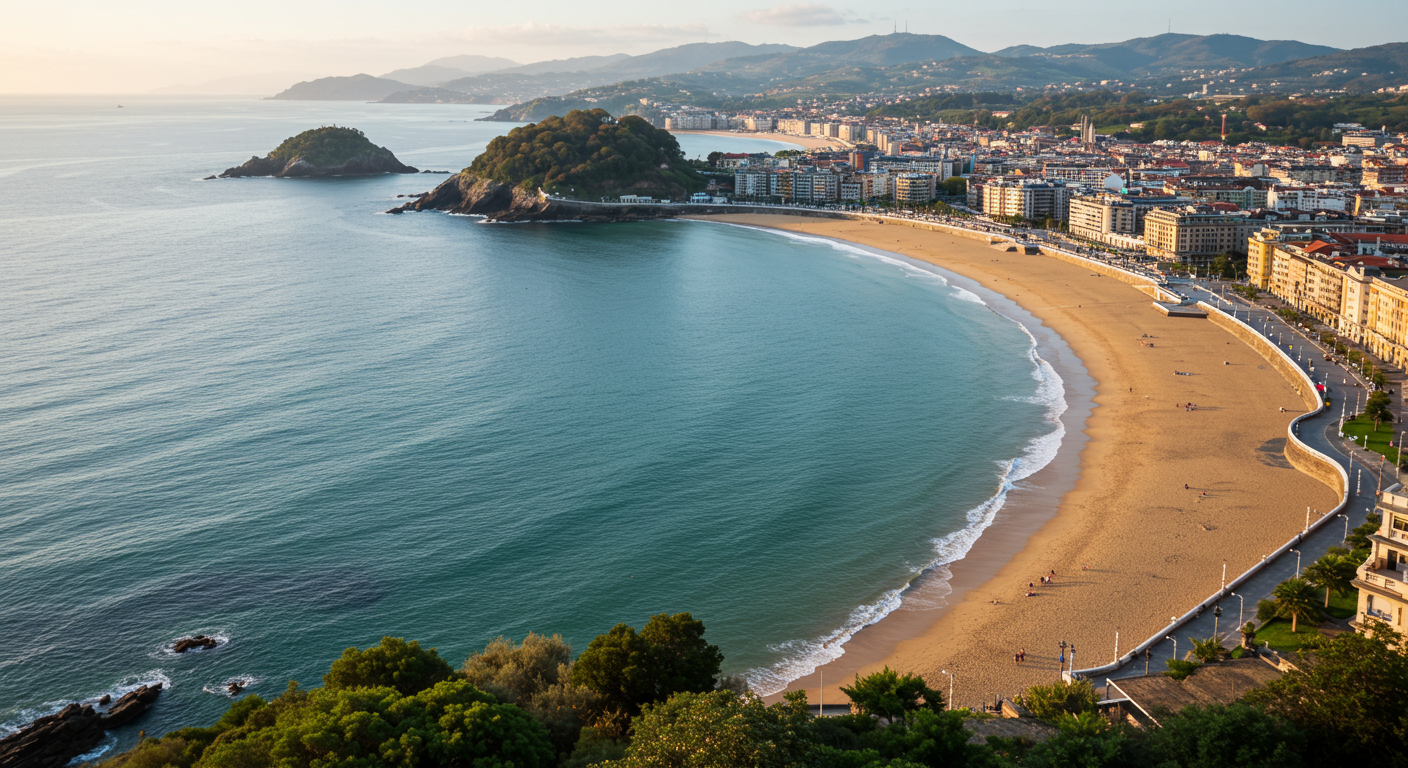
The Basque Country has roughly 200 kilometres of Atlantic coastline and, in summer, it is absolutely worth visiting — even knowing the weather might turn on you. San Sebastián's La Concha is one of the most beautiful urban beaches in Europe, full stop. The surf breaks at Mundaka are world-class. And the whole green northern coast operates at a pace that feels nothing like the scorched, shoulder-to-shoulder experience of the Costa del Sol in August.
The short answer to whether Basque beaches are worth it in summer: yes, if you manage your expectations about the weather and lean into what makes this coast genuinely different. Temperatures in July and August hover between 20°C and 27°C — occasionally higher — but Atlantic fronts roll in fast, and you can lose two days to grey drizzle in a week. That's not a bug for everyone. The crowds are far thinner than Andalusia, the food is dramatically better, and the water is clean and swimmable from late June through September.
What the Basque Coast Actually Looks Like
Forget the bleached limestone and flat turquoise water of the Mediterranean. This coast is green, dramatic, and genuinely moody. The cliffs are dark and jagged. The sea runs from grey-green to deep blue depending on the light. Villages like Getaria and Zumaia sit on headlands above beaches that look more like Cornwall than Catalonia — which is either thrilling or slightly damp, depending on your outlook.
Zumaia is worth singling out. The flysch cliffs there — horizontal bands of rock laid down over tens of millions of years — are extraordinary, and the beach below them is quiet even in August. You can walk the coastal path between Zumaia and Deba in a couple of hours; it's one of the best short hikes on the northern coast and almost nobody who isn't already in the Basque Country knows about it.
Getaria, a few kilometres east of Zumaia, is a small fishing village with a beach that fills up quickly in summer but never reaches the chaos of, say, Barceloneta. More relevantly, it produces Txakoli — the local slightly sparkling white wine — and you can drink it at a table ten metres from the water for under €3 a glass. That's the Basque summer in a nutshell.
San Sebastián: La Concha and Beyond
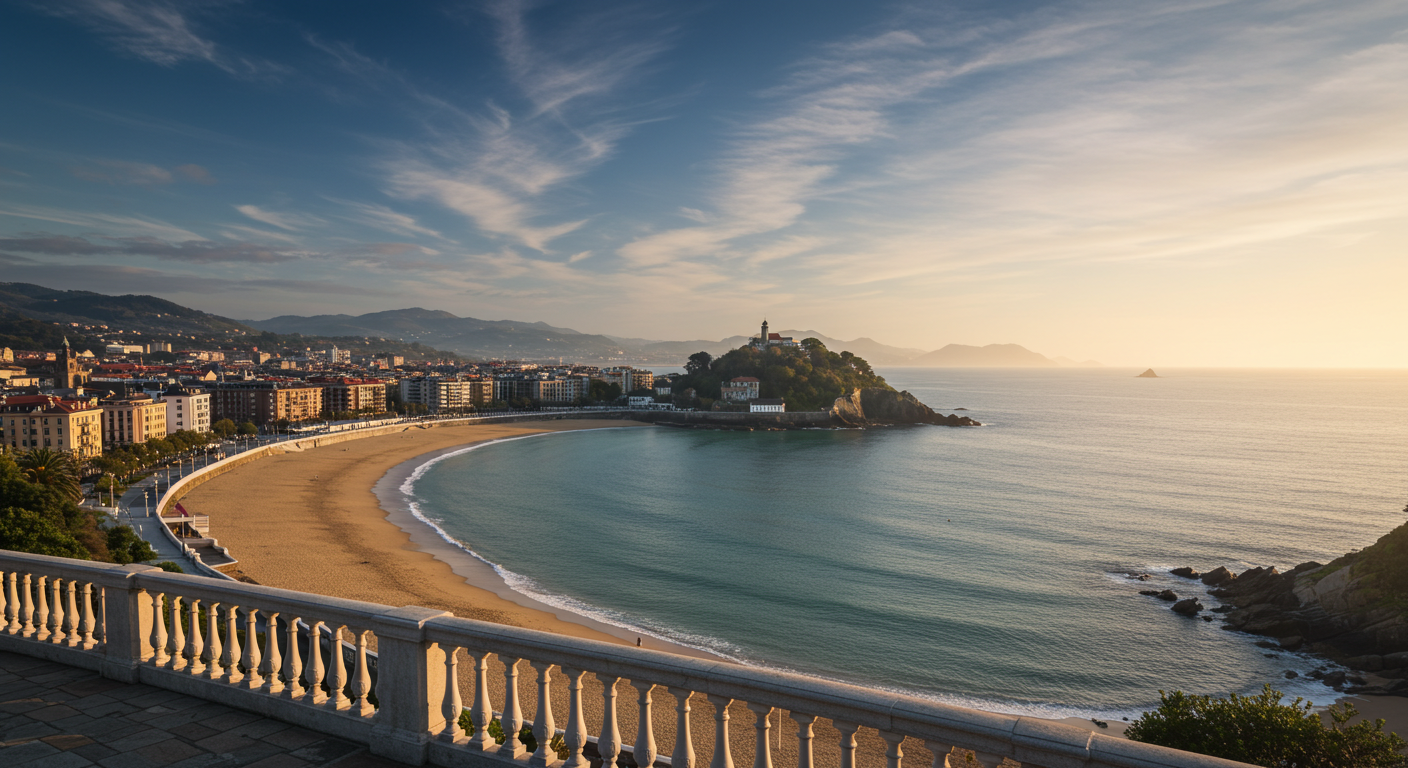
La Concha is the famous one. The crescent of sand curling around the bay, the Belle Époque promenade, the island of Santa Clara sitting in the middle like a full stop — the photographs don't lie. It really does look like that. What the photographs don't tell you is that in August, the beach is packed by 10am and the sun lounger situation is competitive. Get there before 9:30 if you want a spot without fighting for it.
Surfers should skip La Concha entirely and head to Zurriola, on the other side of the Urumea river in the Gros neighbourhood. Zurriola faces the open Atlantic, takes a proper swell, and has a surf school culture that's been building for twenty years. Rental boards and lessons are easy to find along the paseo. The neighbourhood itself — Gros — is where locals actually eat and drink, away from the pintxos-bar tourist conveyor belt of the Old Town. Bodegón Alejandro is reliable in the Old Town if you want a proper sit-down meal, but for pintxos without paying the tourist premium, walk to Gros and try the bars along Calle Zabaleta.
Once you've done San Sebastián for a couple of days, hire a car. The coast west of the city opens up considerably when you're not dependent on buses.
Mundaka and the Surf Coast
Mundaka sits at the mouth of the Urdaibai estuary, about an hour's drive west of San Sebastián, and it has one of the longest left-hand barrel waves in Europe. It only works properly in autumn and winter when the swells are big — in summer, the break is much smaller and the village fills with surfers who are essentially on holiday rather than chasing serious waves. That's fine. The village is charming, the estuary behind it is a UNESCO biosphere reserve, and the beach at Laida, a short boat trip across the water, is wide and sandy and far quieter than anything in San Sebastián.
Bilbao is 40 minutes inland and worth a day regardless of whether you care about the Guggenheim (though you probably will once you see it). The beaches closest to Bilbao — Sopelana, Plentzia, Gorliz — are popular with locals and genuinely good. Sopelana in particular has consistent surf and a relaxed atmosphere that feels more like a real Basque beach town than a tourist destination.
The Weather Question
This is the honest part. The Basque Country receives roughly 1,500mm of rain a year — more than twice the annual rainfall in Madrid. Summer is the driest season, but "dry" is relative. July is the most reliable month; August can be fine for weeks and then deliver three days of solid Atlantic rain. September is often excellent and the crowds thin dramatically after the Spanish school holidays end in the last week of August.
If guaranteed sunshine is your priority, this coast will occasionally let you down. If you're someone who finds a grey morning with coffee and a newspaper followed by an afternoon swim perfectly acceptable — and the food is genuinely some of the best in Spain — then the Basque coast in summer is hard to beat.
Pack a light waterproof. Wear it as a layer in the evenings even when it's not raining, because the temperature drops noticeably once the sun goes behind a cloud.
Practical Logistics for Summer
Accommodation in San Sebastián in July and August is expensive and books out months in advance. Expect to pay €150–€250 per night for a decent central hotel in peak summer (as of 2026). The Gros neighbourhood is slightly cheaper than the Old Town and, honestly, more enjoyable. If budget matters, base yourself in Zarautz — a proper surf town 20 minutes west by train, with a long beach and far more reasonable prices — and day-trip into San Sebastián.
The train between San Sebastián and Zarautz runs regularly and costs a few euros. For the rest of the coast, you need a car. The roads are good, parking in small villages is manageable outside August, and driving the N-634 coastal road between San Sebastián and Bilbao is one of the better drives in northern Spain.
If you're spending more than a week in the region and thinking about longer-term options — working remotely from a Basque City for a month, say — the logistics of Spanish bureaucracy apply just as much here as anywhere else. The Spanish Digital Nomad Visa on Minimum Salary: Is It Worth It? article is worth reading before you commit to anything. And if you're already in Spain on a visa and sorting out banking, Open a Spanish Bank Account as a Non-Resident in 2026 covers what's actually available to you.
What to Eat (and Drink)
Pintxos are the obvious answer and they're genuinely excellent, but don't treat them as a novelty snack. In the right bars, they're a serious meal. The Old Town of San Sebastián — particularly Calle 31 de Agosto and the streets around it — has a concentration of good pintxos bars. Go between 7pm and 9pm when the trays are freshest. Avoid anywhere with laminated photographs of the food outside.
If you're in Getaria, eat grilled fish. The turbot (rodaballo) and sea bream (besugo) coming out of the Getaria harbour boats and onto charcoal grills there are some of the best seafood you'll eat in Spain. Elkano has a Michelin star and deserves it, but you'll need to book weeks ahead and spend accordingly. The smaller restaurants on the port do excellent work for a fraction of the price.
Txakoli throughout. Rioja Alavesa — the Basque part of the Rioja appellation — produces some serious red wine and is only an hour's drive south of San Sebastián, if you want to combine coast with vineyard.
Getting There
San Sebastián's airport (Hondarribia) is small and has limited connections. Most people fly into Bilbao (BIO), which has regular flights from London, Dublin, and other European hubs, or into Biarritz just across the French border — sometimes the cheapest option. From Bilbao to San Sebastián is just over an hour by bus or car. The bus service (ALSA and Lurraldebus) is cheap and reliable.
From Madrid, the Alvia train to San Sebastián takes around five and a half hours. Not fast, but the route through the Basque mountains in the last hour is genuinely lovely.
The Basque coast in summer is a different Spain from the one most visitors see — cooler, greener, more expensive in places, considerably better fed, and far less frantic. Go with a flexible attitude to the weather and an appetite for eating well, and it delivers.
Frequently asked questions
- Are Basque Country beaches warm enough to swim in during summer?
- Yes. Sea temperatures along the Basque coast typically reach 18–22°C by July and August — cold by Mediterranean standards but perfectly swimmable. Most people manage without a wetsuit in the height of summer, though surfers often wear a thin shorty for comfort.
- What is the best beach in San Sebastián for surfing?
- Zurriola, in the Gros neighbourhood on the eastern side of the Urumea river. It faces the open Atlantic and picks up a consistent swell. La Concha is sheltered and great for swimming, but it rarely has surfable waves.
- How far in advance should I book accommodation in San Sebastián in August?
- At least three to four months ahead for anything central and decent. August is peak season and the city is genuinely popular — both with international tourists and with Spaniards escaping the heat further south. Zarautz and Hondarribia are cheaper alternatives within easy reach.
- Is the Basque coast suitable for families with children?
- Very much so. La Concha in San Sebastián is calm and shallow — ideal for young children. The beach at Laida near Mundaka is wide and quiet. The main practical issue is the weather variability; have a plan B for rainy days, of which there will probably be one or two in a week.
- Can I visit the Basque coast without a car?
- San Sebastián itself is very manageable by train and on foot. The Topo train runs along the coast to Hendaye and Zarautz. For Mundaka, Getaria, and Zumaia, a car makes life considerably easier, though buses do exist — they're just infrequent. The Lurraldebus network covers most of the province.
- Is September a good time to visit the Basque Country beaches?
- Often the best time. The Spanish school holidays end in late August, crowds drop sharply, prices fall, and the weather in September is frequently excellent — arguably more reliable than August. The sea is still warm from summer. The main trade-off is that some seasonal beach bars and activities wind down after the first week of September.
- How does the cost of visiting the Basque Country compare to other parts of Spain?
- It's one of the more expensive regions. San Sebastián is consistently ranked among the priciest cities in Spain for accommodation and eating out at restaurants. That said, pintxos bars offer remarkable value — you can eat and drink very well for €20–€30 per person if you stick to bar-hopping rather than sit-down restaurants. Bilbao is noticeably cheaper than San Sebastián for accommodation.