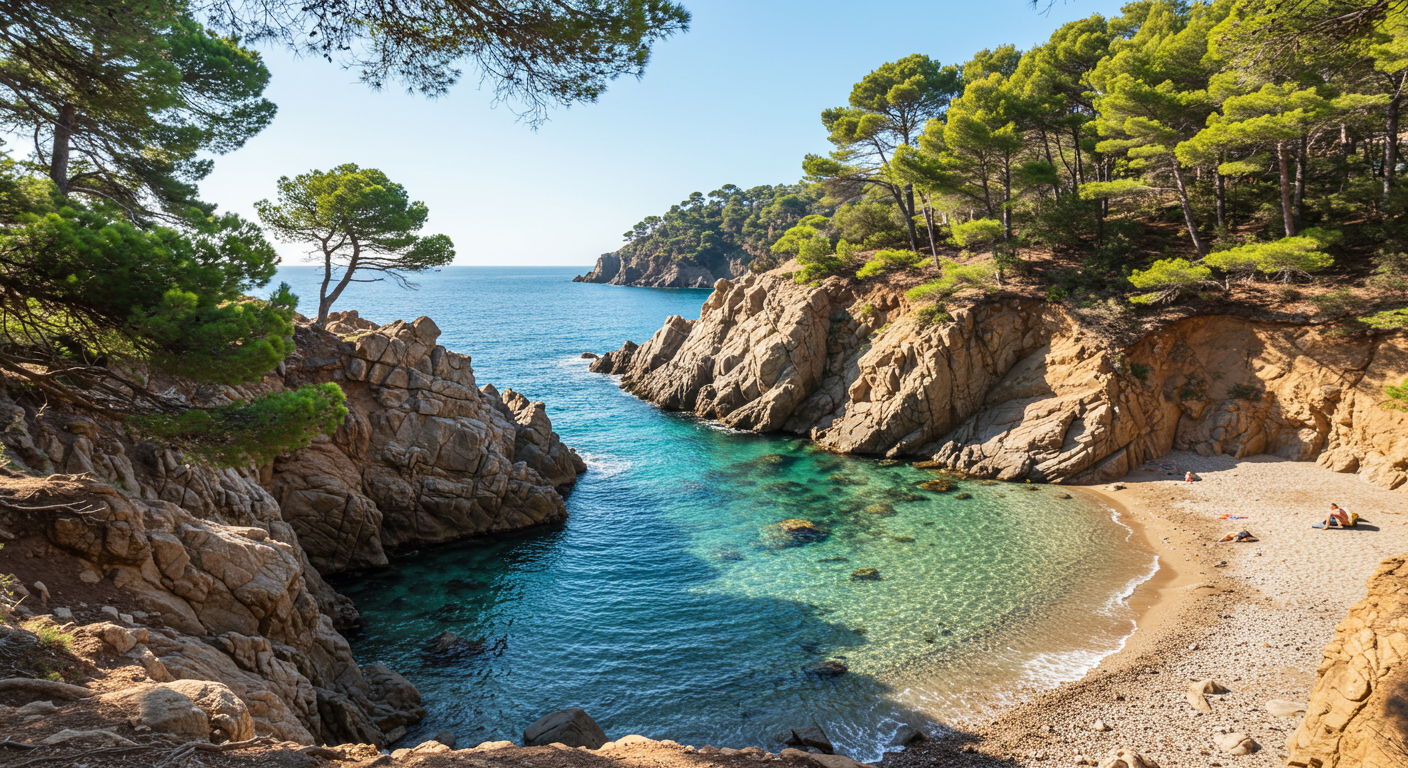
Where to Stay in Barcelona: Eixample vs Gràcia vs El Born vs the Beach
Eixample, Gràcia, El Born or the beach? This honest guide picks the best neighbourhood to stay in Barcelona for a first visit, with real hotel picks.
The single question I get asked more than any other about Barcelona is this: which neighbourhood should I stay in? It sounds simple. It isn't. The city's districts feel almost like separate villages, each with a different rhythm, price bracket and tolerance for tourist behaviour — and picking the wrong one can quietly ruin a trip.
For a first visit, the best neighbourhood to stay in Barcelona depends on what you actually want from the city. If you want walkable access to most major sights and a central base without being inside a postcard, Eixample wins. If you want atmosphere, local life and a quieter pace, Gràcia is the answer. If you want medieval lanes and excellent bars, El Born (officially part of Sant Pere, Santa Caterina i la Ribera) is hard to beat. And if you genuinely want the beach at your doorstep, Barceloneta delivers — with caveats.
None of those is a wrong answer. But they're not interchangeable.
Eixample: The Logical Choice for Most First-Timers
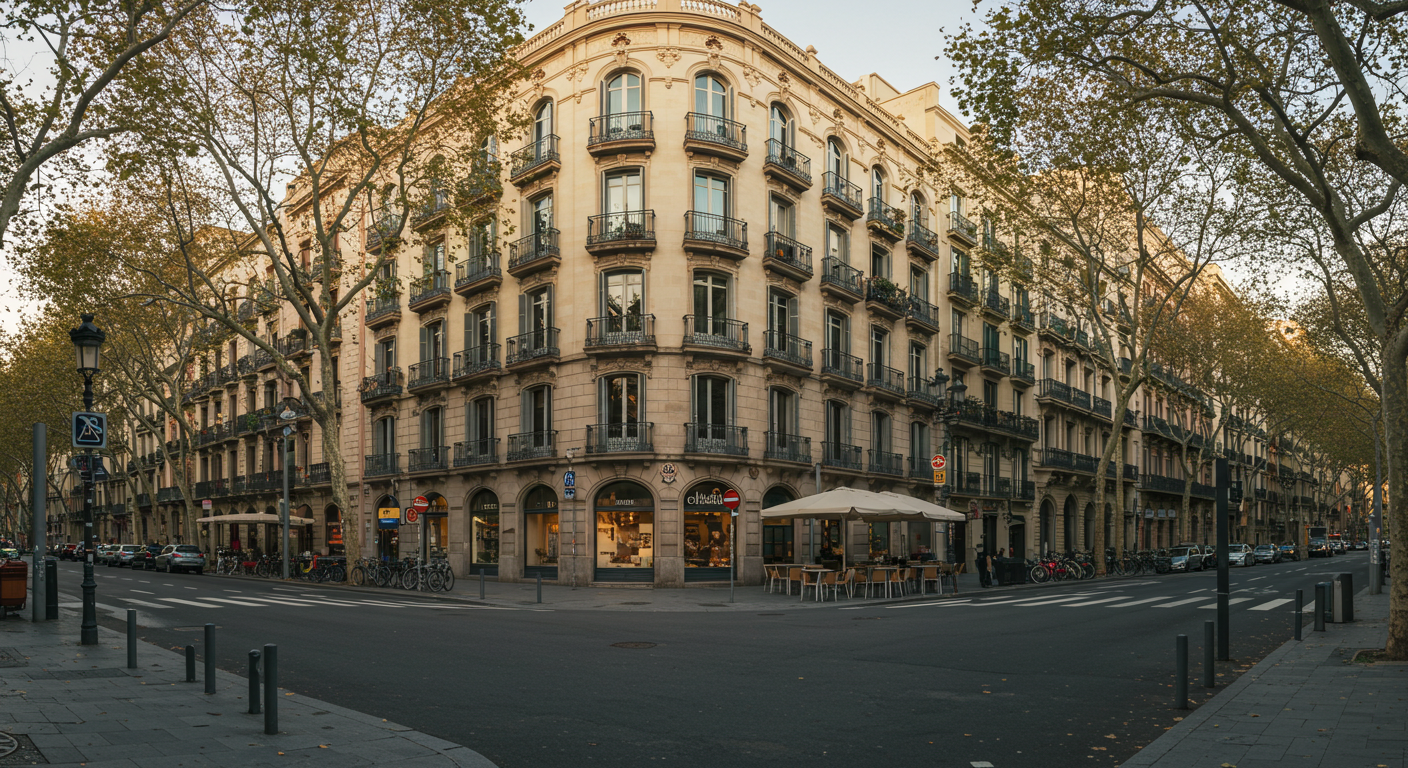
Eixample is the grid district that Ildefons Cerdà designed in the 1860s — those wide, chamfered-corner blocks you see in every aerial photo of the city. It's where Gaudí's Sagrada Família sits (in the eastern half, the Dreta de l'Eixample), and it runs from Plaça de Catalunya almost up to Gràcia. The streets are broad, the pavements are wide, the metro stops are frequent.
For a first visit, the logic is hard to argue with. You're roughly 15 minutes on foot from the Sagrada Família, 20 from Passeig de Gràcia and its Gaudí buildings, 10 from Plaça de Catalunya and the top of Las Ramblas. The neighbourhood has real restaurants — not just tourist traps — particularly around Carrer del Consell de Cent and the stretch of Carrer de Muntaner. The Esquerra de l'Eixample (left side) is notably cheaper for both hotels and eating out, and it's where you'll find the Gayxample scene and some of the city's better neighbourhood bars.
The downside: parts of Eixample feel more like an extension of a European business district than a living neighbourhood. The wide streets can feel anonymous. And in high summer, the heat bouncing off that grid is punishing.
Standout hotels in Eixample: The Almanac Barcelona on Gran Via de les Corts Catalanes is serious — rooftop pool, genuinely good service, doubles from around €250–350 in shoulder season. For something smaller and less corporate, Hotel Praktik Rambla on Rambla de Catalunya (the much nicer Rambla, not Las Ramblas) is a reliable mid-range option, around €130–180 a night. Budget travellers often land on the quieter side streets of Esquerra: the Hostal Girona near Passeig de Gràcia is old-fashioned in the best sense, clean and honest at around €80–110.
Gràcia: For People Who Hate Feeling Like Tourists
Gràcia was a separate town until the late 19th century, and it still feels like one. The streets narrow immediately once you cross Carrer de Còrsega heading north. There's a produce market (Mercat de l'Abaceria, on Travessera de Gràcia), a handful of small squares — Plaça de la Vila de Gràcia, Plaça del Sol, Plaça de la Virreina — where locals actually sit and drink coffee at all hours, and a general absence of souvenir shops.
Gràcia suits people who want to feel what Barcelona life actually looks like. The restaurants are cheaper than central Eixample, the bars stay open late, and the neighbourhood has a long history of bohemian and politically independent identity — the Catalan independence flags aren't decoration here, they're a statement. Park Güell is a ten-minute walk up the hill.
The trade-off is distance. You're further from the Gothic Quarter, further from the beach. You'll be on the metro (L3, Fontana or Diagonal stops) or walking 25 minutes to reach most central sights. Not a problem if you're staying a week. A bit annoying if you've got two days.
Hotels in Gràcia are few and mostly small. The Casa Gracia Barcelona Hostel on Passeig de Gràcia (technically on the border with Eixample) has a fantastic rooftop terrace and a grown-up feel — around €50–80 for a private room, more in August. For something more boutique, Hotel Pulitzer is just below the neighbourhood boundary and often gets overlooked. If you want a proper Gràcia apartment rental, this is honestly the neighbourhood where it makes more sense than a hotel.
El Born: Small Streets, Big Atmosphere
El Born is the neighbourhood that Barcelona's creative class discovered in the 1990s and that Instagram discovered around 2015. It's now genuinely popular, but it hasn't entirely sold its soul. The streets around Carrer del Rec and Carrer del Parlament are still full of independent shops, decent cocktail bars, and restaurants that change their menus seasonally rather than printing them on laminated boards.
The Basílica de Santa Maria del Mar is here — arguably more affecting than the cathedral in the Gothic Quarter, and usually less crowded. The Museu Picasso is a five-minute walk. The Born Cultural Centre (the old iron market, now an archaeological site and exhibition space) is excellent and free to wander.
El Born is walkable to the Gothic Quarter in under ten minutes, and to Barceloneta beach in about fifteen. For a first visit, this is actually a strong argument: you get the medieval character without being trapped in the tourist circus of the Barri Gòtic, and you can walk to the sea.
The noise is real. Carrer del Parlament and the streets around Passeig del Born itself are loud until 2am on weekends. Ask specifically for a room facing an interior courtyard.
Standout hotels in El Born: The Chic & Basic Born on Carrer de la Princesa is exactly what it says — small, well-designed, around €110–160. The Hotel Neri in the adjacent Gothic Quarter (two minutes' walk) is the most characterful option in this part of the city: a converted 18th-century palace on Carrer de Sant Sever, doubles from around €200–300. It's quiet despite being surrounded by tourist chaos. Worth it.
Barceloneta and the Beach: Be Honest With Yourself
Barceloneta is the old fishing district that sits between the port and the sea. It's dense, loud, and increasingly full of short-term rental apartments that have pushed out most of the families who used to live there. The beach is a ten-second walk from most of it.
If the beach is your priority — if you're going to Barcelona specifically to swim in the Mediterranean and lie in the sun — then staying in Barceloneta makes sense. The city's beaches (Barceloneta, Nova Icària, Bogatell) are all accessible along the seafront path. The chiringuitos (beach bars) on Passeig Marítim are fun for a drink, though the food is generally overpriced and mediocre. Skip them for actual meals.
But be clear about what you're getting. Barceloneta is noisy — very noisy in summer. The streets smell of sunscreen and fried food. It's a 25-minute metro ride from the Sagrada Família. And the short-term rental saturation means the neighbourhood has a transient, slightly hollow feel that Gràcia and El Born don't have.
The better beach hotels are on the Passeig Marítim itself. The W Barcelona (the sail-shaped tower at the end of the beach) is overpriced and trades on its silhouette, but the sea views from the upper floors are undeniably good — budget €300–500 a night and upwards in summer. The Hotel Arts Barcelona next door is more consistently excellent: better service, better restaurant (Enoteca Paco Pérez has two Michelin stars), similarly expensive. For something more affordable near the beach, the Eurostars Grand Marina in the Port Vell area is a quieter option, around €150–220.
So Which Neighbourhood Is Actually Best for a First Visit?
For a genuine first visit to Barcelona — say, four to six nights — I'd rank them like this:
- El Born, if you want atmosphere and walkability to both the old city and the beach
- Eixample (Dreta), if you want a central, logical base and don't want to think too hard about logistics
- Gràcia, if you're staying at least five nights and want to feel like a temporary resident rather than a visitor
- Barceloneta, if the beach genuinely comes first and you accept the trade-offs
One thing people often forget: Barcelona's metro is excellent and cheap (a T-Casual ten-trip card costs around €11.35 as of 2026, though check current prices). No neighbourhood is so remote that you can't reach anywhere in 20–30 minutes. Don't let the neighbourhood decision paralyse you.
If you're planning a longer stay — thinking about renting an apartment, working remotely, testing the city before committing — the logistics shift considerably. You'll need to think about renting in Spain without a Spanish payslip, getting your empadronamiento sorted (which matters more than most people realise), and possibly looking at whether the Spanish digital nomad visa fits your situation. Barcelona is one of the main cities where that visa gets processed, and the paperwork starts before you arrive.
For those arriving with serious relocation in mind, the empadronamiento process without a rental contract is worth understanding early — it affects your access to local services more than almost anything else. And if you're planning to open a bank account to handle rent and utilities, the guide to opening a Spanish bank account as a non-resident covers the current options honestly.
Barcelona rewards people who spend time in it rather than ticking it off. Pick a neighbourhood, learn two or three streets in it properly, and let the city come to you.
Frequently asked questions
- Which Barcelona neighbourhood is best for a first-time visitor?
- El Born or the Dreta de l'Eixample are the strongest choices for most first-time visitors. El Born gives you medieval character, excellent bars and restaurants, and walking distance to both the Gothic Quarter and Barceloneta beach. Eixample is more central and logical if you want easy metro access to the Sagrada Família and Passeig de Gràcia. Gràcia suits longer stays; Barceloneta suits people who genuinely prioritise the beach over sightseeing.
- Is it worth staying in Barceloneta if I want to be near the beach?
- It depends on your priorities. Barceloneta puts the beach at your doorstep, but the neighbourhood is noisy, increasingly touristy, and further from most major sights. If beach time is genuinely your main goal, yes. If you want a mix of beach and city, El Born gives you the sea within a 15-minute walk and a much better local atmosphere.
- What is the quietest central neighbourhood to stay in Barcelona?
- Gràcia is the quietest of the central-ish options, particularly on weekday evenings. The residential streets around Plaça de la Virreina are calm by Barcelona standards. Parts of Eixample (especially Esquerra, away from the main avenues) are also relatively quiet. El Born near the Santa Maria del Mar church can be peaceful during the day but gets noisy at weekends.
- How much does a mid-range hotel in Barcelona cost per night in 2026?
- Expect to pay roughly €120–200 per night for a decent mid-range double in Eixample or El Born in shoulder season (spring or autumn). Summer prices, especially July and August, push that to €180–280 and above. Budget options in Gràcia or Esquerra de l'Eixample can be found for €80–120. Beachfront hotels (W Barcelona, Hotel Arts) run €300–500+ in high season.
- Is Gràcia too far from the main Barcelona sights?
- Not really, but it requires more planning. Gràcia is about 25 minutes on foot from Plaça de Catalunya, and the L3 metro (Fontana or Diagonal stops) gets you most places in 15–20 minutes. If you're staying five or more nights, the extra travel time is easily offset by the neighbourhood's genuinely local feel. For a two-night city break, Eixample or El Born are more practical.
- Are there good boutique hotels in El Born Barcelona?
- Yes, though options are fewer than in Eixample. Chic & Basic Born on Carrer de la Princesa is the most-recommended smaller option (around €110–160 in shoulder season). The Hotel Neri, technically in the adjacent Gothic Quarter but a two-minute walk from El Born, is the most characterful hotel in this part of the city — a converted 18th-century palace, doubles from around €200–300.
- Can I stay in Barcelona long-term as a digital nomad and which neighbourhood suits remote workers best?
- Barcelona is one of Spain's main hubs for remote workers and digital nomads. For long-term stays, Gràcia and Eixample Esquerra tend to suit people who want to actually live and work there — quieter in the mornings, good café culture, more affordable month-to-month rents. El Born is livelier and better for socialising but noisier. You'll want to look into the Spanish digital nomad visa if you're staying more than 90 days and working for non-Spanish clients.