A Slow Day Trip from Madrid to Segovia: Aqueduct, Alcázar & Cochinillo
Everything you need for a slow day trip from Madrid to Segovia by train — the aqueduct, the alcázar, where to eat cochinillo, and how long you actually need.
The high-speed train from Chamartín to Segovia takes 27 minutes. Twenty-seven. You leave central Madrid, drink half a coffee, and you're stepping out into a city that the Romans built around two thousand years ago and that the Castilians never quite finished tidying up. That gap between travel time and historical weight is the whole point of this trip.
For a day trip from Madrid to Segovia by train, the short answer is: take the first Avant service from Chamartín (usually around 07:55, though check Renfe's site for the current timetable), walk up from Segovia's station into the old city, spend the morning at the aqueduct and the cathedral quarter, eat cochinillo at a proper sit-down lunch, and get back to Madrid by early evening. You need a full day — not a half day, whatever the package-tour operators tell you.
Getting the Train Right
Segovia has two stations and this matters. The high-speed Avant service stops at Segovia-Guiomar, which is several kilometres outside the walled city. You'll need to take a connecting bus (line 11, included with your train ticket if you ask at the machine, though the signage is confusing) into the centre. The journey into town takes about 15 minutes. Factor it in.
Tickets as of 2026 run roughly €12–€16 each way for the Avant. Book on Renfe's website or app a day or two ahead — not because trains sell out dramatically, but because prices nudge up and you might as well. The regional bus from Moncloa (Autobuses La Sepulvedana) is cheaper at around €8 each way and drops you more centrally, but it takes over an hour and a quarter. Your call.
The Aqueduct: Don't Just Photograph It, Stand Under It
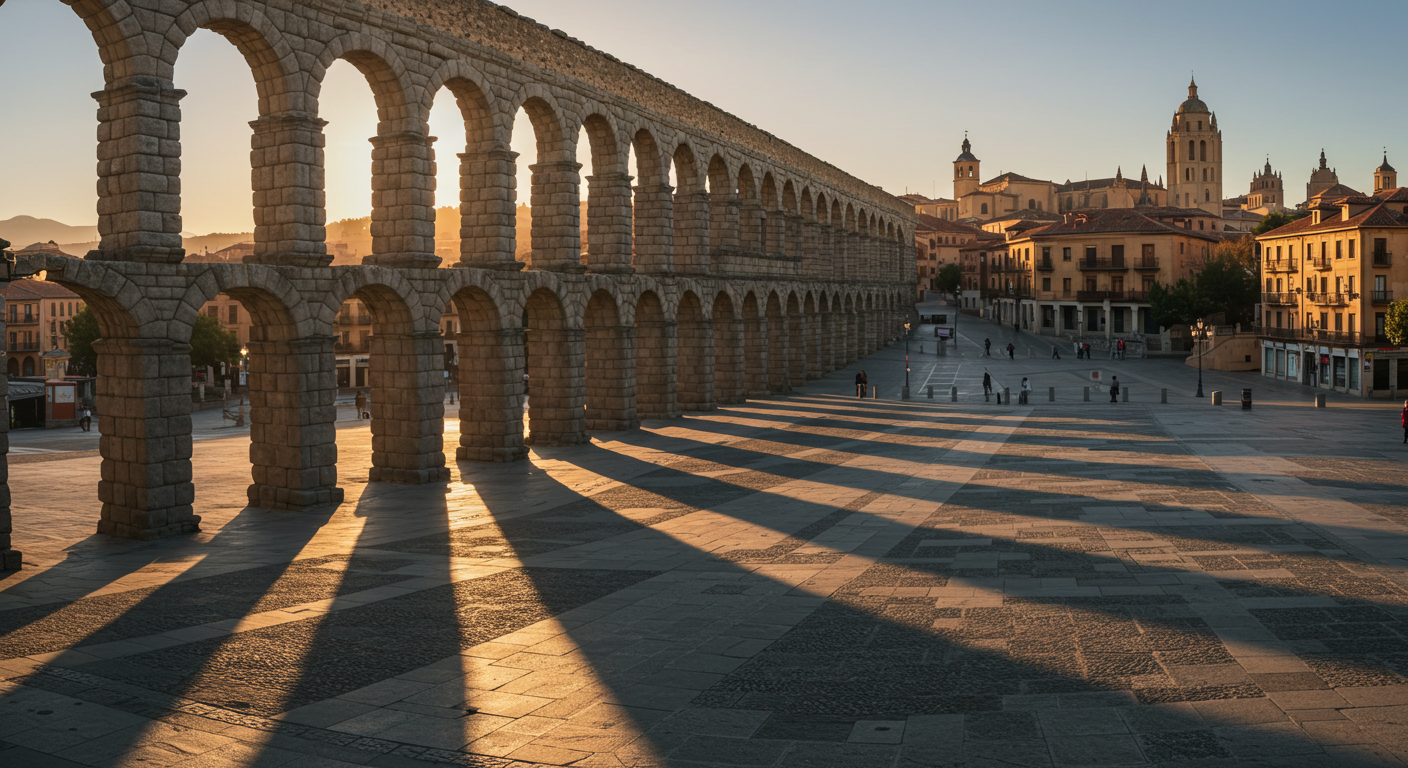
Every article about Segovia opens with the aqueduct. Fine, it deserves it. What those articles don't tell you is that the best thing to do is walk under it slowly, from the Plaza del Azoguejo end, and then double back and do it again. The granite blocks — no mortar, just Roman engineering and gravity — are more astonishing the longer you look. It's 167 arches. It carried water from the Río Frío until the 20th century.
The Instagram angle (from below, arches framing the sky) is obvious. The better photograph is from the top of the old city wall, looking back down at it. Take Calle Cervantes up from the plaza and find the viewpoint above the arch. Early morning light is exceptional here.
Skip the small tourist market stalls immediately around the plaza — overpriced ceramic plates and fridge magnets. Walk past them.
The Cathedral and the Quarter Around It
Segovia's cathedral is the last Gothic cathedral built in Spain, completed in the 16th century, and it's genuinely lovely without being as overwhelming as Burgos or Toledo. The interior is calm, the cloister has a melancholy quality on grey days, and the tower climb (check current opening times on-site; hours shift seasonally) gives you a rooftop view of the alcázar that no postcard quite captures.
Entrance to the cathedral is around €3–€4 as of 2026 — or free during certain morning mass hours, though you'd be attending a service, obviously.
The streets between the cathedral and the Plaza Mayor are where Segovia actually lives. Sit in the Plaza Mayor itself for a coffee at one of the terrace bars. Order a café con leche, ignore the tourist menu boards, and watch Segovians go about their Tuesday morning. This is the bit that slow travel is supposed to be about.
The Alcázar: Worth the Queue, Skip the Crowds
The alcázar is the fairytale castle on the promontory at the western tip of the old city — the one that supposedly inspired Walt Disney's Sleeping Beauty castle, though Disney himself never confirmed this. It doesn't matter. It's extraordinary.
Arrive before 11am or after 3pm to avoid the worst of the school groups and coach tours. Entrance is around €7–€9 for the main rooms, with the tower climb costing a little extra. The tower is worth it: the view down to the confluence of the Eresma and Clamores rivers, with the Vera Cruz church below and the Sierra de Guadarrama behind, is about as Castilian a landscape as you'll find.
The interior rooms are somewhat over-restored — lots of 19th-century neo-medieval decoration — but the armour collection is impressive and the ceilings in the Sala de los Reyes are genuinely beautiful. Don't rush it. Budget 90 minutes.
Cochinillo: How to Do It Properly
Cochinillo asado — roast suckling pig — is Segovia's signature dish and one of the great regional plates of Castile. The pig is no more than three weeks old, roasted in a wood-fired oven until the skin crackles like thin glass and the meat underneath is almost white, falling apart. The tradition is that the waiter serves it by cutting it with the edge of a ceramic plate, then smashes the plate on the floor for luck. Some places still do this theatrically; others have quietly stopped.
The two famous names are Mesón de Cándido (in the plaza by the aqueduct) and José María (Calle Cronista Lecea, 11). Both are excellent, both are expensive by Spanish standards — expect to pay €25–€35 per person for a full lunch with wine — and both are extremely popular with tourists. Book ahead, particularly at weekends. Cándido has been serving cochinillo since 1931 and is frankly a bit of an institution; the dining room has a slightly faded grandeur that I find charming. José María is more polished, arguably more consistent.
If you want something less theatrical, Restaurante El Fogón Sefardí in the Jewish quarter is quieter and does a good version. Or buy half a cochinillo from one of the delis around the market to take away — though eating it on a bench is a messy, magnificent experience.
Lunch in Segovia runs 2pm to 4pm. Don't show up at 1pm expecting to be seated without a reservation.
The Jewish Quarter and the Vera Cruz Church
Segovia had a significant Jewish community until the expulsions of 1492. The old judería (Jewish quarter) is between the cathedral and the alcázar — narrow streets, some with original carved doorways, a small interpretive centre. It's quiet and worth 20 minutes of wandering.
The Vera Cruz church, a 13th-century Templar church just outside the walls, is the most underrated thing in Segovia. It's round — built to hold a relic of the True Cross — and it sits alone in a field with the alcázar behind it. The walk down from the alcázar gate and around the outside of the walls to reach it takes about 20 minutes and is beautiful. The church is small, plain, and genuinely medieval in a way that the over-restored alcázar isn't. It's often almost empty. Opening hours are irregular; check locally.
How Long You Actually Need
A single full day is enough to do Segovia properly — aqueduct, cathedral, alcázar, a long lunch, the Jewish quarter. You will not be bored and you will not feel rushed, if you pace it right.
Two days would let you take the evening more slowly, eat dinner at a smaller place, walk the walls at dusk. Segovia has a handful of good hotels inside the old city if you want to stay. The city is different after the day-trippers leave; quieter, more itself.
Half a day — which some Madrid tour companies sell — is not enough. You'd be skipping lunch or the alcázar, and skipping either would be a mistake.
A Note for Newcomers to Spain
If you're planning a longer stay in Spain rather than just a visit, Segovia is the sort of place that makes you think seriously about it. Castile-La Mancha and Castilla y León are genuinely underrated for slow living — cheaper than Madrid, calmer than the coast, with real seasons and real food culture. If you're sorting out the paperwork side of a move — residency, banking, renting without a local payslip — it's worth reading up before you arrive. The practicalities of renting in Spain without a Spanish payslip catch a lot of people off-guard, as does understanding what healthcare cover you actually have before your TIE arrives. Worth knowing before you fall in love with somewhere and try to stay.
Getting Back
Last Avant trains back to Madrid from Guiomar run into the evening — around 21:00–22:00 on most days, but check Renfe for the current last service. Don't cut it close if you have an early start the next morning; the bus connection from town to the station adds time. Leave the old city by 8pm at the latest if you're aiming for the last train.
Buy your return ticket before you leave Madrid. The machines at Guiomar can be slow and occasionally temperamental.
Frequently asked questions
- How long does the train from Madrid to Segovia take?
- The high-speed Avant service from Chamartín to Segovia-Guiomar takes approximately 27 minutes. Add another 15 minutes by bus (line 11) from the station into the old city centre.
- Is one day enough for Segovia from Madrid?
- Yes, a full day is enough to see the aqueduct, the alcázar, the cathedral quarter, and eat a proper cochinillo lunch. A half day — as some tour operators sell — is not enough. Two days is ideal if you want to take it slowly or see the Vera Cruz church without rushing.
- How much does cochinillo cost in Segovia?
- At the main restaurants like Mesón de Cándido or José María, expect to pay €25–€35 per person for a full lunch including wine. It's not cheap by Spanish standards, but it's one of the great regional meals in Castile. Book ahead, especially at weekends.
- What is the best time of day to visit the Segovia aqueduct?
- Early morning — before 10am — is best for photographs and for avoiding the crowds that build up around the Plaza del Azoguejo by mid-morning. The light is good from the east in the morning and from above the old city walls in the afternoon.
- Do I need to book Segovia alcázar tickets in advance?
- It's advisable, particularly on weekends and in July–August. You can book online via the alcázar's official website. Arriving before 11am or after 3pm also helps avoid the busiest periods.
- Is Segovia worth visiting in winter?
- Yes, arguably more so than summer. The city is far quieter from November to February, the restaurants are less hectic, and cochinillo is a natural winter dish. The Sierra de Guadarrama backdrop is often snow-capped, which is beautiful. Bring a proper coat — Segovia sits at around 1,000 metres and gets genuinely cold.
- Can I visit Segovia and Toledo in the same day from Madrid?
- Technically possible but not recommended. Both cities deserve proper time — rushing through two medieval Castilian cities in a single day means you'll do justice to neither. Pick one and do it properly.