How to Spend a Long Weekend in Madrid Like a Local
A slow, neighbourhood-by-neighbourhood guide to spending a long weekend in Madrid like a local — tabernas, markets, barrios and what to skip.
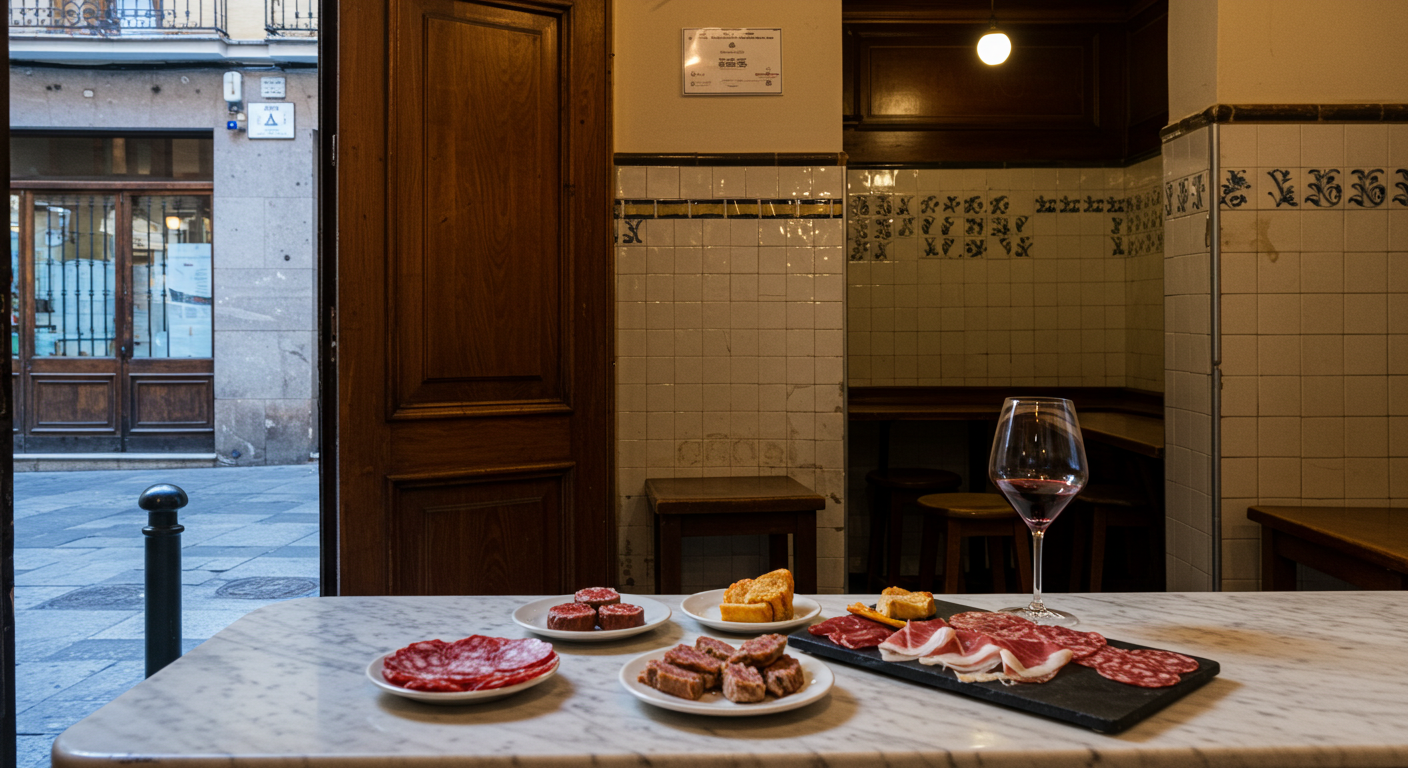
Three days in Madrid is enough to do it badly or well. Done badly, you queue for the Prado on a Saturday morning, eat paella in Sol (never do this), and leave thinking the city is noisy and expensive. Done well, you barely leave a two-kilometre radius, eat standing up at a marble bar, and start quietly researching flat prices on the Sunday night train home.
Spending a long weekend in Madrid like a local means slowing down, picking one or two neighbourhoods and going deep rather than ticking monuments. The city rewards that approach more than almost anywhere else in Spain. Here's how to actually do it.
Forget the centre. Start in Lavapiés.
Most visitors gravitate towards Sol, Gran Vía and the tourist triangle around the Prado. Those places are fine, but they're not where Madrid lives. Lavapiés is where Madrid lives — messy, loud, genuinely multicultural, with more tabernas per square metre than anywhere else in the city.
Base yourself here if you can. Short-term rentals on Calle Argumosa or around the Plaza de Lavapiés itself run roughly €80–120 a night for a decent one-bed as of 2026, which is considerably cheaper than anything near the Retiro. The neighbourhood is walkable to everything — the Reina Sofía is a ten-minute stroll, the Rastro market is on your doorstep on Sunday mornings, and the Mercado de San Fernando on Calle Embajadores is where you should actually be eating lunch.
San Fernando is the anti-Mercado de San Miguel. No tourists posing with jamón cones, no €6 croquetas. Just a covered market with a rotating cast of small operators: a Turkish place, a couple of Spanish wine bars, a Vietnamese stall that's been there for years. Lunch for two with wine, around €25–30. Go between 2pm and 4pm — outside those hours it's half-closed.
Friday evening: the art of the vermut
Madrileños don't do dinner at 7pm. They do vermut at 1pm on Sundays and dinner at 9:30pm on weekdays, and if you try to fight that rhythm you'll spend the weekend eating alone in half-empty restaurants.
Arrive on a Friday, dump your bags, and head out around 7pm for a paseo and a caña. Don't plan dinner before 9pm. This is non-negotiable.
The stretch of Calle Cava Baja in La Latina is the classic Friday-evening spot, and it's popular for a reason — but it's also heaving. Walk one block east to Calle Cava Alta instead. Taberna Txakolina does excellent pintxos for a Madrid bar (they import properly from the Basque Country). Casa Lucas, a few doors down, is small and serious about its wine list without being precious about it. A glass of Ribera del Duero and a plate of cured meats, maybe €12 a head. This is dinner, or the start of it.
For comparison, if you want a proper sit-down dinner in La Latina on a Friday night without a reservation, you'll struggle. Book ahead, or eat early by Spanish standards (9pm rather than 10:30pm) and hope for a gap at the bar.
Saturday: Malasaña in the morning, Chamberí in the afternoon
Saturday morning belongs to Malasaña. Walk up from Gran Vía through the Chueca market on Calle Fuencarral, past the independent shops that haven't yet been replaced by Zara, and into the Plaza del Dos de Mayo. Have your first coffee at Bar Maravillas or any of the half-dozen neighbourhood cafés that open at 8am. Order a cortado and a tostada con tomate y aceite — toast, grated tomato, olive oil, salt. This is breakfast. It costs around €3.50 and it's better than anything in a hotel.
Malasaña has gentrified considerably since the early 2000s, but it hasn't completely lost its edges. The streets around Calle Manuela Malasaña and Calle San Vicente Ferrer still have hardware shops and old-school bodegas alongside the brunch cafés. Spend an hour walking without a destination. That's the point.
After lunch (see below), cross north into Chamberí. This is the neighbourhood Madrid residents consistently name as their favourite to actually live in, and it's easy to see why. Wide pavements, handsome early-20th-century buildings, the ghost metro station at Andén 0 (free to visit, genuinely eerie), and a concentration of excellent local restaurants that don't bother with Instagram aesthetics. Walk along Paseo de Eduardo Dato, turn into the side streets around Calle Alonso Cano, and just look at the city. It feels like the Madrid that hasn't been packaged for export.
Where to eat on Saturday
Lunch: Taberna Pedraza on Calle Ibiza, in the Retiro-adjacent neighbourhood of the same name — it's a short cab or metro ride from Malasaña but worth it. They do one of the best tortillas in the city (the debate over runny vs set is eternal; theirs is properly cuajada, set, which is the correct answer). Book ahead, even for Saturday lunch. A full meal with wine, around €35–45 a head.
If you can't get into Pedraza, El Brillante near the Reina Sofía does a bocadillo de calamares — fried squid in a bread roll — that costs about €4 and is one of the best sandwiches in Spain. Don't let anyone convince you otherwise.
Dinner: Head to Chueca for the evening. Restaurante Cisne Azul on Calle Gravina is a reliable neighbourhood place that locals actually use, not a tourist trap. The menu del día isn't available at dinner, but the raciones are well-priced and the wine list focuses on small Spanish producers.
Sunday: the Rastro and the vermut ritual
The Rastro is Europe's oldest flea market, running every Sunday morning from around 9am to 3pm across the streets around the Plaza de Cascorro and spilling down Calle Ribera de Curtidores. It's chaotic, occasionally magnificent, and full of junk. The stalls at the top near Cascorro are mostly tourist tat — keyrings, replica football shirts, cheap sunglasses. Go to the bottom end, where the serious antique dealers and secondhand book sellers set up. You might find nothing. You might find a 1960s Spanish cinema poster for €15.
Watch your pockets. Not in a dramatic way, but the Rastro is the one place in central Madrid where pickpocketing is genuinely common.
After the Rastro, the entire neighbourhood moves to the bars around La Latina for vermut. This is a genuine ritual, not a tourist performance. Order a vermut rojo — Lustau or Yzaguirre are the ones to ask for — with a small plate of olives and a sliver of cheese. Bodegas Ricla on Calle Cuchilleros is old, dark, slightly sticky, and exactly right. Stand at the bar. Talk to whoever is next to you. This is what Sunday in Madrid looks like.
The Prado: yes, but do it properly
I'm not going to tell you to skip the Prado. It's one of the great art museums on earth and it's free after 6pm Monday to Saturday (until 8pm) and on Sundays after 5pm. Go on Sunday late afternoon when the queues have died down. Go straight to the Velázquez rooms — Las Meninas is the obvious one, but the Surrender of Breda two rooms over is arguably the better painting. Then find the Goya Black Paintings in the basement. Give yourself ninety minutes and leave before you're saturated. The museum is enormous; trying to do it in one visit is a mistake.
Skip the Thyssen on this trip unless you have a specific reason to go. The Reina Sofía — Guernica, the surrealists, the Spanish Civil War photography — is worth half a day on its own, and personally I'd choose it over the Thyssen every time.
Practical notes for the weekend
Getting around: Madrid's metro is excellent and covers the whole city for €1.50–2 a journey (as of 2026 — check current fares, they adjust). The city is also remarkably walkable between Lavapiés, La Latina, Malasaña and Chueca. You don't need a taxi unless you're heading to the airport or the further-flung suburbs.
Cash vs card: Most tabernas and traditional bars still prefer cash, and a few of the older places won't take card at all. Carry €50 in small notes.
Heat: If you're visiting between June and September, the city gets genuinely brutal — 38–40°C is normal in July and August. Plan to be inside or in shade between 1pm and 6pm. Madrileños do this instinctively. Early mornings and late evenings are when the city is at its best in summer.
If this trip starts to feel like the beginning of something longer — if you find yourself googling flat rentals or wondering what the bureaucratic process looks like — there's a step-by-step guide to getting your NIE and TIE that covers the residency paperwork in plain English. And if you're considering the slower, more immersive version of this kind of trip elsewhere in Spain, the slow travel guide to Granada takes a similar approach to a very different city.
For anyone thinking about relocating rather than just visiting, the cost of living breakdown by city is useful context — Madrid is more expensive than most of Spain, but cheaper than London or Paris in ways that still surprise people.
One last thing: the long weekend format suits Madrid particularly well precisely because the city doesn't demand to be conquered. Come back. Come back in a different season, stay in a different barrio, find a different taberna. The city is designed for returning to.
Frequently asked questions
- What is the best neighbourhood to stay in for a long weekend in Madrid?
- Lavapiés is the best base for a slow, local-feeling long weekend — it's central, affordable, full of good tabernas, and walkable to the Reina Sofía, La Latina and the Rastro. La Latina itself is another strong option if you want to be in the thick of the Friday and Saturday night scene, though it's louder.
- What time do people actually eat dinner in Madrid?
- Locals typically eat dinner between 9pm and 10:30pm. Restaurants before 9pm on a weekday will be half-empty or full of tourists. On weekends, 9:30–10pm is normal. Don't fight the rhythm — it works in your favour, because you can have a long, leisurely evening without feeling rushed.
- Is the Rastro flea market worth visiting on a Sunday?
- Yes, though manage expectations. The top of the market near Cascorro is mostly tourist goods; the better stuff — antiques, old books, vintage ceramics — is at the lower end on Calle Ribera de Curtidores. Go before 11am if you want space to move. Watch your pockets. Combine it with vermut in La Latina afterwards for the full Sunday experience.
- When is the Prado Museum free to visit?
- The Prado is free Monday to Saturday from 6pm to 8pm, and on Sundays from 5pm to 7pm (as of 2026 — verify on the museum website before you go, as hours adjust seasonally). Sunday late afternoon is the best time: queues are shorter than the morning rush, and the light through the upper windows is beautiful.
- What should you actually eat in Madrid — and what should you avoid?
- The classics worth eating: cocido madrileño (a slow-cooked chickpea stew, usually lunch-only), bocadillo de calamares (fried squid roll, €3–4 from El Brillante near Atocha), tortilla española, and cured meats at any halfway decent taberna. Avoid: paella in or near Sol or Gran Vía (it's not a Madrid dish and tourist-area versions are poor), overpriced 'mercado gourmet' spots near the main sights, and anywhere with a photo menu in four languages.
- How much does a long weekend in Madrid typically cost?
- It varies widely. Budget roughly €80–120/night for a decent self-catering flat in Lavapiés or La Latina (as of 2026). Eating and drinking like a local — tabernas, market lunches, bar snacks — you can live very well on €50–70 a day for two people including wine. The city rewards eating at the bar and avoiding the obvious tourist traps.
- Is Madrid worth visiting in summer despite the heat?
- Yes, but you need to adapt. July and August regularly hit 38–40°C in the afternoon. The trick is to do what Madrileños do: be out early (before 1pm), retreat indoors or to a shaded terrace in the afternoon, and come back out after 7pm when the city genuinely comes alive again. Many locals leave in August, which makes the city quieter and, in some ways, more pleasant.