Pintxos Bar Crawl San Sebastián and Bilbao: How It Works
How to do a pintxos bar crawl in San Sebastián and Bilbao — the unwritten rules, best bars, what to order, and what to avoid. Updated 2026.
How a Pintxos Crawl Actually Works
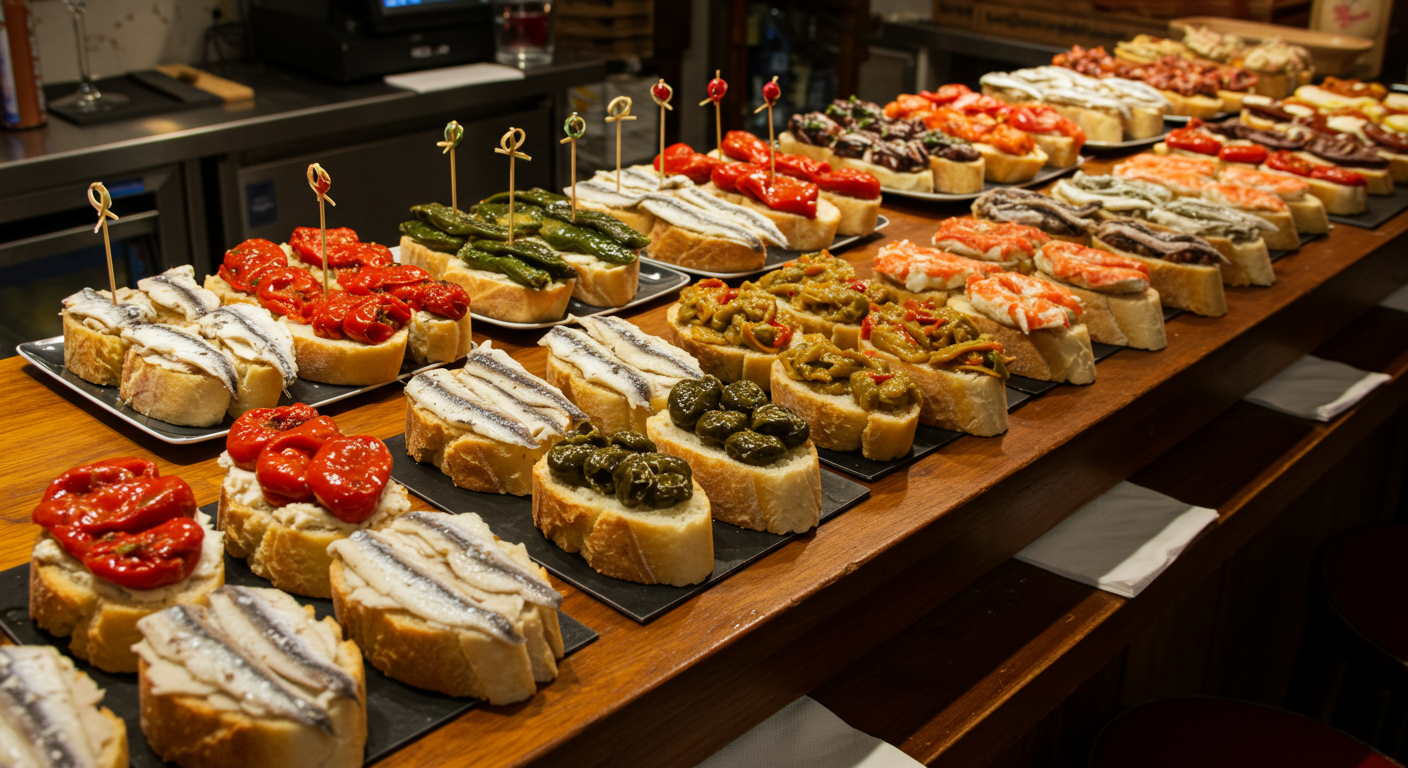
A pintxos crawl in San Sebastián or Bilbao is not complicated, but it has a rhythm — and if you ignore it, you'll end up full, drunk, and mildly ripped off by 7pm. The basic format: you walk into a bar, you order a drink, you eat one or two pintxos, you pay, you move on. That's it. You do not sit down. You do not linger. You definitely do not order twelve things at once.
The crawl is called a txikiteo in Basque, and locals treat it like a social art form. Each stop is short — fifteen to twenty minutes, maybe thirty if you're with a group. Two pintxos and a txikito (a small glass of wine, roughly 100ml) or a zurito (a half-pint of beer) per bar. Then you walk to the next one. Across an evening you might visit five, six, seven bars. The total bill per person, done properly, should sit around €20–30 in San Sebastián, possibly a little less in Bilbao where prices are marginally more forgiving.
One thing nobody puts in the guidebooks: you are expected to leave your used napkins on the floor. Not in the bin, not folded neatly on the bar. On the floor. This is normal. This is correct. The more napkins underfoot, the better the bar is doing.
San Sebastián: Where to Go and What to Order
The old town — Parte Vieja — is the obvious starting point and, for once, the obvious choice is the right one. The streets that matter most are Calle 31 de Agosto, Calle Fermín Calbetón, and the narrow strip of Calle de la Pescadería. You can cover a serious crawl without ever leaving this triangle.
The bars worth your time
Bar Nestor on Calle de la Pescadería is the one everyone argues about. The tortilla — served only at 1pm and 8pm, one slab per session, first come first served — is genuinely extraordinary. Soft, barely set, the kind of thing that ruins you for all other tortillas. Get there fifteen minutes early and put your name down. Miss it and you'll eat the pintxos on the bar like everyone else; they're fine, but they're not the point.
La Cuchara de San Telmo on Calle 31 de Agosto operates differently from most pintxos bars. There's no spread of food on the counter; everything is made to order from a small blackboard menu. The carrillera de ternera (braised beef cheek) is one of the better things I've eaten in Spain. It's busier than it deserves to be, but it's busy for genuine reasons.
Borda Berri, also on Calle Fermín Calbetón, does extraordinary things with risotto and braised meats, which sounds wrong for a pintxos bar and somehow isn't. The kokotxas al pil-pil — salt cod cheeks in the gelatinous, emulsified pil-pil sauce — is worth ordering if you see it.
A Fuego Negro is the outlier: modern, slightly theatrical, self-consciously creative. The mini-burger and the squid ink cracker things are good. It's not traditional and it doesn't pretend to be. Skip it if you want the real thing; go if you want something to talk about.
Avoid the bars on the waterfront promenade. The pintxos there are pre-made hours in advance, the wines are overpriced, and the staff are managing tourist volume rather than cooking. The money you'd spend there is better used on an extra stop in the Parte Vieja.
Timing in San Sebastián
Locals start late. Seriously late. The real lunch crawl runs from 1pm to 3pm; the evening crawl kicks off around 7:30pm and peaks between 9pm and 10:30pm. Tourists tend to arrive at 6pm and find the bars quiet and the pintxos stale. Wait until 8pm for the evening session. The food will be fresher, the atmosphere better, and you'll be eating alongside people who actually live there.
Bilbao: A Different Energy
Bilbao's pintxos scene is excellent and considerably less written-about than San Sebastián's, which is partly why it's better value and partly why you can still get a spot at the bar on a Friday night without queuing for twenty minutes.
The main crawl areas are the Casco Viejo (old town) and the Ensanche neighbourhood — specifically the streets around Plaza Nueva and Calle García Rivero respectively. These are different crowds. The Casco Viejo is older, louder, more traditional. The Ensanche attracts a younger Bilbao crowd and has a few more creative bars.
Bars to prioritise in Bilbao
El Globo on Calle Diputación in the Ensanche is where I'd send anyone who thinks Bilbao is second-best. The foie pintxos and the txangurro (spider crab) preparations are serious. It's a proper bar — noisy, busy, zero pretension — and the wine list is better than you'd expect.
Gure Toki on Plaza Nueva is the one for atmosphere. The square itself is beautiful and the bar opens onto it in good weather. The pintxos are consistently good rather than exceptional, but the setting earns its place in an evening.
Bar Txosne near the Ribera market does the traditional stuff without fuss: anchoas, boquerones, pimientos rellenos. It's the kind of bar where the staff have been doing this for decades and it shows.
In Bilbao, unlike San Sebastián, some bars still put the old-school pintxos — bread rounds with toppings, skewered with a toothpick — on the counter and charge you by counting the toothpicks at the end. Don't be alarmed. Just keep track of how many you've eaten. The price per pintxo runs from about €2 to €4.50 depending on the bar and what's on top.
The Unwritten Rules Nobody Tells You
Order your drink first. Always. The bar's primary business is drinks; food is what comes with them. Asking for food before you've ordered a drink is a small social error that marks you immediately.
Don't hover. If there's no space at the bar, wait outside or at the edge until someone leaves. Squeezing in and waving money around is not the move.
Learn four words: uno (one), dos (two), por favor (please), and ¿cuánto es? (how much?). Add txakoli (the local sharp white wine, pronounced roughly chah-koh-lee) and you're essentially set. Txakoli is poured from a height to aerate it — you'll see the barman lift the bottle above his head. It's slightly sparkling, quite acidic, and the right drink for the first two or three bars.
Pay at each bar before you leave, not at the end of the night. Running a tab across multiple bars is not a thing here.
If you're doing this in a group larger than four, split into two groups or accept that you will block the bar, annoy the staff, and have a worse time than the couple next to you who can actually get served.
San Sebastián vs Bilbao: Which to Do First
If you only have one night in the Basque Country, do San Sebastián. The concentration of excellent bars in a small area is unmatched, and the Parte Vieja on a Friday evening is one of those experiences that justifies the trip to Spain entirely.
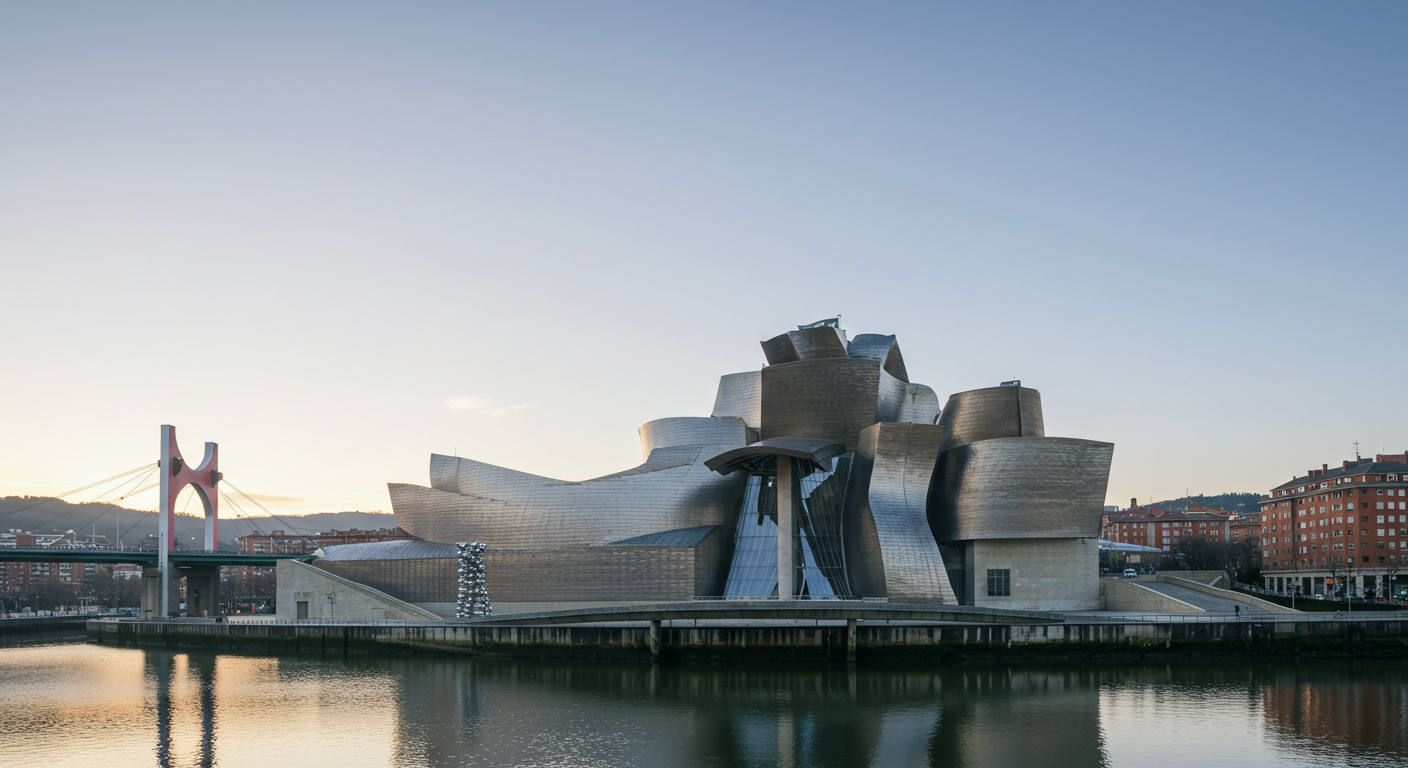
If you have two nights — which is really the minimum to do both properly — do Bilbao first. It's slightly less intense, which is a good way to calibrate your appetite and your rhythm before the main event. Bilbao also has the Guggenheim, the Ribera market, and a genuinely good restaurant scene beyond pintxos, so a full day there doesn't feel like a warm-up act.
The train between the two cities takes roughly an hour on the Euskotren or slightly faster on Renfe. It runs regularly and costs under €15 each way. There's no sensible reason to hire a car for this trip.
Practical Notes for 2026
Pintxos prices have crept up in San Sebastián particularly. Budget €3–5 per pintxo in the Parte Vieja's better bars; €2–3.50 in Bilbao's Casco Viejo. A txikito of house wine is usually €1.50–2.50. A zurito of beer is similar. So a realistic per-stop spend is €6–10. Over five or six bars, that's your €30–40 evening, all-in.
Both cities are extremely walkable. San Sebastián's Parte Vieja is small enough that you can walk its full length in eight minutes. You don't need taxis, apps, or any planning beyond knowing which street you want to start on.
If you're relocating to the Basque Country rather than just visiting — which more people are doing, drawn by the food culture and the quality of life — the usual bureaucratic groundwork applies. Getting your empadronamiento sorted and opening a Spanish bank account are the first practical steps. If you're working remotely, it's worth reading up on the Spanish Digital Nomad Visa before you commit to anything longer than a tourist stay.
One last thing: pace yourself on the first evening. The fatal mistake — and I have made it — is to eat three pintxos at the first bar because they look extraordinary, and then arrive at the fifth bar unable to eat anything. One or two per stop. Move often. Eat slowly. That's the whole secret.
Frequently asked questions
- How many bars should you visit on a pintxos crawl in San Sebastián?
- Five to seven bars is the sweet spot for an evening crawl. One or two pintxos and one drink per bar keeps you going without overdoing it. Most locals do the crawl over two to three hours, starting around 8pm.
- What is the difference between pintxos and tapas?
- Pintxos (also spelled 'pinchos' outside the Basque Country) are individual, usually one-bite preparations — often on bread, sometimes skewered — and you pay per piece. Tapas in Andalusia and central Spain are often free with a drink, or served as small shared dishes. The culture, pricing, and format are quite different.
- Is it rude not to speak Basque in the pintxos bars?
- Not at all. Spanish works everywhere. A few Basque words — 'eskerrik asko' (thank you), 'agur' (goodbye) — are appreciated but entirely optional. Bar staff in San Sebastián and Bilbao are used to visitors and most speak at least basic English.
- What should you drink on a pintxos crawl?
- Txakoli is the classic choice for the first few bars — it's the local dry, slightly sparkling white wine and pairs well with seafood pintxos. Switch to Rioja or Ribera del Duero for meatier bites later in the evening. A zurito (small beer) is also perfectly normal between wines.
- Are pintxos bars in San Sebastián suitable for vegetarians?
- There are vegetarian options — tortilla, peppers, mushroom preparations, cheese — but the best pintxos tend to involve anchovies, crab, foie, or cured meats. Vegans will find it harder. It's not impossible, but the Basque pintxos tradition is heavily built around seafood and meat.
- When is the worst time to do a pintxos crawl in San Sebastián?
- Lunchtime on a Sunday in August. The Parte Vieja is dangerously packed, queues form outside the best bars, and prices at the tourist-facing spots are at their highest. If you're visiting in summer, weekday evenings are significantly more manageable.
- Can you do a pintxos crawl on a Monday?
- Many bars in both cities close on Mondays, or run reduced hours. It's the weakest night for a crawl. Tuesday and Wednesday are quieter than weekends but most bars are open. If your trip only allows a Monday, stick to the streets around Plaza Nueva in Bilbao or Calle Fermín Calbetón in San Sebastián — those tend to have better Monday coverage.