Slow Travel in Córdoba: How Many Days Do You Actually Need?
Wondering how many days to spend in Córdoba? This honest slow-travel guide covers the Mezquita, the Judería, the patio festival and the best places nobody tells you about.
Three days is the honest minimum. Two days feels rushed — you'll leave having ticked boxes but not having sat still long enough to understand what this city is. Four days and you start to feel like a temporary local, which is really the whole point.
Most people come to Córdoba on a day trip from Seville or Granada, spend four hours at the Mezquita, eat a salmorejo, and leave. That is a shame. Córdoba rewards slowness more than almost any Andalusian city — it's compact, walkable, and built around a kind of contemplative beauty that you cannot absorb at speed.
How Many Days to Spend in Córdoba: The Honest Answer
For a meaningful visit — Mezquita, Judería, the old town, a couple of patios, a proper lunch, and enough time to sit in a courtyard without looking at your watch — you want three nights, four days. If you're travelling in May during the Festival de los Patios, add an extra day. If you're doing it as a short break rather than a deep dive, two full days will do, but you'll need to be selective.
The city itself is not large. The historic centre fits inside a rough circle of about a kilometre across. That's the good news. The bad news is that it's dense with things worth seeing, and the heat (June through September, this is brutal — regularly above 38°C) slows everything down whether you want it to or not.
The Mezquita-Catedral: Go Early, Go Twice
Everyone goes to the Mezquita. You should too. But go first thing in the morning — doors open at 10:00 (as of 2026, Monday to Saturday; on Sunday the first tourist entry is after the 10:00 mass, usually around 10:30). Get there by 9:50 and you'll be near the front of the queue. By 11:30 it's genuinely packed.
Tickets are around €13 for adults as of 2026 — check the official Cabildo website because pricing has shifted in recent years. There's a free entry slot from 08:30 to 09:30 Monday to Saturday, but it's technically for prayer, not tourism, and the lighting is dim. Worth knowing, not worth fighting over.
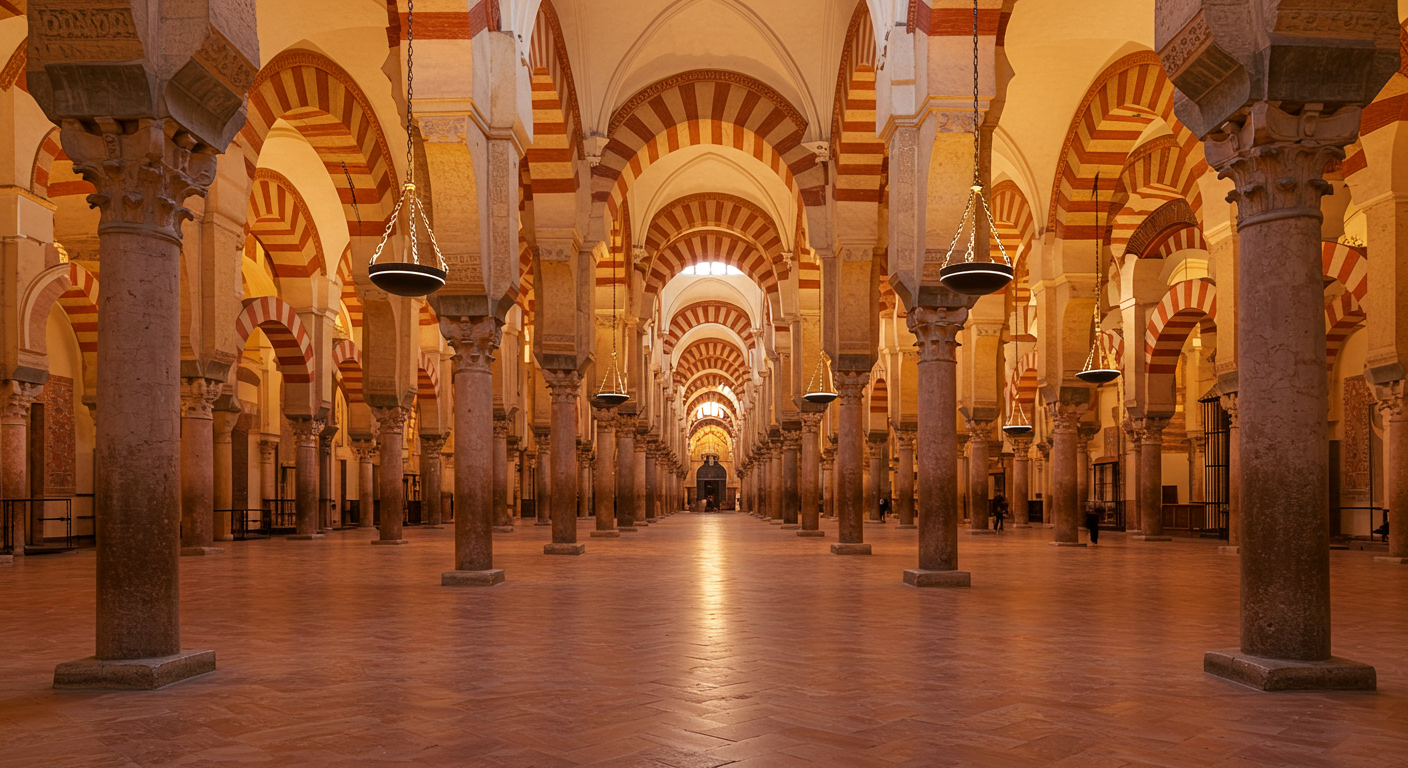
The forest of 856 striped arches is as extraordinary as promised. What surprises most people is the Renaissance cathedral plonked in the middle of it — Charles V famously said, on seeing it completed, that the builders had "destroyed something unique to build something ordinary". He had a point, but the cathedral itself is not without merit if you give it five minutes rather than dismissing it as a colonial imposition.
Go twice if you can. The second visit, even the next morning, lands differently once you've had a night to process it.
The Judería: More Than a Souvenir Quarter
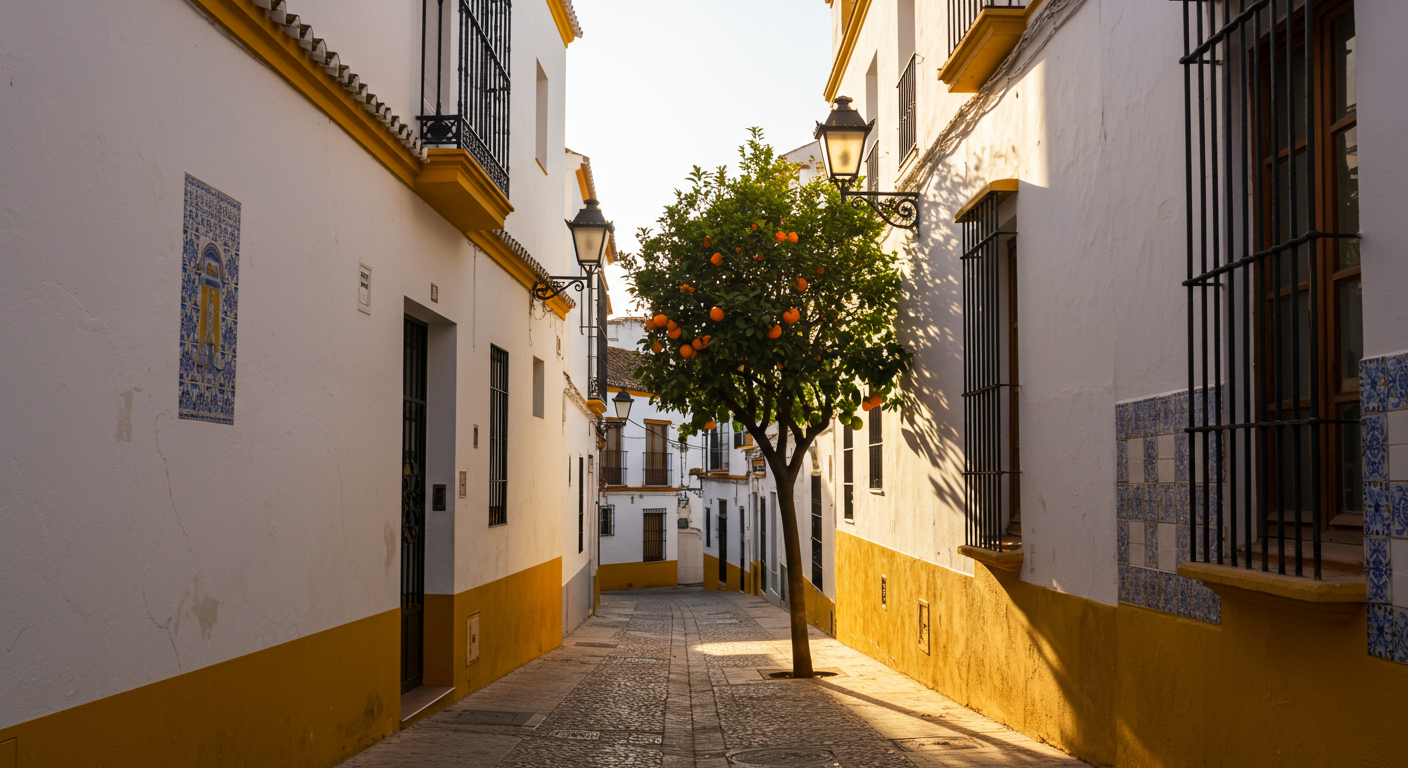
The old Jewish quarter spreads immediately west and north of the Mezquita. A lot of it is now tourist-facing — ceramics shops, overpriced restaurants on the main lanes — but the bones of the neighbourhood are genuine, and the streets themselves are remarkable: narrow, whitewashed, with flower pots trailing down the walls.
The Sinagoga on Calle de los Judíos (one of only three surviving medieval synagogues in Spain) is tiny and frequently overlooked. Entry is free for EU citizens; non-EU is around €0.30, which feels almost insulting given its significance. It dates from 1315. Spend twenty minutes here rather than five.
Skip the tacky restaurants on Calle Buen Pastor. Head instead to the streets just east of the synagogue, around Plaza de Maimonides — quieter, more genuine, and where you'll find a handful of family-run places that haven't entirely pivoted to tourist menus.
The Patio Festival: Time Your Visit If You Can
The Festival de los Patios Cordobeses happens in the first two weeks of May and it is, without exaggeration, one of the most beautiful things in Spain. Private residents throw open their interior courtyards — filled with geraniums, jasmine, roses, potted plants stacked floor to ceiling — and the city holds a competition. The winning patios are genuinely jaw-dropping.
Entry to the patios is free. You queue. The queues can be long (30–45 minutes for the most famous ones). Go on a weekday morning if you can, not a Saturday afternoon. The festival draws significant crowds, especially in the second week, so accommodation books out early — if you're planning around this, sort your hotel in January.
Even outside May, many patios are open to visitors year-round. The Centro de Interpretación de los Patios Cordobeses (just off Calle San Basilio) is a good starting point, and the Casa de los Villalones on Calle Marroquíes is often cited as one of the finest examples you can visit without the festival queues.
Eating and Drinking: Where to Go, What to Order
Salmorejo first. Córdoba's version is thicker and richer than the watery gazpacho you get elsewhere — more bread, more olive oil, served cold with a tangle of jamón and hard-boiled egg on top. Taberna Salinas on Calle Tundidores is the classic choice and still worth it despite the crowds; go at 13:30 when it opens for lunch rather than 14:30 when it's heaving.
Flamenquín is the local fried-food obsession — pork loin wrapped around jamón, breaded and deep-fried. It sounds straightforward. It tastes significantly better than it sounds. Order it at almost any traditional taberna in the old town.
For wine: Montilla-Moriles is Córdoba's local DO, a fino-style wine made from Pedro Ximénez grapes. It's similar to sherry but often better value and less well-known outside the region. A glass of dry fino from Montilla alongside a plate of ibérico is a small, correct pleasure. Try it at Bodega Guzman on Calle de los Judíos — no-frills, cash only, the kind of place that hasn't changed since 1970.
Avoid the restaurant strip immediately around the Mezquita on Calle Torrijos. All of it. Overpriced, indifferent food, trading entirely on footfall.
The Alcázar and the Palacio de Viana: Two Different Paces
The Alcázar de los Reyes Cristianos sits just south of the Mezquita, surrounded by formal gardens with fountains and fish ponds. It's pleasant without being extraordinary — the gardens are the point, not the interior. Good for a slow morning hour, particularly in spring when the orange trees are in blossom. Entry around €5 as of 2026.
The Palacio de Viana, fifteen minutes' walk north into a quieter residential neighbourhood, is something else entirely. Twelve interconnected courtyards, each planted differently, belonging to a Renaissance palace that was lived in by the same noble family until 1981. It still feels like a private house. Entry is around €10 for the full tour including the palace interior; €6 for just the patios. The patios alone are worth it and take the better part of an hour to walk properly.
If you only have time for one of the two, choose the Palacio de Viana.
Staying in Córdoba: Where and What to Expect
Stay inside or immediately adjacent to the historic centre. The streets around Plaza de la Corredera — a proper arcaded square, quieter than its Salamanca equivalent, with a daily market under the arches — are well-placed and still reasonably priced compared to Seville.
Budget for accommodation: a decent mid-range hotel inside the Judería or old town runs €80–€130 a night in spring (higher during the Patio Festival), €60–€90 in autumn. Small boutique places with interior patios exist throughout the old town and are worth the slight premium — staying somewhere with a courtyard is part of the experience.
Cordoba gets genuinely quiet in July and August — the Spaniards largely abandon it to the tourists and the heat. If you visit in summer, start every day by 9:00, rest completely between 14:00 and 18:00 (everything will be closed anyway), and resume in the evening when the streets cool to something bearable.
Getting to Córdoba
The high-speed AVE from Madrid takes about 1 hour 45 minutes; from Seville, 45 minutes. The station is about twenty minutes' walk from the historic centre, or a short taxi. Renfe prices vary enormously depending on how far ahead you book — a Madrid–Córdoba ticket can be €25–€70 one way. Book in advance.
From Málaga, the train takes about an hour. From Granada, it's more complicated — you'll need to change, and it often takes two and a half hours or more. Some people drive from Granada. It's about 160km and the road is fine.
Parking inside the historic centre is a nightmare. If you're driving, park at one of the car parks on the perimeter (Parking Campo Santo de los Mártires is close and manageable) and walk. Don't try to navigate the medieval lanes by car.
If You're Thinking About Staying Longer
Cordoba has a small but genuine expat and digital nomad community, drawn by the low cost of living and the quality of life. Renting in the historic centre is cheaper than you'd expect — a furnished flat in the Judería area might run €700–€1,000 a month for a one-bedroom as of 2026, though supply is limited. The wider city has cheaper options.
If you're considering a longer stay or relocation, the practical admin still applies: you'll need to navigate things like empadronamiento without a rental contract if you're in an informal housing situation, and if you're working remotely, the Spanish Digital Nomad Visa is worth looking at properly before you arrive. Healthcare access before your TIE is sorted is another thing worth understanding — there's a useful overview at Healthcare in Spain Before Your TIE Arrives.
Cordoba is not a city people talk about moving to as often as Seville or Valencia. That's part of its appeal. It's been here for a very long time and it's not particularly trying to impress you.
Frequently asked questions
- How many days do you need in Córdoba, Spain?
- Three nights and four days is the honest minimum for a meaningful visit that includes the Mezquita, the Judería, the Palacio de Viana, and enough time to eat and sit properly. Two full days works if you're selective, but feels rushed. During the Patio Festival in May, add an extra day.
- When is the best time to visit Córdoba?
- March to May and October to November are ideal. May brings the Festival de los Patios, which is worth timing your trip around. June through September is brutally hot — regularly above 38°C — and while the city doesn't close, it demands a very different pace (early mornings, long afternoon rests).
- Is the Mezquita free to enter?
- There's a free entry slot from 08:30 to 09:30 Monday to Saturday, technically for religious visitors rather than tourists. Standard tourist entry is around €13 as of 2026 — check the official Cabildo de Córdoba website for current pricing before you go.
- What is the Festival de los Patios in Córdoba?
- A two-week festival in early May during which residents open their private flower-filled courtyards to visitors and compete for prizes. Entry to the patios is free, but popular ones have queues of 30–45 minutes. Weekday mornings are significantly quieter than weekends.
- Is Córdoba worth visiting outside the Patio Festival?
- Absolutely. The Mezquita, the Judería, the Palacio de Viana, and the food and wine scene exist year-round. The city is quieter and in some ways more enjoyable outside the festival peak — especially in October and November when the light is good and the tourist crowds thin out.
- Can you do Córdoba as a day trip from Seville?
- You can — the AVE takes 45 minutes — but it's not ideal. A day trip gives you time for the Mezquita and a wander, but Córdoba's appeal is cumulative. An overnight stay, at minimum, changes the experience entirely.
- What food should you eat in Córdoba?
- Salmorejo (thicker and richer than gazpacho, served with jamón and egg), flamenquín (breaded fried pork), and anything from the Montilla-Moriles wine DO — particularly the dry fino style, which is excellent with ibérico. Avoid the restaurant strip directly around the Mezquita.