Spending a Week in Granada Slowly: A Real Slow Travel Guide
How to spend a slow travel week in Granada, Spain — real neighbourhoods, honest costs, where to eat, what to skip, and how to actually live it rather than tick it off.
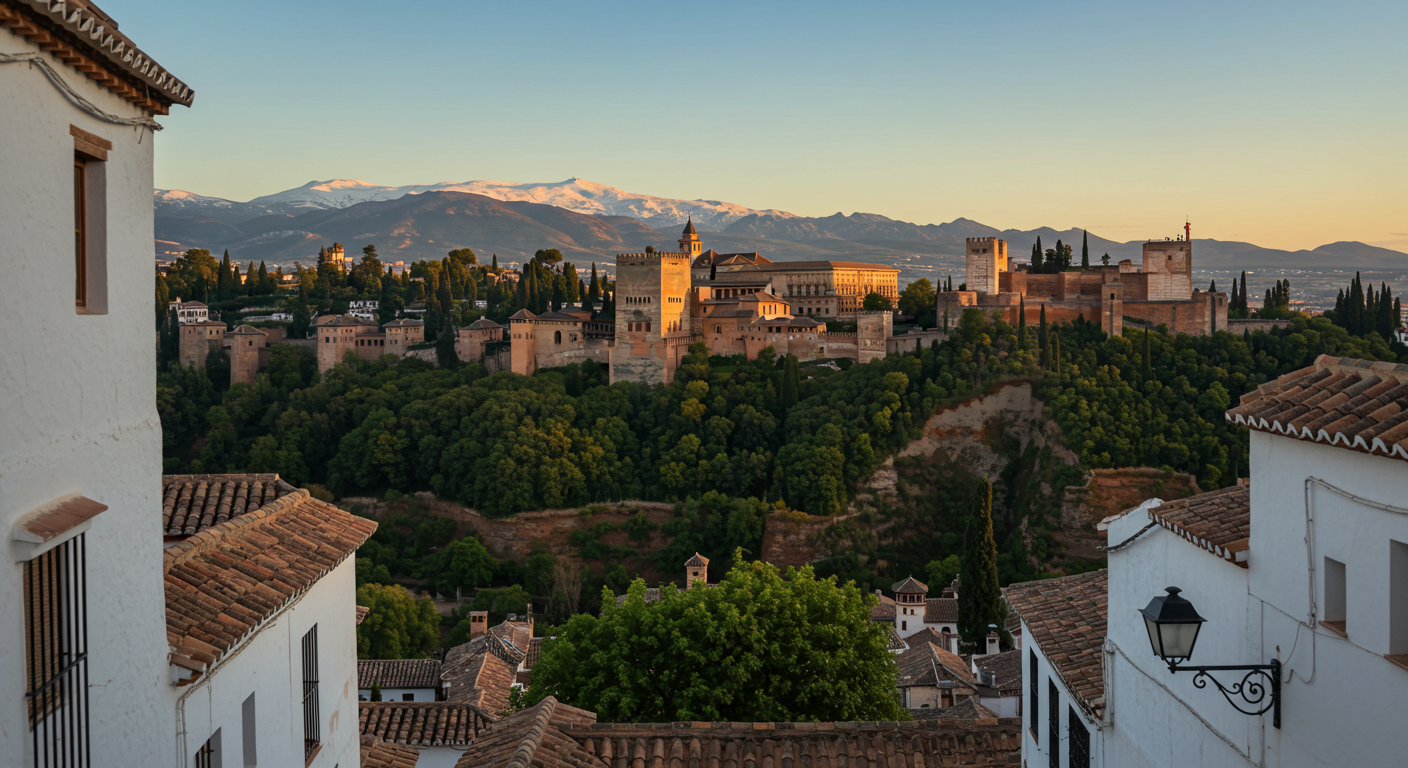
What a Slow Travel Week in Granada, Spain Actually Looks Like
Most people give Granada two days. They queue for the Alhambra, eat paella somewhere near the cathedral (don't — Granada is a tapas city, and paella is not a local dish), and leave. A slow travel week in Granada, Spain means something different: you eat lunch at 2pm because that's when the kitchen actually opens, you walk the same streets twice and notice different things, and by day four the woman at the corner café knows your order. Granada rewards exactly that kind of attention.
The short answer for anyone wondering whether a week is too long: it isn't. Granada has enough to fill ten days if you're moving at a human pace — between the Albaicín, the Sacromonte caves, the university quarter, the Sierra Nevada foothills, and the sheer density of free tapas culture. A week lets you do it without feeling like you're running a marathon.
Why Granada Works for Slow Travel
Granada is one of the few Spanish cities that still does free tapas as a genuine cultural practice rather than a marketing gimmick. Order a beer or a glass of wine — anywhere from about €2 to €3 — and a small plate of food arrives with it. Not a token olive. An actual thing: a montadito, a plate of jamón, sometimes a small raciones-sized portion. Do that twice at lunch and twice at early evening, and you've basically eaten for under €15 a day on food and drink combined. That's not a budget hack; that's just how it works here.
The city is also compact enough to walk almost everywhere, which is the practical engine of slow travel. The Alhambra hill, the Albaicín, the centre around Gran Vía and Calle Navas, and the university barrio around Calle Pedro Antonio de Alarcón are all within thirty minutes of each other on foot. You don't need a car. You don't need taxis. You need decent shoes because the Albaicín in particular is paved with uneven cobblestones that will test an ankle.
The altitude helps too — Granada sits at around 680 metres, so even in July the evenings are cooler than on the coast. Summers are still very hot in the afternoons (35°C+ is normal in August), but the rhythm of slow travel — rest between 2pm and 6pm, then out again — slots perfectly into the local schedule.
The Neighbourhoods Worth Your Time
The Albaicín
This is the old Moorish quarter on the hill facing the Alhambra, and it's the obvious starting point. The main mirador is the Mirador de San Nicolás — yes, it's on every Instagram account in existence, and yes, it's worth it at sunset anyway. Go at 7pm in summer, slightly earlier in winter. The view of the Alhambra against the Sierra Nevada is genuinely arresting.
But don't stop there. Walk deeper into the Albaicín — past Calle Calderería Nueva (the tea-shop street, which is touristy but charming), up towards the smaller miradors like San Miguel Alto. The higher you go, the quieter it gets. There are carmenes up here — traditional Andalusian houses with walled gardens — and on a weekday morning you'll have entire streets to yourself.
For breakfast in the Albaicín, the Café 4 Gatos on Plaza Larga is where locals actually go: tostada with aceite and tomate, a café con leche, change from €3.
Sacromonte
Adjacent to the Albaicín but with a completely different feel. This is the traditional cave-dwelling quarter, historically home to Granada's gitano community and the birthplace of the local flamenco style, the zambra. The cave houses are real — people live in them — and some have been converted into flamenco venues.
The flamenco shows here are expensive (€25–€35 per person, as of 2026) and vary wildly in quality. The Cueva de la Rocío has a solid reputation; avoid anything being sold aggressively on the street. But even if you skip the show, walk the Camino del Sacromonte at dusk. It's a rough path along a ravine and the views back over the Albaicín and Alhambra are better than anything you'll see from the standard mirador.
The Centre and University Quarter
The area around the cathedral and Alcaicería (the old silk market, now mostly souvenir shops — skip the interior stalls) is busy but manageable outside peak hours. The Capilla Real, which holds the tombs of Ferdinand and Isabella, is genuinely worth the €5 entry. Small, quiet, and unexpectedly moving.
West of the centre, the university barrio around Pedro Antonio de Alarcón and Calle Elvira is where you'll find the best bar density for real tapas — places aimed at students, not tourists. Bar Poe, Bar Avila, and the cluster around Campo del Príncipe are the areas to wander. Order a cold Alhambra 1925 (the local premium lager) and see what lands on your table.
The Alhambra: Book Months Ahead, Full Stop
If you're planning a slow travel week in Granada and haven't booked the Alhambra yet, do it now. Tickets sell out weeks to months in advance, especially for the Nasrid Palaces, which have timed entry slots. The official site is alhambra-patronato.es — ignore any other site charging a booking fee on top. As of 2026, tickets are around €19 for general entry including the Nasrid Palaces, and you must choose your Nasrid entry time when booking.
Two practical things nobody mentions: first, the morning slots (opening time, around 8:30am) are far more pleasant than afternoon ones — cooler, fewer people, better light. Second, the Generalife gardens and the Alcazaba fortress are included in the same ticket and are far less crowded than the Palaces. Spend time there. Most people rush through to get to the famous rooms and then wonder why they feel underwhelmed.
Where to Eat and Drink (and What to Ignore)
The tapas culture is the point. Work the barrio around Navas and Pescadería for traditional tapas bars. Los Diamantes on Calle Navas is famous and deservedly so for its pescaíto frito — fried fish and seafood, ordered by the ración. It's cheap, it's loud, it's exactly right.
For a proper sit-down lunch, Restaurante Chikito on Plaza del Campillo is old-school Granadan — rabo de toro (oxtail stew), habas con jamón (broad beans with cured ham), and a house wine that costs nothing. Lunch for two with wine, around €30–€40. Book ahead at weekends.
Skip the restaurants on the Alhambra hill itself. They're overpriced and trade entirely on location.
For coffee, the Café Fútbol on Plaza de Mariana Pineda has been serving granizados (crushed ice drinks) and coffee since 1922. The horchata de chufas is not local to Granada but it's excellent there in summer. Sit outside.
Day Trips That Actually Make Sense
A slow week isn't all city. Granada's position means you have serious options nearby.
The Sierra Nevada is thirty minutes by bus from the city centre. In winter (roughly December to April), there's skiing. In summer, the upper slopes above 2,500 metres are genuinely alpine — wildflowers, cool air, serious walking. The Mulhacén, at 3,479 metres the highest peak on the Iberian Peninsula, is a long but non-technical day hike from the Hoya de la Mora car park (served by bus from Granada in summer). Don't attempt it without decent boots and layers regardless of the city temperature.
Las Alpujarras — the villages on the southern flank of the Sierra Nevada — is a half-day or full-day excursion by bus. Lanjarón, Órgiva, and Pampaneira are all worth the trip. The architecture is distinctly Berber in feel, the jamón serrano from the area is some of the best in Spain, and the valleys are green in a way that surprises people expecting Andalusian dryness.
Practicalities for Longer Stays
If you're staying a week or more, a short-term rental makes more sense than a hotel. Granada has a healthy Airbnb market, and apartments in the Realejo or university quarter run from roughly €60–€90 a night for a decent one-bedroom as of 2026, less outside peak summer. The Albaicín sounds romantic but the cobblestone streets make grocery runs genuinely difficult — factor that in.
If you're thinking about this turning into something longer — a base for a month, or the start of a Spanish relocation — there are practical things to sort early. Renting in Spain without a Spanish payslip is the first real obstacle most arrivals hit; landlords in Granada tend to ask for three months' deposit plus a guarantor, though practices vary. And if you're working remotely, it's worth understanding what the Spanish digital nomad visa's income requirements actually mean in practice before you commit to anything.
For banking, opening an account as a non-resident is possible but requires some preparation — the practicalities are more involved than most people expect.
The Rhythm That Actually Works
Here's the pattern that made my own week in Granada feel genuinely restful rather than just slower tourism:
Mornings are for walking — the Albaicín before 10am, the Alhambra gardens at opening, the market at the Mercado San Agustín (just behind the cathedral, mostly closed on Sundays). A proper breakfast somewhere local, not a hotel buffet.
Lunch at 2pm, always. This is non-negotiable if you want the best kitchens. Eat properly. Take your time. Have the second glass of wine.
From roughly 3pm to 6pm: rest, read, sit in a shaded plaza. The Jardines del Triunfo near the hospital real are quiet and almost entirely tourist-free. This is not wasted time — it's the actual point.
Evenings start properly around 8pm. Tapas bars from 8 to 10. Dinner if you want it from 9:30 onwards. The city doesn't sleep early.
If you're planning to stay longer and need to sort out registration — getting your empadronamiento sorted is step one, and in Granada, the Oficina de Atención al Ciudadano on Calle Periodista Barrios handles appointments — worth knowing before you arrive.
Granada is not a city that gives itself up quickly. A week is the minimum to feel like you've started to understand it. Come back in a different season and it'll show you something else entirely.
Frequently asked questions
- How many days do you need in Granada for a slow travel experience?
- A genuine slow travel week in Granada — seven nights — is the sweet spot. Less than five days and you'll feel rushed; the Alhambra alone can take a full morning, and the Albaicín, Sacromonte, university quarter, and at least one day trip each deserve proper time. Seven days lets you move at a human pace without anything feeling squeezed.
- Is Granada expensive compared to other Andalusian cities?
- Granada is one of the most affordable cities in southern Spain for day-to-day living. The free tapas culture means you can eat well for very little — a beer with a substantial free tapa runs €2–€3. Accommodation is cheaper than Seville or Málaga, and public transport within the city is minimal because most of it is walkable. A comfortable week for two, including the Alhambra tickets and a couple of sit-down lunches, can be done for €800–€1,100 all in, depending on accommodation choice.
- When is the best time of year to visit Granada slowly?
- April, May, October, and November are ideal. Spring brings the Sierra Nevada still snow-capped above a warm city, and the crowds haven't arrived yet. Autumn has excellent light and cooler temperatures. July and August are hot — often 35°C+ in the afternoons — but manageable if you adopt the local schedule (morning activity, afternoon rest, evening out). Winter is cold (Granada can snow) but the Alhambra queues are almost non-existent.
- Do I need to book the Alhambra in advance?
- Yes, and well in advance. Tickets — particularly for the Nasrid Palaces, which have timed entry slots — sell out weeks to months ahead in peak season. Book directly at alhambra-patronato.es. As of 2026, general entry including the Nasrid Palaces costs around €19. If you arrive without a ticket, you will almost certainly not get in on the day you want.
- Can Granada work as a base for remote workers?
- It works very well. Reliable café wifi culture exists throughout the university quarter, costs are low, the climate is pleasant for most of the year, and the city has a large student and international community so English is more widely spoken than in smaller Andalusian towns. If you're planning a longer stay and working remotely, look into whether Spain's digital nomad visa applies to your situation — the income threshold and documentation requirements are specific.
- What are the best free things to do in Granada?
- Quite a lot: the Albaicín streets and all its miradors are free, the Generalife exterior gardens have free access at certain times, the Sacromonte walk costs nothing, the Jardines del Carmen de los Mártires are free and almost empty, and of course the tapas culture means every drink comes with food. The Capilla Real (€5) and the cathedral (€5) are the only real paid sights in the centre beyond the Alhambra itself.
- Is the Albaicín a good neighbourhood to stay in?
- Romantic, yes. Practical, less so. The streets are steep, very uneven cobblestone, and often too narrow for vehicles — which means carrying groceries or luggage is genuinely hard work. If you're staying a week or more, the Realejo (just south of the centre, quieter than the tourist core) or the university quarter are far more liveable. Save the Albaicín for long walks, not as a base.