A Slow Weekend in Bilbao: Guggenheim, Casco Viejo & Pintxos Crawls
How to spend a weekend in Bilbao: the Guggenheim, Casco Viejo streets, and a proper pintxos crawl — with real timings, honest tips, and no filler.
Three days is enough for Bilbao. Two is doable. One is a crime.
If you're trying to work out how to spend a weekend in Bilbao across the Guggenheim, the Casco Viejo, and a proper pintxos crawl, here's the honest answer: don't rush. The city rewards slow movement — a long lunch that tips into afternoon, a second glass of txakoli, getting lost in the Siete Calles. The Guggenheim alone can take four hours if you let it. And you should let it.
Bilbao is not San Sebastián. It doesn't have the beach glamour or the three-Michelin-star mythology (though it has one or two of those too). What it has is a former industrial city that quietly rebuilt itself into something genuinely good to live in — and to visit. The people are direct, the food is serious, and the prices are noticeably kinder than Donostia twenty minutes up the motorway.
What to Know Before You Arrive
Bilbao's airport (BIO, also called Loiu) is small and efficient. A taxi to the city centre costs roughly €25–30 as of 2026; the Bizkaibus A3247 does the same journey for around €3 and takes about 40 minutes. The metro is excellent once you're in town — designed by Norman Foster, which sounds like a tourist board boast but is actually noticeable. Clean, fast, logical. A single ride is €1.65 or so; a Barik card cuts that further.
Stay in the Abando or Indautxu neighbourhoods if you want something quieter and slightly more residential. Stay in or just outside the Casco Viejo if you want to be inside the noise. Both are walkable to everything that matters.
One thing nobody tells you: Bilbao is hilly in places. Not Edinburgh-steep, but enough that your phone's "12-minute walk" becomes 20 if you're heading up toward Artxanda. Comfortable shoes are not optional.
The Guggenheim: Go Slow or Don't Bother
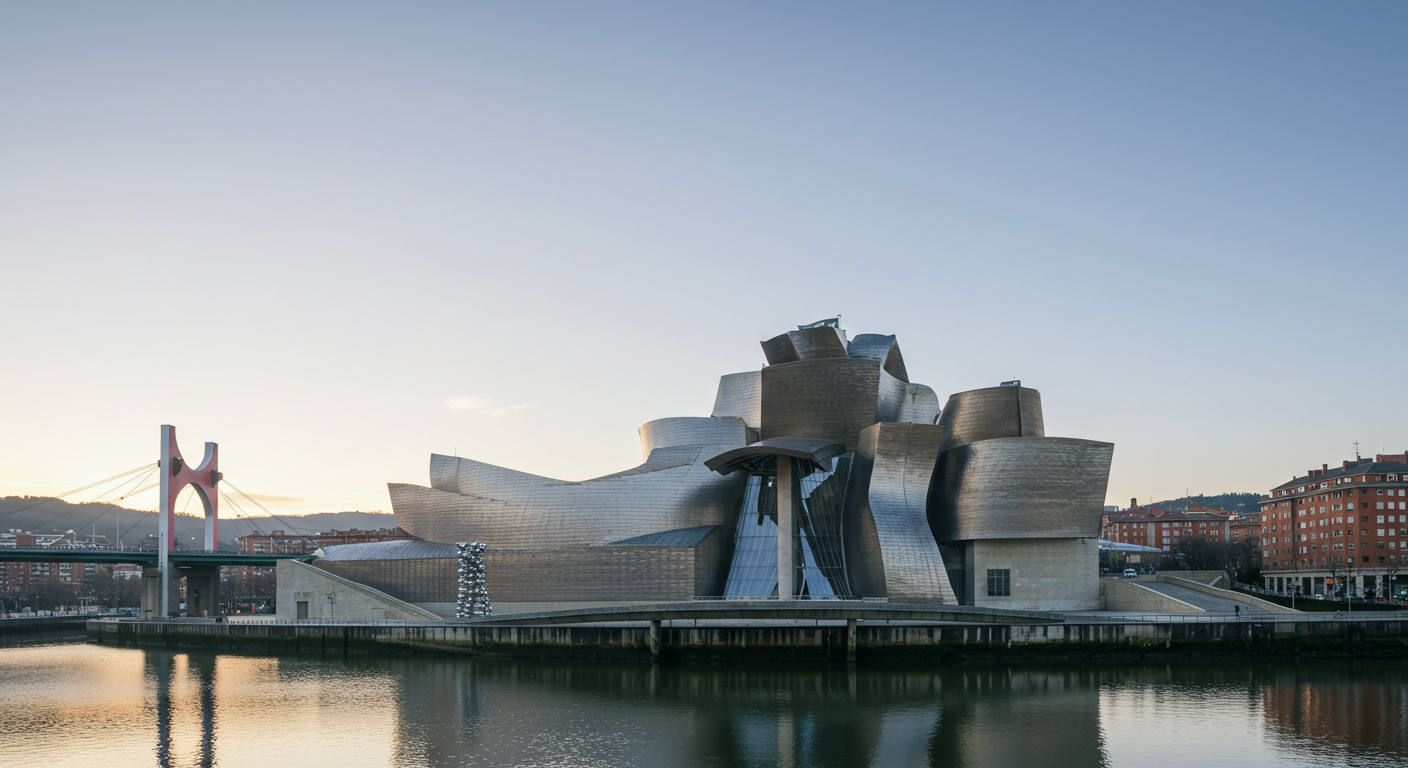
The building is the famous part, and yes, it really is that good in person. Frank Gehry's titanium curves catch the light differently depending on the time of day — morning is softer, afternoon turns it almost silver. Jeff Koons's Puppy (the giant floral terrier at the entrance) is absurd and wonderful. The Louise Bourgeois spider, Maman, lurks around the side and is considerably more unsettling than the photographs suggest.
Tickets as of 2026 are €18 for adults, with reductions for under-26s, students, and over-65s. Book online — the queues at the desk on busy weekends are real. Free entry on Fridays from 17:00 to 21:00, but that's a local secret that's become slightly less secret, so arrive early in that window.
The permanent collection is strong on large-format American art — Richard Serra's The Matter of Time, a series of massive weathered-steel sculptures in the ground-floor gallery, is the piece most people remember longest. You walk through them, not past them. Allow at least 30 minutes just for that room. The temporary exhibitions vary wildly in quality; check what's on before you go and decide whether it's worth upgrading to a combined ticket.
Skip the museum café for lunch. It's fine but overpriced and you can do better within a ten-minute walk. The museum shop, on the other hand, is genuinely good — better than most.
The Casco Viejo: The Siete Calles and Beyond
The old town is compact and slightly medieval in its logic — seven parallel streets (the Siete Calles) running between the river and the hillside, with a web of narrower lanes connecting them. It's easy to navigate once you stop trying to navigate it and just walk.
The Plaza Nueva is the social centre: a neoclassical arcaded square where old men argue about football and tourists sit in the same chairs eating the same pintxos. The bars under the arcades are decent but not the best in the city. Use the square as an orientation point, then head into the streets behind it.
The Mercado de la Ribera, on the riverfront, is worth a look. It's one of the largest covered markets in Spain by floor area — though honestly it's been through a renovation that made it slightly more polished and slightly less raw than it once was. Still worth going for the fish counter alone. Basque fishing heritage is not a small thing: the variety of salt cod preparations on display on a Tuesday morning is quietly staggering.
The Catedral de Santiago is modest by Spanish standards, which is to say it's still 700 years old and beautiful. The cloister is the best part. Entry is a couple of euros and takes 20 minutes.
For a view over the whole old town, take the Funicular de Artxanda (about €1.65 each way, runs every 15 minutes). At the top there's a park, a restaurant that's unremarkable, and a panorama that puts the city in context — the river bending through it, the Guggenheim glinting, the hills closing in on all sides.
How to Do a Pintxos Crawl in Bilbao
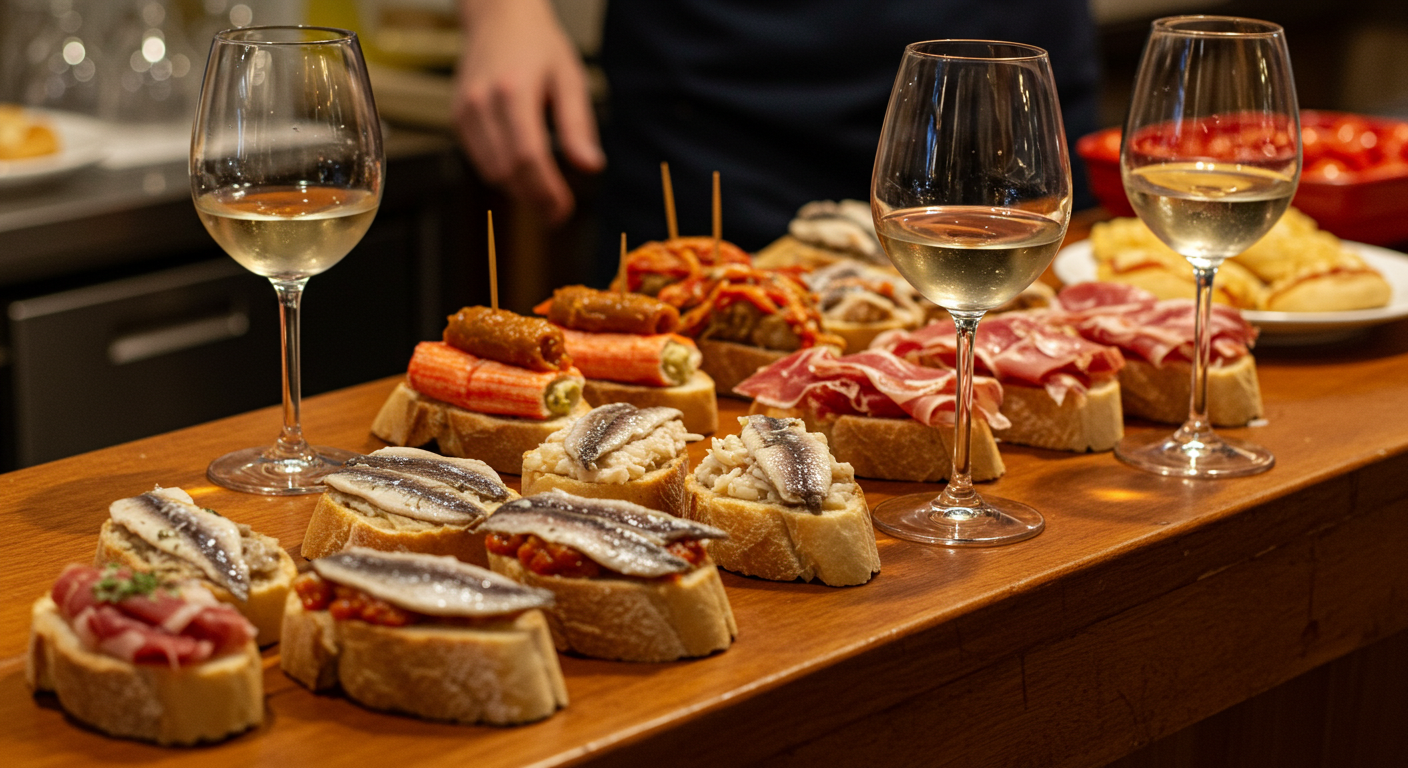
This is the main event. A pintxos crawl in Bilbao is not the same as tapas in Madrid or Seville. The format is specific: you stand at the bar, you pick pintxos from the counter or order hot ones from the kitchen, you drink one small glass (a zurito of beer, or a small pour of txakoli, or a glass of Rioja — you're in both wine regions here), and then you move on. You do not linger over a single drink for an hour. That's a different kind of bar.
The rhythm: one bar, one drink, two or three pintxos, twenty minutes, next bar. Repeat four or five times. You'll be full and happy by 22:00.
Where to go. The Casco Viejo is the obvious answer, and Calle del Ledesma and the streets around it have good options. But for my money, the Gros neighbourhood in San Sebastián has nothing on the stretch of bars along Calle Licenciado Poza in Bilbao's Indautxu district — it's where locals actually go on a Friday night. Less photographed, better value, no one trying to catch your eye for a photo.
Some specific places worth knowing about: Bar Baster on Calle Ledesma does a tortilla that has won awards and deserves them. El Globo on Diputación is an institution for a reason — the counter pintxos are more elaborate than average and the txakoli is always cold. Taberna Tolare in the Casco Viejo is small, unpretentious, and the anchovies are exceptional.
Avoid the bars with photos of pintxos on laminated menus in the windows of the tourist streets near the Guggenheim. They're not terrible, but they're not why you came.
Budget roughly €3–4 per pintxo and €2–3 per drink. A full crawl — five bars, a couple of rounds at each — might cost €40–50 per person including a final sit-down glass of something. That's Bilbao being affordable relative to what you'd pay for equivalent quality almost anywhere else in Western Europe.
One Full Day, Loosely Structured
Morning: coffee and a croissant or bollo de mantequilla at a neighbourhood bar (not a café chain — any bar with an espresso machine and locals standing at the counter will do). Walk to the Guggenheim for opening time at 10:00. Spend three to four hours. Eat nothing in the museum.
Lunch: walk across the bridge into the Casco Viejo. Sit down at a proper lunch — a menú del día in the old town runs €13–16 for three courses with wine, as of 2026. This is not a snack; it is a meal. Take your time.
Afternoon: wander the Siete Calles without a plan. Check out the Mercado de la Ribera, walk along the Nervión river, take the funicular if your legs are complaining. Coffee somewhere at around 17:00.
Evening: pintxos crawl from 19:30 or 20:00 onwards. Five bars minimum. End somewhere with a chair.
If You're Thinking of Staying Longer
Bilbao is a genuinely liveable city. Rents are lower than Barcelona or Madrid, the infrastructure is excellent, and the Basque public services — including healthcare — have a reputation for being well-run. If you're relocating to Spain and weighing options, it's worth serious consideration. The weather is the honest caveat: this is the wet Atlantic coast. Grey and damp from October to April is not an exaggeration. But summers are mild and genuinely lovely.
For anyone navigating the bureaucratic side of moving here — whether that's sorting your initial paperwork, understanding what bank account to open, or figuring out healthcare before your residency card arrives — a lot of the practical detail applies across Spain. The Spanish Digital Nomad Visa and whether it's worth it at minimum salary thresholds is worth reading if you're considering remote work from the Basque Country. And if you're in the early stages of residency and wondering about healthcare cover, this piece on what you're actually entitled to before your TIE arrives is useful groundwork.
Bilbao rewards the people who slow down. The ones with a train to catch at 18:00 always leave saying they didn't have enough time. They're right, and it was their own fault.
Frequently asked questions
- How many days do you actually need in Bilbao?
- Two full days is a realistic minimum if you want to do the Guggenheim properly and have a genuine pintxos crawl. Three days lets you breathe — add a day trip to Getxo on the coast or a quick hop to San Sebastián by train (about 70 minutes on the regional service). One day is possible but you'll feel rushed and you'll probably skip the things worth not skipping.
- Is the Guggenheim Bilbao worth the ticket price?
- Yes, genuinely. At €18 it's not cheap, but the permanent collection — particularly Richard Serra's steel sculptures — is world-class. If money is tight, go on a Friday evening from 17:00 to 21:00 when entry is free. Book online either way to avoid queuing at the desk.
- What's the best area to stay in Bilbao?
- Abando and Indautxu are quieter and more residential, with good metro access and plenty of local bars and restaurants. The Casco Viejo puts you in the thick of it — noisier on weekends but very convenient. Avoid anywhere described as 'near the Guggenheim' if you want realistic prices.
- How much does a pintxos crawl in Bilbao cost?
- Budget around €3–4 per pintxo and €2–3 per drink. A proper crawl across four or five bars will typically come to €35–50 per person, depending on how many rounds you do. That's excellent value for the quality you're getting — Bilbao consistently undercuts San Sebastián on price for food that's genuinely as good.
- Can you do a day trip to Bilbao from San Sebastián?
- Yes. The regional train (Euskotren) takes around 2.5 hours and costs roughly €8–10 each way. The high-speed Alvia is faster — about 70 minutes — and runs several times a day. A day trip is feasible but you'll have to choose between the Guggenheim and the Casco Viejo; you can't do both justice in a single day.
- Is Bilbao a good base for relocating to the Basque Country?
- It's one of the more underrated relocation options in Spain. Rents are lower than Barcelona or Madrid, the public transport is excellent, and the city has a strong local economy. The main honest drawback is the weather — the Atlantic north is genuinely wet for much of the year. If you're considering a move and need to sort residency paperwork, check resources on [healthcare before your TIE arrives](/en/healthcare-spain-tie) and the [Spanish Digital Nomad Visa income requirements](/en/digital-nomad-visa-minimum-salary).
- What's the difference between pintxos in Bilbao and in San Sebastián?
- San Sebastián (Donostia) has the flashier reputation and the more elaborate, often avant-garde pintxos — think towering constructions with unexpected flavour combinations. Bilbao's pintxos culture is slightly more straightforward and considerably cheaper. Both are excellent; Bilbao just doesn't make as much fuss about it, which is very on-brand for the city.