La Hora del Vermut: Where to Do Vermouth Hour in Spain
La hora del vermut is Spain's Sunday-morning aperitif ritual. Here's what it is, when it happens, and the best bars to do it properly across Spain.
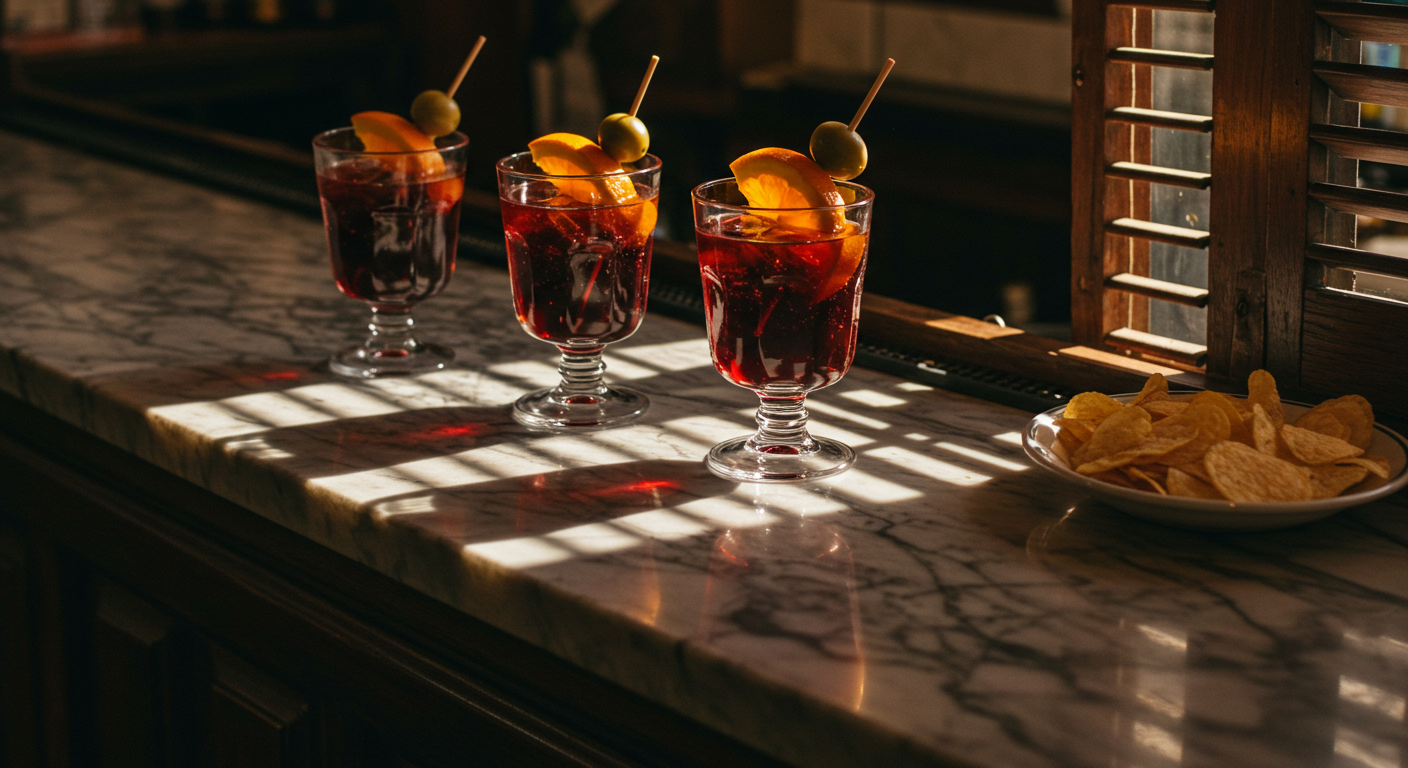
Sunday, 12:30pm. The bar has been open for twenty minutes and already every stool is taken. A glass of slightly cloudy reddish vermouth arrives with a slice of orange, an olive, and a small dish of crisps that nobody asked for. Nobody is eating lunch yet. That comes later — much later. This is la hora del vermut, and if you haven't stumbled into it yet, it's one of the most quietly civilised things Spain does.
What Is Vermouth Hour in Spain, Exactly?
The hora del vermut — also called el vermut as an event, not just a drink — is the pre-lunch aperitif window that runs roughly from 12pm to 2pm, most commonly on Sundays. It's the social glue between the morning and the afternoon. You drink vermouth (or sometimes a cold beer, or a small glass of wine), you eat a few snacks, you talk. You do not rush. Lunch follows at 2:30 or 3pm. The vermut is not lunch. It is the reason lunch feels earned.
In practice, this ritual is strongest in Catalonia, Madrid, Valencia, and parts of the Basque Country, though you'll find versions of it across the whole country. Sundays are the classic day, but in bigger cities plenty of bars run it on Saturdays too, and in some working-class neighbourhoods it happens quietly every single day.
The Drink Itself
Spanish vermouth (vermut) is not the same as an Italian Martini Rosso, though that's what many people picture. The Spanish style — particularly from producers in Reus, Tarragona, and parts of Madrid — tends to be slightly more bitter, more herbal, and less sweet. Brands worth knowing: Yzaguirre and Miró from Reus are the Catalan benchmarks. Zarro is a decent mid-range Madrid staple. Lustau makes a sherry-based vermouth from Jerez that's excellent if you find it on tap. Morro Fi is a newer Catalan producer that's become fashionable in Barcelona's better bars.
Ordering is simple. Un vermut, por favor does the job. In Catalonia you might hear un vermut de l'Aramprunyà or similar — these are house vermouth blends, often made in-bar by macerating wine with botanicals. Don't be afraid to ask what they have on tap (de barril or de grifo). On-tap vermouth is almost always better than bottled.
It arrives with a slice of orange or lemon, sometimes an olive on a cocktail stick, and often a small plate of aperitivos — olives, crisps, or anchovies — that come automatically and are included in the price. Expect to pay €2–€3.50 for a glass as of 2026, depending on the city and the bar. In tourist-facing spots in central Barcelona or Madrid, you might pay €4–€5. At a proper neighbourhood bar, rarely more than €2.50.
Where to Do Vermouth Hour Properly in Spain
Barcelona
Barcelona is probably where the vermut ritual is most embedded in daily life, and where the craft vermouth scene has become genuinely interesting. The neighbourhood that does it best is El Poblenou — specifically the stretch of the Rambla del Poblenou and the streets just off it. Bar Calders on Carrer del Parlament (in Sant Antoni) is excellent on a Sunday, though it's busy. La Pepita in Gràcia draws long queues but earns them.
Honestly, though, the best vermut in Barcelona isn't at the famous spots — it's at whichever unremarkable neighbourhood bar near your flat opens at noon on a Sunday and has a barrel on the counter. El Born and Gràcia are good hunting grounds. Avoid the Barceloneta seafront bars for this; they're fine for beer but they've lost the ritual entirely.
Madrid
Madrid's vermut culture is centred on La Latina on Sundays — the area around the Plaza de la Paja and the Calle de la Cava Baja fills up from about 12:30pm and doesn't empty until 3pm. El Tempranillo on Cava Baja is a reliable choice for wine and vermouth. Taberna Almendro 13 is famous, deservedly so, though you'll wait for a table on Sundays.
For something less crowded, head to Lavapiés or Malasaña. The bar scene there has been doing good vermut for years without the Instagram queue. Bar Palentino on Calle del Pez in Malasaña is a classic, old-school, no-nonsense spot.
The Madrid vermut tradition often comes with patatas bravas, croquetas, or a tapa de tortilla alongside the drink — slightly more food-forward than the Catalan version.
Valencia
Valencia is underrated for vermouth culture. The Ruzafa neighbourhood is the obvious starting point — the bars there have been doing excellent aperitivo hours for years, and the general vibe on a Sunday morning is unhurried in the best way. Vermouth in Valencia often comes with a small plate of boquerones (anchovied anchovies) or mejillones en escabeche (pickled mussels), which makes the whole thing feel even more civilised.
The Mercado de Colón area also has good options if you want something slightly smarter. Prices in Valencia are noticeably lower than Barcelona or Madrid — €2–€2.80 for a glass is normal.
The Basque Country
The Basque aperitivo culture exists but works slightly differently — pintxos are the dominant snack format, and the drinks lean more towards txakoli and wine than vermouth specifically. That said, in Bilbao's Casco Viejo and in San Sebastián's Parte Vieja, you'll find bars that do a proper vermut alongside the pintxos crawl, especially at weekends. Think of it as a parallel ritual rather than an identical one.
Smaller Cities Worth Mentioning
Reus, in Tarragona province, is where much of Spain's vermouth is produced, and doing vermut there — at a bar that's been open since the 1940s, with a barrel-tap and an old man who's clearly been there every Sunday since before you were born — is as authentic as it gets. Tarragona city itself has a good scene too.
Seville does a version of this with fino sherry rather than vermouth, which is different but equally worth understanding. In Galicia, the aperitivo hour tends to involve albariño and seafood snacks rather than vermouth, but the social structure of the ritual is the same.
When Does Vermouth Hour Actually Happen?
The classic window is 12pm to 2pm on Sundays. In cities, especially Barcelona and Madrid, Saturday has become almost as popular. On weekdays, the vermut exists but is quieter — you'll see older locals and bar regulars, not families and groups of friends.
If you arrive at a bar at 11:30am on a Sunday, you might find it not yet open or just setting up. Wait until noon. If you're there past 2pm, the kitchen is starting to think about lunch and the vermut moment is fading. The window is real.
A Few Things Nobody Tells You
The snacks that come automatically are almost never charged separately — they're part of the bar's hospitality, included in the drink price. Don't make a fuss about asking for them or trying to order them as a separate dish. Just accept what arrives.
Standing at the bar is fine — expected, even, at a busy Sunday spot. Many of the best vermut bars have very little seating. If you want a table, arrive early.
You don't have to drink vermouth. A cold caña (small draught beer) or a glass of house white is equally acceptable and equally part of the ritual. The point isn't the drink specifically; it's the hour and the company.
And one practical note for those still finding their feet in Spain: the vermut is a brilliant way to start understanding neighbourhood social rhythms, which matters enormously if you're settling here long-term. The bar where you become a regular for Sunday vermut is often the same bar where someone eventually recommends your plumber, your gestor, or your landlord. Social capital in Spain is built slowly and in exactly these kinds of unhurried moments. If you're navigating the bureaucratic side of moving here — getting empadronamiento sorted, opening a bank account, or figuring out how to rent without a Spanish payslip — the neighbourhood relationships you build at the local bar are not as trivial as they sound.
For those here on a digital nomad visa, learning to actually inhabit Spanish time — rather than just working Spanish hours — is half the battle. The hora del vermut is a good place to start.
Go on a Sunday. Order whatever's on tap. Don't check your phone for at least the first twenty minutes.
Frequently asked questions
- What time is vermouth hour in Spain?
- La hora del vermut typically runs from about 12pm to 2pm, most commonly on Sundays. Saturday is increasingly popular in cities. After 2pm, bars shift focus to lunch service and the aperitif moment winds down.
- What do you eat during vermouth hour in Spain?
- Snacks arrive automatically in most bars — usually olives, crisps, or a small tapa. In Madrid you'll often get patatas bravas or croquetas alongside. In Valencia, pickled mussels or anchovies are common. You don't order these separately; they come with the drink.
- Which Spanish city has the best vermouth culture?
- Barcelona and Madrid are the strongest cities for the vermut ritual, with Barcelona's neighbourhood bars — especially in Gràcia and Poblenou — and Madrid's La Latina quarter being the classic locations. Valencia is underrated and cheaper. Reus, in Tarragona, is the spiritual home of Spanish vermouth production.
- What is the difference between Spanish and Italian vermouth?
- Spanish vermouth tends to be slightly more bitter and herbal, and less sweet, than Italian styles like Martini Rosso. Key Spanish producers include Yzaguirre and Miró (both from Reus, Catalonia), and Lustau, which makes a sherry-based vermouth from Jerez.
- How much does vermouth cost in Spain?
- As of 2026, a glass of vermouth at a neighbourhood bar costs around €2–€3.50 depending on the city. Valencia is cheapest; central Barcelona and Madrid tourist areas can reach €4–€5. On-tap vermouth (de barril or de grifo) is usually the better and cheaper option.
- Is the aperitif ritual only on Sundays in Spain?
- Sundays are the classic day, and the ritual is at its fullest then — families, groups of friends, long conversations before a big lunch. But in larger cities it also happens on Saturdays, and in traditional working-class neighbourhoods you'll find regulars doing a quiet vermut on weekday mornings too.
- Do you have to drink vermouth during la hora del vermut?
- No. A cold caña (small draught beer) or a glass of house wine is equally acceptable. The ritual is about the hour and the social moment, not the specific drink. Ordering vermut is the most traditional choice, but nobody will look twice if you order something else.