Andalucía Road Trip in Two Weeks: Seville, Granada, Córdoba & the White Villages
A two-week Andalucía road trip itinerary covering Seville, Granada, Córdoba and the white villages — with real driving times, where to stay and what to skip.
Two weeks is roughly the minimum you need to do Andalucía without feeling like you've been dragged through it backwards. I've driven this region more times than I can count — for work, for pleasure, once for a very ill-advised February camping trip — and the route that consistently makes sense starts in Seville, swings east through Córdoba and Granada, then loops back through the Pueblos Blancos before you return the hire car smelling of orange blossom and olive oil.
For a two-week Andalucía road trip itinerary, plan roughly three to four nights in each of the three main cities and save the final four days for the white villages and the coast if you want it. Driving between Seville and Granada takes around three hours on the A-92; Córdoba to Seville is under two. None of these legs are punishing. The roads are good, petrol stations are frequent, and Andalucían drivers are — honestly — far calmer than those in Madrid.
Why Drive Rather Than Take the Train?
The AVE connects Seville, Córdoba and Granada with reasonable frequency, and if you're only hitting the cities, the train is excellent. But the whole point of this particular route is the stuff in between: the olive groves that go on for 200 kilometres past Jaén (the largest olive-growing region on earth, though check current figures), the roadside venta serving €10 menús del día, the turn-off to Zahara de la Sierra with the reservoir glittering below. A hire car from Seville airport costs somewhere between €180 and €350 for two weeks in 2026 depending on the company and season — avoid picking up in July or August, when prices spike and the roads to the white villages fill with coaches.
One practical note: you cannot drive into the historic centres of Seville, Granada or Córdoba without a ZBE (zona de bajas emisiones) permit or a sufficiently clean vehicle. Pre-2015 diesels are the main casualties. If your hire car is less than five years old, you're almost certainly fine, but confirm with the rental company before you collect. Park at the edge of the centre and walk or use a taxi for the last kilometre.
Seville: Three Nights, No Rushing
Fly into Seville and spend three nights there before you do anything else. The city rewards slowness. The Alcázar and the cathedral between them will eat most of one day — book the Alcázar online at least a week ahead, more in spring. The queues without a booking are genuinely punishing.
Base yourself in Triana or the Alameda de Hércules area rather than directly next to the cathedral. Both are walkable to everything and you'll pay noticeably less. Triana has better tapas bars — El Patio de San Eloy on Calle San Eloy, La Albariza on Calle Betis. The Mercado de Triana is good for breakfast, not so good for lunch when it gets overrun.
A word on the heat: June through September in Seville is genuinely extreme. July averages in the high 30s°C and can push 44°C. If you're coming in those months, adjust your whole rhythm — nothing before 10am, nothing between 2pm and 6pm, everything happens at night. It's not impossible, just different. April, May and October are the sweet spots.
Córdoba: An Overnight Is Not Enough
Most people treat Córdoba as a day trip from Seville, which is a shame. Yes, you can see the Mezquita-Catedral in a morning — it's extraordinary, one of the more disorienting buildings in Europe, where a Gothic cathedral was built inside a vast Moorish mosque and somehow both survived — but Córdoba has a whole old town worth wandering, and the Judería (the medieval Jewish quarter) is best in the early morning before the groups arrive.
Two nights here. Stay in the old town if you can afford it; the riad-style hotels inside converted palaces are genuinely special. Prices range from around €80 to €200 a night depending on season. Eat at least one meal on Calle de la Hoguera or around the Mercado Victoria — the latter is a covered food market that gets unfairly dismissed as touristy but has some excellent stalls.
The Alcázar de los Reyes Cristianos is often overlooked in favour of the Mezquita. Don't skip it. The gardens in the evening light are worth the €5 entry.
The Drive to Granada: Take the Scenic Route
The direct A-45/A-92 from Córdoba to Granada takes about two hours. Do it a different way. Head south towards Antequera, stop for half an hour at the Dolmen de Menga — three Neolithic burial chambers that are free to enter and almost nobody visits — then continue east through the Parque Natural de las Sierras de Tejeda. The road through the Axarquía wine country (Málaga's little-known wine region, producing the sweet Moscatel and a growing number of dry whites) adds an hour but it's a completely different Andalucía from the olive plains.
Granada: Four Nights, Minimum
Granada is where most people underestimate how much time they need. The Alhambra alone — the palace complex above the city — requires a full day if you're doing it properly, and tickets must be booked weeks in advance. I cannot stress this enough. The official booking site (alhambra-patronato.es) releases tickets at 8am Spanish time, three months ahead. If you're planning a spring or summer visit, set a calendar reminder now.
The Alhambra opens in two main slots: morning (8:30am) and afternoon (2pm). The morning slot is better for light in the Generalife gardens; the afternoon slot for the Nasrid Palaces, which glow differently in the lower sun. Book whichever you can get.
Beyond the Alhambra, Granada is a city of neighbourhoods. The Albaicín — the Moorish quarter across the ravine from the Alhambra — is a UNESCO site in its own right, a tangle of whitewashed lanes and carmenes (walled garden houses). Walk up to the Mirador de San Nicolás for the view, but go early or at dusk; at midday in summer it's unpleasant. The Sacromonte neighbourhood above it has cave houses and flamenco shows that vary enormously in quality — ask your hotel which caves have genuine artists rather than tourist-circuit performers.
Granada is also one of the few Spanish cities where tapas are still served free with drinks. Order a caña at a bar in the centre and something small appears. This tradition holds in the less central bars more reliably than the very touristy ones on Calle Navas.
The White Villages: The Part Most People Skip
This is where a self-drive itinerary earns its keep. The Pueblos Blancos — the white villages of Cádiz province — are strung across the Sierra de Grazalema and the Sierra de Ronda, and they're genuinely one of the more beautiful things in southern Spain. Ronda, Zahara de la Sierra, Grazalema, Setenil de las Bodegas, Arcos de la Frontera: each one is distinct.
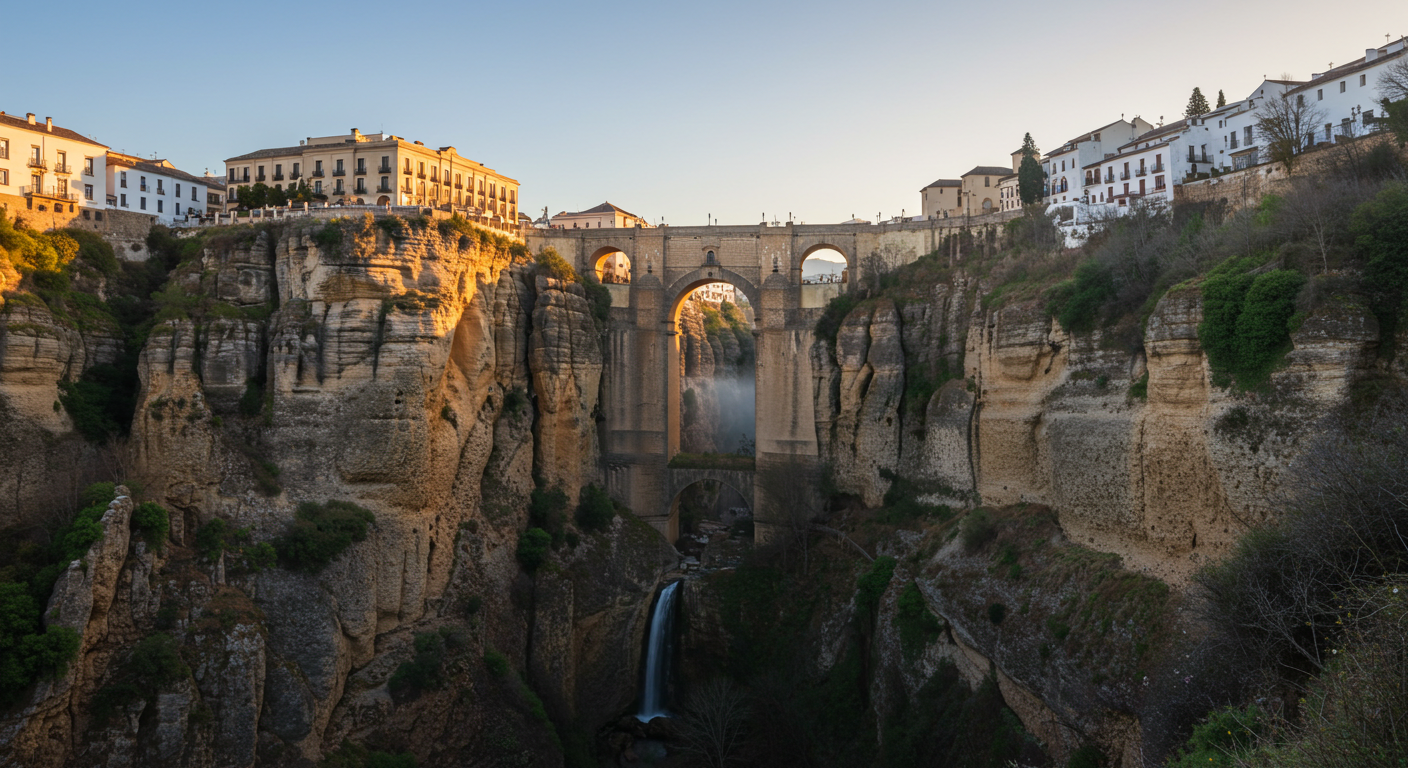
Ronda is the most visited, and it shows — the Puente Nuevo bridge and the tajo (gorge) below it draw enormous crowds by 11am. Go very early or stay the night and have it to yourself. The Parador de Ronda sits literally on the edge of the gorge; rooms from around €120 a night. Worth it once.
Setenil de las Bodegas is the one that stops people in their tracks: houses built directly into the overhanging rock face, with the cliff as both ceiling and wall. It's a 40-minute drive from Ronda and almost nobody goes. Park at the entrance and walk down through the main street — the bar under the rock at the bottom serves good local wine and a plate of jamón ibérico for under €10.
Grazalema is the starting point for the Parque Natural Sierra de Grazalema, a limestone massif with serious walking. The Garganta Verde (Green Gorge) requires a permit from the park office in Zahara — free, but limited numbers — and takes about three hours return. Genuinely impressive. The village itself has a wool-weaving tradition going back centuries; the shop on the main square sells blankets that are actually made locally.
Allow three to four days for this section, staying in village accommodation rather than driving back to a city each night. Casa Rurales (rural guesthouses) typically run €60–€100 a night for a double and are bookable through Rusticae or directly.
Practical Logistics
Petrol is around €1.65–€1.80 per litre for unleaded as of early 2026 (check current prices — they fluctuate). Budget roughly €40–€60 in fuel for the full loop.
If you're considering relocating to Andalucía after this trip — it happens, the region has that effect — there's a fair amount of bureaucratic groundwork ahead of you. Getting a Spanish bank account as a non-resident is usually the first practical step. If you're planning to work remotely while you're here, the Spanish Digital Nomad Visa is worth understanding before you commit. And if you're thinking about renting rather than buying, renting in Spain without a Spanish payslip is more navigable than it sounds.
For those who fall hard enough to want to stay long-term, the administrative side of things — NIE, TIE, empadronamiento — can feel opaque from the outside. The healthcare situation before your TIE arrives is one thing people consistently don't think about until they need it.
The Return Leg
Most hire car agreements let you return to a different city for a fee — typically €80–€150 extra. If your flight home is from Málaga rather than Seville, this works out well: finish the white villages route in Ronda, drop down to Málaga on the A-397 (a dramatic mountain road, take it slowly), and return the car at the airport. Málaga is worth a night on its own — the Picasso Museum, the Soho street art district, the Mercado de Atarazanas — before you leave.
Two weeks in Andalucía, done at this pace, leaves you feeling like you've actually been somewhere rather than ticked boxes. That's rarer than it should be.
Frequently asked questions
- How long does the Andalucía road trip itinerary take if I only have 10 days?
- Ten days is workable but tight. Cut the white villages to a two-night stay based in Ronda, reduce Seville to two nights and skip the scenic detour to Granada. Prioritise booking the Alhambra and the Alcázar in Seville before anything else — those are the places where running out of time hurts most.
- Do I need to book the Alhambra months in advance?
- Yes, genuinely. Tickets sell out weeks ahead in spring (March–May) and summer. The official booking site releases tickets at 8am Spanish time, three months to the day before your visit. Same-day tickets occasionally appear due to cancellations, but don't rely on it. There is no legitimate way to walk up and buy a ticket on the day during peak season.
- Can I drive into the centres of Seville, Granada and Córdoba?
- Not freely. All three cities have low-emission zones (ZBEs) that restrict older or more polluting vehicles. Most hire cars from 2019 onwards meet the requirements, but confirm with your rental company. The practical approach is to park in a paid car park at the edge of the historic centre and walk or taxi in.
- What is the best time of year for an Andalucía road trip?
- April and May are the classic answer — wildflowers, mild temperatures (20–26°C), everything open. October is equally good and less crowded. March can be cold and rainy in the mountains. July and August are extreme in the cities — Seville regularly exceeds 40°C — but the white villages at altitude are more bearable and the coast is at its best.
- Is the drive through the Sierra de Grazalema difficult?
- No, but it's narrow in places and there are hairpin bends on some of the mountain passes. A standard saloon car handles it without issue. The A-372 between El Bosque and Grazalema is the most dramatic stretch. Drive slowly, use passing places when needed, and don't attempt it in icy conditions in winter.
- Are the white villages worth it if I'm short on time?
- Ronda and Setenil de las Bodegas together make a very satisfying single day from Málaga or a night stop between Granada and Seville. If you can only do one village, make it Ronda — the gorge and bridge are genuinely unlike anything else in Spain.
- What should I budget per day for this road trip?
- A realistic mid-range budget (decent guesthouses, eating out twice daily, entry fees, petrol) runs to around €120–€160 per person per day for two people sharing. Staying in paradores or boutique hotels pushes that higher; casa rurales and self-catering bring it down. The white villages section is notably cheaper than the cities.