The Best Beaches in Spain for Summer 2026: A Curated Coast-by-Coast Guide
From Galicia's wild Atlantic coves to the Balearics' turquoise bays, our curated guide to Spain's finest beaches for summer 2026 — with practical tips for every coast.
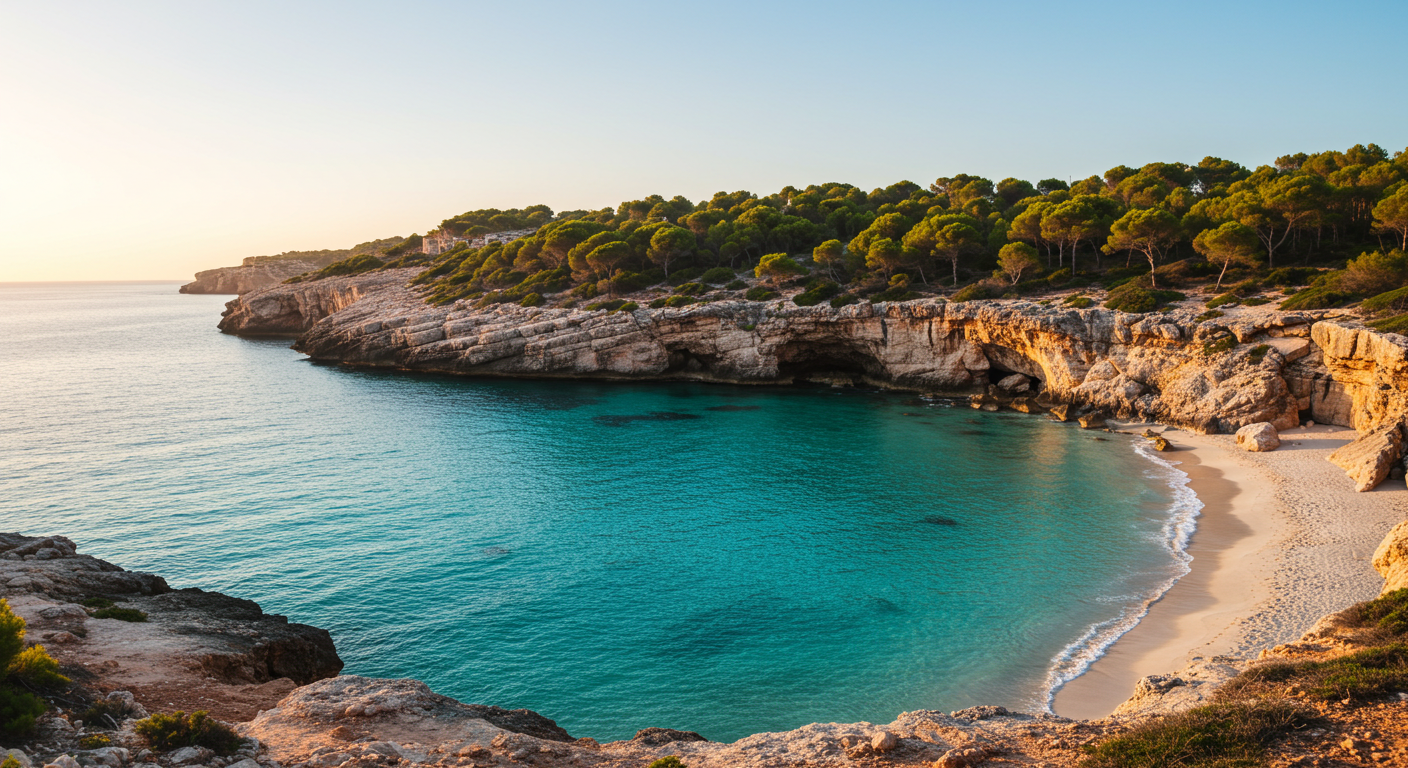
Spain has more than 8,000 kilometres of coastline and somewhere north of 3,000 beaches. That figure is either thrilling or paralysing, depending on your temperament. This guide is designed to cut through the noise: not a list of every sandy strip with a Blue Flag, but a genuinely curated selection of beaches across the mainland coasts and islands that are worth organising a trip around in summer 2026 — with honest notes on crowds, access, and what makes each one special.
We've grouped them by region, because Spain's beaches are not interchangeable. The Atlantic north is cold, dramatic, and often empty. The Mediterranean south is warm, social, and occasionally heaving. The islands sit in categories of their own. Knowing which suits you matters more than chasing a ranking.
Galicia and the Atlantic Northwest
Galicia is Spain's best-kept beach secret, and the locals would prefer it stayed that way. The water temperature in August hovers around 18–20°C — bracing by Mediterranean standards, refreshing if you've spent a week in 35-degree heat inland. The payoff is extraordinary scenery and beaches that feel genuinely wild.
Praia das Catedrais (Beach of the Cathedrals), Ribadeo
The most photographed beach in Galicia, and for good reason: at low tide, the sea retreats to reveal a series of soaring rock arches and sea caves that genuinely do resemble Gothic vaulting. It's on the Lugo coast, about 45 minutes from Ribadeo town.
The practical reality for 2026: access is managed via a free reservation system (reservas.turgalicia.es) from June to September. Slots are timed and limited to protect the site. Book as soon as you know your dates — popular windows fill within hours of opening. The beach itself is only fully accessible for roughly two hours either side of low tide, so check the tide table before you go.
Praia de Rodas, Cíes Islands
Routinely cited as one of Europe's finest beaches, Rodas sits in the Galician Atlantic Islands National Park. The water is an improbable Caribbean blue; the sand is pale and fine. To get there, you take a ferry from Vigo, Baiona, or Cangas (services run from April to October, with more frequent crossings in summer). As of 2026, you need both a ferry ticket and a park access permit — the daily visitor cap is strictly enforced, so again, book ahead. The island has basic camping and a restaurant, but no hotels. Day trips are the norm.
The Basque Country
The Basque coast is short, rugged, and not primarily a beach destination — but that's partly what makes it so good. The food culture alone justifies the trip. If you're heading to San Sebastián for the pintxos (and you should be — read our guide to eating in San Sebastián before you go), you'll find excellent beaches within walking distance of the old town.
La Concha, San Sebastián
La Concha is, by most measures, the finest urban beach in Europe. A perfect crescent of sand enclosed by the bay, with the Isla de Santa Clara anchoring the view, it combines easy access with genuine beauty. In August it is busy — this is no secret — but the promenade, the water, and the backdrop make it worth it. Surf conditions are usually calm inside the bay. Water temperature peaks at around 22°C in late August.
Playa de la Zurriola, San Sebastián
Just around the headland from La Concha, Zurriola faces the open Atlantic and is the city's surf beach. Consistent waves, a younger crowd, and slightly less congestion than La Concha. The Kursaal congress centre marks the eastern end — it's a five-minute walk from the old town.
Catalonia
Catalonia's Costa Brava, north of Barcelona, is the part of the Catalan coast that rewards exploration. The stretch between Cadaqués and Begur contains some of the most beautiful coves on the Mediterranean — rocky, clear-watered, and backed by pine forest.
Cala Maset and Cala Culip, Cap de Creus
Cap de Creus is Spain's easternmost point and a protected natural park. The coves here — Maset, Culip, Jugadora — require a walk of 20–40 minutes from the nearest car park, which keeps them relatively quiet even in July. The water is exceptionally clear. Bring everything you need: there are no facilities.
Cala Aiguablava, Begur
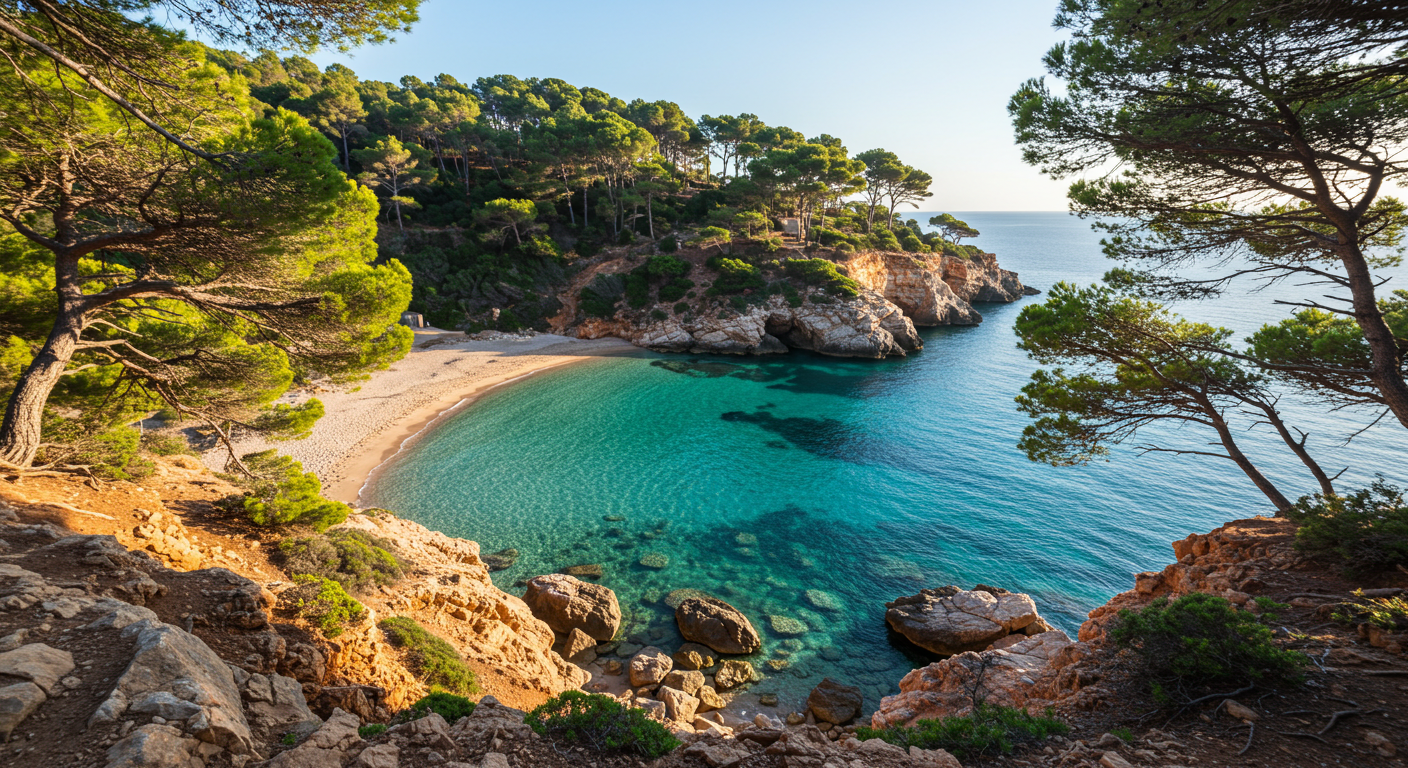
One of the most photogenic spots on the Costa Brava: a small, sheltered cove with turquoise water, pale rock, and pine trees reaching to the cliff edge. There's a parador hotel on the headland above, a small beach bar, and a car park that fills by 10am in August. Arrive early or walk down from Begur town (about 40 minutes on foot).
Valencia and the Costa Blanca
The Costa Blanca gets a mixed press — Benidorm casts a long shadow — but the northern stretch around Dénia, Jávea, and Altea contains genuinely lovely beaches and coves, with reliable sunshine from May to October.
Cala del Moraig, Benitatxell
A large, pebbly cove near the border with Alicante province, famous for its sea cave (accessible by swimming or kayak) and excellent snorkelling. The water is deep and clear. There's a well-regarded beach restaurant. Access is via a steep path from the car park — about 15 minutes down, longer coming back up.
Playa de la Granadella, Jávea
Small, sheltered, and surrounded by pine-covered cliffs, Granadella is arguably the finest beach near Jávea. It has a beach bar, sunbed hire, and a diving centre. The road down is narrow and the car park small — parking is genuinely difficult in August, so consider cycling from Jávea town (about 7km).
Andalusia
Andalusia has two coastlines: the Mediterranean Costa del Sol and the Atlantic Costa de la Luz. They are very different in character.
Bolonia, Tarifa
On the Atlantic side, near Tarifa, Bolonia is one of the most beautiful beaches in southern Spain: a long arc of pale sand backed by a Roman archaeological site (Baelo Claudia) and a large natural sand dune. The Levante wind blows hard here in summer — which is either annoying or wonderful, depending on whether you're a windsurfer. There are a handful of beach bars and a small village. No large hotels, no promenade. If you're spending time in Granada and want a day at the coast, the drive to Bolonia (about 2.5 hours) is more rewarding than heading to the Costa del Sol — though for a deeper sense of that part of Andalusia, our slow travel guide to Granada is worth reading first.
Playa de los Genoveses, Cabo de Gata
Cabo de Gata Natural Park, in Almería, contains the most unspoiled coastline on the Spanish Mediterranean mainland. Los Genoveses is its showpiece: a long, quiet bay with golden sand and volcanic rock formations, accessible only by a dirt track (cars are restricted in summer — a shuttle bus runs from San José). The water is warm, clear, and relatively calm. There are no facilities on the beach itself.
The Balearic Islands
Mallorca, Menorca, Ibiza, and Formentera each have their own beach personality. Menorca and Formentera tend to attract visitors who prioritise water quality and scenery over nightlife.
Cala Macarella and Macarelleta, Menorca
These twin coves on Menorca's south coast are among the most beautiful in the Balearics: white sand, pine-fringed cliffs, water that shifts from pale green to deep blue. Macarelleta (the smaller of the two) is clothing-optional. Access is on foot from the car park at Cala Galdana (about 30 minutes each way) or by boat. As of 2026, Menorca has introduced a vehicle access management system for its southern coves in July and August — check the Menorca tourism website for current restrictions before driving.
Ses Illetes, Formentera
Formentera is a 20-minute ferry from Ibiza and feels like a different world. Ses Illetes, on the northern peninsula, has water that rivals the Maldives in colour and clarity — this is not hyperbole, it's a function of the Posidonia oceanica seagrass meadows that filter the water. The beach is narrow and popular; arrive early or accept that you'll be sharing it. There are good beach bars. Formentera is car-light by design — hire a bicycle at the ferry port in La Savina.
The Canary Islands
The Canaries offer year-round warmth and a completely different landscape from mainland Spain. The beaches here are volcanic in origin — black sand on Tenerife and La Palma, golden sand imported or formed from shell on Gran Canaria and Fuerteventura.
Playa de Cofete, Fuerteventura
Cofete is the wild card on this list: a vast, remote beach on the Jandía peninsula, accessible via a rough track that requires either a 4x4 or a long walk. There are no sunbeds, no beach bars (just one isolated restaurant), and strong currents that make swimming inadvisable. What there is: about 12 kilometres of empty Atlantic beach, backed by mountains, with almost nobody on it. It's one of the most dramatic landscapes in Spain.
Playa de las Canteras, Las Palmas de Gran Canaria
For something entirely different: Las Canteras is an urban beach in the middle of Gran Canaria's capital city, protected by a natural reef that keeps the water calm. It's three kilometres long, has excellent restaurants and bars along the promenade, and is genuinely used by locals year-round. Water temperature in summer is around 23–24°C. Las Palmas has become increasingly popular with digital nomads and long-stay visitors — if you're considering a longer stint, you'll want to understand the bureaucratic basics, starting with getting your NIE and TIE sorted.
Practical Notes for Summer 2026
Reservations and access controls are spreading. Beyond Catedrals and the Cíes, several other beaches and natural parks have introduced or are piloting visitor management systems. Check local tourism websites before assuming you can simply turn up.
Parking is the single biggest practical headache at popular beaches in July and August. Where possible, use public transport, shuttle buses, or bicycles. Many coastal towns have introduced paid parking zones that fill by 9am.
Water temperatures vary enormously. The Atlantic north (Galicia, Basque Country) peaks at 18–21°C in August. The Mediterranean and Balearics reach 26–28°C by late summer. The Canaries sit at a consistent 22–24°C year-round.
Blue Flag status is a useful baseline indicator of water quality and facilities, but it doesn't predict beauty or crowd levels. Some of the most spectacular beaches on this list have no facilities at all.
If you're planning an extended stay rather than a holiday — renting a base on the coast, working remotely, or testing out life in Spain — the financial and administrative groundwork matters as much as choosing the right beach. Our guide to opening a Spanish bank account and registering as autónomo covers the practical steps that longer-stay visitors frequently overlook.
Spain's coastline is large enough that even in the busiest August, it's possible to find a beach that feels like a discovery. The trick is to do a little research, book access where it's required, and resist the pull of the most-photographed spot in favour of the one that suits how you actually want to spend a day by the sea.
Frequently asked questions
- Which Spanish coast has the warmest sea in summer?
- The southeastern Mediterranean coast — around Murcia and Almería — and the Balearic Islands typically have the warmest water, reaching 26–28°C by late August. The Canaries sit at a steady 22–24°C year-round. The Atlantic north (Galicia, Basque Country) is considerably cooler, peaking at around 18–21°C in August.
- Do I need to book to visit beaches in Spain in summer 2026?
- For some beaches, yes. Praia das Catedrals in Galicia, the Cíes Islands, and several Menorcan coves require advance reservations or access permits in summer. The system is expanding — always check the relevant regional tourism website before visiting protected or heavily managed beaches.
- What is the best Spanish island for beach quality?
- Formentera consistently tops rankings for water clarity, thanks to protected Posidonia seagrass meadows. Menorca offers excellent beaches in a more varied landscape with less development than Ibiza or Mallorca. For sheer variety, Mallorca has the most options across all styles.
- Which Spanish beaches are best for families with young children?
- Sheltered, calm-water beaches work best for families. La Concha in San Sebastián, Cala Macarella in Menorca, Playa de las Canteras in Las Palmas, and Cala Aiguablava in Begur all offer relatively calm conditions, good facilities, and manageable access. Avoid beaches with strong currents or surf unless your children are confident swimmers.
- When is the best time to visit Spanish beaches to avoid crowds?
- Late June and early September are the sweet spots: water temperatures are good, the weather is reliably sunny, and Spanish school holidays haven't fully kicked in (or have just ended). The first two weeks of August are the busiest period across all coasts and islands.
- Are there good beaches near Barcelona?
- Barcelona's city beaches (Barceloneta and its neighbours) are convenient but crowded and not especially beautiful. The Costa Brava north of the city — particularly around Begur, Palafrugell, and Cadaqués — offers far more scenic coves and is accessible by car in 1.5–2 hours. Sitges, south of Barcelona, has pleasant town beaches with a lively atmosphere.
- Can I work remotely from a Spanish beach town in summer 2026?
- Many people do, particularly from towns like Tarifa, Las Palmas de Gran Canaria, Jávea, and Cadaqués, which have developed decent infrastructure for longer-stay visitors. Reliable broadband, coworking spaces, and a community of remote workers are increasingly common. If you're staying more than 90 days, you'll need to look into visa options and local registration requirements.