Best Madrid Neighbourhood to Stay for Expats: Malasaña vs La Latina vs Chamberí vs Salamanca
Malasaña, La Latina, Chamberí or Salamanca? A real comparison of the best Madrid neighbourhoods to stay in for expats in 2026 — rents, vibe, and honest trade-offs.
Four neighbourhoods. One city. Wildly different lives.
The question I hear most from people planning a move to Madrid — or even just a long stay — is which part of the city to base themselves in. And it's a genuinely hard one, because Madrid doesn't have a single obvious expat quarter the way Lisbon has Príncipe Real or Barcelona has the Eixample. Each barrio has its own personality, its own rental market, and its own set of annoying trade-offs nobody mentions in the glossy relocation guides.
The short answer, if you want a featured-snippet version: Malasaña suits creatives and younger arrivals who want nightlife on the doorstep; La Latina is for people who want old Madrid atmosphere and a sociable street scene at a slightly lower price point; Chamberí is the pick for those who want to actually live like a Madrileño rather than an expat; and Salamanca is for people with a budget to match their desire for quiet, order, and decent pavements. Now for the detail.
Malasaña: The One Everyone Arrives In
Malasaña is where a lot of people land first, and a reasonable number of them never leave. It sits just north of Gran Vía, centred roughly on Plaza del Dos de Mayo, and it has the kind of energy that makes you feel like you made a good decision moving abroad — at least for the first few months.
The neighbourhood was the epicentre of the movida madrileña in the 1980s, that explosion of art and music and general excess after Franco died. Some of that DNA is still there in the record shops on Corredera Baja de San Pablo, the old-school bodegas that open at noon and close when they feel like it, and the tattoo studios wedged between vintage clothing shops. In recent years it's tipped firmly into trendy — craft cocktail bars, third-wave coffee, avocado toast — which either delights you or makes you want to move to Lavapiés.
Rents here have climbed sharply. As of early 2026, a decent one-bedroom flat in Malasaña proper is running €1,100–€1,500 a month. You can find cheaper if you're willing to go up to a fourth floor with no lift and a kitchen the size of a wardrobe, which is genuinely fine in your twenties and less fine thereafter. The streets are lively — read: loud — on Thursday through Sunday nights, so if you're a light sleeper, look for a flat on an interior courtyard (patio interior). Estate agents don't always volunteer this information.
For digital nomads, Malasaña has good café-working culture and a lot of people doing the same thing, which can be social or annoying depending on your temperament. If you're thinking about the Spanish Digital Nomad Visa and wondering whether Madrid makes financial sense on the minimum threshold, the answer in Malasaña is: it's tight.
Who it actually suits
People under 35, or over 35 and not bothered by noise. Freelancers. People who want to be within walking distance of the Prado without living in a tourist zone. Anyone who appreciates a neighbourhood that feels genuinely alive at 11pm on a Tuesday.
The honest downside
It's become self-consciously cool in a way that can feel a bit exhausting. The mercado on Fuencarral is a tourist trap at this point — skip it. And if you're arriving with a pet or a child, the tiny flats and busy pavements will wear on you.
La Latina: Old Madrid, Real Prices, Real Character
La Latina is the neighbourhood I usually recommend to people who want to feel like they're in Madrid rather than in a version of every European capital's trendy district. It sits south of the old city centre, spreading out from the Plaza de la Cebada and Calle Cava Baja — that long street of tapas bars where the tostas are still €2 and the wine comes in a proper ceramic jug.
The Sunday rastro flea market spills through the streets around here, which is wonderful once a month and genuinely chaotic every week if you live on the route. The architecture is older and more uneven than Malasaña — narrow streets, low buildings, the occasional Roman wall fragment embedded in a car park. It's not pretty in a manicured way, but it has texture.
Rents are slightly more forgiving than Malasaña. A one-bedroom flat here might run €950–€1,300, though the stock of larger flats is limited because the buildings are old and subdivided. The Metro connections are fine — La Latina station on Line 5 — but you're a longish walk from most of the business districts, which matters less if you work remotely.
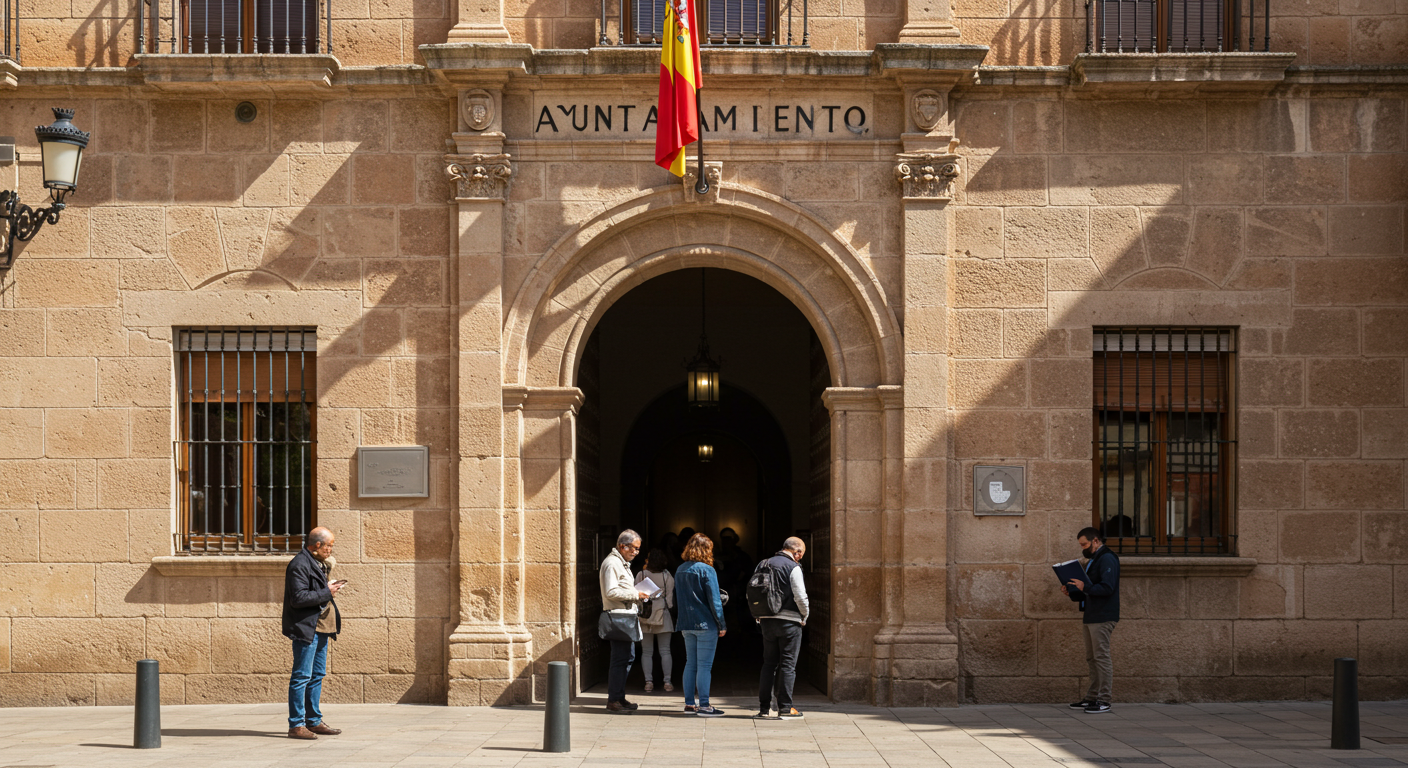
One practical issue: getting your paperwork sorted when you arrive in any Madrid neighbourhood involves the usual bureaucratic friction, but La Latina's local padron office (the one handling empadronamiento) can have long queues. If you're renting a room or staying somewhere informal, read up on getting empadronamiento without a standard rental contract before you arrive — it's not as simple as showing up with a lease.
Who it actually suits
People who want a sociable, local neighbourhood without paying Malasaña prices. Couples. Anyone who takes Sunday lunch seriously. People who'd rather walk to a proper market than order from an app.
The honest downside
The flat stock is old and often poorly insulated — cold in winter, hot in August. Lifts are rare. And the area around Cava Baja gets very touristy on Friday and Saturday nights, so the "local" atmosphere you're paying for partly evaporates at weekends.
Chamberí: Where You Actually Live Like a Madrileño
If I had to pick one neighbourhood to live in long-term — and I've had this conversation with myself more than once — it would be Chamberí. It sits north of the centre, above Malasaña and west of Alonso Martínez, and it has a quiet confidence that comes from not needing to impress anyone.
The streets are wide and tree-lined in places, particularly around Almagro and along Paseo de Eduardo Dato. The mercado at Vallehermoso is a proper working market with fishmongers and butchers who know their regulars. There are good schools, proper pharmacies, doctors' surgeries that aren't a half-hour Metro ride away. The bars here open at sensible hours and close at sensible hours, which is either a feature or a bug depending on your lifestyle.
Rents have risen here too — Madrid-wide, prices have gone up roughly 15–20% over 2023–2025, and Chamberí is no exception. Budget €1,200–€1,700 for a good one-bedroom, and more like €1,800–€2,400 for a two-bedroom in decent condition. That's not cheap. But you get more space for your money than in Malasaña, the buildings tend to be better quality, and you're less likely to be woken up by someone's birthday party at 3am.
For people arriving and sorting out residency, Chamberí is well-served by transport links to the various administrative offices you'll be spending time in. Getting a Spanish bank account as a non-resident is one of the first practical tasks; there are branches of all the major banks within easy walking distance, which matters more than it sounds when you're carrying a stack of documents.
Chamberí also has a good concentration of professionals and families, which means the social scene is more dinner-party than bar-crawl. That's not a complaint.
Who it actually suits
Families, professionals, anyone over 30 who wants a proper neighbourhood rather than a lifestyle product. People planning to stay longer than a year. Remote workers who want calm daytime hours and a good café that isn't full of other remote workers.
The honest downside
It can feel a little quiet if you're used to Malasaña's pace. Some parts feel slightly corporate — particularly around Almagro, which has a lot of embassy buildings and law firms. And it's genuinely expensive for what you get compared to equivalent neighbourhoods in, say, Valencia.
Salamanca: The Expensive, Orderly, Entirely Comfortable Option
Salamanca is Madrid's answer to the 6th arrondissement or Knightsbridge: wide boulevards, designer shops on Serrano, doormen in apartment buildings, and a general sense that things work properly here. It's east of the Retiro park, and the grid layout (it was planned in the 19th century, which is unusual for Madrid) makes it easy to navigate.
It's also the most expensive residential neighbourhood in the city. One-bedroom flats start around €1,500 and can easily reach €2,500 for anything with a terrace or a view. Two-bedrooms in good condition are €2,000–€3,500. These are not typos.
What you get for that: genuinely excellent public spaces, some of the best restaurants in Madrid (El Paraguas on Jorge Juan, or the more casual spots on Ayala), very low noise levels, and the kind of flat where the heating actually works and the windows seal properly. The Retiro is ten minutes' walk. The international schools in the north of the city are accessible. If you're arriving with children and a relocation package, this is probably where your company is putting you.
For those arriving on a visa and navigating the early administrative months, Salamanca's location near the Paseo de la Castellana means easy access to the consulates and administrative offices clustered in that part of the city. If you're dealing with the early stages of getting documentation sorted — and the wait times for NIE appointments can be genuinely frustrating — having good transport links helps.
Salamanca is also where you'll find the highest concentration of private health clinics, which matters if you're in the gap between arriving and getting your public health coverage sorted. Worth reading about what healthcare cover you actually have before your TIE arrives.
Who it actually suits
People relocating with a company budget. Families with older children. Anyone who wants to be in Madrid but doesn't want to compromise on comfort. Those who find the words "charming and characterful" deeply suspicious.
The honest downside
It's expensive, obviously. But also — and nobody says this — it can feel a bit soulless. The streets are handsome but not warm. The bar scene is polished but not interesting. If you want to actually meet Madrileños rather than other expats and visiting executives, you'll need to travel for it.
The Practical Comparison
A quick side-by-side for the things that actually matter when you're deciding:
- Average 1-bed rent (2026): Malasaña €1,100–€1,500 / La Latina €950–€1,300 / Chamberí €1,200–€1,700 / Salamanca €1,500–€2,500
- Metro access: All four are well-connected; Chamberí and Salamanca have more line options
- Noise at night: Malasaña is the loudest by a distance; Salamanca the quietest
- Flat quality: Salamanca > Chamberí > Malasaña ≈ La Latina (older stock in both)
- Local feel vs expat bubble: La Latina and Chamberí feel most local; Salamanca and parts of Malasaña have heavier expat/tourist presence
- Working from home: Chamberí is the best balance of calm and amenities
When it comes to actually securing a flat in any of these areas, landlords in Madrid have become more demanding about proof of income — particularly for foreign arrivals without Spanish payslips. The situation is manageable but requires preparation; there's a useful guide to renting in Spain without a Spanish payslip that covers exactly what landlords will accept instead.
The Verdict
There's no universally correct answer, which is the honest truth. But if you're arriving for the first time and planning to stay at least a year, I'd put Chamberí at the top of the list for most people. It's expensive enough to be liveable, quiet enough to work in, and local enough to feel like you've actually moved to Spain rather than into a holding pen for international arrivals. La Latina is the runner-up if budget is the deciding factor. Malasaña is fine for a year; harder for five. And Salamanca is excellent if someone else is paying.
Whatever neighbourhood you choose, the first few months involve the same administrative slog: padron, NIE, bank account, health cover. Get those sorted early and the rest of Madrid opens up pretty quickly.
Frequently asked questions
- Which Madrid neighbourhood is cheapest for long-term renting in 2026?
- Of the four main expat-friendly neighbourhoods, La Latina tends to have the lowest rents — roughly €950–€1,300 for a one-bedroom flat as of early 2026. That said, the flat stock is older and lifts are rare, so factor that into your calculations.
- Is Malasaña good for families with children?
- It's manageable but not ideal. The flats are often small and the streets are noisy at weekends. Chamberí or Salamanca are better suited to families — both have larger flat stock, better schools nearby, and quieter streets.
- Can I work from a café in these Madrid neighbourhoods?
- Yes, all four have café culture, but the quality varies. Malasaña has the most dedicated remote-working cafés; Chamberí has quieter spots that are less crowded. Salamanca tends towards smarter coffee bars where lingering for three hours with a laptop might get you a look.
- How do I rent a flat in Madrid as a foreigner without Spanish income proof?
- It's increasingly common for landlords to ask for a Spanish payslip or proof of local employment, but foreign bank statements, remote work contracts, and a larger deposit are often accepted. Some landlords also ask for a Spanish guarantor (aval). See the guide on renting in Spain without a Spanish payslip for the full picture.
- Is Salamanca worth the premium over Chamberí?
- Honestly, for most people, no. Chamberí offers most of the same practical advantages — good transport, quality flats, calm streets — at 20–30% lower rents. Salamanca makes sense if you have a corporate relocation budget or specific needs like proximity to international schools on that side of the city.
- Which neighbourhood is best for digital nomads in Madrid?
- Chamberí is the most practical balance: calm enough to work, good cafés, solid Metro links to co-working spaces around Chueca and Alonso Martínez, and less noisy than Malasaña. Malasaña works well socially but the flat noise levels can be a problem if you keep regular hours.
- Do I need to register (empadronarse) at my Madrid address when I arrive?
- Yes — empadronamiento is essential for accessing public services, registering for healthcare, and eventually getting your TIE. You register at your local Junta Municipal de Distrito. If you're renting a room or in an informal housing situation, the process is slightly more complicated; there's detailed guidance on getting empadronamiento without a standard rental contract.