Costa Brava Beaches and Hidden Calas: The Essential Summer Guide to Catalonia's Coast
From wild calas near Cadaqués to family-friendly sands in Begur, this is your honest, detailed guide to the Costa Brava's best beaches in summer 2026.
Why the Costa Brava Still Earns Its Name
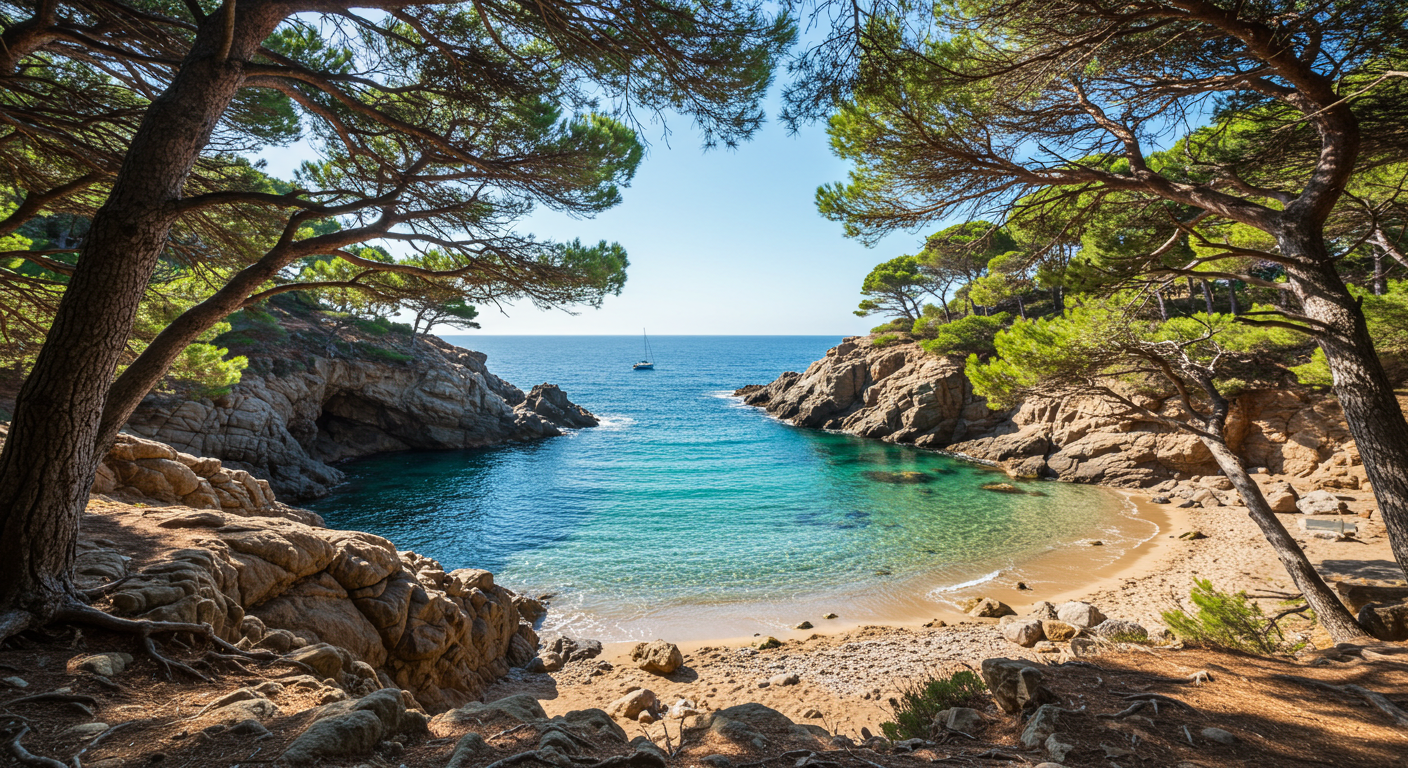
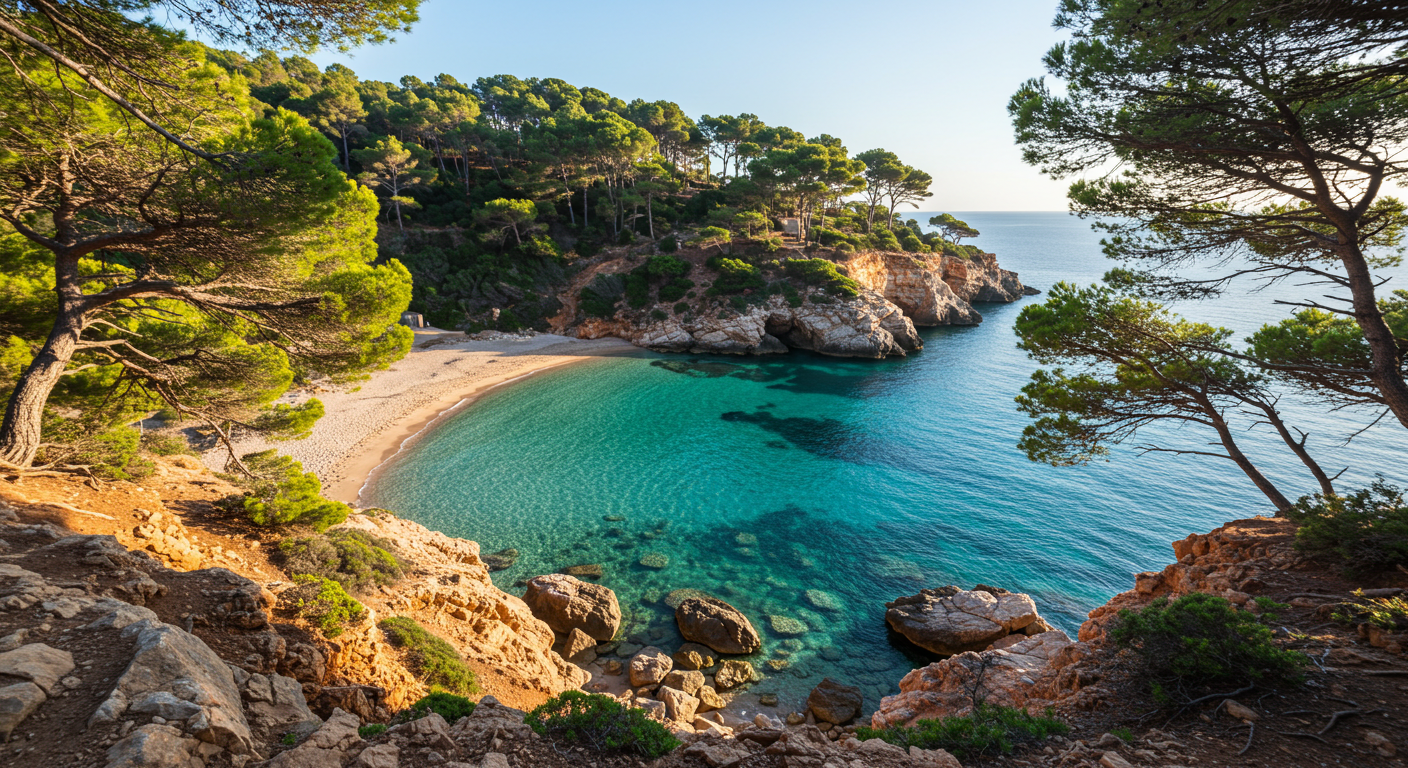
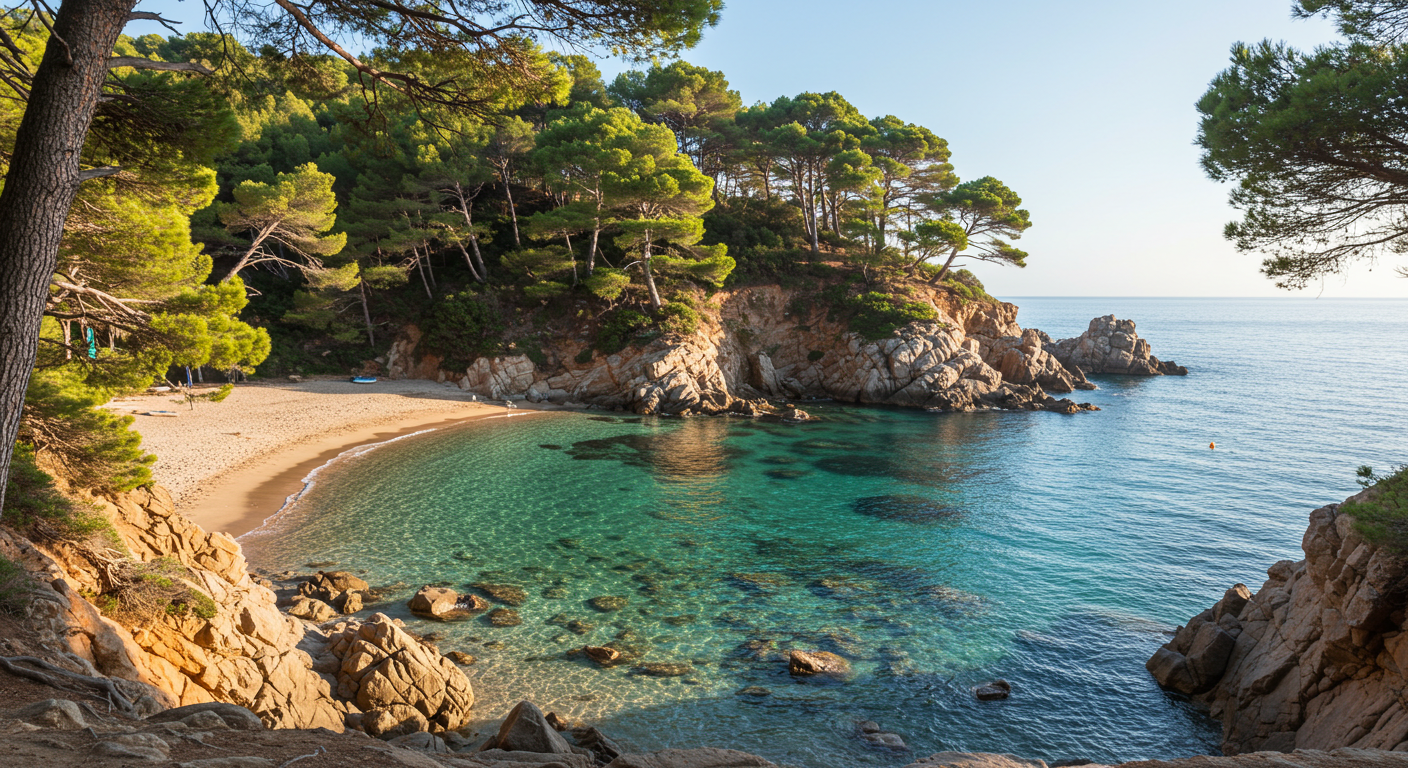
The Costa Brava — literally the "wild coast" — stretches roughly 200 kilometres from Blanes, just north of Barcelona, all the way up to Portbou on the French border. That name was coined by a journalist in 1908, and more than a century later it still fits. This is not the flat, hotel-lined littoral of the Costa del Sol. The Costa Brava is a coast of pine-covered headlands, crystal-clear water that shifts from turquoise to deep cobalt within a few metres, and calas — small coves, often accessible only on foot or by kayak — that can make you feel genuinely remote even in the height of July.
That said, it is not undiscovered. The Costa Brava is one of Europe's most visited coastlines, and parts of it — Lloret de Mar, most obviously — have paid a heavy price for mass tourism. The skill, as with most of Spain, is knowing where to go and when. This guide focuses on the stretches that reward a little effort: the calas around Begur and Palafrugell, the Cap de Creus peninsula near Cadaqués, and the quieter northern reaches between Roses and the French border. We'll also give you the practical detail — parking, access, facilities, costs — that most articles skip.
For a broader overview of Spain's coastline this summer, see our coast-by-coast beach guide for 2026, which puts the Costa Brava in national context.
The Three Zones Worth Understanding
The Costa Brava divides naturally into three sections, each with its own character.
The Southern Coast: Blanes to Palamós
This is the most accessible stretch from Barcelona — Blanes is barely an hour by car or train — and consequently the busiest. Towns like Lloret de Mar and Tossa de Mar attract enormous summer crowds. Tossa, at least, has earned them: its medieval walled town (the Vila Vella) is genuinely beautiful, and the beach directly below it, the Platja Gran, is one of the most photogenic on the entire coast. Arrive before 9am in August or accept that you'll be sharing your towel space.
Further north, Sant Feliu de Guíxols and Palamós are working towns with real character — fishing fleets, covered markets, restaurants that serve the day's catch without a tourist markup. Palamós is Spain's last significant commercial prawn fishery; the gamba de Palamós is a genuine delicacy, sweet and firm, best eaten simply grilled at the port-side restaurants. Expect to pay €30–45 per person for a proper meal with wine, as of 2026.
The Central Coast: Palafrugell, Begur and the Calas de Palafrugell
This is the section most serious Costa Brava visitors come for, and rightly so. The municipality of Palafrugell encompasses four small coastal settlements — Calella de Palafrugell, Llafranc, Tamariu and Aigua Blava — each with its own character, and a string of calas in between that are among the finest on the Mediterranean.
Calella de Palafrugell is a whitewashed fishing village that has changed less than most. The beach is small and pebbly-sandy, the restaurants are stacked up the hillside, and in July the town hosts the Festival de Havaneres, a traditional sea-shanty festival held on the beach at night with open fires and glasses of cremat (rum flambéed with coffee and spices). It is one of those evenings that reminds you why people fall in love with Catalonia.
Tamariu is the quietest of the four, a single arc of sand backed by a handful of restaurants and no through-road. Parking is brutally limited in summer; the practical solution is to park in Palafrugell town (free in the municipal car parks) and take the local bus — the Bus del Mar service runs frequently between June and September, costs around €2 per journey as of 2026, and saves considerable stress.
Begur, set on a hill 5 kilometres inland with a ruined castle above it, is arguably the most elegant base on the Costa Brava. It has excellent restaurants, a good selection of boutique hotels and rental properties, and direct access to several outstanding calas. Cala Aiguafreda, Cala Sa Tuna and Cala Fornells are all within walking distance — the paths are well-marked and take between 20 and 45 minutes each way. None of them has a road, which keeps the numbers manageable even in August.
The Northern Coast: L'Escala, Roses, Cadaqués and Cap de Creus
The northern Costa Brava is wilder, drier and — outside the main resorts — considerably less crowded. The landscape shifts here: the Pyrenees push closer to the sea, the tramuntana wind blows hard and often, and the light has that particular quality that drew Dalí to Cadaqués and kept him there for most of his life.
L'Escala sits at the southern end of the Gulf of Roses and is best known for its anchovies — anxoves de l'Escala are salt-cured in the traditional way and exported across Europe. The town's beaches are long and sandy, the water shallow and warm, and the adjacent ruins of Empúries (the Greek and Roman city of Emporion) are one of the most atmospheric archaeological sites in Spain.
Roses has a large, sheltered bay and tends toward the family resort end of the spectrum. It is also, unexpectedly, home to what many consider the world's most famous restaurant: El Bulli was here, in the Cala Montjoi, until Ferran Adrià closed it in 2011. The site has since become the Bullipedia research foundation and is not open for dining, but the cala itself is accessible by boat from Roses.
Cadaqués is the jewel of the northern coast. Perched behind the Cap de Creus peninsula, it is genuinely hard to reach — the road in is a long series of hairpin bends — and that difficulty has preserved it. The town is white-walled and blue-shuttered, the bay is dotted with fishing boats, and the surrounding coastline is protected within the Cap de Creus Natural Park, Spain's easternmost point. The calas here — Cala Culip, Cala Jugadora, Cala Fredosa — require real walking (the GR-92 coastal path is the access route) but reward you with near-total solitude even in high summer.
The Calas Worth the Effort
Here, in brief, are the specific coves we'd send a friend to.
Cala Estreta (Palafrugell)
A narrow inlet of crystalline water flanked by pine-covered cliffs. No facilities, no road access — you walk 25 minutes from the car park at Llafranc. One of the most beautiful small coves on the coast.
Cala de la Fosca (Palamós)
Larger than most calas and easily accessible, but tucked behind a headland that keeps the worst of the crowds away. Good snorkelling on the rocky edges. Free parking nearby (though it fills by 9am in August).
Cala Montgó (L'Escala)
A broad, sandy cove with clear water and a backdrop of scrubby hills. Popular with families. The walk from the car park is gentle — about 15 minutes — and there's a beach bar with cold drinks and basic food.
Cala Culip (Cap de Creus)
The wildest on this list. No facilities, exposed to the tramuntana, and a 45-minute walk from the nearest road. The landscape is lunar — volcanic rock, sparse vegetation, extraordinary light. Go in late June or early September.
Cala S'Alguer (Palamós)
A tiny fishermen's cove with colourful wooden huts (barraques) that have been used by the same families for generations. You can't swim from the huts themselves, but the adjacent small beach is charming. Accessible on foot from Palamós in about 20 minutes.
Practical Matters: Getting There, Getting Around
From Barcelona
The fastest option is to drive: Palafrugell is around 1 hour 45 minutes via the AP-7 motorway (toll costs approximately €12–15 each way as of 2026). Cadaqués is around 2 hours 30 minutes. Train services run to Figueres (for the northern coast) and to Girona, from where buses connect to the coastal towns. The Sagalés and SARFA bus companies operate direct services from Barcelona's Estació del Nord to Palafrugell, Begur and Cadaqués in summer — journey times of 2–3 hours, fares around €18–25 return.
Getting Around the Coast
Without a car, the Bus del Mar network (operated by SARFA within the Baix Empordà area) is genuinely useful between June and September. A car gives you more flexibility but parking is the central headache of a Costa Brava summer. The golden rule: if you're heading to a popular cala, arrive before 9am or after 6pm. Midday parking near Begur's calas in August is essentially impossible.
Kayaking is an excellent alternative for reaching otherwise inaccessible coves. Several operators in Calella de Palafrugell, Llafranc and Cadaqués offer guided half-day tours (around €40–55 per person as of 2026) or kayak hire by the hour.
Costs in 2026
The Costa Brava is not cheap by Spanish standards. A double room in a decent Begur hotel runs €150–250 per night in July and August; rural houses and apartments can be better value for groups. Restaurants in the tourist centres charge accordingly — budget €25–35 per person for a decent lunch with wine. The further you get from the main resorts, the more reasonable prices become. Palafrugell town, a 10-minute drive inland from the calas, has a covered market and local restaurants where a menú del día costs €13–15.
Where to Stay: A Few Honest Recommendations
Begur is our preferred base for the central coast. The town itself is worth exploring — the castle ruins, the weekly market, the excellent can Bonay hotel and restaurant — and you're within easy reach of six or seven different calas. Book accommodation for July and August at least three months in advance.
Cadaqués for the northern coast, despite (or because of) the difficult access. There are several small hotels and a good range of apartment rentals. The town is pedestrianised in summer evenings and has a genuinely lively bar and restaurant scene.
Palafrugell town for budget-conscious travellers who want to be near the best calas without paying coastal prices.
If you're considering spending more than a few weeks and thinking about how to make it work legally, our comparison of the Non-Lucrative Visa and Digital Nomad Visa is a useful starting point, and you'll want to read our step-by-step NIE and TIE guide before you arrive.
Food, Wine and the Costa Brava Table
Catalonia takes its food seriously, and the Costa Brava is no exception. The regional cuisine leans heavily on the sea — suquet de peix (a rich fish stew), fideuà (noodles cooked like paella with seafood), salt cod in a dozen preparations — combined with the produce of the Empordà plain inland: wild mushrooms, black truffles in season, botifarra sausages, and the wines of the DO Empordà appellation.
Empordà wines are having a moment. The garnatxa (grenache) grape dominates, producing both robust reds and the region's distinctive sweet garnatxa de l'Empordà, a fortified wine drunk as an aperitif or with dessert. Look for producers like Espelt, Mas Estela and Terra Remota. A bottle from a local shop costs €8–18; the same wine on a restaurant list will be €20–35.
For anyone who has read our San Sebastián food guide and wants a Catalan counterpart: the Costa Brava doesn't do pintxos, but it does have pa amb tomàquet (bread rubbed with tomato and olive oil), cargols (snails, a Catalan obsession), and a culture of long, unhurried lunches that is equally worth surrendering to.
The Best Time to Visit
July and August are peak season: hot, busy, expensive. The water is at its warmest (around 25–26°C) and the evenings are perfect. If you can go in June or September, do. June on the Costa Brava is one of the finest things in Europe — the crowds are manageable, the light is extraordinary, accommodation costs 30–40% less, and the sea is already warm enough for comfortable swimming.
May is beautiful but the water is still cold (around 18°C). October brings the first storms but also empty calas, golden light and the start of mushroom season inland.
The tramuntana wind is a factor worth understanding. It blows from the north with considerable force, particularly around Cap de Creus and Cadaqués, and can make some exposed calas uncomfortable even on otherwise sunny days. Local knowledge (or a quick check of the wind forecast) is worth having before you commit to a long walk to a cala.
A Coast That Rewards Patience
The Costa Brava's best moments tend to come when you stop rushing. The cala you find by following a goat track rather than a Google Maps pin. The fisherman's bar in Palamós that has no sign and serves wine from an unlabelled bottle. The evening in Cadaqués when the light goes gold and the whole bay seems to hold its breath.
This is a coastline that has been drawing visitors for well over a century — artists, writers, discerning travellers — and it continues to deliver, provided you're willing to do a little more than park at the nearest beach. Arrive early, walk a bit further than the next person, eat where the locals eat, and the Costa Brava will more than justify the journey.
Frequently asked questions
- What is the best base for exploring the Costa Brava's hidden calas?
- Begur is our top recommendation for the central coast. It sits on a hill above several excellent calas (Sa Tuna, Aiguafreda, Fornells) that are accessible on foot, has a good range of hotels and restaurants, and is within easy driving distance of the Palafrugell calas. For the northern coast, Cadaqués is the obvious choice despite its difficult road access.
- How do I get to the Costa Brava without a car?
- SARFA and Sagalés buses run direct services from Barcelona's Estació del Nord to Palafrugell, Begur and Cadaqués in summer, with journey times of 2–3 hours and return fares around €18–25 as of 2026. Trains run to Girona and Figueres, with onward bus connections. The local Bus del Mar network covers the Palafrugell area between June and September.
- Which Costa Brava calas are accessible without a long walk?
- Cala de la Fosca near Palamós is a short, easy walk from the car park. Cala Montgó near L'Escala is about 15 minutes on a gentle path. Tamariu beach itself is accessible by road (though parking is extremely limited in summer). For genuine solitude, you'll need to walk further — calas like Estreta and Culip require 25–45 minutes each way.
- Is the Costa Brava expensive compared to other parts of Spain?
- Yes, particularly in July and August. Hotel rooms in Begur or Cadaqués run €150–250 per night in peak season, and restaurants in tourist areas charge €25–35 per person for a meal with wine. Prices drop significantly in June and September, and staying in inland towns like Palafrugell rather than on the coast reduces costs considerably.
- What is the tramuntana and should it affect my plans?
- The tramuntana is a strong north wind that blows across the northern Costa Brava, particularly around Cap de Creus and Cadaqués. It can make exposed calas uncomfortable even on sunny days. Check a local wind forecast (Windfinder is reliable) before planning a long walk to a remote cove, and consider the more sheltered central coast around Palafrugell and Begur if wind is forecast.
- When is the best time to visit the Costa Brava?
- June and September are the sweet spots: manageable crowds, warm sea (25°C+ in September, around 22°C in June), lower prices and easier parking. July and August are peak season with the warmest water but the highest prices and most crowded beaches. May is beautiful but the sea is still cool at around 18°C.
- Can I kayak to the hidden calas of the Costa Brava?
- Yes, and it's one of the best ways to access otherwise unreachable coves. Several operators in Calella de Palafrugell, Llafranc and Cadaqués offer guided half-day kayak tours for around €40–55 per person as of 2026, or hourly kayak hire. The coastline between Llafranc and Calella de Palafrugell is particularly well-suited to kayaking, with several small calas that have no road access.