Secret Calas of the Costa Brava: Best Hidden Coves 2026
The best hidden coves on the Costa Brava for summer 2026 — which calas are worth the hike, which are overrun, and how to time your visit right.
The Costa Brava has 214 kilometres of coastline and somewhere north of 200 named calas. Most visitors see about four of them — the ones with car parks and chiringuitos. That's fine. But if you're spending any serious time on this coast in summer 2026, knowing which hidden coves are genuinely worth the effort, and which are only "hidden" on Instagram, is the difference between a memorable day and a sweaty scramble to find somewhere to put your towel.
The Best Hidden Coves on the Costa Brava for Summer
The short answer: Cala Llevadó, Cala Pola, Cala Bona (near Tossa de Mar), Cala Culip and Cala Jonca in Cap de Creus are the standouts for 2026 — genuinely beautiful, accessible without a boat, and not yet ruined by shuttle buses. Cala Montjoi (near Roses) deserves a mention but gets busy by midday in July and August. Sa Tuna near Begur is small, lovely, and has a decent restaurant — arrive before 10am in high summer or forget it.
Now the detail.
The Coast in Three Sections (Know Before You Go)
The Costa Brava runs from Blanes in the south to the French border at Portbou in the north. It breaks naturally into three zones, each with a different character.
Southern Costa Brava (Blanes to Palamós) is the most accessible from Barcelona — about 90 minutes by car, or train to Blanes then bus or taxi. The beaches here are broader and sandier. Less dramatic, but easier for families. Lloret de Mar is a write-off for anyone over 22 who isn't there for the nightlife.
Central Costa Brava (Palamós to Begur) is the sweet spot. The cliffs get higher, the water gets clearer, and the towns — Palafrugell, Begur, Tamariu, Llafranc — are genuinely pleasant rather than just tourist-service towns. This is where most of the best calas cluster.
Northern Costa Brava (L'Escala to Portbou) includes the Cap de Creus peninsula, which is a protected natural park. Fewer facilities, more wind (the Tramuntana comes through here with real force), wilder scenery. The calas up here feel properly remote.
The Calas Worth the Hike
Cala Culip and Cala Jonca, Cap de Creus
These two sit within the Cap de Creus Natural Park, just north of Cadaqués. You park at the Cap de Creus lighthouse car park (€5–7, as of 2026) and walk south along the GR-11 coastal path — about 20–30 minutes to Cala Culip, another 10 to Cala Jonca. The rock formations here are genuinely unlike anywhere else on the coast: folded schist that looks like something geological went badly wrong in the best possible way. The water is cold by Costa Brava standards (the Tramuntana keeps it mixed) and incredibly clear.
No facilities. Bring everything. Shoes with grip — the path is rocky and dry in summer.
Cala Llevadó, Near Tossa de Mar
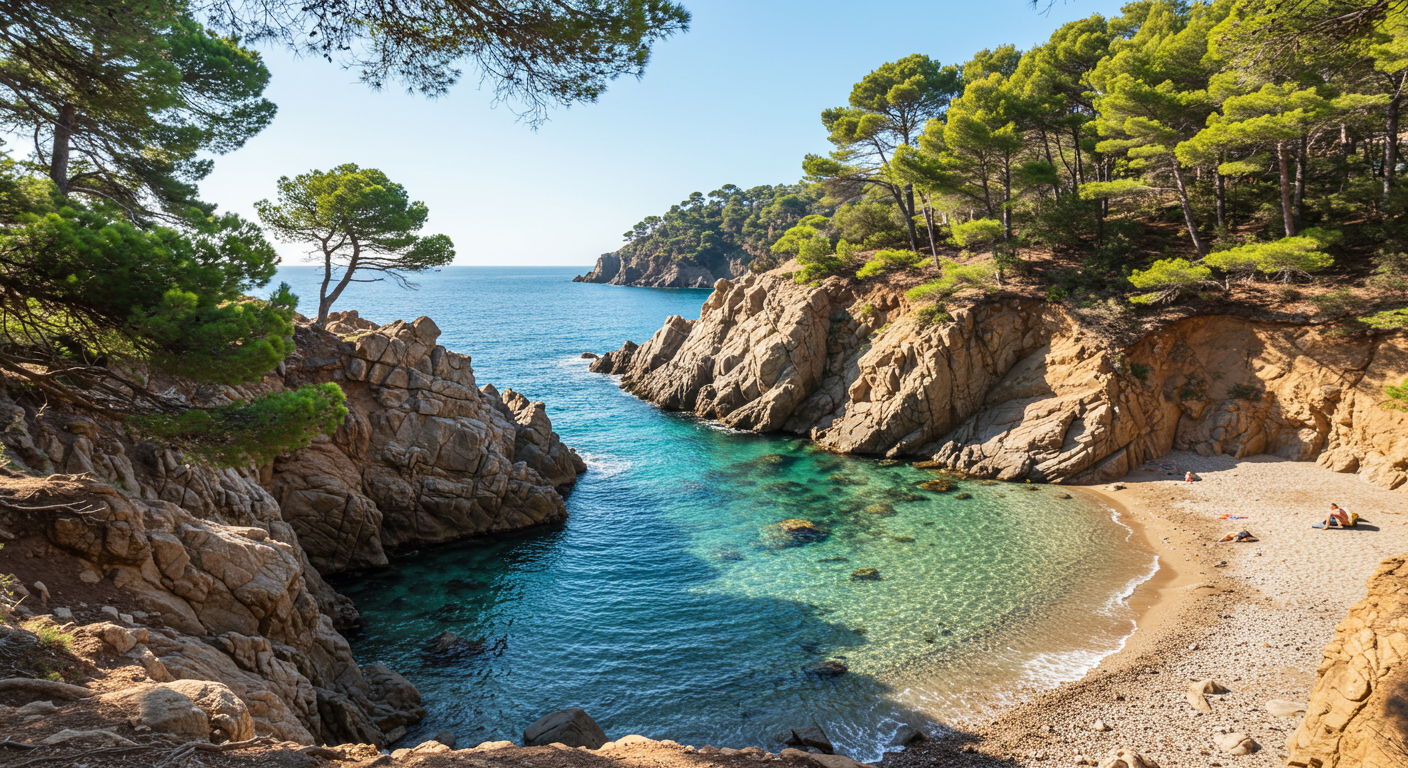
This one surprises people. Tossa itself is excellent — one of the few Costa Brava towns that earns its reputation — but most visitors stop at the main beach. Cala Llevadó is a 25-minute walk north along the coastal path from Tossa (the GI-682 road signs will confuse you; ignore them and follow the coast). Three small coves, pine trees coming down to the water, and the only "facility" is a snorkelling rental shack that may or may not be there depending on the season. Pebbles, not sand. Bring water shoes if that bothers you.
Sa Tuna, Begur
Smaller than it looks in photos. The village is a handful of whitewashed houses, a few fishing boats, and a restaurant (Restaurant Sa Tuna — the arrós a la cassola is the thing to order, around €18–22 per person for a proper lunch). This is a drive-to cove, not a hike, but the road is narrow enough that parking fills by 9:30am in August. Go early or take the path down from Begur town, which takes about 35 minutes and means you can have a beer in Begur afterwards.
Cala Pola, Between Tossa and Santa Cristina
A 10-minute walk from the road — shorter than most — but the angle of the cliffs means it stays shaded until about 11am and again after 4pm. In August that's genuinely useful. Small, rocky, often a few families with kids because it's calm water. Not dramatic. Just very pleasant.
The Ones That Are Overrated (Or Overcrowded)
Cala Futadera gets posted constantly. It's fine. It's also a 45-minute walk each way on a rocky path, tiny, and in July you'll share it with 60 other people who also read the same article you did. Go to Cala Pola instead.
Platja de Castell near Palamós is consistently listed as "undiscovered." It has a car park, a restaurant and a volleyball net. Lovely beach, genuinely one of the best sandy ones on the coast, but nobody's discovering anything there.
Aiguablava is beautiful but fully known. Parador hotel, boat trips, the works. Worth going — just don't expect solitude.
How to Actually Get to the Costa Brava Without a Car
This matters more than most guides admit. The train from Barcelona Sants goes to Blanes (about 1 hour 20 minutes, €7–9 as of 2026) and to Figueres (around 2 hours, €15–20 on faster services). From those endpoints you're dependent on buses, taxis or bikes.
Sagalés runs buses from Girona and the coast towns — the frequency is reasonable in summer (roughly hourly on main routes) but drops to almost nothing in the evenings. If you're based in Begur or Palafrugell without a car, you'll be timing your evenings around bus departures. That's not the end of the world, but know it going in.
Girona airport is worth considering as a base. It's 40 minutes from the coast by car and has decent bus connections to the city. If you're flying in specifically for the Costa Brava, Girona beats Barcelona El Prat for convenience.
For the northern section — Cadaqués, Cap de Creus — a car is close to essential. Cadaqués has one road in and out. Bus service exists from Figueres but runs maybe three times a day in summer. Worth checking the current schedule on the Sarfa/Moventis website before you plan around it.
Timing: When to Go and When to Stay Away
July and August are brutal for crowds, particularly in the central section. The Spanish summer holiday runs from roughly the last week of July through the third week of August — during that window, even the "hidden" calas fill up by 10am.
June is genuinely good. The water temperature is around 20–22°C — perfectly swimmable — and the towns are functional without being rammed. Prices at rental apartments and hotels are 20–30% lower than August.
September is arguably the best month. Water is at its warmest (23–25°C), the school crowds have gone, and the light is extraordinary. The only downside is that some beach restaurants start reducing hours after the 10th or 15th.
October: the water is still swimmable well into the month (18–20°C on most years), but the Tramuntana picks up and some coves get big swell. The coast is nearly empty. If you're relocating to the area or doing a slow-travel stint, October is worth serious consideration.
Practicalities Worth Knowing
Sunscreen rules: Catalonia has been moving to restrict reef-damaging sunscreens in protected park areas. In Cap de Creus, mineral-only sunscreens are encouraged. A few beaches have posted signs. It's not heavily enforced yet but worth being aware of.
Parking fees have increased noticeably across the Costa Brava since 2023. Many coves now have regulated parking at €2–3 per hour, with maximums of €8–10 per day. Some require an app (usually Parclick or the local municipality's own app). Cash parking is becoming rare. Check before you drive.
Drinking water at calas: almost never available. Bring at least 1.5 litres per person. The sun and the walk will use more than you think.
Snorkelling: the Costa Brava is genuinely excellent for it. The sea grass meadows (posidonia) and rocky reefs around Cap de Creus are protected, and the fish life is better than most of the Mediterranean. A basic mask and fins are worth packing.
A Note for People Planning to Stay Longer
A growing number of people are using the Costa Brava as a base for slow-travel stays or remote work — Begur and Cadaqués in particular have a quiet off-season that surprises people used to summer crowds. If you're thinking about longer-term residency in Catalonia, the practical side of getting sorted (bank accounts, registration, healthcare) has its own learning curve. The Spanish Digital Nomad Visa on Minimum Salary: Is It Worth It? piece covers the visa angle well if you're thinking about staying beyond 90 days. And if you're navigating the early stages of residency, Healthcare in Spain Before Your TIE Arrives: What Cover Do You Actually Have? is worth reading before you assume you're covered.
For the practical admin of settling in — particularly opening a bank account without a full residency setup yet — Open a Spanish Bank Account as a Non-Resident in 2026 will save you some confusion. And if you're renting a place on the coast for an extended stay, Renting in Spain Without a Spanish Payslip: How Foreigners Do It is genuinely useful — landlords in tourist areas can be cautious about longer lets to foreigners.
The Costa Brava rewards the slightly awkward choice: the 8am start, the 20-minute walk, the town that doesn't have a beach bar. Do that, and you'll find water that looks like it's been doctored in post-production. Don't, and you'll spend August sharing a cove with 80 strangers and wondering what the fuss was about.
Frequently asked questions
- What are the best hidden coves on the Costa Brava for summer 2026?
- Cala Culip and Cala Jonca in Cap de Creus, Cala Llevadó near Tossa de Mar, and Sa Tuna near Begur are the strongest options — accessible without a boat, genuinely beautiful, and not yet overrun. For the central section, Cala Pola is a quieter alternative to the most-photographed spots.
- Can you reach Costa Brava calas without a car?
- For the southern and central sections, yes — train to Blanes or Girona, then Sagalés or Moventis buses to towns like Tossa, Palafrugell or Begur. For the northern section (Cadaqués, Cap de Creus), a car is close to essential. Bus service to Cadaqués from Figueres exists but runs only a few times daily in summer.
- When is the best time to visit Costa Brava beaches to avoid crowds?
- June and September are the best months. June has warm water (20–22°C) and far fewer people than July–August. September brings the warmest sea temperatures of the year (23–25°C) and the crowds drop sharply after the Spanish school return in mid-September. October is excellent for slow travel but some facilities reduce hours.
- Is snorkelling good on the Costa Brava?
- Yes — it's one of the better snorkelling coastlines on the Spanish mainland. The rocky reefs and protected posidonia meadows around Cap de Creus in particular have good fish life. Visibility is typically 10–15 metres in calm conditions. Bring your own gear; rental is patchy outside the main resort areas.
- Are there parking fees at Costa Brava calas?
- Increasingly, yes. As of 2026, many coves have regulated parking at €2–3 per hour with daily caps of around €8–10. Payment is usually via app (Parclick or a local municipality app) — cash machines are becoming rare. Check in advance for the specific cala you're visiting.
- Which Costa Brava beaches should I skip?
- Lloret de Mar is geared entirely around package tourism and nightlife — the beach itself is fine but the town isn't. Cala Futadera is overposted online: long walk, tiny cove, often crowded in July–August. Platja de Castell near Palamós is lovely but not remotely undiscovered despite what travel lists say.
- Can you swim in the sea on the Costa Brava in September or October?
- Comfortably in September — water temperatures are typically 23–25°C, the warmest of the year. October is still swimable for most people (18–20°C in most years), though the Tramuntana wind can make northern coves choppy. Southern beaches around Tossa and Lloret hold heat better in October.