Living in Spain Without Speaking Spanish: An Honest City-by-City Take
Can you live in Spain without speaking Spanish? Honestly, it depends where. A city-by-city breakdown of how far English really gets you.
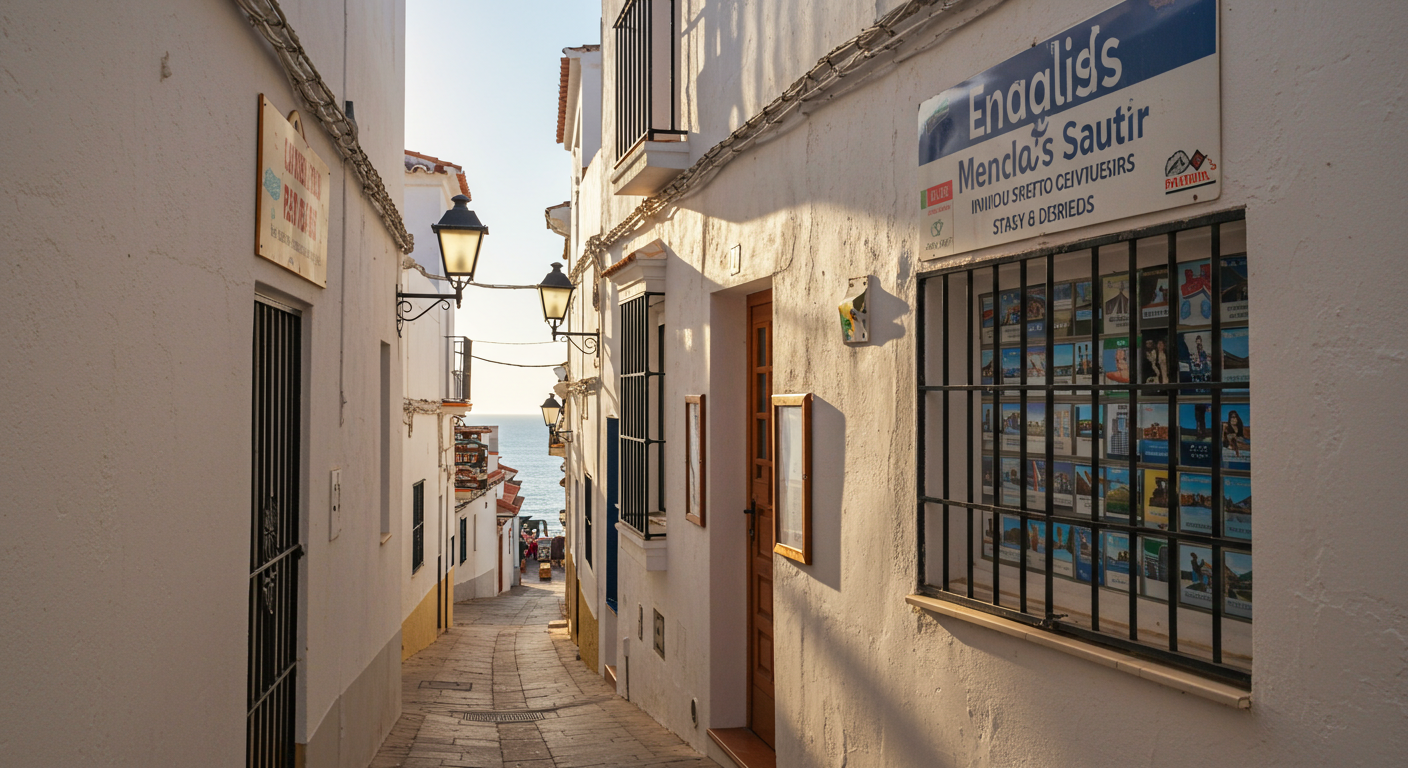
Can You Live in Spain Without Speaking Spanish?
Yes — but with caveats that vary enormously by where you land. In parts of the Costa del Sol or the Canary Islands you could, technically, spend years without uttering more than gracias and una cerveza, por favor. In rural Galicia or the smaller towns of Castilla y León, you'd struggle to rent a flat, register at the health centre, or have a meaningful conversation with a single neighbour. The honest answer is: it depends on which Spain you're moving to, and what kind of life you expect to lead there.
This isn't a piece designed to scare you into Duolingo. It's a realistic look at how far English actually gets you, city by city and region by region, based on years of living here and watching other expats either thrive or quietly lose their minds.
Barcelona: The Easiest City — with a Catch
Barcelona is probably the most English-friendly city in the country for day-to-day life. International population, a massive tech and startup scene, and decades of tourism mean you'll find English spoken in most restaurants, many shops, and a decent chunk of professional environments. Gràcia, Eixample, and Poblenou all have enough English-speaking doctors, landlords, and café staff that you can genuinely function.
The catch — and it's a real one — is that Barcelona is also a Catalan-speaking city. Many locals will switch to Spanish for you, but some won't, especially in official settings. Go to the local Ajuntament office in the wrong arrondissement and you may find forms only in Catalan, staff who default to Catalan, and a general assumption that you've made some effort. Not speaking Spanish is manageable. Not speaking either language can occasionally feel like being the only person at a party who doesn't know the host.
For professional life, Barcelona's international firms (think tech, pharma, logistics) often operate partly in English. But if you're going autónomo and dealing with Spanish bureaucracy — gestor appointments, Hacienda queries, Social Security — you'll want at least basic Spanish, or a reliable gestor who bridges the gap.
Madrid: Surprisingly Less English-Ready Than You'd Think
This surprises people. Madrid is a capital city of nearly 3.5 million, cosmopolitan in many respects, but far less internationally oriented than Barcelona in terms of day-to-day English use. Waitstaff in Malasaña or Chueca often speak some English; head to Carabanchel or Vallecas and the assumption is firmly that you speak Spanish.
Professionally, international companies in Madrid do use English — multinationals in the IFEMA area, financial firms, some law offices. But the city's bureaucratic infrastructure runs almost entirely in Spanish. Getting your empadronamiento sorted, dealing with your landlord's agency, navigating the local health centre (centro de salud) — these are in Spanish, full stop. You can survive with a mix of Google Translate and goodwill, but you'll feel the friction constantly.
Madrid rewards Spanish effort more directly than almost anywhere else in the country. The city has a warmth when you try; people will slow down, repeat themselves, draw diagrams if necessary. But it will not particularly accommodate you if you don't try at all.
The Costa del Sol and Andalusia's Expat Belt
Marbella, Nerja, Fuengirola, Estepona — this is the zone where you genuinely can live an almost entirely English-language life if you choose to. British estate agents, English-speaking GPs, Irish pubs, English-language newspapers (still, somehow), WhatsApp groups for every conceivable expat need. The infrastructure for non-Spanish speakers here is decades old and very well established.
Honestly, some people find this a trap rather than a comfort. It's entirely possible to spend five years on the Costa del Sol without acquiring more than menu Spanish, and many people do. Whether that bothers you is personal. What I'd say is: your quality of life will be noticeably richer — and your practical problems noticeably fewer — if you pick up the basics. The Spanish neighbours, the market traders, the woman at the farmacia who actually knows what she's talking about: they're all there, accessible, if you make the effort.
Seville and Granada are different. Both cities have significant tourist infrastructure and reasonable English in the historic centre, but they're real Spanish cities with real Spanish bureaucracies. For anything official — healthcare registration, housing, banking — you'll be better off with at least conversational Spanish or a trusted local contact.
The Canary Islands: The Great Anglophone Exception
Tenerife, Gran Canaria, Lanzarote. These islands have been absorbing northern European residents for so long that in places like Los Cristianos or Puerto Rico de Gran Canaria, Spanish is almost the second language. British and German expats are so numerous that entire service industries exist to cater to them.
For purely practical daily life — shopping, healthcare at private clinics, rental agreements, social life — you can absolutely manage without Spanish in the tourist-facing south of these islands. The Spanish healthcare system requires more navigation, but even the public health centres in heavily expat areas often have English-speaking staff or can find someone who does.
That said, if you move to the north of Tenerife — say, La Orotava or Icod de los Vinos — you're in a much more authentically Spanish environment where English gets you nowhere fast. Same principle applies: tourist south, manageable without Spanish; everywhere else, you'll want at least the basics.
Valencia: Middle Ground, With Caveats
Valencia is increasingly popular with digital nomads and relocating families, and it's more English-friendly than it was five years ago. The Ruzafa neighbourhood has a cosmopolitan feel; there are English-speaking GPs, international schools, and a growing expat social scene.
But Valencia is also a bilingual city (Valencian and Spanish), and the official bureaucracy can be stubborn. Getting appointments at the extranjería, dealing with the Generalitat Valenciana's offices, even some landlords — Spanish is expected. The city is not hostile to non-speakers, but it's not particularly accommodating either. It sits somewhere between Barcelona's relative ease and Madrid's firm Spanish requirement.
For practical matters like opening a bank account or sorting your healthcare cover before your TIE arrives — see this piece on what cover you actually have — you'll find the process smoother with at least functional Spanish.
The Basque Country: Don't Even Try Without Spanish
Bilbao, San Sebastián, Vitoria — these are cities with high local pride, Basque (Euskara) as a co-official language, and very little patience for people who haven't made an effort with Spanish. Euskara is notoriously difficult and nobody expects you to learn it quickly. But Spanish is the minimum. English is spoken in tourist contexts and by younger professionals, but the administrative and social infrastructure here runs in Spanish and Basque.
The Basque Country is a genuinely fantastic place to live — excellent food, real civic culture, low crime, beautiful landscape. But it's not where you want to land if you're hoping English will carry you.
Galicia: Forget It (For Now)
A Coruña, Vigo, Santiago de Compostela. Galicia is one of Spain's most underrated regions and has its own language (Galego, closer to Portuguese than Castilian Spanish). English is rare outside university circles and tourism in Santiago. If you're considering Galicia, it's worth being realistic: you'd need Spanish to function, and ideally some Galego to feel truly at home.
That said, Galicia has a growing remote-working community drawn by low rents and extraordinary coastline. Those people universally speak at least intermediate Spanish. It's a commitment, not a compromise.
The Bureaucracy Reality, Wherever You Are
Here's the thing nobody mentions in relocation YouTube videos: Spanish bureaucracy is hard even if you speak fluent Spanish. The cita previa system for immigration appointments, the empadronamiento process, tax registration, Social Security — all of this is conducted in Spanish, with Spanish-language forms, Spanish-speaking officials, and precisely zero obligation on the state to provide interpretation.
You can hire a gestor for almost everything, and in many cases you should — see whether you actually need one to register as autónomo. A good gestor handles the bureaucracy in Spanish on your behalf and reports back in English. This works. It costs money — typically €50–150 for a single process, more for ongoing tax management — but it's a legitimate workaround for the paperwork side of life.
The social and daily-life side is different. No gestor helps you chat to your upstairs neighbour, understand what the landlord is complaining about, or know when the market is closed for a local fiesta. For that, you need some Spanish, or you need to accept a certain comfortable isolation.
The Honest Summary
If you're moving to the Canary Islands tourist south, the Costa del Sol expat belt, or certain pockets of Barcelona: yes, you can functionally live without Spanish. Your life will be smaller and more expensive (English-language services cost more), but it's possible.
Everywhere else — Madrid, Valencia, Seville, the Basque Country, Galicia, the Balearics outside Palma's tourist quarter — you'll hit walls regularly. Not impossible walls, but frustrating, time-consuming, occasionally expensive ones.
My actual advice: arrive with A2 Spanish at minimum, aim for B1 within your first year. Not for the bureaucracy — hire someone for that — but because Spain at arm's length, filtered through translation apps and English-language bubbles, is a fraction of what it actually is.
Frequently asked questions
- Can you get by in Spain with just English?
- In major tourist areas — the Costa del Sol, parts of the Canary Islands, central Barcelona — yes, day-to-day life is manageable in English. In Madrid, Valencia, the Basque Country, Galicia, and smaller towns across the country, English will get you through tourist interactions but not much else. Official processes, healthcare registration, and renting a flat almost always require Spanish or a professional intermediary.
- Which part of Spain is easiest for English speakers to live in?
- The south of Tenerife and Gran Canaria, and the Costa del Sol (especially Marbella, Nerja, and Fuengirola) have the most established English-speaking expat infrastructure in Spain. Barcelona is also relatively accessible, though Catalan adds a layer of complexity. These are the areas where English-speaking GPs, estate agents, and social networks are easiest to find.
- Do Spanish bureaucrats speak English?
- Very rarely, and you cannot rely on it. Immigration offices, tax offices (Hacienda), Social Security (Seguridad Social), and local town halls (ayuntamientos) operate in Spanish. Some larger cities have helplines or specific offices with limited English assistance, but it's the exception. Most expats either learn enough Spanish to manage or use a gestor to handle official processes on their behalf.
- Can I see a doctor in Spain in English?
- In the public system, it depends entirely on the individual doctor. In heavily expat areas (Costa del Sol, Canary Islands), some public health centres have English-speaking staff; elsewhere, it's hit and miss. Private clinics in major cities often have English-speaking doctors, though this adds cost. If you're still waiting for your TIE or figuring out your healthcare cover, it's worth understanding what you're actually entitled to before you need a doctor.
- Is it worth learning Spanish before moving to Spain?
- Yes, even A2 level makes a significant practical difference. You'll be able to handle basic transactions, understand written communications, and follow along in official appointments. B1 level opens up most of daily life. Beyond practicality, Spanish unlocks the actual culture — local bars, neighbourhood relationships, regional television, the humour. Expats who don't bother often find themselves in a comfortable but limited bubble.
- Can I rent a flat in Spain without speaking Spanish?
- Possibly, but it's harder. Many landlords and agencies in expat-heavy areas operate in English, and international rental platforms list properties with English descriptions. The rental contract itself will be in Spanish, and any disputes or communication with the landlord will default to Spanish. Having someone who can review contracts in Spanish — a gestor, a bilingual friend, or a lawyer — is sensible regardless of your language level.
- Do I need Spanish to work remotely in Spain?
- For the work itself, often not — if you're employed by a foreign company or work with international clients, your job may be entirely in English. But living as a remote worker in Spain means dealing with Spanish tax registration, Social Security, banking, and housing in Spanish. Digital nomad visa applicants and autónomos especially will encounter Spanish-language bureaucracy at every turn, which is why most use a gestor for the administrative side even if their actual work is in English.