Tarifa for Digital Nomads and Long-Stay Visitors: Is It Worth Living There?
Thinking about living in Tarifa long term? Here's an honest look at costs, the kitesurf scene, Atlantic vs Mediterranean beaches, internet, and daily life in 2026.
Is Tarifa Actually Liveable — or Just a Kitesurf Holiday?
Living in Tarifa long term as a foreigner is more realistic than most people assume — and more complicated than the Instagram version suggests. The short answer: yes, it works, especially if you're remote-working or semi-retired, you don't need a buzzing city infrastructure, and you genuinely like wind. That last point is not a joke. The Levante — the easterly wind that funnels through the Strait of Gibraltar — blows hard here for weeks at a time, and it shapes everything: the kite schools, the restaurant terraces, the mood of the town.
Tarifa sits at the southernmost tip of mainland Europe, where the Atlantic and the Mediterranean meet in a genuinely visible way. Stand on Playa de los Lances on a clear day and you can see the Rif Mountains of Morocco, roughly 14 kilometres across the water. That geography is the whole point of the place.
The Two Beaches (and Why the Distinction Matters)
Most people arrive thinking Tarifa is one beach. It's two coastlines, and they behave completely differently.
The Atlantic side — Playa de los Lances — is where the kitesurfers are. It's a long, wide, pale-sand beach that stretches north from the town towards Punta Paloma, backed by pine trees and dunes. It's rarely calm. The wind is the product. Lessons, rentals, freestyle sessions — the schools line up along the N-340 road behind the beach, and in summer the sky is dotted with kites from mid-morning until the light goes. If you're learning, budget around €180–220 for a three-day beginner course as of 2026, though prices shift between schools and seasons.
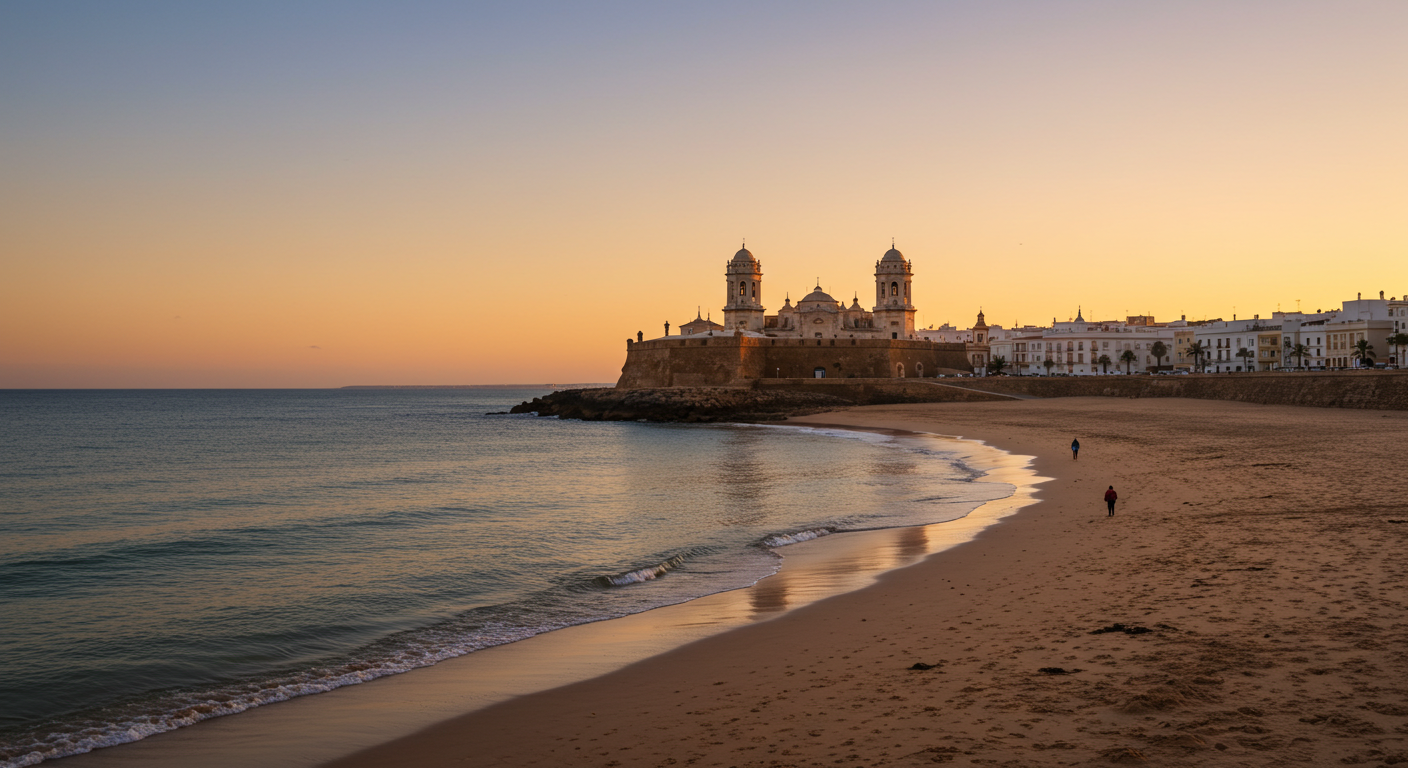
The Mediterranean side is the Old Town beach — smaller, more sheltered, where the ferries leave for Tangier. It's calmer, swimmable on more days, and overlooked by the castle walls. Locals use it more than tourists do. On a hot July afternoon with no Levante, this is where you want to be.
Between the two, Tarifa has a beach situation that suits almost anyone. What it doesn't have is warm, flat, sheltered water on both sides simultaneously. Manage expectations accordingly.
The Town Itself
The old medina-like centre — all whitewashed walls, bougainvillea, and lanes so narrow two people have to turn sideways — is genuinely atmospheric without being preserved-in-aspic. It's a working Andalusian town of around 17,000 people, not a theme park. There's a covered market (Mercado de Abastos) near the castle where you can buy decent local fish. There are proper tapas bars where a caña and a tapa still costs under €2 if you know where to go — avoid anything on Calle Sancho IV El Bravo after dark in high season, which has drifted firmly towards the tourist end.
The international crowd — German and Dutch kitesurfers, British retirees, a growing number of remote workers — has been here for decades, so the town is comfortable with foreigners without being overwhelmed by them. You'll find good English spoken in most kite schools and surf shops. In the bakeries and the town hall, less so.
Cost of Living in Tarifa in 2026
This is where Tarifa surprises people. It is not cheap by Andalusian standards — demand from the kite crowd and the short-term rental market has pushed prices up over the past five years.
Renting a one-bedroom flat in the old town or close to the beach runs roughly €700–950 per month as of 2026, higher in summer if you're unlucky enough to be signing a new contract then. Two-bedroom places with parking go from around €1,000–1,300. These aren't Málaga city prices, but they're meaningfully higher than, say, Algeciras 25 kilometres up the coast, which has far better infrastructure and far less charm.
Groceries are normal Spanish supermarket prices — Mercadona is on the edge of town. Eating out is mid-range: a proper menú del día (three courses, wine, bread) runs €12–15 at a decent local restaurant. Fresh tuna — atún rojo de almadraba, caught in the traditional trap-net fishery in the Strait — is the local speciality and worth ordering properly at least once. Expect to pay €18–25 for a good main course of it.
If you're working remotely and living modestly, a realistic monthly budget for one person is €1,400–1,800 all in. Couples can share costs meaningfully and live well for €2,200–2,800 combined.
Internet and Working Remotely
Fibre optic coverage in Tarifa has improved significantly. Most modern flats now have access to fibre through Movistar, Orange, or Digi (Digi is cheapest, around €20–25/month for 1Gbps as of 2026). Check before you sign a lease — older buildings in the historic centre sometimes still run on ADSL, which is fine for calls but painful for video-heavy work.
Coworking is limited. There's no dedicated coworking space in Tarifa as such — a few cafés tolerate laptop workers in the morning, but don't expect reliable sockets and professional-grade quiet. If you need a proper desk setup, you'll need to create it at home.
For anyone thinking seriously about making Spain their base and working remotely, the Spanish Digital Nomad Visa on Minimum Salary: Is It Worth It? article covers whether the numbers actually stack up — worth reading before you commit.
Getting There and Getting Around
Tarifa has no train station. That's the single biggest practical inconvenience of the place. The nearest rail connection is Algeciras, from where you can get to Málaga (change at Bobadilla, roughly 2.5–3 hours) or Ronda (a beautiful if slow single-track line). From Tarifa, you're relying on Comes buses to Algeciras or Málaga, or a car.
A car is genuinely useful here. The N-340 coast road north towards Zahara de los Atunes and Vejer de la Frontera is one of the better drives in Andalusia, and without a car you're dependent on infrequent buses. Parking in the old town is a nightmare in summer; there's a paid car park near the port that takes some of the pain away.
The ferry to Tangier Med takes about 35 minutes; the older crossing to Tangier Ville takes longer. FRS and Baleària both run the route. Morocco is a genuinely easy day trip — or a long weekend — from here, which is one of the unusual pleasures of living in Tarifa.
The Bureaucratic Reality of Settling Here
If you're planning to stay longer than 90 days as a non-EU citizen, you'll need the right visa sorted before you arrive. The kite crowd includes a lot of people who've been doing 90-day runs for years; that's getting harder to sustain as enforcement tightens.
Once you're here legally, the usual Spain admin applies. Getting your empadronamiento (town hall registration) done early matters — you need it for almost everything else. The local Ayuntamiento in Tarifa is small and not always fast, but staff are generally helpful. If you're arriving without a formal rental contract, that linked article covers your options honestly.
For banking, you'll want a Spanish account sorted early. Opening a Spanish bank account as a non-resident in 2026 is straightforward in theory but involves some paperwork; do it before you need it urgently.
Anyone going the autónomo route to work legally in Spain should read about whether you actually need a gestor to register — in a small town like Tarifa, finding a good local gestor who speaks English is possible but takes a recommendation or two. Ask in the kite schools; the expat network here is tight.
What Tarifa Does Badly
Hospitals. The nearest proper hospital is in Algeciras — Hospital Punta de Europa. Tarifa has a health centre (Centro de Salud) for GP-level care, but anything serious means a 25-minute drive. If you have ongoing health needs, factor this in. The healthcare situation before your TIE arrives is worth understanding before you land.
Schools. There's a public primary and secondary school in town, and it's fine — but if you have children with specific educational needs or you want a bilingual private option, you're looking at Algeciras or a commute to the Campo de Gibraltar area.
Nightlife and culture. The town has bars and a few clubs, but it's not Málaga. If you need regular live music, theatre, or a serious restaurant scene, Tarifa will feel limiting within a few months. It's a small town, and it knows it.
Wind fatigue. Nobody warns you about this. After two weeks of sustained Levante — gusts hitting 50–60 km/h, sand in everything, the trees all permanently bent east — some people start to crack. Kitesurfers love it. Everyone else develops a complicated relationship with it.
Why People Stay Anyway
Because the combination of light, coastline, pace, and affordability (relative to northern Europe) is hard to replicate. Tarifa sits inside the Parque Natural del Estrecho, so development is controlled — the landscape around it hasn't been ruined by concrete, which is not something you can say about most of the Costa del Sol. Zahara de los Atunes, 20 minutes north, has one of the most beautiful beaches in Spain and barely a tourist in sight outside July and August.
For remote workers who want Andalusia without Málaga's prices and crowds, Tarifa is a serious option. Go for a month first. See how you feel about the wind.
If you're working through the visa and residency process, the Cita Previa Extranjería guide is worth bookmarking — getting appointments at the Algeciras foreigners' office can be its own challenge, and knowing the workarounds saves weeks.
Frequently asked questions
- Is Tarifa good for digital nomads?
- It works well if you can set up a proper home office — fibre internet is available in most modern flats, and the cost of living is lower than northern European cities. The lack of coworking spaces and a small-town social scene are the main downsides. A trial month before committing to a longer lease is strongly advisable.
- What is the best time of year to visit or live in Tarifa?
- May, June, and September are the sweet spots — warm enough to swim, the Levante wind is less relentless than in summer, and the town isn't overwhelmed with visitors. July and August are peak kitesurf season: busy, expensive, and very windy. Winter is mild (14–17°C most days) and quiet, which suits slow-travel types, but some restaurants and shops reduce hours significantly.
- How far is Tarifa from Málaga?
- About 100 kilometres by road, roughly 1 hour 15 minutes to 1 hour 30 minutes depending on traffic on the A-7/AP-7. There's no direct train; bus connections via Algeciras take around 2.5–3 hours. A car makes the journey significantly easier.
- Can you learn to kitesurf in Tarifa as a complete beginner?
- Yes, and it's one of the better places in Europe to do it precisely because of the consistent wind. A three-day beginner course runs roughly €180–220 as of 2026. Most schools operate from the N-340 road behind Playa de los Lances. Lessons are conducted in the water with radio helmets — you're not just left to figure it out.
- What is the Levante wind and how does it affect daily life in Tarifa?
- The Levante is an easterly wind that accelerates through the Strait of Gibraltar. It can blow continuously for days or weeks at a time, reaching 50–70 km/h in strong episodes. Kitesurfers chase it; for everyone else it means sand in your coffee, restaurant terraces shut, and a certain cabin-fever quality to life. The Poniente (westerly) is gentler and more welcome.
- Is it expensive to rent in Tarifa compared to other Andalusian towns?
- More expensive than most. Demand from the kite community and short-term holiday renters has pushed long-term rental prices up. A one-bedroom flat runs €700–950/month as of 2026 — higher than Algeciras or Vejer de la Frontera nearby, though lower than Málaga city centre. Prices spike for anything with a sea view or a terrace.
- Do I need a car to live in Tarifa?
- Not strictly, but life is significantly easier with one. The town centre is walkable, and the Atlantic beach is reachable on foot or by bike. But the nearest hospital is in Algeciras, the nearest train station is in Algeciras, and much of what makes the area special — the beaches north towards Punta Paloma, the villages of the Comarca de la Janda — requires wheels.