Slow Travel Santander: El Sardinero, Green Coast Beaches & When to Go
The best time to visit Santander and the Cantabrian coast, what El Sardinero is really like, and how to travel green Spain slowly. Honest, lived-in guide for 2026.
The Best Time to Visit Santander and the Cantabrian Coast
July and August work, but they're not the answer most people expect. The Cantabrian coast runs wetter and cooler than anything south of the Ebro, which is precisely the point. The best time to visit Santander and the Cantabrian coast is late June or September — warm enough to swim, empty enough to breathe, and green in a way that feels almost theatrical after years of staring at Andalucía's scorched summer hills. Prices drop noticeably in September, the Atlantic swells calm down, and the seafood restaurants stop being perpetually rammed.
If you only have a long weekend, go in mid-September. The water is around 19–20°C (check current sea temperature forecasts before you book — it varies year to year), the light is extraordinary in the late afternoon, and the locals get their city back.
What Green Spain Actually Means
People use "Green Spain" as a loose label for the strip of coast running from Galicia through Asturias and Cantabria to the Basque Country. It rains. That's the whole secret. Annual precipitation in Santander sits somewhere around 1,200mm — roughly double what falls on Madrid — and the result is a landscape that looks more like the west of Ireland than anything you'd associate with a Spanish summer holiday brochure.
For a certain kind of traveller, that's the entire appeal. The beaches are wide and Atlantic-rough. The hills behind them are proper hiking country — the Picos de Europa start less than two hours south of Santander. The food leans heavily on dairy, fish, and slow-cooked beans rather than olive oil and tomato. Cantabria produces some of Spain's best anchovies (the ones from Santoña, tinned in olive oil, are genuinely worth buying in bulk to take home) and a soft, slightly sharp cheese called quesucos de Liébana that you'll find in any decent market.
This is not the Spain of cheap flights and sangria buckets. It rewards people who slow down.
Santander Itself: What to Expect
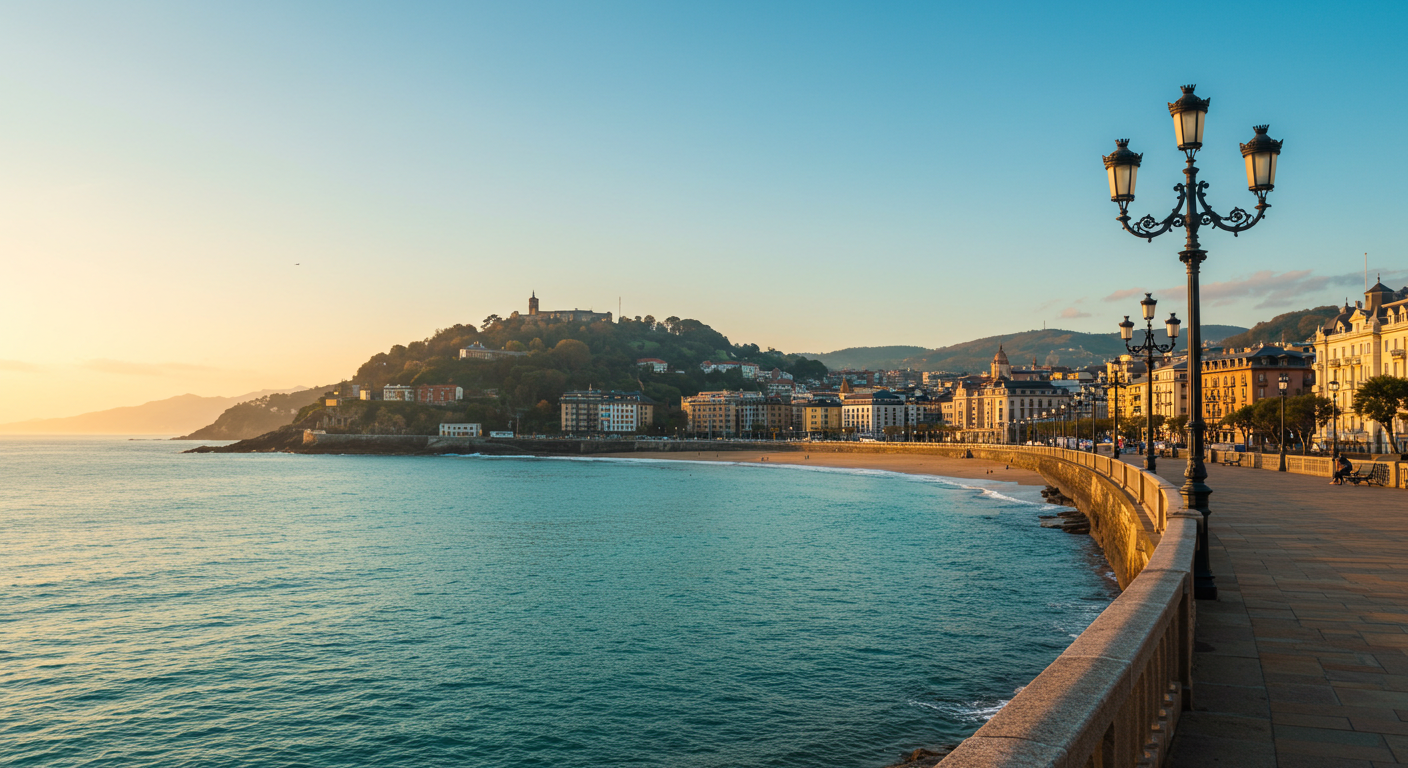
Santander is a working city of around 170,000 people. It was largely rebuilt after a catastrophic fire in 1941 destroyed much of the old centre, which means the historic core is relatively sparse compared to, say, Santiago de Compostela. Don't come expecting medieval streets. Come instead for the bay — one of the finest natural harbours in northern Spain — the long seafront promenade, and the specific pleasure of eating grilled fish at a table overlooking water that's actually cold and clean.
The city splits into a few distinct areas worth knowing.
The centre and the Mercado de la Esperanza is where you should start any morning. The market on Calle Hernán Cortés is a proper working market, not a tourist spectacle. The fish hall upstairs is the real draw: piles of merluza, bonito, nécoras (small swimming crabs, a Cantabrian obsession), and whatever the boats brought in that morning. Downstairs, look for the cheese and charcuterie stalls. Budget around €15–25 for a serious haul of things to eat that evening.
El Sardinero deserves its own section, and gets one below.
El Paseo de Pereda runs along the bay and is fine for a walk, though the restaurants immediately on it are largely overpriced and aimed at tourists. Go one or two streets back — the Calle Daoíz y Velarde area has better pintxos bars at more honest prices.
For somewhere to stay, the Sardinero end of the city is quieter and closer to the beaches. The centre is more useful if you're using the city as a base for day trips. Airbnb supply is reasonable; hotel prices in high summer can be surprisingly steep for what you get — a mid-range double in August runs €100–160/night as of 2026, sometimes more for anything with a sea view.
If you're planning to stay longer, perhaps working remotely for a month or two, the practicalities stack up quickly. You'll want a bank account — opening a Spanish bank account as a non-resident is easier than most people assume. And if you're thinking about making the move permanent, the Spanish Digital Nomad Visa is worth reading about before you commit.
El Sardinero: The Beach That Shouldn't Work, and Does
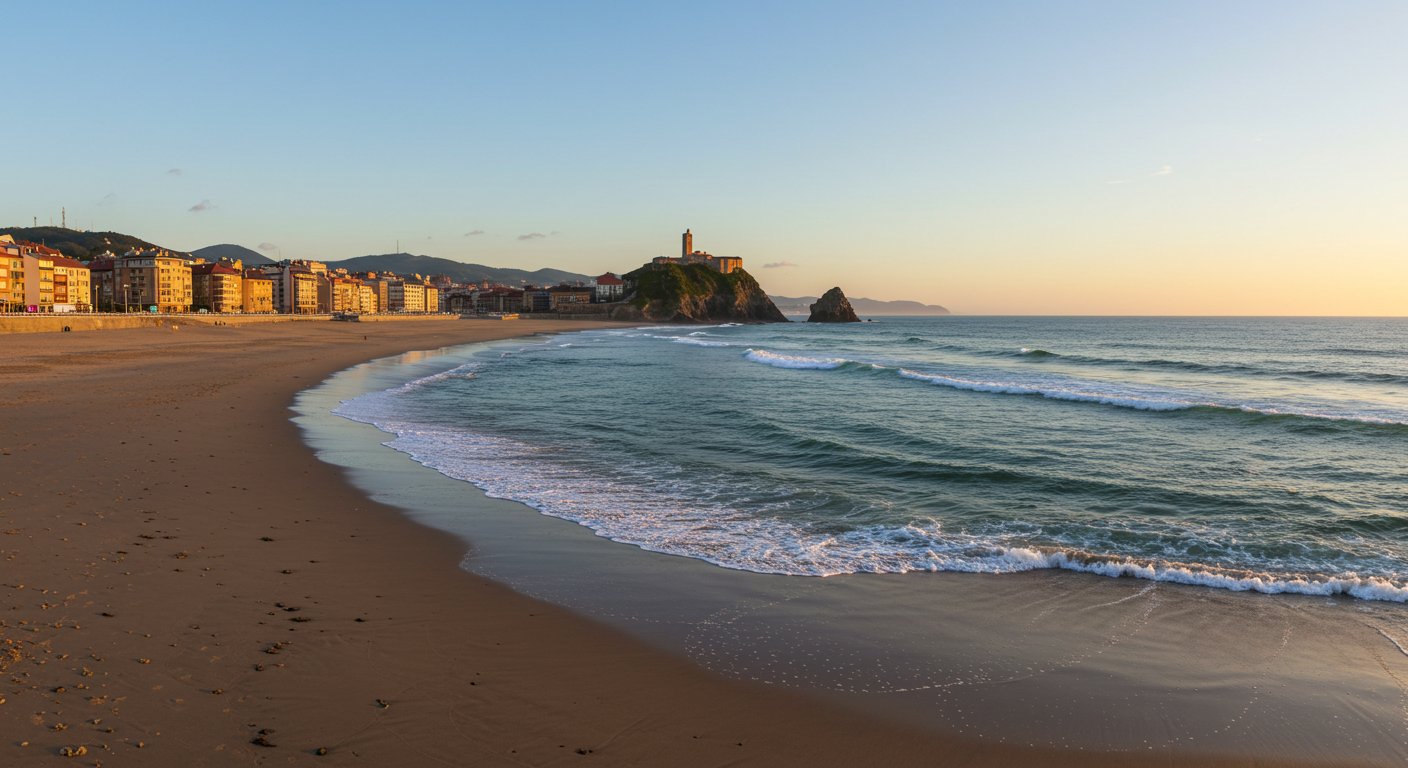
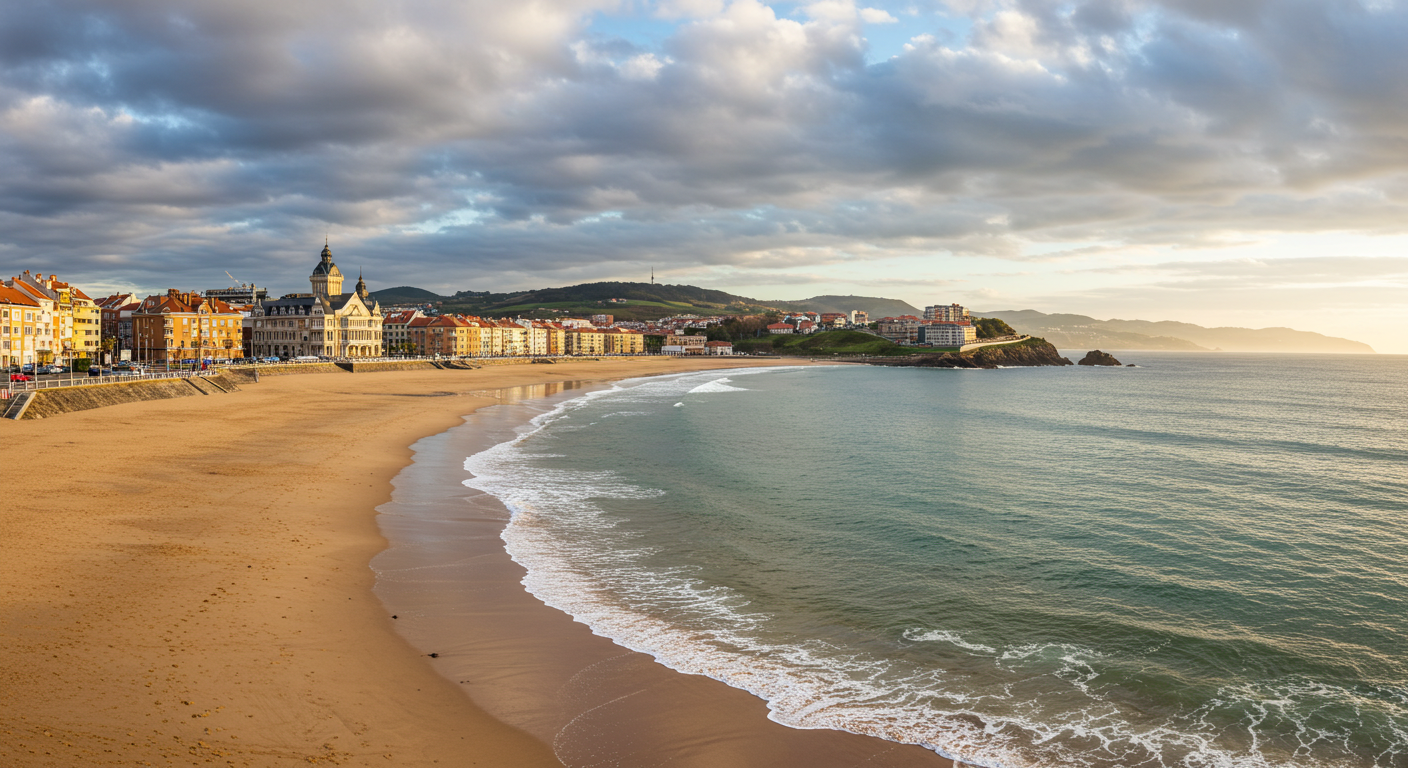
El Sardinero is the collective name for the main beach area on the eastern edge of Santander — technically two beaches, Primera Playa and Segunda Playa del Sardinero, separated by a small rocky promontory. Together they stretch for nearly two kilometres of pale sand backed by a wide promenade, a handful of old casino-era buildings (the Gran Casino del Sardinero, opened in 1916, is still there, still slightly faded and magnificent), and a neighbourhood of early-20th-century villas that speak to the era when the Spanish royal family summered here.
The beach itself is wide, well-maintained, and genuinely swimmable from late June through September. The waves are bigger than anything on the Mediterranean — Atlantic swells can make the water lively, particularly after a storm — but there are lifeguards on duty during peak season and the beach is flagged in the usual way. On a calm August day, the water is clear and the sand is clean. On a grey September morning with nobody else around, it's one of the better beaches in northern Spain.
Skip the ice cream stalls on the promenade — they're fine but nothing special. Instead, walk ten minutes inland to the Calle Joaquín Costa area for a proper café breakfast: café con leche and a tostada con mantequilla, which in Cantabria often means real butter rather than the olive oil you'd get further south.
The tram (a single line, running from Cuatro Caminos to El Sardinero) connects the beach to the city centre in about 20 minutes. Tickets are cheap — around €1.50 as of 2026, cash or card. It's a perfectly good way to avoid parking headaches.
Day Trips Along the Cantabrian Coast
Santander works well as a base. The coast east and west offers a completely different texture from the city.
Santillana del Mar, 30km west, is frequently described as a perfectly preserved medieval village. That's almost true — it's extremely well-preserved and extremely visited. Go on a weekday morning in shoulder season and it's genuinely lovely. Go on a Saturday in August and it's a slow shuffle between souvenir shops. The Altamira cave paintings are nearby; the museum replica is worth the visit, the original cave is closed to the public (and has been for decades, so don't believe any suggestions otherwise).
Comillas, another 15km west, is more interesting. The old town has a good beach, a reasonable selection of restaurants, and, slightly surreally, a Gaudí building — El Capricho, built in 1885, sits in the middle of the town looking cheerfully bizarre. It's open to visitors and the entrance fee is modest (around €7–8 as of 2026).
San Vicente de la Barquera is the furthest easy day trip west, about 65km from Santander. A fishing village built around a medieval castle on a promontory, with a long beach and an estuary full of birds. The drive itself, on the N-634 rather than the motorway, passes through country that justifies the whole trip — small farms, apple orchards, fog sitting in the valleys on autumn mornings.
East of Santander, Laredo has one of the longest beaches on the northern coast — a five-kilometre arc of sand that manages to absorb summer crowds more gracefully than you'd expect. Castro Urdiales, closer to Bilbao, has a Gothic church perched on a headland next to a lighthouse in a way that looks almost too cinematic to be real.
The Picos de Europa: Green Spain's Interior
The Cantabrian coast isn't just coast. An hour and a half south of Santander, the Picos de Europa national park is one of the most dramatic landscapes in the country — limestone massifs rising abruptly from green valleys, gorges you can walk through in a day, and villages that feel almost untouched.
The Cares Gorge (Ruta del Cares) is the famous walk: 12km one way, largely flat, carved into the face of a cliff above a river. It's popular, deservedly so, but start early — by 10am in summer it's genuinely busy. The trailheads at Caín and Poncebos are both serviceable; driving from Santander to Caín takes around two hours via Panes.
For a quieter experience, the villages around Potes in the Liébana valley are worth exploring on their own terms. Potes has a small market on Mondays, a 15th-century tower, and several shops selling quesucos and orujo (a grape-marc spirit that locals drink with alarming enthusiasm at all hours). The road from Potes up to the Fuente Dé cable car is 23km of increasingly vertiginous driving that ends at a cliff face where a telecabina lifts you 753 metres in four minutes. At the top, you're on a plateau at 1,800m with views that stretch to the coast on a clear day.
Eating and Drinking in Cantabria
The food culture here is serious and largely unpretentious. Anchovies from Santoña are the regional obsession — they're cured in salt for months and then packed in olive oil, and the best ones (look for brands like Consorcio, Anxoves de l'Escala if you're comparing, or the artisan producers you'll find at the Mercado de la Esperanza) are nothing like the rubbery things on a supermarket pizza. A decent tin runs €6–15 depending on quality and size; buy several.
Cocido montañés is the traditional Cantabrian stew — white beans, cabbage, blood sausage, and whatever cuts of pork the cook decided on that morning. It's heavy, warming, and absolutely not appropriate in August at a beach table in full sun. Save it for a rainy October lunch.
For pintxos, the quality is high throughout the region but genuinely outstanding once you cross into the Basque Country. Santander's pintxos bars are good but a different register from San Sebastián or Bilbao, which are an easy two-hour drive east.
Sobao pasiego is the regional pastry — a small, buttery sponge cake from the Pas valley that you'll find in every bakery and petrol station in Cantabria. It's excellent. The ones from the town of Selaya are considered the benchmark.
Practical Notes for Longer Stays
Cantabria is not an obvious destination for relocation, but a growing number of remote workers are discovering that a city with a beach, a proper food market, and a two-hour train connection to Madrid (the Alvia service is fast and comfortable) compares favourably to more expensive coastal alternatives.
Renting is more straightforward than in Madrid or Barcelona — demand is lower, landlords are generally less likely to ask for three months' deposit plus six months' rent upfront — though the usual challenges for foreigners without a Spanish payslip still apply. Renting in Spain without a Spanish payslip covers the options that actually work.
Registering on the padrón (the local census) is the first practical step after finding accommodation. If your rental situation is complicated, empadronamiento without a rental contract walks through what Cantabrian town halls will generally accept.
Healthcare is covered by the Cantabrian regional health service (SCS) once you're properly registered. If you're in a gap between arriving and getting your TIE sorted, healthcare in Spain before your TIE arrives is worth reading before you assume you're covered.
Santander has a university, a reasonable international community, and a slightly sleepy charm that suits people who want Spain without the intensity of the major cities. It's not for everyone. The weather alone will filter out the sun-seekers. But if you actually like rain, green hills, cold Atlantic water, and extraordinary anchovies, it might be exactly right.
The last ferry from Plymouth to Santander (Brittany Ferries, roughly 24 hours, running through the year with some seasonal gaps) remains one of the more civilised ways to arrive in Spain with a car full of your life. Check current schedules — they adjust seasonally — but as a way of entering the country slowly, watching the Bay of Biscay pass, and waking up in Cantabria rather than Málaga, it has a logic that grows on you.
Frequently asked questions
- What is the best time to visit Santander and the Cantabrian coast?
- Late June and September are the sweet spots. July and August are warm and swimmable but busy and pricier. September offers sea temperatures around 19–20°C, far fewer crowds, and noticeably lower accommodation costs. Spring (April–May) is green and beautiful but wetter, and swimming in the Atlantic before June is cold by most people's standards.
- Is it worth going to Santander if the weather looks grey?
- Yes, genuinely. The city's market, its pintxos bars, the Picos de Europa day trips, and the drive along the N-634 coast road are all better in overcast weather than you'd expect. Green Spain's appeal is specifically tied to its climate — persistent sunshine would make it a different, less interesting place.
- How do you get from Santander to the Picos de Europa without a car?
- It's possible but awkward. There are bus services from Santander to Potes (the main Picos gateway town) via the Palomera company — journey time around two hours, with limited daily services. For the Cares Gorge specifically, you'd need a taxi or a tour from Potes to reach the trailhead at Caín. A car makes the whole region dramatically more accessible.
- Are the beaches at El Sardinero safe for swimming?
- Yes, during flagged season (typically late June through early September). Lifeguards are on duty and the beach uses the standard green/yellow/red flag system. Atlantic swells can make conditions lively — always check the flag before entering. Outside flagged season the sea is swimmable on calm days, but there are no lifeguards and currents can be unpredictable.
- Can you do Santander as a base for a week in northern Spain?
- Easily. A week gives you the city itself, two or three days on the coast (Comillas, San Vicente, Laredo), a Picos de Europa day trip, and a day trip east to Bilbao or San Sebastián if you want a contrast. That's a genuinely full week without feeling rushed, which is exactly what slow travel on this coast suits.
- Is Santander a good city for remote workers or digital nomads?
- It's underrated for this. Lower rents than Madrid or Barcelona, a beach, a fast train to Madrid, a university town atmosphere, and decent café infrastructure. The international community is small but growing. The main practical hurdle is the same as anywhere in Spain — sorting NIE, bank account, and registration — but the bureaucratic load in a smaller city can feel more manageable.
- What food should you definitely try in Cantabria?
- Anchovies from Santoña (buy tins from a proper deli or the Mercado de la Esperanza), quesucos de Liébana cheese, sobaos pasiegosthe small butter sponge cakes), fresh merluza (hake) grilled simply, and nécoras (small crabs) if they're in season. Cocido montañés in autumn or winter. And orujo, the local grape-marc spirit, which you'll be offered whether you want it or not.