Slow Travel Oviedo and Gijón: Cider, Coast and Two Very Different Cities
A slow travel guide to Oviedo and Gijón in Asturias — cider bars, green coast beaches, food markets and what makes these two cities worth a week of your time.
Asturias gets about a quarter of the visitors that Andalusia pulls, which tells you something useful: it is not undiscovered, but it is genuinely underused. Slow travel in Oviedo and Gijón rewards that quieter pace better than almost anywhere else in northern Spain. You can walk the old city of Oviedo in a morning, drink cider by the beach in Gijón that evening, and spend the days in between on cliff paths above the Cantabrian Sea without seeing a tour group.
These two cities sit 28 kilometres apart — about 25 minutes by ALSA bus or Cercanías train — yet they feel like different countries. Oviedo is inland, compact, cathedral-anchored, proud of its UNESCO pre-Romanesque monuments and its reputation as one of Spain's cleaner, calmer regional capitals. Gijón faces the sea, has a long working-class industrial history, a big fishing port and a summer beach scene that gets rowdier than Oviedo ever does. Together they make an ideal slow-travel base: one city for culture and calm, the other for coast and cider.
What Slow Travel in Oviedo and Gijón Actually Looks Like
Slow travel here does not mean spending a fortnight staring at the same square. It means arriving without an itinerary that would embarrass a tour operator, giving yourself enough time to notice things — the way the rain clears on the Asturian coast and the light turns extraordinary, the specific ritual of pouring cider from arm's height without spilling more than you're allowed to, the fact that the market in Gijón's Cimadevilla quarter is better for lunch than any restaurant you'll find on TripAdvisor.
A week split roughly three nights in Oviedo and four in Gijón is the rhythm that works well. You could do it the other way around, but Oviedo is easier for arriving (the AVE from Madrid takes about four hours, and there are direct trains from other northern cities), and it eases you in gently before Gijón's slightly louder energy.
Oviedo: The City That Wears Its Age Well
The old centre of Oviedo — the casco histórico — is small enough that you'll loop back on yourself without trying. The cathedral is the obvious anchor, and the pre-Romanesque churches on the hillside above the city (Santa María del Naranco, San Miguel de Lillo) are genuinely worth the twenty-minute walk up, particularly on a clear morning when you can see the Cantabrian mountains to the south. These are 9th-century buildings that have been standing for twelve centuries. They're not especially dramatic to look at, but the age of them lands differently in person than it does in photographs.
The pedestrian shopping street, Calle Uría, is fine but not the point. The point is the streets behind it: Calle Mon, the Plaza de Feijóo, the area around the university. There are tapas bars on Calle Gascona — dubbed the Boulevard de la Sidra — where the cider flows all afternoon and the fabada asturiana arrives in a clay pot the size of a small bucket. Fabada is the local bean stew with chorizo, morcilla and salt pork. It is extremely filling, costs around €12–15 for a proper portion as of 2026, and should be eaten slowly with bread and cider. Do not order it and then try to walk up a hill.
Skip the touristy cider shows at the big venues on Gascona on weekend evenings — they're fine but they're performing for you. The better option is a quiet afternoon at a smaller sidrería where the locals are actually drinking, not watching. The Mercado El Fontán, just off the old square, is a good morning stop for cheese, smoked meats and conversation with vendors who have been there for decades.
Oviedo is also, quietly, a city where people are increasingly choosing to live long-term. The cost of living is meaningfully lower than Madrid or Barcelona, the healthcare infrastructure is solid, and the quality of life — walkable, safe, genuinely four-seasoned — is hard to argue with. If you're considering a move and want to understand the admin side, the process of getting your NIE, finding a flat without a local payslip and registering on the padrón is broadly the same here as elsewhere in Spain. Renting in Spain Without a Spanish Payslip: How Foreigners Do It is worth reading before you start flat-hunting anywhere in Asturias.
Gijón: Louder, Saltier, More Fun in Summer
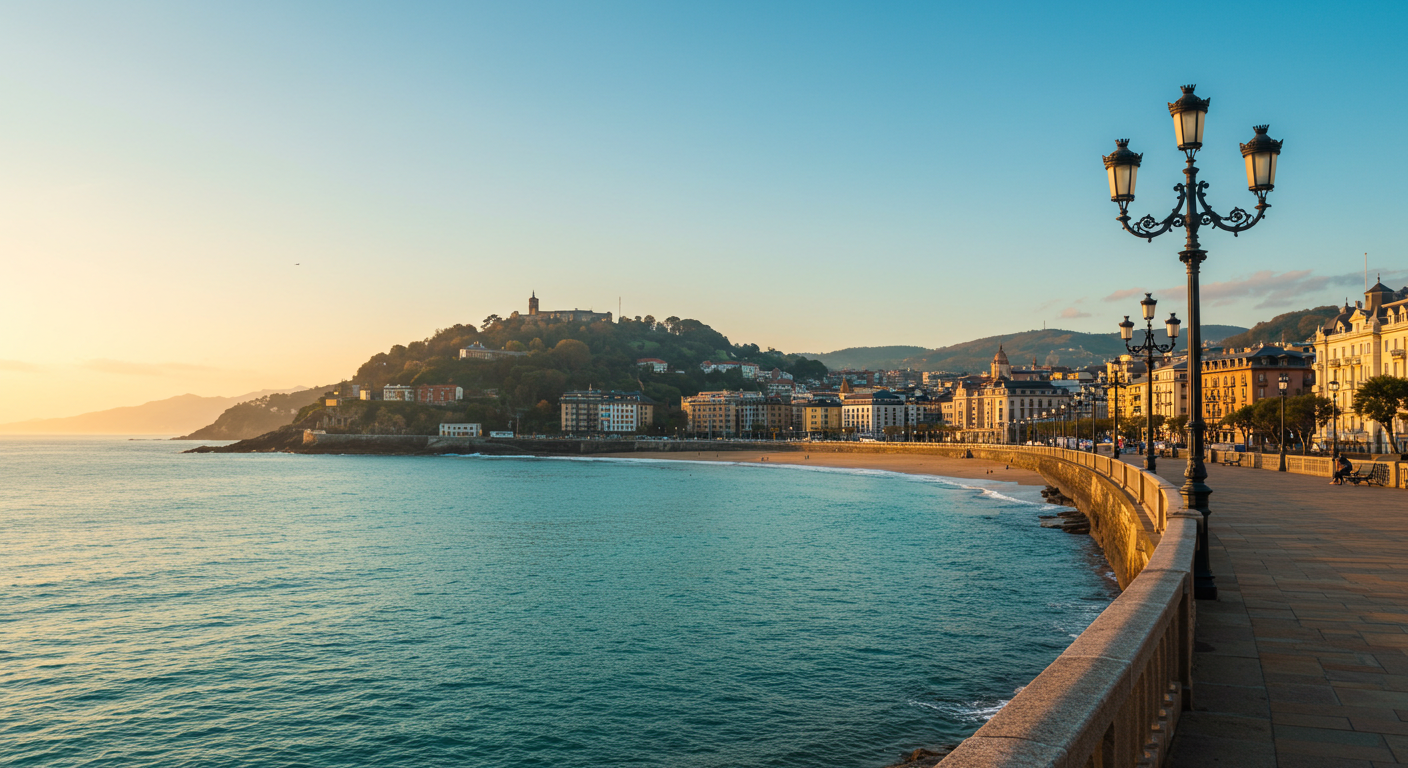
Gijón is the larger city (population around 260,000 versus Oviedo's 220,000 as of 2026, though these figures shift — check the INE for current data) and it carries itself differently. The old fishing quarter of Cimadevilla sits on a headland between the main beach — Playa de San Lorenzo, a proper kilometre-and-a-half of urban sand — and the working port. The streets there are steep and narrow and full of bars that open at noon and close when they feel like it.
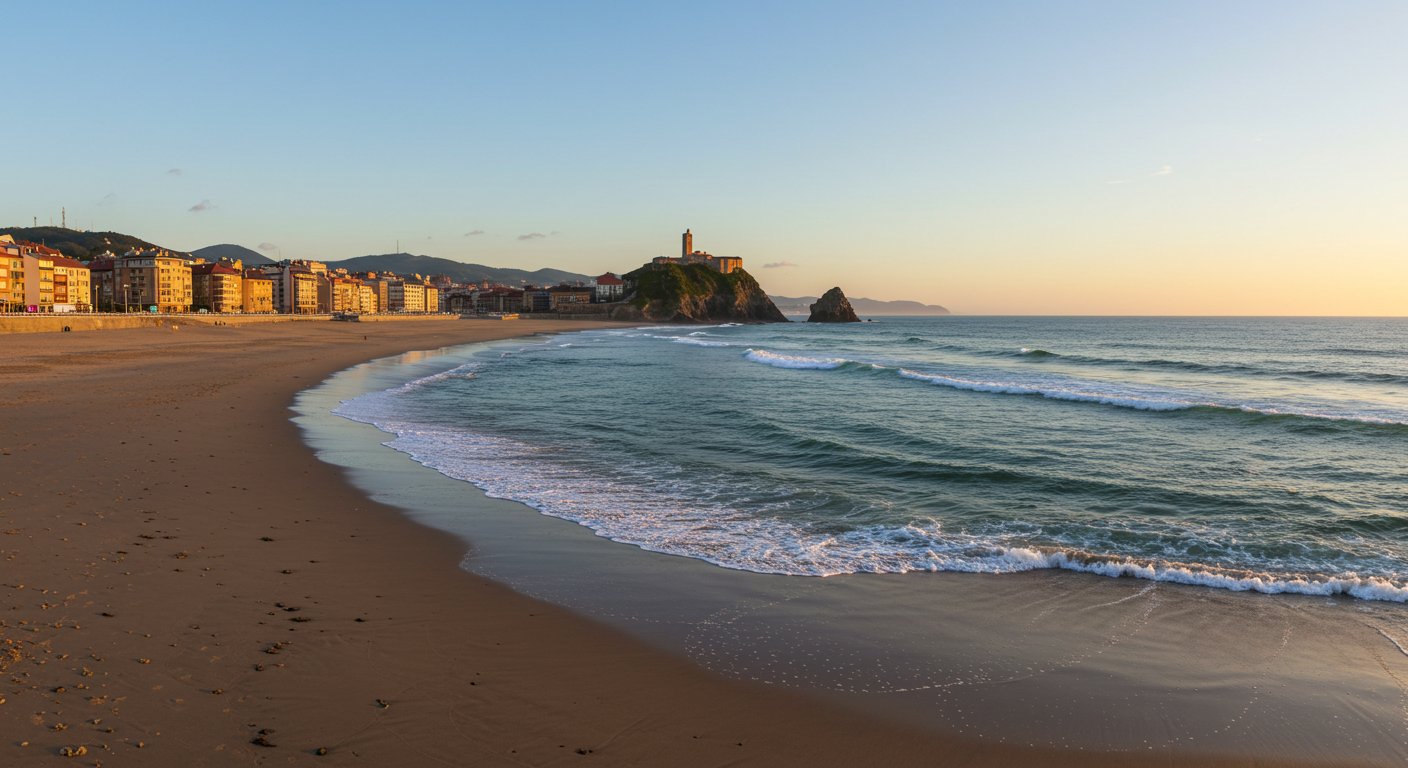
San Lorenzo is the beach. It is not a postcard beach in the Mediterranean sense — the water is cold (around 18–20°C in August, significantly colder in June), the waves are real, and the sky is not guaranteed to be blue. But on a sunny August day it is one of the best urban beaches in Spain, full of Asturians who know exactly how to spend a Saturday. There's a long promenade, decent surf in the right conditions, and the whole thing backs onto a grid of restaurants and bars that come alive in the evening.
For slow travel purposes, Gijón rewards aimlessness. Walk out to the Cerro de Santa Catalina, the headland above Cimadevilla, where there's a large Chillida sculpture called Elogio del Horizonte — a concrete arch overlooking the sea. It's the kind of thing you stumble upon and then sit near for longer than you planned. The Mercado del Sur is a good wet market for lunch ingredients. The Lab Gijón cultural space in the old waterworks building is worth an hour on a rainy afternoon.
The cider culture in Gijón is if anything more embedded than in Oviedo. Sidrerías are everywhere, and the ritual of escanciado — pouring the cider from a height with the glass held low — is not a performance here, it's just how you do it. The bottles cost around €3–4 each as of 2026, and it's genuinely expected that you'll spill some. Order the cachopo if you want a sense of local pride in portion size: it's two large veal fillets stuffed with ham and cheese, breaded and fried. One is enough for two people, though locals would argue otherwise.
The Green Coast: Day Trips and Slow Walks
Asturias calls its coastline the Costa Verde, and it earns the name. The cliffs are dramatic, the sea is a particular shade of grey-green, and the villages between Gijón and the Galician border to the west are largely untouched by mass tourism. This is where slow travel really pays off.
Llanes, about an hour east of Gijón by car or bus, has a medieval harbour, a series of painted concrete cubes in the tidal pools (Los Cubos de la Memoria), and a clutch of beaches within walking distance. Ribadesella, halfway between Gijón and Llanes, sits at the mouth of the Sella river and has one of the most attractive settings on the north coast — the old town on one bank, the beach on the other. The descent of the Sella canoe race happens here every August; book accommodation months ahead if you're visiting then.
Westward from Gijón, Cudillero is the village that photographs well — painted houses stacked up a narrow inlet — but it's become quite visited. Luarca, further west, is quieter and more genuine, a proper fishing town with a white cemetery on the cliffs above the port that is, oddly, one of the more beautiful things in Asturias.
For walking, the Camino de Santiago's Camino del Norte runs along this coast. You don't need to walk the whole thing. A day section from Gijón towards Avilés, or east towards Villaviciosa, gives you the cliff paths and the farmland behind the coast without any commitment. The paths are well-marked, the gradients are honest rather than brutal, and the hórreos — the raised stone granaries on stilts that dot every village — are one of those things that feel distinctly Asturian in a way that's hard to describe but immediately recognisable.
Practicalities for Staying Longer
If Asturias grabs you — and it does grab people — the admin of staying longer than a tourist trip is manageable. Getting your empadronamiento sorted is the first step for anything official; Empadronamiento Without a Rental Contract: Your Real Options covers the scenarios where you haven't signed a lease yet. For anyone working remotely and considering Spain as a base, the Spanish Digital Nomad Visa on Minimum Salary: Is It Worth It? piece is a useful reality check before you start the application process.
Healthcare in Asturias works through the SESPA (Servicio de Salud del Principado de Asturias). Once you're registered and have your residency sorted, access is straightforward. Before your paperwork arrives, Healthcare in Spain Before Your TIE Arrives: What Cover Do You Actually Have? explains the gaps worth knowing about.
Bank accounts are worth sorting early. Sabadell and BBVA both have branches in Oviedo and Gijón. For the non-resident process, Open a Spanish Bank Account as a Non-Resident in 2026 is the practical starting point.
When to Go
July and August are the warmest and driest months, but 'dry' in Asturias is relative — pack a light waterproof regardless of the forecast. Temperatures in Gijón in August average around 21–23°C, which is mild by Spanish standards and exactly right for walking. September is arguably better: the crowds thin, the light changes and the sidrerías don't fill up quite so fast.
Spring (April–June) is green and often rainy, which is either a problem or the whole point depending on your disposition. Winter in Oviedo is cold and grey; Gijón gets the Atlantic weather full-force. Neither city shuts down — the Asturians are not a people who hibernate — but the coast paths can be genuinely wild in January, which is a different kind of pleasure entirely.
The one honest caveat: Asturias is not cheap in the way that inland Castile is cheap. It's not expensive either. A week in Gijón with accommodation, food and cider will cost less than the same week in San Sebastián, but don't expect Extremadura prices. Budget roughly €80–120 per person per day for mid-range accommodation, meals and transport, less if you self-cater, more if you're staying in the better hotels. As always, verify current prices locally — things shift.
Come with time and low expectations of sunshine. Leave with an inexplicable attachment to a region that doesn't need to shout about itself.
Frequently asked questions
- How long do you need for a slow trip to both Oviedo and Gijón?
- A week is the minimum that lets you do both cities properly and still get out to the coast. Three nights in Oviedo and four in Gijón works well. Less than five days total and you're rushing, which defeats the point.
- Is Asturian cider (sidra) different from other Spanish ciders?
- Yes, significantly. Asturian sidra natural is flat, sharp, slightly sour and very dry — nothing like commercial fizzy cider. It's poured from height (escanciado) to aerate it, served in wide-mouthed glasses, and drunk in small amounts at a time. A bottle costs around €3–4 in a sidrería as of 2026.
- What's the best way to travel between Oviedo and Gijón?
- The Cercanías FEVE train runs frequently between the two cities and takes about 35–45 minutes; the ALSA bus is slightly faster at 25–30 minutes. Both are cheap (under €4 as of 2026). Taxis exist but aren't necessary for this route.
- Is the sea in Gijón warm enough to swim in?
- In July and August, Cantabrian sea temperatures around Gijón reach roughly 18–20°C — cold by Mediterranean standards but swimmable. The waves are real and there's often a decent swell. Outside of July–September it's genuinely cold and most people don't swim.
- Can you visit Asturias without a car?
- Yes, for Oviedo and Gijón themselves and the towns directly connected by bus or train (Llanes, Ribadesella, Avilés). For the smaller coastal villages and walking paths between them, a car or a willingness to take taxis and local buses makes things considerably easier.
- Is Oviedo or Gijón better for living long-term as a foreigner?
- Both are viable, and the choice is mostly about preference. Oviedo is quieter, more compact, easier to walk, and has a slightly stronger professional and university culture. Gijón is larger, has a more varied social scene, and the coast is right there. Housing costs are similar and broadly lower than Spain's major cities.
- What is fabada asturiana and where should you eat it?
- Fabada is the signature Asturian stew — large white beans (fabes) slow-cooked with chorizo, morcilla and salt pork (lacón or tocino). It's heavy, deeply savoury and best eaten at lunch. In Oviedo, the sidrerías on Calle Gascona serve reliable versions; in Gijón, look for places in Cimadevilla that are busy with locals at 2pm rather than tourists at 7pm.