Slow Travel in Salamanca: What a Week in the Golden City Feels Like
Slow travel in Salamanca Spain means golden sandstone, cheap tapas, and a university city that rewards staying put. Here's what a week actually feels like.
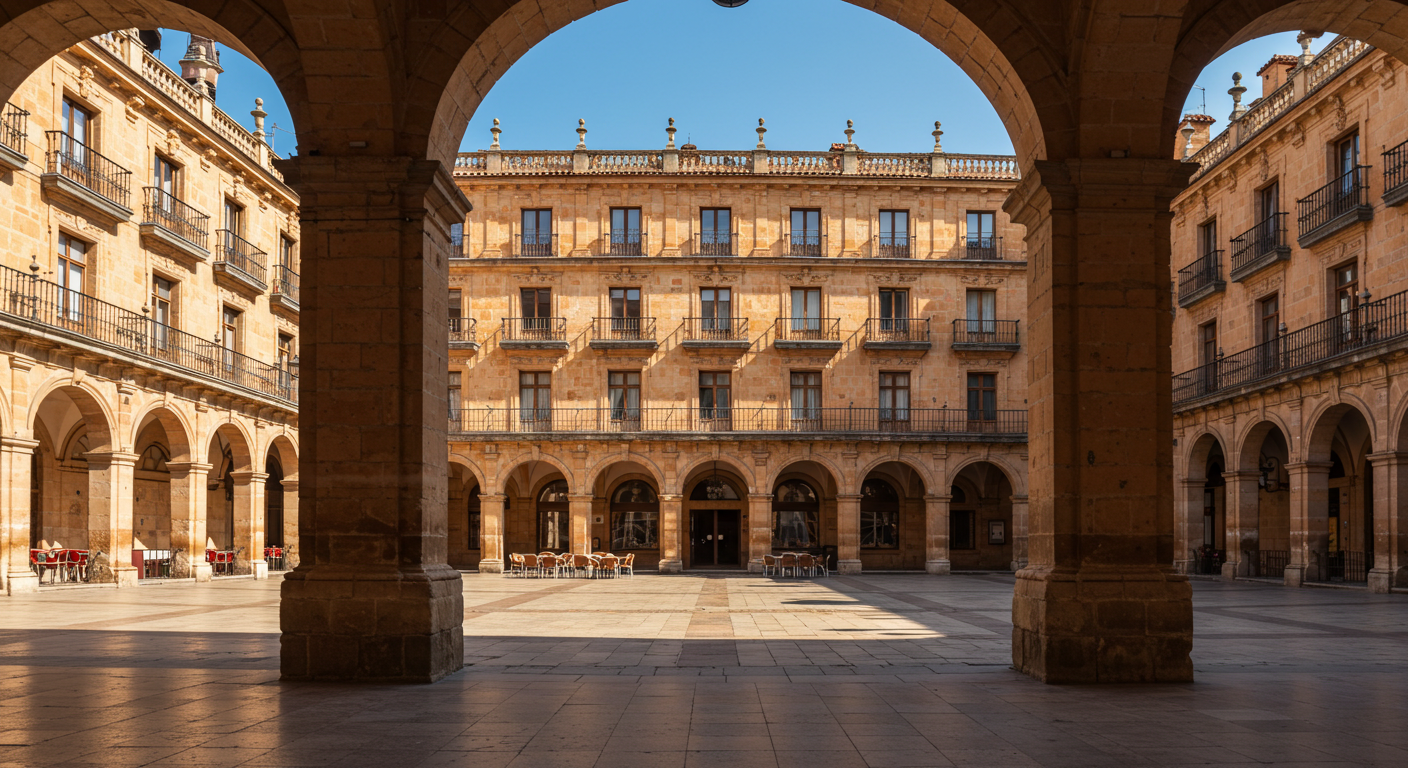
Salamanca is the only city in Spain where I've genuinely lost track of time. Not in a romantic-Instagram-caption way — I mean I sat in Plaza Mayor with a coffee at what I thought was half ten in the morning and it turned out to be quarter past one. The light does something strange here. The piedra de Villamayor — the local sandstone used in almost every building in the old centre — absorbs the sun and throws it back at you warmer and slower than it arrived. You stop rushing.
For slow travellers, Salamanca is close to ideal. The city is compact, walkable, and has the rhythm of a university town: cafés full at strange hours, bookshops open late, tapas bars that take Sunday seriously. It's also cheap by the standards of Spain's better-known cities. A week here, staying in a decent central flat, eating and drinking properly, will cost you less than four days in Barcelona.
What Slow Travel in Salamanca Spain Actually Looks Like Day to Day
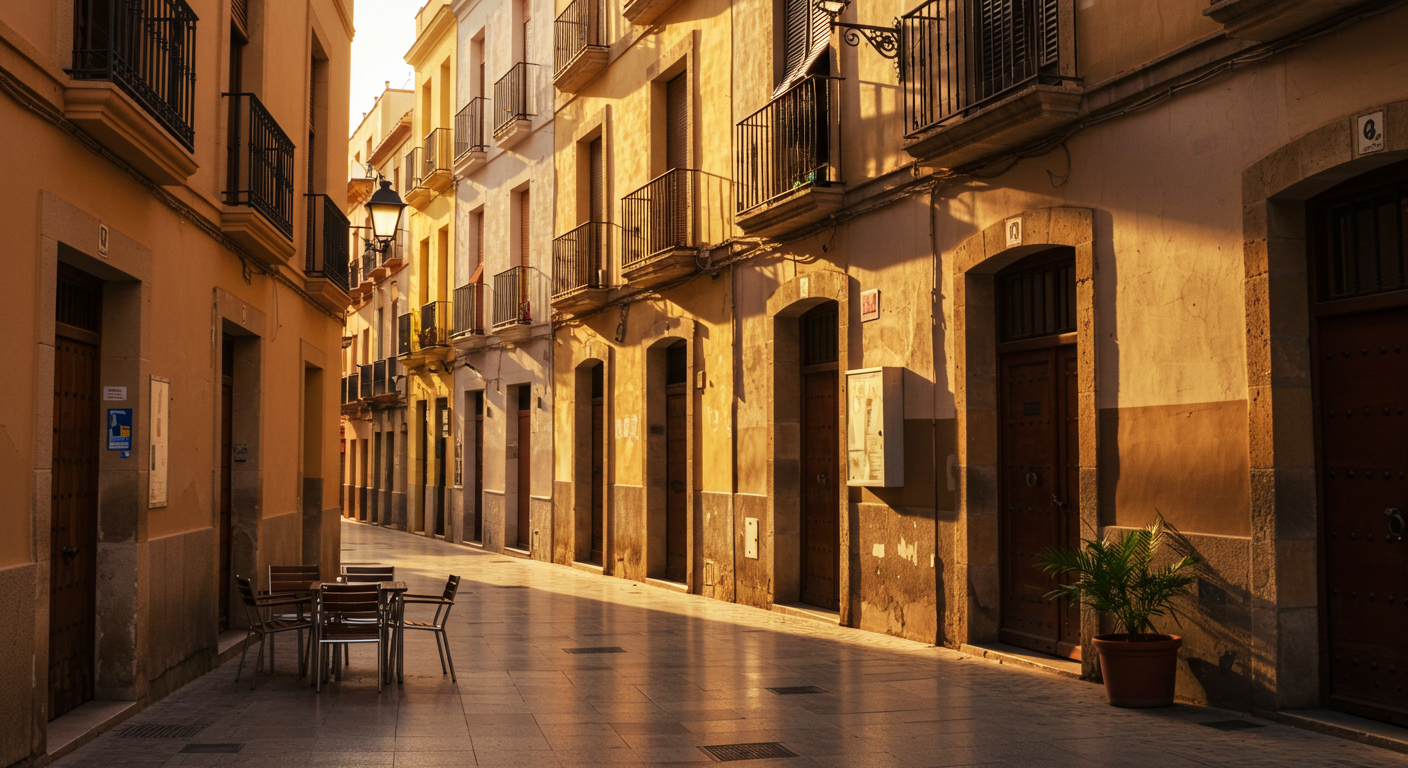
The old quarter — declared a UNESCO World Heritage Site in 1988 — is small enough to cross on foot in twenty minutes, which means you can spend a week here and still find a street you haven't noticed before. That's the point. Slow travel isn't about ticking sights; it's about staying long enough that you develop opinions about which bar makes the better hornazo and which café has the best terrace light in the afternoon.
A sensible base is anywhere within a ten-minute walk of the Plaza Mayor. The Barrio Antiguo and the streets around the Rúa Mayor are the obvious choices. Calle Zamora and Calle Toro — two parallel streets running north from the plaza — have a mix of independent shops, no-nonsense bars, and the kind of papelería that still sells fountain pen ink. Avoid renting anything near the bus station unless you're only staying two nights; it's fine, but you'll spend time you don't need to spend walking back to the centre.
Mornings have a particular quality here. The students are up late and so the early hours — before ten, say — belong to older residents, market vendors, and the occasional confused tourist. The Mercado Central on Plaza del Mercado is worth a visit on a weekday morning: it's working, not performative, and the cheese stalls alone justify the detour. Pick up some zamorano (technically from Zamora, just up the road, but sold everywhere here) and you've got breakfast.
The Student Energy: Real or Overstated?
Salamanca's university is one of the oldest in Europe — founded in 1218 — and enrolment runs to around 25,000 students across its various faculties as of 2026 (worth double-checking on the university's own site, as figures shift). That's significant for a city of roughly 140,000 people. The effect on daily life is real but not overwhelming. You notice it in the cheap menú del día culture — plenty of places offer a three-course lunch with wine for €10–12, because they have to compete for student custom — and in the fact that bars stay genuinely lively on weeknights, not just weekends.
What you don't get is the faintly exhausting party-town energy of somewhere like San Sebastián's old town on a Saturday in August. Salamanca's students are present but they're also, frequently, in the library. The city has an intellectual undertone that suits slow travel rather than working against it.
The language schools add another layer. Salamanca has a long reputation as the place to learn Castilian Spanish — the accent here is considered particularly clear and standard — and in summer especially you'll hear English, German, and French being spoken badly in the streets by people who are, admirably, trying. If you're in Spain on a longer stay and considering a language course, this is one of the better cities in which to do it.
Eating and Drinking Without Overthinking It
The hornazo is the thing to know about. It's a raised pie — shortcrust pastry, filled with chorizo, loin, and hard-boiled egg — specific to Salamanca and its surrounding province. Every bar sells a version. Quality varies considerably. The ones at the counter of a working-class bar near the university faculties are usually better than the ones in a tourist-facing café on the plaza. Ask locals; they have strong opinions.
For tapas in the proper Salamanca style — where you get a free tapa with every drink, a tradition that is dying in many Spanish cities but clings on here — head to the streets around Gran Vía and the area south of the cathedral. El Pecado on Plaza Poeta Iglesias is well-regarded and has been for years, though it's no longer a secret. Mesón Cervantes on Plaza Mayor is the kind of place you walk past ten times before you try it; don't leave without doing so.
The wine situation is straightforward: you're on the edge of the Arribes del Duero and Toro wine regions, and the house wines in most bars reflect that — robust, slightly rustic, good value. A glass of local tinto costs €1.50–2 in a non-touristy bar. A full bottle in a supermarket, something decent from Toro, is €5–8.
Skip the restaurants immediately adjacent to the Plaza Mayor. Not all of them — a couple are fine — but the pricing is tourist-inflated and the service reflects it. Walk two blocks in any direction and you'll find better food for less money.
Practical Notes for Staying Longer
If you're considering Salamanca as a base for a month or more rather than just a week, the practicalities are manageable. Rental prices are significantly lower than Madrid or Barcelona — a one-bedroom flat in the old centre runs roughly €600–750/month as of early 2026, though that's been creeping up. If you're a foreigner without a Spanish payslip, landlords can be cautious; renting in Spain without a Spanish payslip is doable but requires some groundwork.
For those arriving with digital nomad or remote-work intentions, Salamanca is an interesting option precisely because it's affordable. The Spanish Digital Nomad Visa has income requirements that feel more achievable when your rent is €700 rather than €1,400. The city has decent coworking infrastructure — a few spaces near the university — and the café culture means you can work from a laptop without anyone looking at you strangely.
Banking and registration are the usual Spanish bureaucratic exercises. If you're a non-resident needing a bank account, the options in 2026 are broader than they used to be — several online banks will onboard you without a Spanish address. Getting your empadronamiento (local registration) sorted is worth doing early if you're staying any length of time; it's possible even without a standard rental contract, though it takes a bit more effort.
Healthcare is worth thinking about before you arrive. If your TIE (residence card) isn't yet in hand, your cover situation is more complicated than most people realise. Salamanca has a good public hospital — the Complejo Asistencial Universitario de Salamanca — and a university medical school, which means specialist care is better here than in smaller Castilian cities.
The Cathedral, the University, and What to Actually Spend Time On
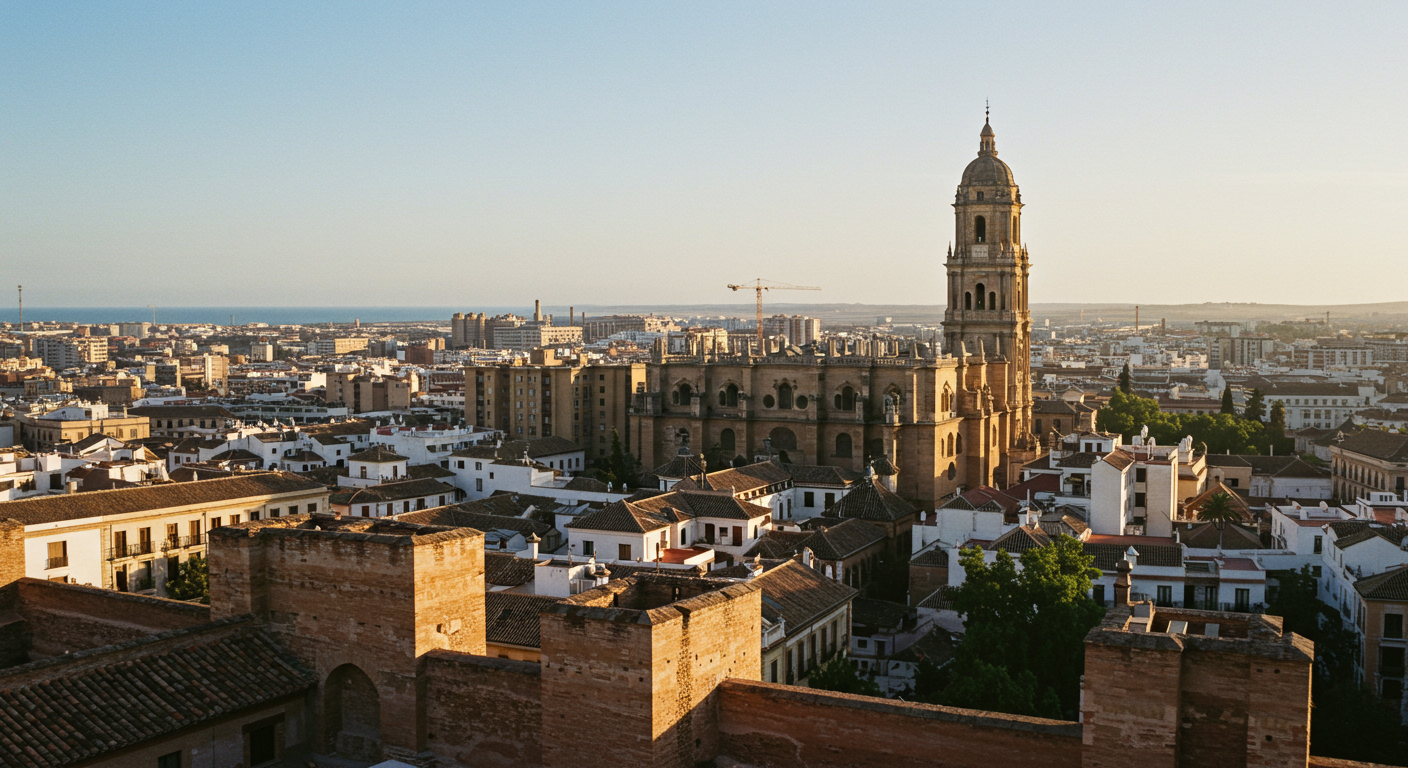
The two cathedrals — old and new, sharing a wall — are worth more than an hour of your time. The old cathedral (Catedral Vieja, 12th century) has a Byzantine dome and a retable of 53 painted panels that stops most people in their tracks. The new cathedral (Catedral Nueva, begun 1513) is Gothic-Baroque and vast. Entry to both together is around €6 as of 2026; the rooftop walkway, accessed separately, gives you the best view of the sandstone cityscape.
The University of Salamanca's historic façade — the fachada plateresca on Calle Libreros — is the thing everyone photographs. The game, which every Salamanca schoolchild knows, is to spot the frog carved into the skull on the façade; legend says finding it brings good luck in exams. You'll either find it in thirty seconds or spend ten minutes feeling increasingly foolish. (It's on the right pillar, about a third of the way up — I've told you now and I don't feel bad about it.)
The Casa de las Conchas — the 15th-century mansion covered in carved scallop shells — is free to enter and houses a public library. Sit in the courtyard. That's the instruction. It takes five minutes and costs nothing and it's one of the better five minutes available to you in Castile.
The Ieronimus tower climb, which takes you through the cathedral interiors and up to the rooftops via a sequence of medieval staircases, is the most physically engaging thing in the city. Book ahead in summer; it sells out.
A Note on Timing
Salamanca in July and August is hot — routinely above 35°C, occasionally above 40°C — and the student population largely evaporates, replaced by language-school cohorts and Spanish tourists. It's still enjoyable but the energy shifts. September and October are the sweet spot: students return, the heat breaks, and the light on the sandstone in late afternoon is extraordinary. Holy Week (Semana Santa) is taken seriously here — Salamanca's processions are among the more austere and atmospheric in Castile, without the overwhelming crowds of Seville or Valladolid.
Spring is underrated. February and March can be cold — this is the Castilian meseta, and winters are serious — but by April the terraces are out and the city feels like it's waking up.
Salamanca rewards slow attention more than almost anywhere I've spent time in Spain. Give it a week. Come back and give it another.
If you're planning a longer stay and need to get your paperwork in order, the Cita Previa Extranjería process for residency appointments is worth reading before you arrive — availability in smaller cities like Salamanca can be unpredictable.
Frequently asked questions
- How many days do you need in Salamanca to see it properly?
- Three days covers the major sights comfortably, but Salamanca genuinely rewards a week or more. The city is small enough to feel familiar quickly, and slow travel here — working your way through the bars, the markets, the quieter streets — is the point. If you only have a weekend, prioritise the two cathedrals, the University façade, and Plaza Mayor at different times of day.
- Is Salamanca expensive compared to other Spanish cities?
- No — it's one of the more affordable mid-sized cities in Spain. A coffee costs €1.20–1.50, a beer €1.50–2, and a full menú del día lunch (three courses, wine included) runs €10–12 at most working bars. Monthly rent for a one-bedroom flat in the old centre is roughly €600–750 as of early 2026, significantly less than Madrid or Barcelona.
- What is the best time of year to visit Salamanca?
- September and October are ideal: the heat has broken, the university is back in session, and the light is exceptional. April and May are also excellent. Avoid July and August if you're sensitive to heat — temperatures regularly exceed 35°C and occasionally hit 40°C. Holy Week (Semana Santa) is worth experiencing if you're interested in traditional Spanish religious processions.
- Can you work remotely from Salamanca?
- Yes, reasonably well. There are several coworking spaces near the university, and the café culture is laptop-friendly. Internet infrastructure is solid. The city's low cost of living makes it an attractive base for remote workers, and the Spanish Digital Nomad Visa is worth investigating if you're planning a stay of more than 90 days.
- What is hornazo and where should you try it in Salamanca?
- Hornazo is a raised shortcrust pie filled with chorizo, pork loin, and hard-boiled egg — it's Salamanca's signature food. You'll find it in almost every bar. The best versions tend to be in unpretentious bars near the university faculties rather than tourist-facing spots on the plaza. Ask at the bar counter rather than ordering from a menu; the freshest ones are usually kept under a glass dome.
- How do you get to Salamanca from Madrid?
- By train from Madrid Chamartín, the journey takes around 1 hour 30 minutes on the faster services (check Renfe for current timetables and prices). By bus from Madrid's Estación Sur, it's roughly 2.5 hours but often cheaper. There's no direct high-speed AVE service to Salamanca as of 2026 — the line is conventional, which is fine. Driving from Madrid takes about 2 hours via the A-6 and the AP-51.
- Is Salamanca worth visiting if you've already been to other Spanish cities?
- Yes, and arguably more so. Salamanca has a distinct character — Castilian, academic, architecturally coherent — that feels nothing like the coast or Andalusia. If you've done Madrid, Barcelona, and Seville, Salamanca is the kind of city that recalibrates your sense of what Spain is. It's also small enough that you don't need a plan; you can just walk.