Spain's Best Summer Festivals: San Juan Bonfires, Music and Fiestas Worth Travelling For
From San Juan beach bonfires to flamenco fiestas and open-air music, here's how to experience Spain's best summer festivals in 2026 — region by region.
Why Spain's Festival Calendar Is Worth Planning Around
Spain doesn't do summer quietly. From the last week of June through to late August, barely a weekend passes without some town, city or coastal village erupting into music, fire, colour or all three at once. Some of these festivals are ancient pagan rituals barely touched by modernity. Others are world-class music events that draw international headliners and tens of thousands of visitors. A few are both.
For anyone living in or travelling through Spain in summer 2026, building a loose itinerary around the festival calendar isn't just good fun — it's genuinely one of the best ways to understand the country. Spaniards take their fiestas seriously. They plan for them months in advance, drive hours to attend them, and consider them a non-negotiable part of the year. Joining in, even as a visitor, changes your relationship with the place.
This guide covers the most significant and most rewarding festivals across Spain's regions — with practical detail on dates, locations, costs and what to actually expect when you arrive.
La Noche de San Juan: Spain's Most Atmospheric Night
What It Is
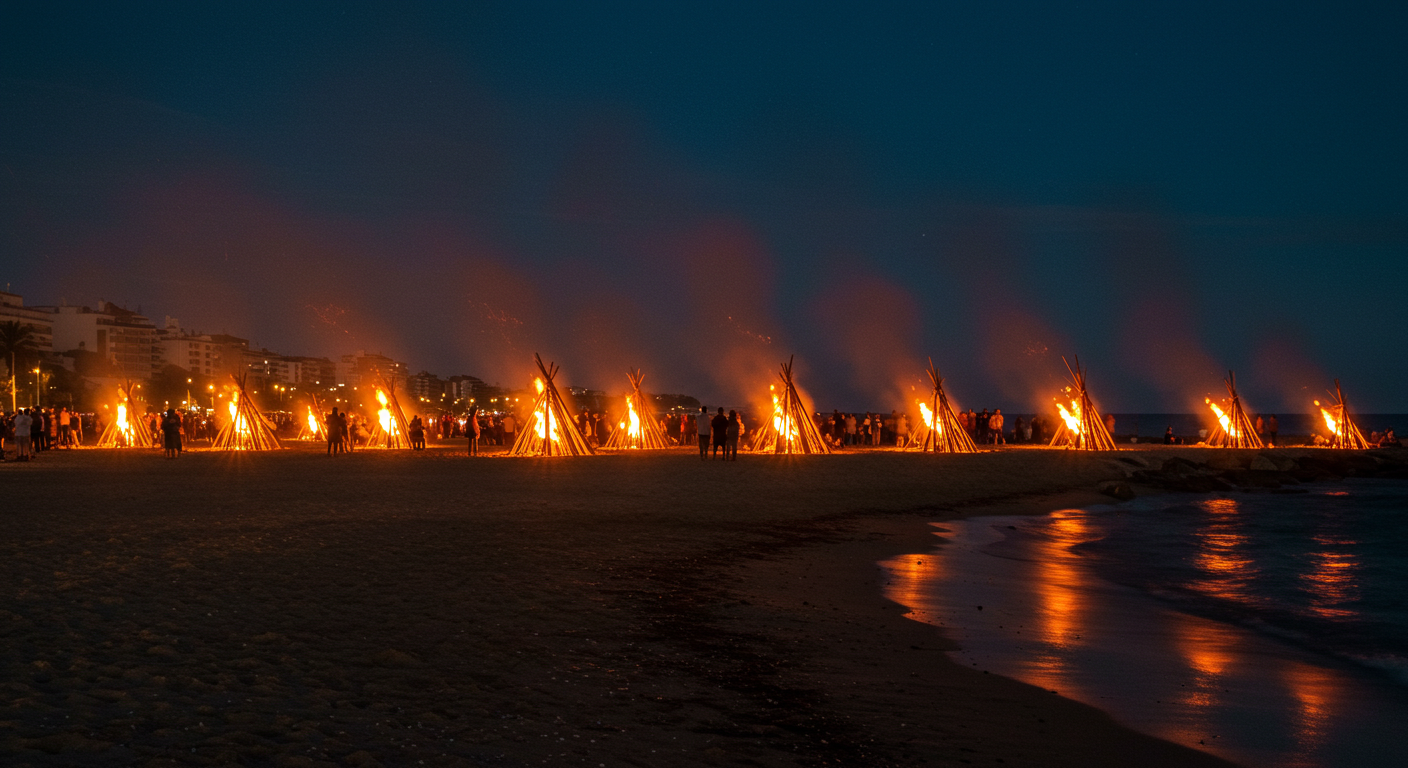
The night of 23–24 June — the eve of the feast of Saint John the Baptist — is celebrated across Spain with bonfires, fireworks, beach gatherings and rituals that predate Christianity entirely. In practice, it's one of the most magical nights of the Spanish year, and almost entirely free.
The tradition varies by region, but the core is the same: you go to the beach or a public space, you light a fire (or gather around one), and you welcome the summer solstice. In many places, people write their fears or bad habits on pieces of paper and burn them. Others jump over the flames three, seven or twelve times for luck. Effigies are burned. Fireworks go off spontaneously all night.
The Best Places to Experience It
Alicante hosts what is arguably the grandest San Juan celebration in Spain — though it's technically called the Hogueras de San Juan and runs from 20–24 June. Giant satirical sculptures (hogueras, or bonfires) up to 25 metres tall are constructed across the city over months, paraded and then burned on the night of the 24th in a spectacular citywide conflagration. The city is loud, smoky and absolutely alive. Book accommodation months in advance; as of 2026, a central hotel room during Hogueras week runs €150–€300 per night. The festival itself is free to attend — the bonfires are on public streets.
Barcelona turns its beaches into one enormous party. Barceloneta and the surrounding stretches fill from early evening with families, groups of friends and visitors. Bonfires are lit on the sand, music plays from every direction, and the fireworks are constant. It's crowded, joyful and entirely spontaneous-feeling despite the scale. The metro runs all night on 23 June.
Galicia has its own deeply rooted version, the Noite de San Xoán, centred on A Coruña and the beach at Riazor. The Galician tradition involves jumping over bonfires and burning meigas (witch effigies), with the whole coastline lit up from Vigo to Ferrol. The Atlantic setting — cooler than the Mediterranean, moodier — gives it a different character entirely.
Valencia and the Costa Blanca celebrate with particular intensity along the coastal towns. If you're already planning a summer trip to the region, timing it around San Juan is easy — see our Summer in Valencia and the Costa Blanca: City Beaches, Paella and Turquoise Coves guide for the full picture on where to base yourself.
Practical note: On the night of San Juan, most beaches officially prohibit open fires — but the reality is that enforcement is light and bonfires happen anyway. Bring your own wood or charcoal if you want your own fire; otherwise, join one of the communal ones.
Major Music Festivals: The Ones That Genuinely Deliver
Primavera Sound (Barcelona and Madrid)
Primavera Sound is Spain's most internationally respected music festival, and as of 2026 it continues to operate across two cities. The Barcelona edition takes place at the Parc del Fòrum in late May/early June — technically the shoulder of summer but with summer temperatures — and the Madrid edition follows a week later at IFEMA. Headliners in recent years have included artists across indie, electronic, hip-hop and experimental genres.
A full festival pass for Barcelona runs approximately €250–€320 as of 2026. Day tickets, when available, are around €90–€110. The site is large but well-organised, with good food options and a layout that rewards wandering between smaller stages. Book accommodation in Barcelona early — the festival coincides with high tourist season and prices spike.
Bilbao BBK Live
Held on the hillside of Kobetamendi, overlooking Bilbao, BBK Live takes place in early July and is one of the most beautifully situated festivals in Europe. The combination of Basque summer weather (unpredictable, sometimes wet, often perfect), the green hills, and a consistently strong lineup makes it worth the trip. As of 2026, a three-day pass costs around €165–€185.
Bilbao itself is an excellent base — the festival runs shuttle buses from the city centre. The Basque Country's beaches are within easy reach if you want to extend the trip; our Beaches of the Basque Country: San Sebastián, Surf and the Green Northern Coast in Summer guide covers the options in detail.
Rototom Sunsplash (Benicàssim)
The world's largest reggae festival outside Jamaica, Rototom Sunsplash takes place in Benicàssim (Castellón, Valencia region) in mid-August. It's a full week of music, culture, food markets and activism, with a beach setting and a remarkably international crowd. A week-long pass as of 2026 costs around €180–€220. The site has its own camping, and the town's beaches are a five-minute walk away.
Sónar (Barcelona)
Sónar is an electronic music and arts festival held in Barcelona in mid-June, split between a daytime venue (Sónar by Day, at the Fira Montjuïc) and a night venue (Sónar by Night, at the Fira Gran Via in L'Hospitalet). It's more cerebral and experimental than a straightforward dance festival — talks, installations and film screenings run alongside the music. Day + night combined tickets run approximately €200–€250 as of 2026.
Regional Fiestas: The Ones Locals Actually Love
Feria de Málaga (August)
The Feria de Málaga, held in mid-August, is one of the most exuberant street parties in Andalusia. The city's historic centre transforms for a full week: the day feria takes place in the streets around the Calle Larios and the Alameda, with flamenco, rebujito (a sherry and lemonade mix), traditional dress and live music from every corner. The night feria moves to the purpose-built fairground at the Cortijo de Torres.
Entry to the feria grounds is free. Drinks and food from the casetas (marquee stalls) are modestly priced — expect to pay €2–€3 for a rebujito. The city's beaches are at their peak in August, and the combination of beach days and feria nights is genuinely hard to beat. See our Costa del Sol Summer Guide: The Best Beaches and Beach Towns Around Málaga for beach logistics.
La Tomatina (Buñol, Valencia) — Late August
The last Wednesday of August in Buñol, a small town 40km west of Valencia, is when approximately 20,000 people throw 125,000 kilograms of tomatoes at each other for an hour. It sounds absurd and it is, but it's also genuinely joyful and surprisingly well-organised. As of 2026, participation tickets (required since 2013) cost around €15 and sell out months in advance. Wear clothes you're willing to throw away and bring goggles if you can.
Semana Grande / Aste Nagusia (Bilbao and San Sebastián — August)
Both Bilbao and San Sebastián hold their Semana Grande (Big Week) in August — Bilbao's runs in the third week, San Sebastián's in the third week from 14 August. These are full civic festivals: fireworks competitions, free outdoor concerts, txikiteo (bar-hopping with pintxos), street performances and bullfighting (in Bilbao). The fireworks competitions in San Sebastián, held at La Concha bay, are among the most spectacular in Europe and are entirely free to watch from the beach or the promenade.
Festes de la Mercè (Barcelona — September)
Strictly speaking, La Mercè falls on 24 September, which is autumn — but the build-up starts in late August and the festival itself is the last great blowout of the summer season. It's Barcelona's biggest free festival: castellers (human towers), gegants (giant papier-mâché figures), correfoc (fire-running with devil costumes and sparklers), and dozens of free outdoor concerts across the city. For anyone still in Barcelona at the end of summer, it's not to be missed.
Island Festivals: Summer Fiestas Beyond the Mainland
The Balearic and Canary Islands have their own rich festival traditions that often get overlooked in favour of beach coverage.
In Ibiza, the summer is effectively one long festival — but the most culturally interesting event is the Festes de la Terra in early August, celebrating the island's UNESCO-listed old town, Dalt Vila, with free concerts, traditional music and fireworks over the harbour. For beach context, see our Balearic Islands Summer Guide: Beaches, Coves and Calm in Mallorca, Menorca and Ibiza.
In Menorca, the Festes de Sant Joan in Ciutadella (23–24 June) is one of the most extraordinary equestrian festivals in Spain — horses rear up on their hind legs in crowded plazas while people try to touch them for luck. It's medieval in character and completely unlike anything on the mainland.
In Gran Canaria, the Fiesta de San Juan is celebrated with bonfires and beach gatherings across the island, though the atmosphere is different from the Mediterranean version — more intimate, more local. For the wider context of the islands in summer, our Canary Islands Beaches: Volcanic Sand, Dunes and Year-Round Swimming guide is worth reading alongside this one.
Practical Advice for Festival-Goers in Spain
Booking Accommodation
For any major festival — Hogueras in Alicante, Feria de Málaga, BBK Live — book accommodation at least three to four months in advance. Prices in festival weeks are typically 40–80% higher than normal. Apartments via short-term rental platforms often work out better value than hotels for groups, and staying slightly outside the festival town (and commuting in by train or bus) can halve your costs.
Getting Around
Spain's regional rail network (Renfe Cercanías) and long-distance AVE connections make festival-hopping surprisingly feasible. Barcelona to Benicàssim (for Rototom) is about two hours by train. Madrid to Bilbao (for BBK Live) is roughly five hours. Check Renfe's website for advance tickets, which can be significantly cheaper than walk-up fares.
What Things Cost
The good news: many of Spain's best festivals are free or very cheap to attend. San Juan is free everywhere. Feria de Málaga is free. Semana Grande in San Sebastián is largely free. The major music festivals (Primavera, Sónar, BBK Live) cost €150–€320 for multi-day passes as of 2026, which is broadly comparable to UK and northern European festivals but with better weather and cheaper food and drink on-site.
If You're Living in Spain
If you're a resident planning your summer around the festival calendar, it's worth noting that many fiestas coincide with local public holidays — which can affect everything from bank opening hours to transport schedules. If you've recently arrived and are still sorting your paperwork, our Getting Your NIE and TIE in Spain: A Step-by-Step Guide for New Residents covers the essentials for getting legally established before you start travelling.
A Summer That Actually Feels Spanish
The festivals listed here aren't tourist attractions bolted onto Spain's summer — they're the summer, for millions of people who live here. Showing up for San Juan on a beach in Galicia, or watching the hogueras burn in Alicante, or joining a correfoc in Barcelona puts you inside something real rather than alongside it. That's the difference between visiting Spain and beginning to understand it.
Plan around two or three of these events, leave space for the unexpected, and you'll find that Spain in summer is considerably more interesting than any beach guide alone can suggest.
Frequently asked questions
- When is San Juan celebrated in Spain and where is the best place to experience it?
- San Juan is celebrated on the night of 23–24 June across Spain. The most spectacular version is the Hogueras de San Juan in Alicante, which runs 20–24 June with giant burning sculptures. Barcelona's beaches, Galicia's Atlantic coast and Valencia's coastal towns are also excellent options for a more spontaneous experience.
- How much do Spain's major summer music festivals cost in 2026?
- As of 2026, multi-day passes for major festivals range from around €165 for BBK Live in Bilbao to €250–€320 for Primavera Sound in Barcelona. Sónar combined day/night tickets are approximately €200–€250. Many regional fiestas — including Feria de Málaga and San Sebastián's Semana Grande — are free to attend.
- Do I need to buy tickets in advance for La Tomatina?
- Yes. Since 2013, La Tomatina in Buñol requires a participation ticket, which costs around €15 as of 2026. Tickets sell out months in advance, so book as early as possible if you want to take part. The event takes place on the last Wednesday of August.
- What is the Feria de Málaga and when does it take place?
- The Feria de Málaga is a week-long street festival held in mid-August. The daytime feria takes place in the city centre with flamenco, music and traditional dress; the night feria moves to a purpose-built fairground. Entry is free, and food and drinks are inexpensive. It's one of the most lively and accessible fiestas in Andalusia.
- Are Spain's summer festivals family-friendly?
- Most are. San Juan beach gatherings, Feria de Málaga, La Mercè in Barcelona and the Semana Grande festivals are all attended by families with children of all ages. The major music festivals (Primavera Sound, Sónar) are adult-oriented by atmosphere but technically open to all ages. La Tomatina is chaotic and better suited to adults and older teenagers.
- What is the Nit del Foc / correfoc and is it safe to watch?
- The correfoc ('fire-running') is a Catalan tradition in which participants dressed as devils run through streets carrying fireworks and sparklers, with crowds encouraged to dance among the sparks. It features at La Mercè in Barcelona and other Catalan festivals. It's safe to watch from a short distance, but if you join the crowd beneath the fireworks, wear old long-sleeved clothes and cover your hair — sparks do land on you.
- How far in advance should I book accommodation for Spain's festival weeks?
- For major festival events — Hogueras de San Juan in Alicante, Feria de Málaga, BBK Live in Bilbao, Primavera Sound in Barcelona — book three to four months in advance at minimum. Prices in festival weeks are typically 40–80% higher than normal, and central accommodation sells out quickly. Staying in a nearby town and commuting in can significantly reduce costs.