Summer in Valencia and the Costa Blanca: City Beaches, Paella and Turquoise Coves
Your honest guide to summer in Valencia and the Costa Blanca: the best beaches, where to eat real paella, hidden coves, and how to do it without the crowds.
Why Valencia and the Costa Blanca Deserve More Than a Long Weekend
Spain's eastern seaboard gets a complicated reputation. Mention Benidorm and people smirk. Mention Valencia and they nod vaguely, thinking of paella and a football club. But spend a proper summer fortnight moving between the city and the coastline that stretches south towards Alicante, and you'll come away wondering why you spent previous summers fighting for a sun lounger in more fashionable corners of the country.
The Costa Blanca — literally the White Coast, named for its pale limestone cliffs — runs roughly 200 kilometres from Dénia in the north to Pilar de la Horadada near the Murcian border in the south. Valencia city sits just above it, technically on the Costa del Azahar (Orange Blossom Coast), but close enough that most summer visitors treat the two as a single region. Together they offer something genuinely rare: a Mediterranean coastline where you can still find a quiet cove on a Tuesday in August if you know where to look, eat paella that tastes of the lagoon it was cooked beside, and base yourself in a city that functions perfectly well year-round rather than existing solely for tourists.
This guide is for people who want to do it properly.
Valencia City: The Beach You Didn't Expect
Malvarrosa and Cabanyal
Valencia's city beach, Playa de la Malvarrosa, stretches for about four kilometres of wide, flat sand just twenty minutes by tram from the historic centre. It is not a secret. In July and August it fills up by 10am, and the paseo behind it — Paseo Marítimo de la Malvarrosa — becomes a long procession of families, cyclists and ice-cream sellers. That said, it is a genuinely good urban beach: the water is clean (Blue Flag certified as of 2026), the sand is well maintained, and the infrastructure is solid without being suffocating.
The real reason to base yourself at Malvarrosa, though, is the Cabanyal neighbourhood immediately behind it. Once a separate fishing village, Cabanyal spent decades under threat of demolition before a long campaign saved it. What remains is one of the most architecturally distinctive barrios in Spain: streets of narrow houses covered in ceramic tiles, painted in faded blues and greens, interspersed with modernista facades that look like they belong in a Dalí painting. It is being gentrified — slowly, and not without tension — but in summer 2026 it still feels lived-in, with local bars, a covered market, and a handful of genuinely good restaurants that haven't yet been discovered by the influencer circuit.
Getting In and Out of the City
Valencia's Renfe Cercanías network connects the city to El Puig, Sagunto and Cullera along the coast. For the beach itself, tram line 4 runs from Torres de Serranos in the old town directly to Malvarrosa and on to the port. A single ticket costs around €1.50 as of 2026. If you're arriving from elsewhere in Spain, the high-speed AVE from Madrid takes just over an hour and a half; from Barcelona, the fast train runs in about three hours.
Where to Eat Real Paella — and What That Actually Means
The paella conversation in Valencia has the same exhausting quality as the tortilla conversation in Madrid. Everyone has strong opinions. Here are the facts that matter.
Authentic Valencian paella is made with chicken, rabbit, green beans (bajoqueta), white beans (garrofó), tomato, saffron, and short-grain rice — specifically Valencian varieties like Senia or Bomba, grown in the Albufera lagoon area. It does not contain chorizo, prawns, or mixed seafood. That dish exists and can be delicious, but it is arroz a banda or arroz del senyoret, not paella valenciana. Ordering "paella" in a tourist-facing restaurant and getting something with frozen prawns is not a Valencian tradition; it is a concession to expectation.
Where to Eat It
La Pepica on Paseo Neptuno is the most famous paella restaurant in Valencia — Hemingway ate here, and they'll tell you so. The food is reliable and the setting is lovely, but you'll pay for the history (expect €25–35 per person for rice and a drink). It is worth it once.
La Riuà in the city centre (Carrer del Mar) is where Valencians actually go for a special-occasion paella. Smaller, less theatrical, and the rice is consistently excellent.
For the full experience, drive fifteen minutes south to the Albufera natural park and eat at one of the restaurants around the lagoon village of El Palmar. Casa Carmina and Nou Raco both serve paella cooked over orange-wood fires in the traditional manner. Lunch for two with wine runs to around €50–70. Book ahead in summer.
One important rule: paella is a lunch dish. If a restaurant is pushing it at dinner, that is a warning sign. The rice sits all day and loses its socarrat — the prized caramelised crust at the bottom of the pan — by evening.
For a broader sense of how seriously Spain takes its regional food cultures, our best beaches in Spain for summer 2026 guide also touches on the culinary landscape coast by coast.
The Costa Blanca: North vs South
The Costa Blanca divides naturally at Benidorm, and the two halves feel like different countries.
The Northern Costa Blanca (Dénia to Altea)
This is the part that rewards slow travel. The landscape is wilder, the towns are more interesting, and the coves — called calas — are the kind of thing you spend years trying to find.
Dénia sits at the northern tip, beneath a Moorish castle that looks out over the sea towards the Balearic Islands (on a clear day you can see Ibiza, 90 kilometres away). The town has a serious food culture — it holds a Michelin star at Quique Dacosta's restaurant — and a working fishing port where the red prawns (gambas rojas) are among the best in Spain. The beaches north of Dénia, around Les Rotes, are rocky and calm, popular with snorkellers.
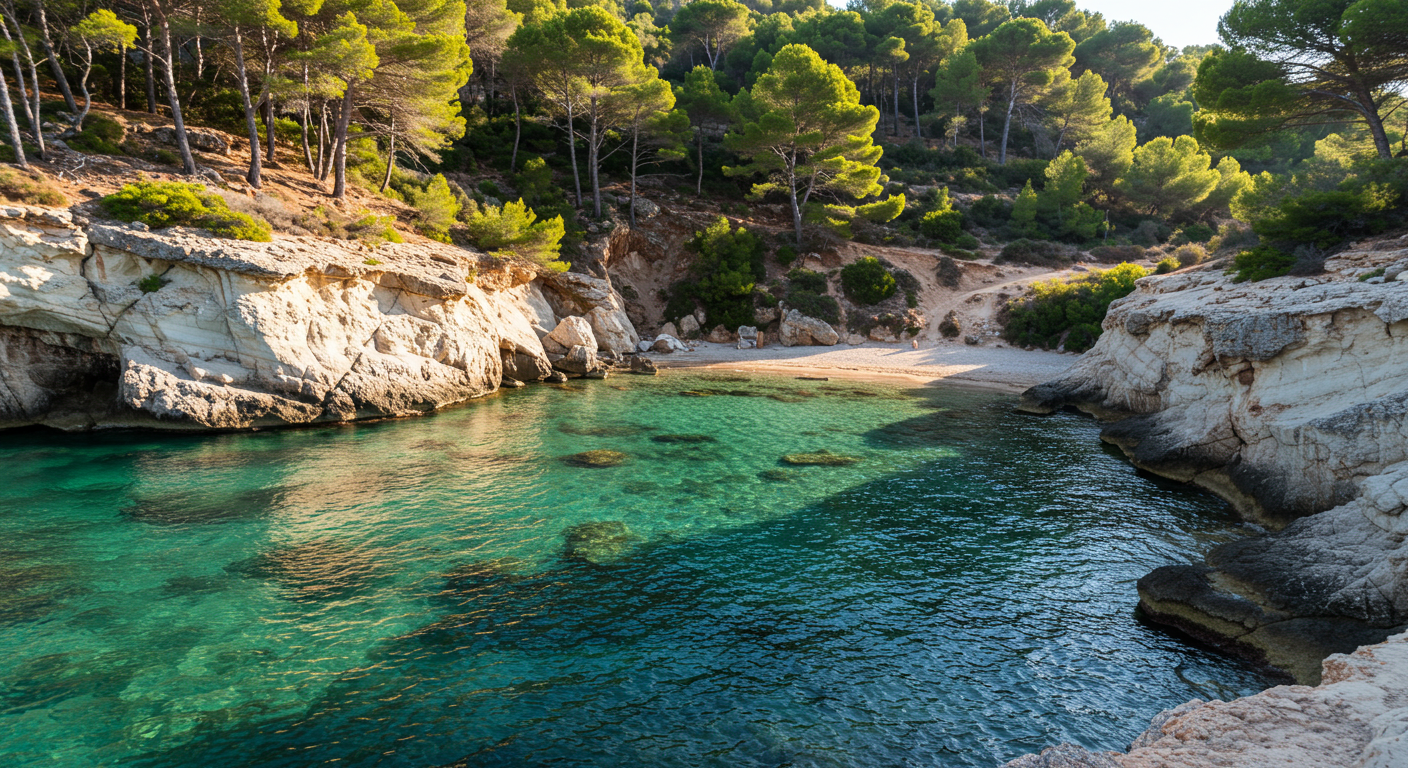
Jávea (Xàbia) is the jewel of the northern Costa Blanca. The town itself is a few kilometres inland, but its coastline is extraordinary: the Parador beach (Playa de l'Arenal) is a conventional sandy bay with good facilities, but drive or walk further around the cape and you reach the Granadella cove — a small, steep-sided inlet of almost absurdly blue water, surrounded by pine trees and limestone cliffs. It gets busy in August; arrive before 9am or after 5pm.
Calpe is dominated by the Peñón de Ifach, a 332-metre rock that rises from the sea like a misplaced Gibraltar. You can hike to the top in about an hour (the trail starts from the visitor centre at the base; bring water). The town's salt lakes attract flamingos in spring and early autumn. The beaches either side of the rock — Playa de la Fossa and Playa del Arenal-Bol — are large and well-serviced.
Altea is the most architecturally beautiful town on this stretch: a white hilltop village above a pebble beach, with a church dome tiled in blue and white ceramics. It has a reputation as an artists' colony, which is partly deserved. The seafront restaurants serve excellent arroz a banda.
The Southern Costa Blanca (Benidorm to Torrevieja)
Benidorm is not for everyone, but it is not nothing either. The Playa de Levante and Playa de Poniente are genuinely impressive beaches — long, wide, and kept immaculately clean despite the volume of visitors. If you want a week of sun loungers, cocktails, and absolutely zero effort, Benidorm delivers it efficiently. Just don't expect tranquillity.
South of Benidorm, Villajoyosa is a fishing town where the houses along the seafront are painted in vivid colours — originally so that fishermen could identify their homes from the sea. It has a chocolate museum (the town has been making chocolate since the 19th century) and a Thursday fish auction at the port that you can visit.
Alicante is a proper city with a proper city beach (Playa del Postiguet) and a castle (Castillo de Santa Bárbara) that you reach by lift through the rock. The old quarter, the Barrio de Santa Cruz, is worth an afternoon. Alicante also has excellent transport links — the TRAM network connects it to Benidorm and Dénia, and the airport handles flights from across Europe.
Further south, Santa Pola and Guardamar del Segura have wide, pine-backed beaches that feel genuinely local. Torrevieja sits on two salt lagoons that turn pink in summer — a striking sight — and the town's salt-air microclimate has made it popular with people managing respiratory conditions.
Hidden Coves Worth the Effort
The best calas on the Costa Blanca require a little work to reach, which is precisely why they're still worth finding.
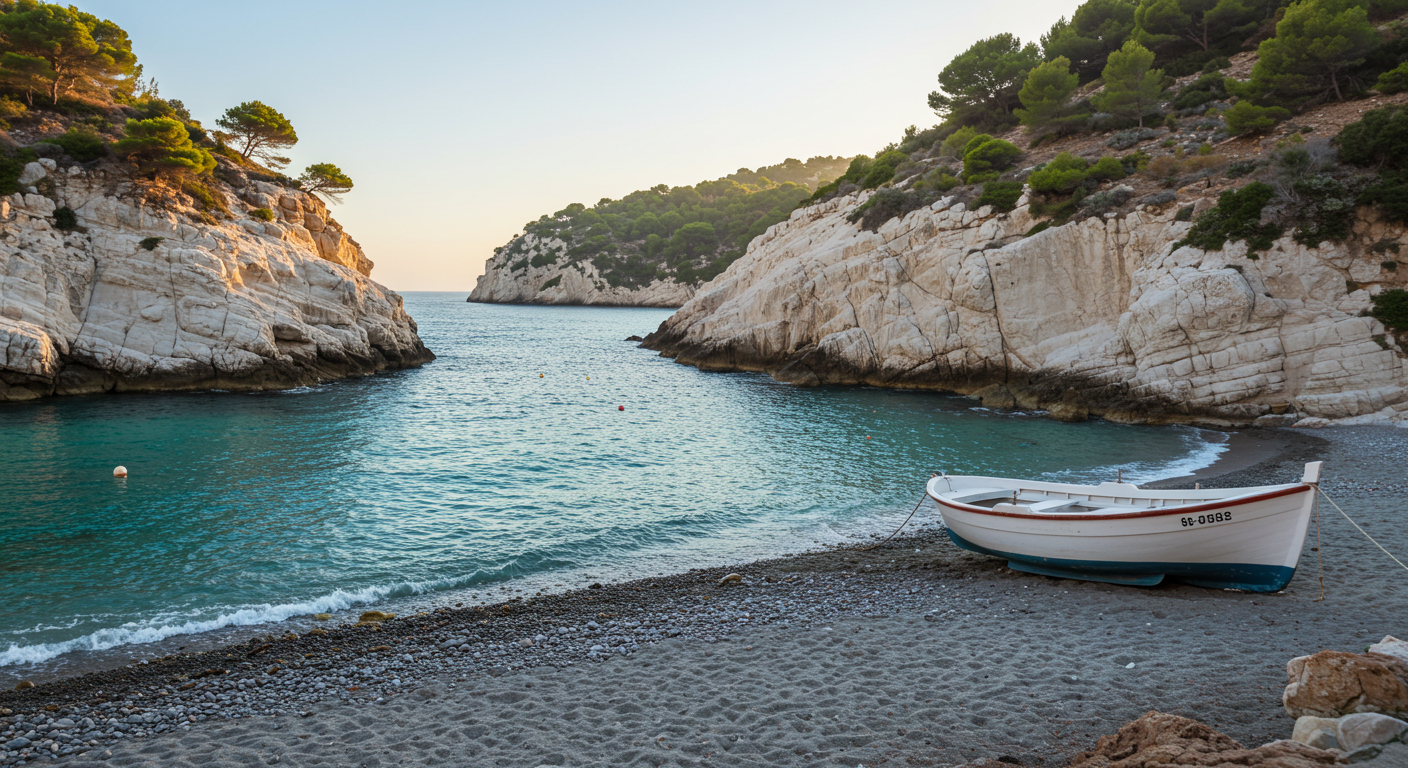
Cala del Moraig near Benitatxell is only accessible on foot (about 20 minutes down a steep path) or by kayak. The water is an improbable shade of green-blue, and there's a sea cave at the far end that you can swim into. No facilities, so bring everything you need.
Cala Portitxol near Jávea is similarly remote — park at the top and walk down through scrubland. The cove is small and rocky, but the snorkelling around the rocky headlands is excellent.
Cala de la Granadella (mentioned above) is the most accessible of the truly beautiful coves, with a small beach bar and some shade. Get there early.
For comparison with other coastlines doing the hidden-cove thing well, see our guide to Costa Brava beaches and hidden calas, where Catalonia's northern coast offers a similarly rugged alternative to the main tourist strips.
Practical Matters for Summer 2026
When to Go
July and August are the hottest months — Valencia city regularly hits 33–35°C, and the coast is only marginally cooler. The sea temperature reaches 27–28°C, which is genuinely warm. September is arguably the best month: the crowds thin after the 15th, the water is still warm, and the light is extraordinary. June is excellent if you can manage it — school holidays haven't started, prices are lower, and the days are long.
Getting Around
For Valencia city, the tram and metro are sufficient. For the Costa Blanca, a hire car is almost essential if you want to reach the good coves and smaller villages. Hire car rates from Alicante Airport in summer 2026 run from around €35–55 per day for a small car, booked in advance. The AP-7 motorway runs the length of the coast but carries a toll; the N-332 is slower but free and more scenic.
Where to Stay
Valencia city has seen a significant expansion in boutique hotel options in the Ruzafa and Carmen neighbourhoods. Expect to pay €100–160 per night for a decent double in July. Jávea and Altea have good villa rental stock — a two-bedroom place with a pool runs to roughly €1,200–1,800 per week in August. Benidorm is cheaper: large hotel packages remain competitive.
A Note for Longer Stays
If you're considering spending more than a tourist summer in the Valencia region — working remotely or settling longer-term — the practical admin of Spanish residency applies here as anywhere else. Our guide to getting your NIE and TIE in Spain covers the paperwork in detail. Valencia's foreigners' office (Oficina de Extranjería) is on Calle Bailén and handles appointments through the standard Sede Electrónica system.
Spain's other summer coastlines each have their own character. The Balearic Islands offer a different kind of cove experience — more exclusive, more expensive, and accessible by ferry from Dénia and Valencia port. The Costa del Sol around Málaga is warmer still and more developed. And if you want to understand how dramatically different Spain's northern coast is, the Basque Country's beaches are a revelation — green, dramatic, and temperamentally the opposite of everything on this list.
The Albufera: Where Paella Comes From
No visit to Valencia in summer is complete without at least a half-day at the Albufera natural park, 12 kilometres south of the city. This shallow freshwater lagoon — separated from the sea by a thin strip of land called the Devesa — is where Valencian rice cultivation began, and where the ecosystem that makes paella possible still exists.
The lagoon itself is best seen at sunset from a small wooden boat (barca de percha), which you can hire from the village of El Palmar for around €10 per person. The light on the water in late July, with herons standing in the shallows and the city's skyline just visible to the north, is one of those quietly perfect travel moments that nobody photographs well but everyone remembers.
A Region That Rewards Returning
Valencia and the Costa Blanca are not destinations you exhaust in a single visit. The northern coves alone could occupy a week of careful exploration. The city's food scene — Ruzafa's restaurant strip, the Mercado Central, the rice restaurants of Cabanyal — takes time to know properly. And the Albufera, the orange groves of the interior, the hill towns like Guadalest above Benidorm: there is always another layer.
The best thing about this stretch of coast is that it has never quite become fashionable in the way that the Balearics or the Costa Brava have. That may change. For now, it remains a place where you can eat lunch for €15, find a cove that isn't on Instagram, and watch the sun go down over the Mediterranean without feeling like you're performing a holiday rather than having one.
Frequently asked questions
- What is the best time to visit Valencia and the Costa Blanca in summer?
- September is the sweet spot: the sea is still warm (around 26–27°C), crowds thin noticeably after the 15th, and accommodation prices drop. June is also excellent — long days, no school holidays, and lower prices. July and August are peak season with temperatures regularly above 33°C in Valencia city.
- Is authentic paella valenciana really that different from what most restaurants serve?
- Yes, significantly. Authentic paella valenciana contains chicken, rabbit, green beans, white beans, tomato, saffron and Valencian rice — no seafood, no chorizo. The best versions are cooked over orange-wood fires and served at lunch only. For the real thing, head to the Albufera lagoon villages like El Palmar, or try La Riuà in Valencia city.
- Do I need a car to explore the Costa Blanca?
- For the main resort towns like Benidorm and Alicante, no — the TRAM network connects them reasonably well. But to reach the best coves (Cala del Moraig, Cala de la Granadella, Cala Portitxol) and smaller villages, a hire car is essentially necessary. Book in advance from Alicante Airport; expect around €35–55 per day for a small car in summer 2026.
- How do I get from Valencia city to the Costa Blanca?
- The AP-7 motorway runs the full length of the coast (tolled). The free N-332 is slower but more scenic and passes through the coastal towns. By public transport, Renfe Cercanías trains run south from Valencia towards Gandia; for Dénia and beyond, the FGV narrow-gauge TRAM line connects Dénia to Alicante via the coast.
- Is the Albufera natural park worth visiting in summer?
- Absolutely. A sunset boat trip on the lagoon from El Palmar costs around €10 per person and is one of the most memorable experiences in the Valencia region. Combine it with lunch at one of the rice restaurants in El Palmar village — paella cooked over orange-wood fires is the traditional method here. Book the restaurant in advance in July and August.
- Which is better for a quiet beach holiday — the northern or southern Costa Blanca?
- The northern Costa Blanca (Dénia, Jávea, Calpe, Altea) is considerably quieter, more scenic, and more interesting architecturally. The southern stretch around Benidorm is more developed and better suited to those who want full resort infrastructure. For hidden coves and slow-travel vibes, go north.
- Can I visit the Costa Blanca as a day trip from Valencia city?
- Yes, though you'll get more from a longer stay. Dénia is about 100km from Valencia — roughly 90 minutes by car or a combination of train and TRAM. Jávea and Calpe are slightly further. As a day trip, Cullera or Gandia (both reachable by Cercanías train in under an hour) are more practical options for a beach day from the city.