What Do Spanish People Eat for Breakfast? A Real Guide
Tostada, churros, café con leche and the menú del día explained honestly. What Spanish people actually eat for breakfast — and where to find it.
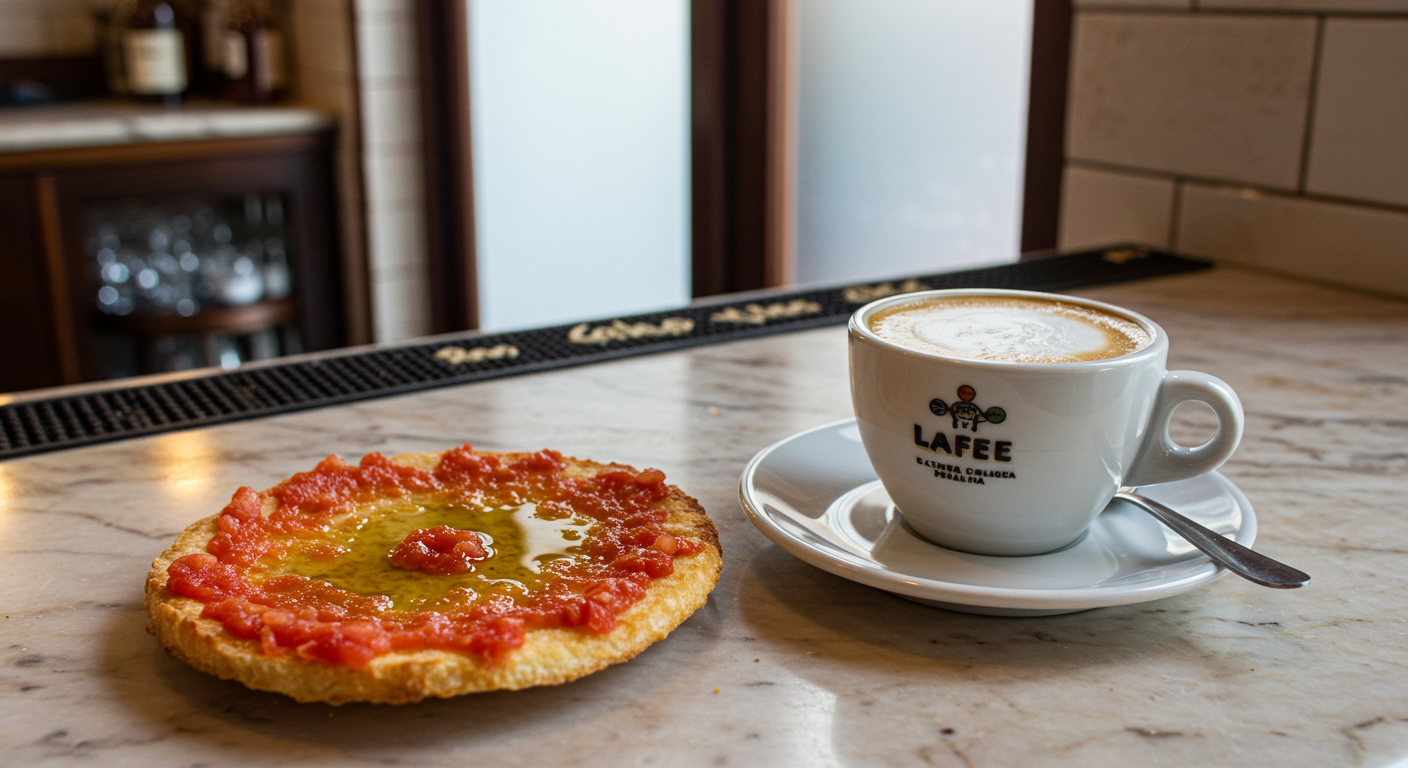
Three years into living in Seville, I still start most mornings the same way: a stool at the bar, a café con leche, and a tostada con tomate that costs €1.80 and tastes better than anything I'd make at home. Spanish breakfast is not elaborate. That's the point.
So, what do Spanish people eat for breakfast? The short answer: almost always something small and quick at a bar. A tostada (toasted bread, usually a thick white roll sliced lengthways) with olive oil and crushed tomato, or with butter and jam. A café con leche — equal parts strong espresso and hot milk. Sometimes a glass of fresh orange juice squeezed to order. That's it. Churros are a weekend or special-occasion thing, not a daily ritual. The menú del día is lunch, not breakfast. And nobody eats cereal.
The Tostada: Spain's Real Breakfast
A tostada is a half-baguette or a thick slice of white bread, toasted on a plancha until golden on the outside and still slightly soft inside, then served with your choice of topping. In Andalusia — Seville, Málaga, Granada, Cádiz — the standard is tostada con aceite y tomate: olive oil drizzled over the bread, then either a smear of crushed fresh tomato (tomate triturado) or, in many places, a whole tomato half that you rub yourself. Sometimes both come separately. Salt on top, maybe a little garlic if you're lucky.
This is not bruschetta. The bread is thicker, the olive oil is generous, and the tomato is more of a light coating than a topping. It's very good. It also costs between €1.50 and €2.50 across most of Spain in a normal bar — more like €3–4 in a tourist-facing café in central Barcelona or Madrid.
In Madrid and Castile, the tostada culture is similar but you'll more often see mantequilla y mermelada (butter and jam) as the default, or tostada con jamón — a serious upgrade. In Catalonia, the local version is pa amb tomàquet: bread rubbed with a cut tomato and drizzled with olive oil, often on denser bread. It turns up at breakfast and at every other meal too.
One caveat: if you ask for a tostada in a hotel breakfast buffet, you'll get something completely different and disappointing. Go to the nearest bar.
What to Order at a Spanish Breakfast Bar
Walk in, sit at the bar or grab a table, and the waiter will usually come to you. In Andalusia especially, it's normal to order in two stages: coffee first, then food, or both together. Don't overthink it.
The coffee options that actually matter:
- Café con leche — the standard. A shot of espresso with an equal or larger amount of hot milk. What most people drink.
- Cortado — espresso with a small splash of milk. Stronger, less milky. Popular mid-morning.
- Solo — straight espresso. What serious coffee people order.
- Café con hielo — hot espresso served with a glass of ice. You pour it yourself. Essential from May to October.
- Café de puchero — only in parts of Andalusia, particularly around Huelva and rural areas. Coffee brewed in a pot, not an espresso machine. Softer and slightly different. Worth trying if you see it.
Avoid asking for a flat white unless you're in a specialty coffee place. You'll get a look, and the result will be unpredictable.
Churros: Not What You Think
Churros are not Spanish breakfast. Not daily, anyway. They're a weekend thing, a late-night thing after a long night out, a cold-day thing. Families go for churros on Sunday mornings. People eat them at feria stalls. But your average Spanish adult does not eat churros before work on a Tuesday.
When you do have them, the format varies by region. In Madrid, churros are thin and ridged, fried until crisp, and served with thick hot chocolate (chocolate con churros) — the chocolate is almost pudding-thick and you dip, not drink. The classic address is the Chocolatería San Ginés near Sol, open since 1894, genuinely good, and yes, full of tourists — but locals still go at 3am after a night out. Worth it once.
In Andalusia you often get tejeringos instead — a slightly different shape, a bit chewier. In some parts of the country you'll find porras, which are thicker, puffier, and fried in a spiral. All of them are best eaten immediately, standing up, slightly burning your fingers.
Skip the churros in any café that also sells croissants wrapped in plastic. That version is never worth it.
The Menú del Día: This Is Lunch, Not Breakfast
I want to address this because it comes up constantly. The menú del día — a set multi-course meal including bread, a starter, a main, dessert or coffee, and often a drink — is a lunch institution, not a breakfast one. It's served roughly 1:30–3:30pm, sometimes until 4pm, and it's one of the best-value eating experiences in Spain. Expect to pay €10–15 for the full thing in most cities as of 2026, though Seville and smaller towns can still do it for €9–11, and Madrid's smarter neighbourhoods push toward €16–18.
If you're newly arrived and trying to understand the rhythm of Spanish eating, this is the one to internalise: breakfast is small and early (7–10am), lunch is the main meal (2–4pm), dinner is late and often light (9–11pm). This is not a cliché. It's how it actually works, and eating at the wrong time in the wrong place will get you a half-empty restaurant and a slightly baffled waiter.
For anyone working through the practical side of relocating — dealing with renting in Spain without a Spanish payslip or sorting out a Spanish bank account as a non-resident — understanding the lunch break culture matters practically too. Most government offices, banks, and gestorías observe a long midday pause. Plan appointments before 2pm.
Regional Variations Worth Knowing
Spain is not one breakfast culture. The Andalusian bar breakfast is probably the richest tradition, but the differences across regions are real.
Basque Country: Breakfast can mean a pintxo or two at a bar in Bilbao or San Sebastián — a small slice of bread with something on top, often tortilla or anchovies. The coffee culture is strong and the bars are good. A slightly more substantial start than the south.
Catalonia: Pa amb tomàquet everywhere. Also ensaïmada if you're in Mallorca (technically the Balearics, but the pastry is everywhere). Catalan breakfasts in Barcelona have been colonised somewhat by the international café scene, but leave the tourist areas and you'll find the same bar-and-coffee ritual.
Valencia: Orange juice is taken seriously here, as you'd expect. Fresh-squeezed zumo de naranja at a bar, alongside coffee and something small. Also horchata — the cold drink made from tiger nuts (chufa) — though that's more of a mid-morning or afternoon thing than a strict breakfast item.
Galicia: Bread is exceptional here, and a slice of good Galician bread with butter and local honey is a legitimate breakfast. Also empanada appears early in bakeries, though more often as a mid-morning snack.
Canary Islands: Look for gofio — a toasted grain flour that gets mixed into everything, including breakfast porridge-style preparations. Also pan de pueblo with mojo sauce, and extremely good coffee from locally roasted beans. The Canaries have their own café culture and it's underrated.
The Bar, Not the Café
One thing that surprises a lot of new arrivals: the best Spanish breakfasts are almost never in places that call themselves cafés or breakfast spots. They're in bares — neighbourhood bars that open at 7am, serve coffee, toast, and maybe a glass of juice, and have a TV on in the corner showing the news or football highlights.
These places don't have Instagram accounts. They have a laminated menu taped to the wall and a coffee machine that's been running since dawn. The tostada will be better than at the artisan brunch place down the road that charges €7 for the same thing with a sprig of rosemary on top.
This is especially true if you're living in Spain long-term rather than visiting. Finding your neighbourhood bar — the one where the staff know your order by your second visit — is one of the small but real pleasures of being here. It costs nothing to become a regular. You just have to show up.
If you're still in the early stages of settling in — sorting out your empadronamiento or working through the paperwork for a digital nomad visa — the morning bar ritual is also one of the better ways to start feeling like you actually live here rather than just passing through.
Prices: What to Expect in 2026
As a rough guide for a standard bar breakfast across Spain in 2026:
- Café con leche: €1.20–€2.00 (more in city centres and tourist areas)
- Tostada with olive oil and tomato: €1.50–€2.80
- Fresh orange juice: €1.50–€2.50
- Full breakfast (coffee + tostada + juice): €4–€6 in most neighbourhood bars
- Churros with chocolate: €3–€5 depending on portion and location
These prices are noticeably higher in Barcelona and Madrid's central neighbourhoods, and in any coastal resort town in high season. A coffee in a bar near La Sagrada Família will cost more than the same coffee three metro stops away. Move slightly off the main drag and prices drop fast.
Spanish breakfast remains one of the genuinely cheap daily pleasures of living here — even accounting for inflation, you can eat and drink well before 10am for under €5 almost anywhere outside the most tourist-heavy postcodes.
If you're budgeting for life here more broadly, that daily bar breakfast adds up to something comfortably under €100 a month — a minor line in the spreadsheet compared to rent or healthcare costs.
The best single piece of advice I can give: ignore the places with English-language breakfast menus in the window. Walk another two minutes, find the bar where old men are reading the paper at the counter, and order what they're having.
Frequently asked questions
- What do Spanish people typically eat for breakfast?
- Most Spanish adults have a small, quick breakfast at a local bar: a tostada (toasted bread with olive oil and tomato, or butter and jam), a café con leche, and sometimes a fresh orange juice. It's rarely eaten at home and almost never elaborate. Churros are a weekend or occasional treat, not a daily habit.
- Is the menú del día a breakfast menu?
- No. The menú del día is a set lunch menu, served roughly between 1:30pm and 3:30pm. It typically includes bread, a starter, a main course, dessert or coffee, and a drink — all for around €10–15 in most Spanish cities as of 2026. Breakfast is a separate, much smaller affair.
- Are churros eaten every day in Spain?
- No — this is one of the most common misconceptions. Churros are a weekend treat, a cold-weather indulgence, or a post-night-out tradition. Most Spanish people eat them occasionally, not as part of a daily breakfast routine.
- What is tostada con tomate and how is it different from bruschetta?
- Tostada con tomate is toasted bread (usually a thick white roll or baguette half) with olive oil and either crushed fresh tomato or a tomato half to rub yourself. It's lighter than bruschetta — the tomato is more of a flavouring than a topping — and it's eaten at breakfast, not as a starter. It costs around €1.50–€2.80 in a normal Spanish bar.
- What coffee should I order for breakfast in Spain?
- A café con leche (espresso with hot milk, roughly equal parts) is the standard Spanish breakfast coffee. A cortado is smaller and stronger. If you want it cold, ask for café con hielo — they'll bring hot espresso and a glass of ice for you to combine yourself. Avoid asking for a flat white in anything other than a specialty coffee shop.
- Where do locals actually have breakfast in Spain?
- In neighbourhood bars (bares), not cafés or brunch spots. Look for places that open at 7am, have a coffee machine, a plancha for toast, and locals reading the paper at the counter. These will almost always serve better and cheaper food than tourist-facing breakfast cafés.
- How much does breakfast cost in Spain in 2026?
- A coffee, tostada, and fresh orange juice at a neighbourhood bar typically comes to €4–6 in most Spanish cities as of 2026. Central tourist areas in Barcelona and Madrid can push individual items higher — a café con leche can reach €2.50+ near major attractions — but move off the main drag and prices drop quickly.