Moving to Spain with Pets and Kids: Visas, Schools and the Logistics Nobody Mentions
Moving to Spain with family and pets? Here's the real checklist: visas, school enrolment, pet import rules, NIE queues and the admin nobody warns you about.

The Stuff That Catches Families Off Guard
Moving to Spain with family and pets is entirely doable — thousands of British, American, and Irish families do it every year. But the logistics nobody mentions are the ones that will eat your first three months: getting a child into school before you have a padron certificate, figuring out what happens to your dog at the border, and realising your visa approval doesn't automatically mean anyone will rent you a flat. The short answer is: start the paperwork six months before you plan to leave, get your pets' EU health certificates sorted at least ten days before travel, and accept that school enrolment depends almost entirely on which municipality you land in.
Below is what I've learned from doing this myself and from talking to a lot of families who've made the move — including several who ended up in the wrong city for the wrong reasons.
Which Visa Are You Actually Going For?
This is the first question, and it matters before anything else, because the visa type shapes your timeline and your paperwork chain.
For most non-EU families, the realistic options are the Non-Lucrative Visa (NLV), the Digital Nomad Visa (DNV), or the Golden Visa (if you're buying property above €500,000). The NLV is still the most common route for families relocating without a Spanish employer — you need to demonstrate sufficient passive or investment income (roughly €2,400/month for a single applicant plus around €600 per additional family member, though these figures shift; verify with your consulate). You apply in your home country, before you arrive. Processing at the Spanish consulate in London, for instance, can take eight to twelve weeks, sometimes longer.
The Digital Nomad Visa is a newer option and appeals to remote workers, but it comes with its own wrinkles — see Spanish Digital Nomad Visa on Minimum Salary: Is It Worth It? for a proper breakdown of whether the income threshold actually works for a family. Spoiler: it often doesn't, once you factor in dependants.
If you already have EU citizenship — or if one parent does — the process is different and significantly simpler. Spouses and children of EU citizens register under a different regime (Régimen Comunitario) and don't need the NLV at all.
NIEs for the Whole Family
Every family member, including children, needs a NIE (Número de Identificación de Extranjero) to do almost anything in Spain: enrol in school, open a bank account, register a car, sign a lease. Getting appointments is the part that breaks people.
In cities like Madrid, Barcelona, and Valencia, NIE appointments at the Oficina de Extranjería can be weeks or months out. Children's NIEs go through the same queue as adults. You can apply for a NIE at the Spanish consulate in your home country before you arrive — and for families, I'd strongly recommend doing exactly that for at least the main applicant, since it unblocks everything else. Read NIE Appointment in Spain 2026: How Long the Wait Really Is before you book anything, and if you arrive to find no appointments available, Cita Previa Extranjería: How to Get an Appointment When None Exist goes through the workarounds in detail.
One thing families often miss: if you're applying as a family unit, you don't necessarily all need separate appointments on the same day. Some oficinas will process accompanying family members in one appointment if you bring all the documentation together. Ring ahead and ask — the answer varies by province.
Empadronamiento: The Padron Problem
The padron (empadronamiento) is your municipal registration — your proof that you live where you say you live. You need it to access public healthcare, enrol children in state school, and eventually get your TIE (residency card). The problem: most landlords want proof of legal status before they'll let you register at their address, and the council wants a rental contract before they'll register you. Classic catch-22.
If you're in rented accommodation, you normally need the signed lease. If you've bought a property, the escritura (title deed) does the job. If neither applies — if you're in a hotel or Airbnb while you house-hunt — it gets complicated. Empadronamiento Without a Rental Contract: Your Real Options covers the alternatives, including the declaración de arrendamiento and asking a friend or family member already registered in Spain to add you to their padron temporarily.
For families, this matters doubly because school enrolment in the state system typically requires a padron certificate showing your address in the catchment area. Get the padron done before you try to register the kids.
Getting Your Children Into School
Spain has a good public school system — genuinely good, not just in comparison to somewhere terrible. State schools (colegios públicos) are free, and concertados (semi-private, state-funded schools, often run by the Church) charge very little. International private schools cost between €8,000 and €20,000+ per year depending on city and school.
The school year starts in September. The formal enrolment period for public schools is typically March to May for the following academic year — which means if you're planning a September move, you need to be registered and applying in spring. If you miss that window, you can still enrol outside the formal period, but you take whatever place is available, and in desirable urban catchments that can mean a school further away than you'd like.
Language of instruction varies significantly by region. In Catalonia, Catalan is the primary language of instruction; in the Basque Country, Basque; in Valencia, many schools teach primarily in Valencian. If your children speak no Spanish at all, this is worth weighing seriously when choosing where to settle. Madrid and Andalusia, where Castilian Spanish dominates, are often easier entry points for English-speaking families. Many state schools in these regions also have bilingual programmes (Spanish/English), which are heavily oversubscribed but worth pursuing.
For secondary-age children (12+), the transition can be harder. Spanish schools follow a different curriculum, and if your child is approaching GCSE or A-level equivalent years, you'll need to decide whether to go full Spanish state, find a concertado with a bilingual programme, or bite the bullet on an international school. There's no perfect answer.
Moving to Spain with Pets: What the Border Actually Looks Like
This is where families consistently get caught out, so I'll be specific.
For dogs, cats, and ferrets entering Spain from a non-EU country (including the UK post-Brexit), you need:
- A microchip (ISO 11784/11785 standard — the 15-digit one)
- A valid rabies vaccination (administered after microchipping, not before)
- An EU-format animal health certificate, completed and signed by an Official Veterinarian no more than 10 days before travel
- A tapeworm treatment for dogs, administered 1–5 days before entry (required for travel from the UK and certain other countries)
The health certificate is time-limited — ten days. That means you're booking your vet appointment, your ferry or flight, and your arrival date as a tightly coordinated sequence. Miss the window and you either delay the trip or the animal goes into quarantine. There is no grace period.
If you're flying your pet in the cabin, check the airline's own weight and carrier limits — they vary significantly. Ryanair doesn't allow pets in the cabin at all. Iberia and Vueling do, within limits. Large dogs typically travel as checked baggage or cargo, which adds cost and complexity.
Once in Spain, dogs need to be registered with your local ayuntamiento (town hall) within a set period — usually within a few weeks of arrival. You'll also need Spanish veterinary documentation going forward. Find a vet in your area before you arrive if you can; in rural areas, the nearest veterinario may be twenty minutes away.
For exotic pets — rabbits, birds, reptiles — the rules are more complicated and depend on the species. Check with CITES and the Spanish agriculture ministry (MAPA) before you assume it's straightforward.
Finding a Flat When You're a Family of Four with a Dog
Renting in Spain with pets is harder than renting without. Many landlords refuse pets outright; those who accept them often charge a higher deposit. Finding a place that accepts a large dog, has enough bedrooms for a family, and sits in the catchment area of a decent school, all within budget — that's a real constraint.
In practice, you may need to rent short-term on arrival (furnished apartment, three months) while you find the right long-term place. Factor this into your budget. A decent furnished two-bedroom apartment in Valencia runs €1,000–€1,400/month as of 2026; in Madrid or Barcelona, expect to pay more, sometimes significantly more in central areas.
If you're arriving without a Spanish payslip or local income history, landlords will want to see your visa, NIE, proof of funds, and often a guarantor or several months' rent upfront. Renting in Spain Without a Spanish Payslip: How Foreigners Do It explains the workarounds — including using a foreign bank statement and, in some cases, a rental guarantee service.
Healthcare Before Your Cards Arrive
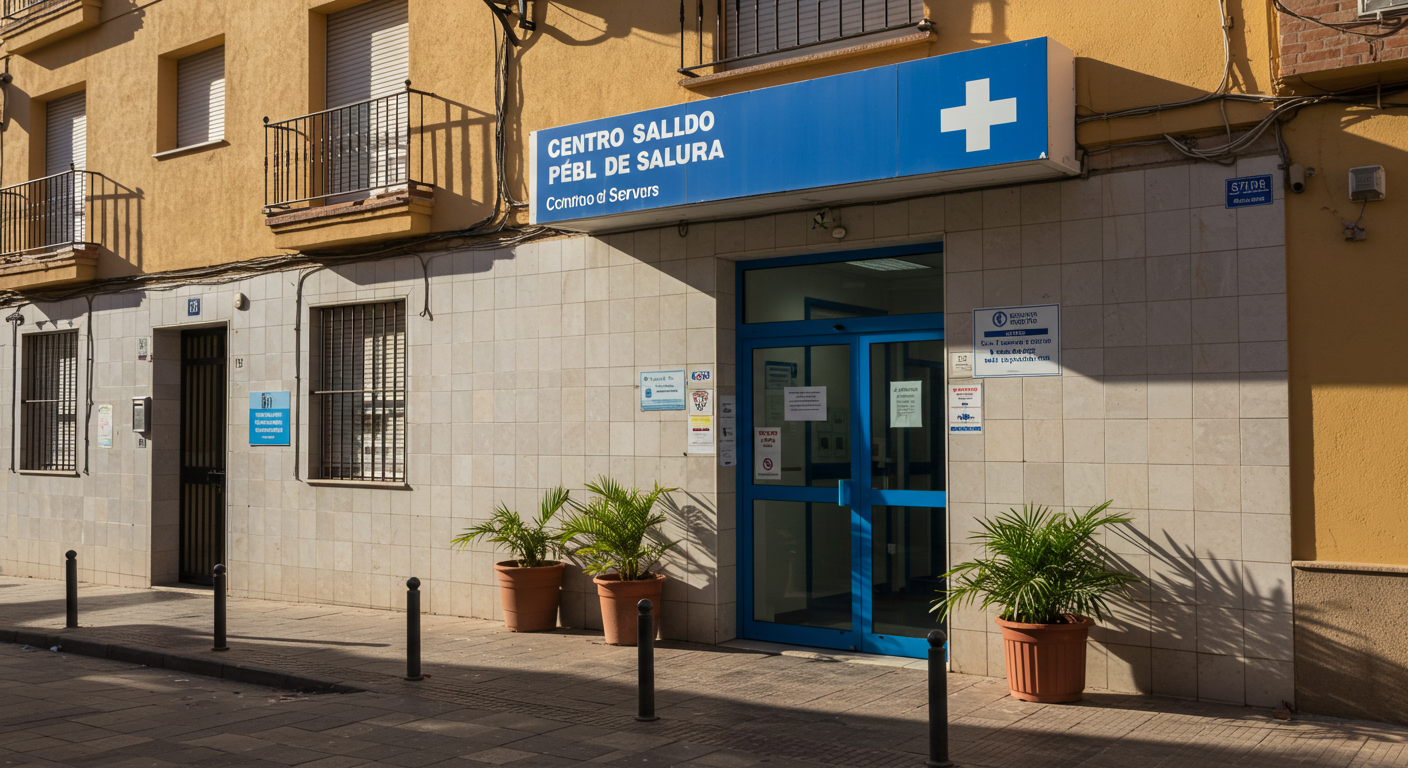
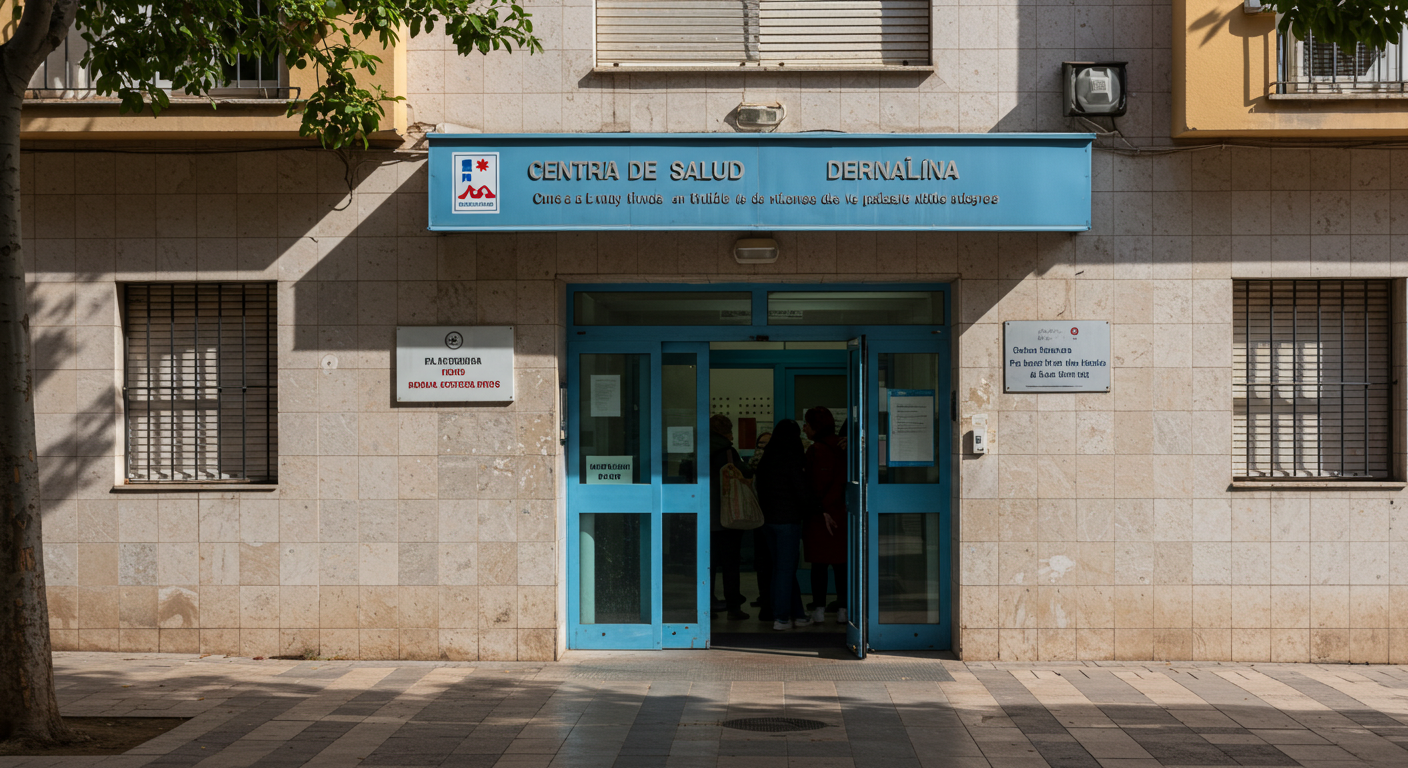
Once you're registered on the padron and have your TIE, you're entitled to register with a local health centre (centro de salud) and access the public system. But there's a gap period — between arrival and getting your TIE sorted — when you're in a grey zone. Healthcare in Spain Before Your TIE Arrives: What Cover Do You Actually Have? is worth reading before you depart.
For families with children, the good news is that minors are entitled to healthcare regardless of the parents' administrative status in many regions. For adults, private health insurance (a policy from Adeslas, Sanitas, or Asisa, for example) is typically required as part of your NLV application anyway, so you should have cover from day one.
If you end up in a situation where you're not yet registered with the public system and your private policy doesn't cover something you need, the Convenio Especial — a voluntary contribution scheme — is an option worth knowing about.
The Financial Admin Nobody Prepares You For
You'll need a Spanish bank account faster than you think. Landlords want a Spanish IBAN for direct debits; the school may want one; utility companies certainly will. Opening an account as a non-resident is possible — Open a Spanish Bank Account as a Non-Resident in 2026 walks through the options — but the process is smoother once you have at least a NIE.
If one parent is going to work as self-employed (autónomo) while the other manages the household and school runs, get that registration done early too. A gestor (local accountant/admin specialist) is worth every cent for the first year; Do You Need a Gestor to Register as Autónomo in Spain? gives you an honest take on whether it's a luxury or a necessity. With children in school and a relocation in progress, it's a necessity.
A Few Things Worth Saying Plainly
Choose your city based on school options and transport, not just weather and Instagram. Seville is gorgeous and significantly cheaper than Madrid, but the August heat with young children is brutal. Valencia is my personal recommendation for families: good schools, a functioning metro, beaches within reach, and costs that don't make your eyes water.
Budget for the first six months to be expensive. Between visa fees, health insurance, flights, short-term accommodation, school uniforms, vet bills, and a dozen pieces of bureaucratic paperwork, you'll spend more than you planned. The families who make it work are the ones who arrived with a financial cushion and a sense of humour about the admin.
And the Spanish school system, once your children are in it, is genuinely wonderful. Mine were fluent within a year.
Frequently asked questions
- Can my children enrol in a Spanish state school without a padron certificate?
- Technically, they're entitled to education regardless of administrative status, but in practice most state schools require a padron certificate showing an address in the catchment area before they'll complete enrolment. Get the padron sorted first — even a temporary registration can help. Speak directly to the school director (director del centro) if you're in an urgent situation; they have more discretion than the paperwork implies.
- Do pets from the UK need quarantine when entering Spain?
- No quarantine, provided you have the correct documentation: microchip, valid rabies vaccination, an EU-format health certificate completed by an Official Veterinarian within 10 days of travel, and a tapeworm treatment administered 1–5 days before entry (for dogs). If any of these are missing or out of date, the animal can be refused entry or placed in quarantine at your expense.
- How long does the Non-Lucrative Visa take to process?
- Processing times at Spanish consulates vary considerably. As of 2026, the London consulate typically takes 8–12 weeks, but this can stretch to 3–4 months during busy periods. Apply well before your intended move date — ideally six months ahead if you have a fixed departure in mind.
- Which Spanish cities are best for English-speaking families with young children?
- Valencia and Málaga are consistently popular with English-speaking families for a combination of cost, climate, and ease of integration. Madrid has excellent bilingual state schools but higher housing costs. Barcelona is appealing but the Catalan-language instruction in state schools is a real adjustment for children with no prior language base. Seville suits families who want a more authentically Spanish experience and lower costs, but summer heat is extreme.
- Can I bring my dog on the plane to Spain in the cabin?
- Some airlines allow small dogs in the cabin (usually under 8–10kg including carrier). Iberia and Vueling both permit in-cabin pets on flights to Spain within size and weight limits. Ryanair does not allow pets in the cabin. Large dogs travel as checked baggage or cargo. Always check the specific airline's current pet policy before booking, as rules change.
- Do my children need their own NIE numbers?
- Yes. Every person — including minors — needs a NIE to be enrolled in school, registered with the health system, or included in any official documentation in Spain. Children's NIEs are applied for in the same way as adults', either at a Spanish consulate before arrival or at the Oficina de Extranjería in Spain. Parents typically apply on behalf of their children.
- What private health insurance do I need for the Non-Lucrative Visa?
- You need a policy that covers you in Spain without a co-payment (copago) clause and without a time limit for the duration of your visa. The main providers families use are Adeslas, Sanitas, Asisa, and Cigna. Costs vary by age and coverage level — for a family of four, budget roughly €200–€400/month as a ballpark, but get quotes specific to your ages and health history. The consulate will check that the policy meets their requirements.