Valencia vs Málaga for Beach Living: Honest 2026 Comparison
Valencia vs Málaga for living by the beach — an honest 2026 comparison of costs, climate, expat life, housing and beaches to help you choose.
Valencia vs Málaga for Living by the Beach: Which City Actually Wins in 2026?
Both cities will sell you a flat within walking distance of the Mediterranean, more sunshine than you'll know what to do with, and a lifestyle that makes your friends back in Manchester question their choices. But Valencia and Málaga are genuinely different places to live, and picking the wrong one will cost you — financially, socially, and in terms of daily comfort. If you're weighing up Valencia vs Málaga for living by the beach, the short answer is this: Valencia gives you more city for less money and a more authentically Spanish daily life; Málaga gives you a warmer winter, a faster-growing international scene, and easier access to the rest of Andalusia. Neither is the obvious winner. It depends entirely on what you're optimising for.
Let me break down what I've actually observed — having spent extended time in both — so you can stop reading generic relocation listicles and make a real decision.
The Beaches: Not All Mediterranean Sand Is Equal
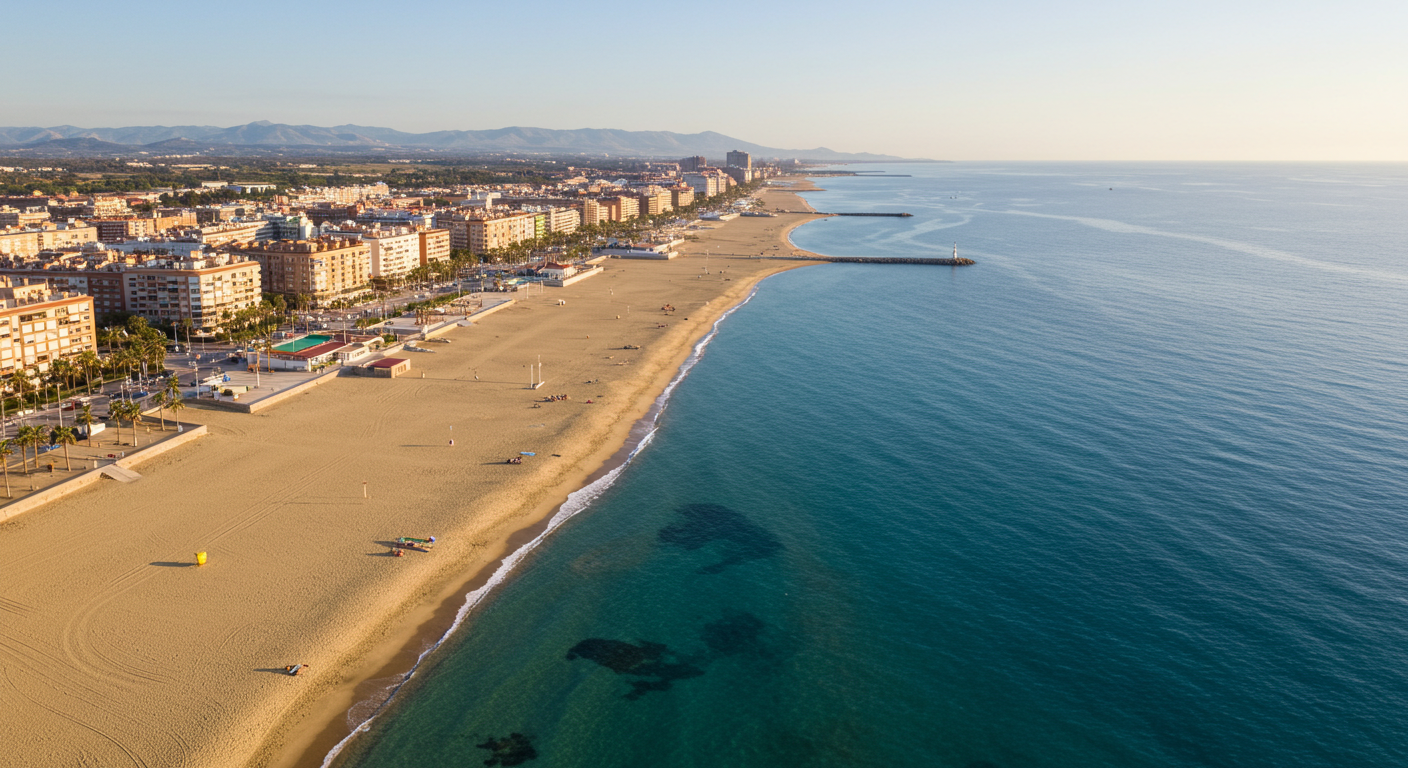
Let's start here, since it's the whole premise. Valencia's main beach, La Malvarrosa, is wide, long, and genuinely good — but it's an urban beach. You're looking at the port cranes from the water. It's fun, it's lively in summer, and it's fifteen minutes by tram from the city centre. The sand is fine, the water is clean enough (it has a Blue Flag), and the chiringuitos along the paseo do a decent arroz a banda. But it doesn't feel like a coastal paradise. It feels like a big city's beach, which is exactly what it is.
Head south of Valencia, though, and the picture changes dramatically. El Saler, about 20 minutes by bus, sits inside the Albufera natural park and is backed by pine trees rather than apartment blocks. Cullera, 45 minutes by cercanías, has rocky coves and calmer water. The point is that Valencia's beach life isn't just La Malvarrosa — it's a coastline you can genuinely explore.
Málaga's city beach, La Malagueta, is pleasant but smaller, and the sand is darker grit rather than pale fine stuff. What Málaga has going for it is proximity to some of the best beaches in Spain. Nerja is an hour east by bus. Maro, just beyond Nerja, is genuinely spectacular. The Axarquía coast is underdeveloped in the best possible way. And if you have a car, the Costa Tropical around Almuñécar is within 90 minutes. If you want to spend your weekends at different beaches, Málaga wins this one. If you want a good beach literally in the city, both are roughly equal — though I'd give Valencia's coastline a slight edge for sheer length and the Albufera backdrop.
For year-round swimming, Málaga is warmer. Sea temperatures there in November hover around 19–20°C; in Valencia they're a few degrees cooler. If you're curious about whether October swimming is realistic at all in Spain, the answer is yes in both cities — but more comfortably in Málaga.
Climate: The Real Difference
This is where Málaga pulls ahead, and it matters more than people admit. Both cities average around 300 days of sunshine a year, but the character of the weather is different. Valencia has a classic Mediterranean climate: hot dry summers, mild winters, and the notorious gota fría — the cold drop weather system that can dump extreme rainfall in autumn. September and October in Valencia can bring genuinely alarming storms. In 2024, the DANA event caused catastrophic flooding in the Valencia region. That's not a reason to avoid Valencia, but it's a reality of living there that nobody mentions in the glossy relocation content.
Málaga's winters are noticeably warmer. Average January highs are around 17°C; in Valencia they're closer to 14°C. That three-degree difference sounds small but it's the difference between eating outside in a light jacket in February and eating outside in a proper coat. If you're coming from the UK specifically to escape grey winters, Málaga's climate is the more convincing argument.
Summers in both cities are hot. Málaga can be more humid near the coast. Valencia's summer heat is drier but the city itself gets very hot in July and August — much of the local population clears out to the beach towns. Neither is as brutal as Seville or Granada in July, if that's your benchmark (see our piece on whether Seville and Granada are too hot to visit in summer for context on Andalusian heat).
Cost of Living: Valencia Still Has the Edge
This is the most practically important section. As of 2026, Valencia remains meaningfully cheaper than Málaga for renters, and the gap has widened slightly as Málaga has attracted more international money over the past five years.
Rent for a two-bedroom flat in a decent neighbourhood — say, Ruzafa or Benimaclet in Valencia, or Soho or El Palo in Málaga — runs roughly €900–1,200/month in Valencia and €1,100–1,500/month in Málaga. Beach-adjacent adds a premium in both cities. For a comprehensive breakdown of what things actually cost day to day in Valencia, our cost of living in Valencia as a couple in 2026 article runs through it in real numbers.
Groceries, restaurants, and transport are broadly similar between the two cities — both are cheaper than Madrid or Barcelona. But Málaga's restaurant scene near the tourist-heavy areas (the old town, the port) has noticeably inflated prices. A menú del día in a workers' bar in Valencia will run you €10–12 with wine; the same in central Málaga is often €13–15 now. Go a few streets back from the tourist trail in Málaga and you recover those prices — but you have to know where to look.
Property purchase prices have risen sharply in both cities. Málaga province has seen some of the steepest increases in Spain; buying in the city itself or on the Costa del Sol is now firmly expensive by Spanish standards. Valencia is still more accessible if you're looking to buy.
Expat and International Life
Málaga has transformed. A decade ago it was a city that serious expats overlooked in favour of the Costa del Sol suburbs. Now it has a genuine tech and creative scene, partly driven by the Tech Park in Campanillas and partly by a wave of remote workers who discovered it during and after the pandemic. The Centro and Soho neighbourhoods have coffee shops, coworking spaces, and a social scene that makes meeting other English-speaking internationals genuinely easy.
This is either a feature or a bug, depending on your perspective. If you want to integrate into Spanish life, Málaga's booming international scene can become a bubble. You can absolutely live in Málaga and barely use your Spanish, surrounded by other expats and digital nomads. Valencia has a significant expat community too — particularly in the Ruzafa area and along the beachfront — but the city is larger, more spread out, and less self-consciously international. You'll be pushed to use Spanish more, which some people find frustrating and others find exactly what they moved for. Our article on living in Spain without speaking Spanish gives an honest city-by-city breakdown if language anxiety is part of your calculation.
For digital nomads specifically, both cities qualify for Spain's digital nomad visa infrastructure, and the Beckham Law tax regime is worth understanding regardless of which you pick. Málaga's coworking scene is arguably more developed at this point; Valencia is catching up fast.
Healthcare, Admin and Practical Life
Healthcare access works the same way in both cities once you're properly registered — get your empadronamiento, get your TIE, access the public system. The quality of public healthcare in both regions (Comunitat Valenciana and Andalusia) is decent, though waiting times vary. If you're in a gap period before your TIE arrives, the situation is more complicated — see our guide on healthcare in Spain before your TIE arrives for what cover you actually have in that window. And if you're self-employed and need to pay into the system voluntarily, the convenio especial is the mechanism in both regions.
Admin bureaucracy is roughly equal in both cities: maddening, slow, and occasionally kafkaesque in ways that make you question your life choices. Neither city has a particular advantage here. Málaga's extranjería office has historically been overwhelmed; Valencia's is no better. Budget time, not optimism.
For autónomos (self-employed), banking matters. Our best Spanish bank for autónomos in 2026 guide is worth reading before you open an account in either city.
The Intangibles: Culture, Food, Feel
Valencia has a stronger sense of its own identity. The Fallas festival in March is one of the most extraordinary things I've seen anywhere — five days of sleep deprivation, fire, papier-mâché monuments the size of buildings, and a city that collectively loses its mind in the best possible way. Valencian food culture is serious and specific: paella (the real one, with rabbit and chicken, not the tourist seafood version), horchata from Alboraya, the mercado central. The city takes its food personally.
Málaga is more relaxed in its identity, which cuts both ways. The food is excellent — pescaíto frito, espetos de sardinas grilled on the beach over wood fires, cold Málaga wines that nobody outside Andalusia talks about enough. The old town is compact and walkable. The Picasso Museum is genuinely world-class, and the contemporary art scene has grown substantially. But Málaga doesn't have Valencia's fierce civic pride, and if you're looking for that immersive Spain-the-place feeling, Valencia delivers it more intensely.
So Which One?
Choose Valencia if you want: lower rent, a bigger city with more going on culturally, a more authentically Spanish daily life, and you're fine with a slightly cooler winter and the occasional dramatic autumn storm.
Choose Málaga if you want: warmer winters, easier integration into an English-speaking international community, better access to spectacular beaches along the Costa and beyond, and you don't mind paying a bit more for the privilege.
Honestly, either will make you wonder why you waited so long. But they're not interchangeable, and anyone who tells you they are hasn't lived in both.
Frequently asked questions
- Is Valencia or Málaga cheaper to live in for expats in 2026?
- Valencia is generally cheaper, particularly for rent. A two-bedroom flat in a good Valencia neighbourhood typically runs €900–1,200/month; the equivalent in Málaga is closer to €1,100–1,500/month as of 2026. Day-to-day costs like groceries and local restaurants are broadly similar, though tourist-area prices in Málaga have risen sharply in recent years.
- Which city has better beaches — Valencia or Málaga?
- Málaga wins for variety and access to spectacular beaches along the Costa del Sol and Costa Tropical. Valencia's city beach (La Malvarrosa) is good but urban; however, El Saler and the Albufera coast nearby are genuinely beautiful. For day-trip beach variety, Málaga edges it; for a solid beach right in the city, both are comparable.
- Is Málaga better than Valencia for digital nomads?
- Málaga has a more established digital nomad and tech scene as of 2026, with a strong coworking infrastructure and a large English-speaking international community. Valencia is growing fast and is cheaper, which matters if you're on a tighter remote income. Both cities support Spain's digital nomad visa. Your choice likely comes down to whether you prefer a ready-made international scene (Málaga) or a larger, more Spanish city (Valencia).
- What is the weather like in Málaga vs Valencia in winter?
- Málaga's winters are noticeably warmer. Average January highs in Málaga are around 17°C; in Valencia they're closer to 14°C. Both cities get plenty of winter sunshine, but Málaga is more reliably warm enough to eat outside without a coat through the winter months. Valencia is also prone to autumn DANA storm events, which can bring heavy, disruptive rainfall between September and November.
- Can you live in Valencia or Málaga without speaking Spanish?
- You can get by in both, but Málaga makes it easier due to its larger international community and more English-speaking services in the centre. Valencia is a bigger, more Spanish city where you'll be pushed to use the language more — and where Valencian (a variety of Catalan) is also present on signage and in some services. If integrating into Spanish life is your goal, Valencia is the better training ground; if language is a barrier, Málaga is more forgiving.
- Which city is better for families — Valencia or Málaga?
- Both are good family cities. Valencia has a strong international school scene, large parks (the Turia riverbed park is exceptional), and a pace of life that suits families well. Málaga has grown its international school provision significantly and has a milder climate year-round. Valencia is generally better value for the space you get, which matters when you need an extra bedroom.
- Is it easy to find a rental flat near the beach in both cities?
- Yes, but competition is fierce in both cities, especially in peak season and increasingly year-round. In Valencia, beachfront areas like La Malvarrosa and El Cabanyal have tightened considerably; in Málaga, anything near La Malagueta or El Palo moves fast. Budget at least 10–15% above the advertised price in your head once agency fees and deposits are factored in, and expect to provide a lot of documentation — especially if you don't have a Spanish payslip.